
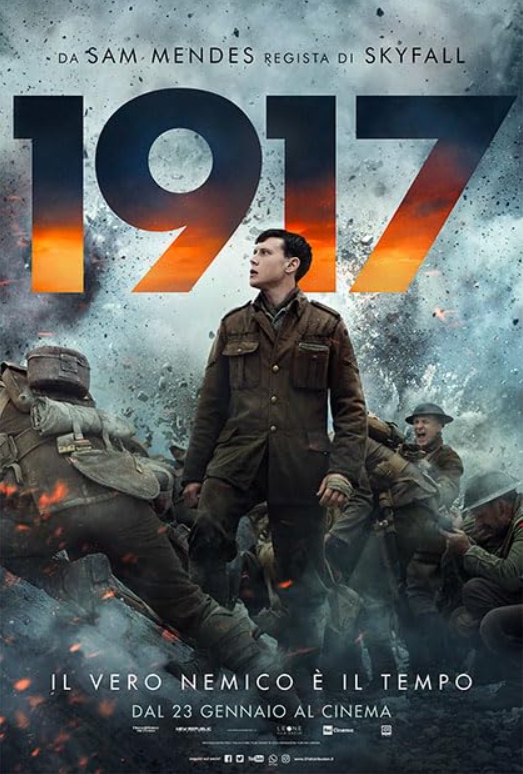
What the Film Is About
At its heart, 1917 is a visceral, immersive journey through the horrors of World War I, focusing not on grand strategy but on the profoundly personal experiences of two young British soldiers. The film follows their urgent mission to deliver a life-saving message, revealing how individual choices and moments of bravery are magnified against a backdrop of chaos and devastation. Rather than glorifying war, 1917 roots its narrative in intimate storytelling—taking viewers through fear, uncertainty, camaraderie, and grief, while exploring the emotional costs extracted by relentless conflict.
The central conflict is internal as much as it is external. The protagonists are not just racing against time and enemy lines—they are also struggling to hold onto their humanity and hope in an environment that constantly threatens to strip both away. The emotional journey pivots on endurance, loss, and a quiet resilience that often goes unseen beneath the thunder of battle. As the narrative unfolds, the film challenges audiences to consider what individuals sacrifice, what they carry with them, and what truly endures when everything else is swept away by war.
Core Themes
At its core, 1917 explores themes of duty, sacrifice, and the arbitrary nature of fate. The idea of responsibility—toward one’s comrades, superiors, and the unseen consequences of action or inaction—lies at the film’s foundation. The characters are propelled by orders, but their journey is marked by countless moral decisions that underline the burdens of loyalty and the unpredictability of survival.
Another prominent theme is the persistence of humanity amid relentless violence and suffering. The film suggests that compassion—often manifesting in fleeting gestures—can persist even within environments engineered to erase it. Through this, 1917 examines the tenuous thread of connection between individuals on opposing sides of war, inviting viewers to see soldiers not as faceless masses but as people with fears, dreams, and loved ones.
These themes had particular resonance in 2019, as global conversations reflected on the centenary of World War I and ongoing conflicts across the world. The film arrives in an era grappling with the legacy of past wars and new forms of trauma, making its meditation on the endurance of the human spirit and the consequences of violence powerfully relevant. They remain urgent today, underscoring the need to remember both the cost and courage of individuals in times of great historical upheaval.
Symbolism & Motifs
1917 is rich with symbolic elements that reinforce its deep meaning. Most obvious is the film’s “one-shot” appearance, which acts not merely as a technical achievement but as a symbol for the continuity and inescapability of traumatic experience. By immersing the viewer in unbroken time, the film mirrors the relentless nature of fear and the immediacy of danger faced by soldiers, denying them, and us, the luxury of retreat or reflection.
Other visual motifs include barren landscapes littered with corpses and ruins, which symbolize both the death of innocence and the desolation left by mechanized violence. Flowers, fields, and brief moments of natural beauty contrast sharply with devastation, hinting at cycles of renewal and loss—a persistent reminder of what is at stake in war and what might survive it.
The motif of messages—delivered, lost, or misunderstood—runs throughout the film, suggesting the fragility of communication in wartime and the immense consequences tied to information or misinformation. Water also recurs symbolically: rivers and rain serve both as physical obstacles and as metaphors for rebirth, washing characters in moments of transformation or emotional release.
Key Scenes
Key Scene 1
One crucial scene occurs early in the ruined German trenches. Surrounded by darkness, uncertainty, and deadly traps, the protagonists’ anxiety and vulnerability are palpable. What makes this scene so important is its crystallization of the film’s message about the omnipresence of invisible dangers and the thin line between life and death. It places viewers in the soldiers’ boots, not just showing peril but making us inhabit it, highlighting how survival in war often rests on luck as much as skill or valor.
Key Scene 2
Later in the narrative, a moment of respite unfolds as one protagonist stumbles into a small French farmhouse, encountering a frightened woman and child. This brief oasis of warmth and care, juxtaposed with the brutality outside, amplifies the film’s exploration of empathy and humanity under siege. Through the soldier’s awkward attempts to comfort the child and the fleeting connection that arises, the scene underscores the persistence of tenderness and the desperate longing for normalcy in an unrecognizable world. It also sharpens the pain of separation and loss, echoing the theme of what endures amid destruction.
Key Scene 3
The film’s climactic moments—when the remaining protagonist races to deliver the urgent message—act as both literal and symbolic catharsis. Sprinting beyond exhaustion, battered by trauma, he pushes forward not just for military duty but in memory of those lost, carrying with him the burdens and hopes of the fallen. This sequence crystallizes the film’s meaning: the significance of individual action in the face of overwhelming odds, and the enduring cost of war etched in every survivor. Here, 1917 offers a final statement on resilience and the quiet heroism of simply enduring and trying to do what is right, even when nobody is watching.
Common Interpretations
Critics and audiences commonly interpret 1917 as a meditation on the futility of war and the harrowing demands placed on ordinary people caught in its machinery. One widely held interpretation emphasizes the film’s existential undertones: that heroism is often isolated, unsung, or rendered ambiguous by the randomness of survival and death on the front lines. Others read the film as a celebration of camaraderie and self-sacrifice, depicting how extraordinary acts can arise from individuals thrust into impossible circumstances.
Another school of thought focuses on the film’s technical bravura—the unbroken “single take”—as a metaphor for the unrelenting pressure of life during wartime, intensifying both narrative immersion and empathy. Some audiences see 1917 as challenging traditional war film tropes by eschewing triumphant moments for a more understated, somber reckoning with violence.
Ultimately, most interpretations agree that 1917 is less concerned with historical specifics than with universal questions: What do we owe each other? How do we carry on amid devastation? How are we changed by survival, and what do we lose along the way?
Films with Similar Themes
- Saving Private Ryan – Both films explore the moral and emotional challenges of war, focusing on small groups tasked with vital missions and the bonds formed between soldiers under duress.
- Paths of Glory – Stanley Kubrick’s anti-war classic also interrogates the cruelty and arbitrariness of military authority, centering on the burdens of individual responsibility against collective violence.
- Come and See – This harrowing Eastern European film uses intense subjectivity and immersive techniques to depict the trauma and loss experienced by young people in wartime, mirroring 1917’s emotional immediacy.
- All Quiet on the Western Front – Both the original and its recent adaptation share 1917’s focus on the tragic disillusionment of young soldiers, highlighting the personal costs of combat and the dehumanizing effects of trench warfare.
In the end, 1917 communicates a powerful message about the enduring effects of violence on the human soul and the fragile but persistent spark of humanity that can survive even the darkest times. It does not try to resolve the contradictions of war or pretend that heroism can undo trauma, but instead presents a somber tribute to individual acts of courage—moments of grace and mercy that, however fleeting, remind us of what is worth protecting. The film stands as a contemporary meditation on sacrifice, memory, and the lingering shadows of conflict, asking viewers to remember not just the battlefields, but the unfinished stories of those who walked them.