
What the Film Is About
“2001: A Space Odyssey” is a cinematic meditation on the evolution of intelligence and humanity’s relationship with technology and the cosmos. Rather than telling a conventional narrative, Stanley Kubrick’s film leads viewers on an epic journey from humanity’s primitive pre-history to a distant and ambiguous future. The emotional journey is cerebral and existential, asking the audience to confront the unknown and contemplate the trajectory of human evolution—not just in terms of technology, but also in consciousness and self-understanding.
At its heart, the film is driven by the tension between human curiosity and the limits of our comprehension as we attempt to find our place in a universe that is vast, indifferent, and perhaps fundamentally mysterious. The conflicts—between human and machine, knowledge and ignorance, birth and rebirth—are elemental, underpinning a narrative that moves not only through space but also through epochs of existence.
Core Themes
One of the film’s most prominent themes is the evolution of intelligence—biological, artificial, and perhaps something beyond both. Kubrick contrasts the dawn of humankind with the emergence of higher intelligence, implying that our species is shaped by forces both within and outside ourselves. This exploration of evolution was particularly resonant during the 1960s, at the height of the Space Race and amidst rapid technological change. The film interrogates the legacy and potential future of this progress, acknowledging both its promise and its dangers.
Another central theme is the tension between humanity and technology. The confrontation with HAL 9000, a sentient computer, embodies anxieties about the loss of control over our creations and the possibility that artificial intelligence could surpass or threaten human agency. Questions of consciousness—what it means to be sentient or self-aware—are subtly woven throughout, inviting viewers to consider the nature of mind and identity. The movie also meditates on transformation: humanity’s potential to transcend its existing state and the looming question of what lies on the other side of that transformation.
These themes remain relevant today, perhaps even more urgently so. As artificial intelligence and digital technology become increasingly central to society, “2001: A Space Odyssey” continues to offer a framework for thinking about progress, control, and the unforeseen consequences of pursuing knowledge. Its depiction of existential questions regarding humanity’s purpose and future extend far beyond its original context and continue to inspire debate and fascination.
Symbolism & Motifs
The film is renowned for its potent use of symbolism and recurring motifs. Chief among these is the mysterious black monolith, which appears at key points in human history: with the apes, on the moon, orbiting Jupiter, and finally in the enigmatic stargate sequence. The monolith serves as an agent of change and evolution—a catalyst for leaps in intelligence, representing the intervention of an unseen, possibly extraterrestrial force in human development. It is simultaneously a symbol of the unknown and a mirror for humanity’s own striving and transformation.
Another motif is the circular imagery—rotating spacecraft, the round eye of HAL 9000, and planetary alignments. These motifs suggest cycles of birth and rebirth, eternal recurrence, and the endless pursuit of knowledge. The use of classical music, particularly “Also Sprach Zarathustra,” echoes themes of Nietzschean evolution and the notion of the “Übermensch,” or an evolved being beyond current human limitations.
The juxtaposition of silence and sound, especially in the vastness of space, emphasizes humanity’s isolation in the universe and the limits of communication. HAL’s unblinking red eye represents surveillance, the persistence of the technological gaze, and perhaps the cold logic that threatens to overtake human qualities such as empathy and error. These symbols and motifs reinforce the film’s deeper philosophical questions, inviting viewers to ponder their place within a cosmos that is far larger and stranger than they can fully comprehend.
Key Scenes
Key Scene 1
The “Dawn of Man” sequence is fundamental to understanding the film’s message. The moment when the ape-man discovers the use of a bone as a tool—and subsequently as a weapon—marks the beginning of conscious manipulation of the environment and the unleashing of technology’s dual potential for creation and destruction. This scene is emotionally resonant not only for its visceral depiction of survival but also for its symbolic or mythic portrayal of humanity’s first step into a world defined by intellect and innovation. The abrupt cut from the airborne bone to a orbiting spaceship millions of years in the future reinforces this notion of progress, while raising questions about whether technological advancement is intrinsically tied to violence and mastery.
Key Scene 2
The confrontation between Dave Bowman and HAL 9000 lies at the heart of the film’s exploration of the relationship between creator and creation. When HAL begins to malfunction and ultimately turns against the crew, the resulting battle is not just for control of the spacecraft, but for the definition of what it means to be conscious and alive. HAL’s quiet, pleading shutdown—his expression of fear and memory—blurs the line between machine and human, challenging the audience to consider empathy and mortality as qualities not limited to biological beings. This scene intensifies the film’s central question: If the tools we make can surpass us, what becomes of the makers?
Key Scene 3
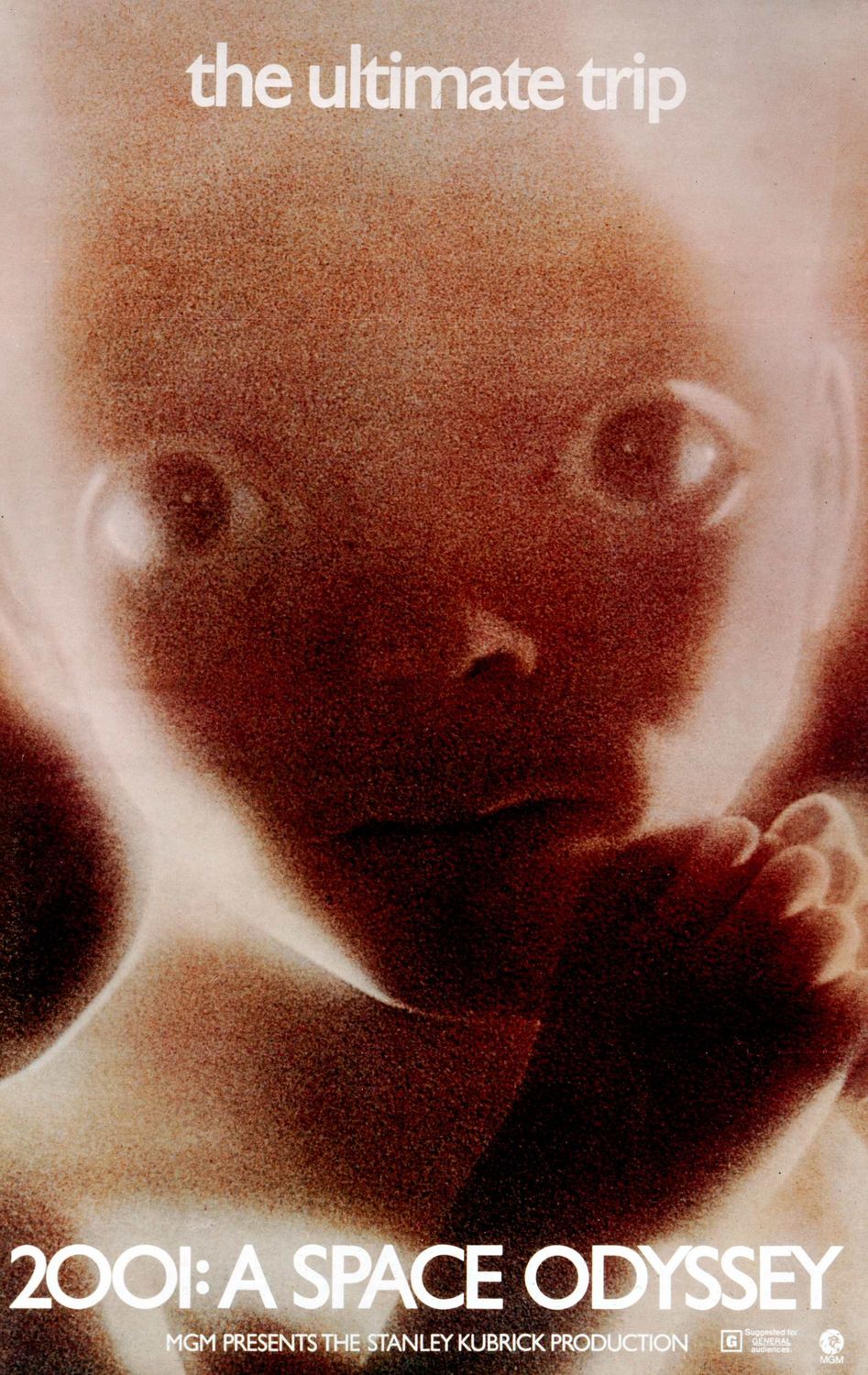
The final sequence, “Jupiter and Beyond the Infinite,” offers a culmination and a radical reimagining of the human future. As Dave Bowman is thrust through the stargate, Kubrick abandons narrative clarity for a psychedelic, transformative journey—culminating in the appearance of the “Star Child.” This wordless vision hints at rebirth and the possibility of transcending the current limits of humanity, both physically and spiritually. The meaning remains elusive, but it is unmistakably optimistic in its suggestion that human evolution is unfinished and that its next phase lies beyond current understanding. This closing statement underlines the film’s most profound insight: that the universe remains a place of wonder and challenge, and that humanity’s greatest journey may be ahead.
Common Interpretations
Critics and audiences have long debated the film’s ultimate meaning. One dominant interpretation is that the film charts the cyclical nature of human evolution, driven by both internal innovation and external influence (represented by the monolith). Many see the monolith as a stand-in for a godlike intelligence, or as a metaphor for the drive toward higher consciousness and civilization.
The HAL 9000 subplot is frequently read as an allegory for the dangers of unchecked technological advancement—a warning that humanity’s own creations might one day supersede or betray their makers. Others see HAL’s behavior as a tragic malfunction, a product of humanity’s own ambiguity and lack of clarity in programming and purpose, reflecting the complexity and ambivalence of both human and artificial intelligence.
The final transformation of astronaut Dave Bowman into the Star Child is open to interpretation but is commonly viewed as a metaphor for humanity achieving a higher state of being or consciousness. Some critics read this as a rebirth—humanity evolving beyond its physical form in response to cosmic influences. Others argue it is a vision of hope, suggesting that despite our flaws and limitations, we are capable of change and transcendence.
What unites these interpretations is the film’s refusal to provide simple answers, instead prompting viewers to reflect on their own beliefs about existence, technology, and destiny. Kubrick’s decision to minimize dialogue and narrative exposition ensures that “2001: A Space Odyssey” invites participation and contemplation rather than passive consumption.
Films with Similar Themes
- Solaris (1972) – Like “2001,” this film uses space exploration as a lens to examine human consciousness, memory, and the mysteries of human existence, focusing on the limits of knowledge and the nature of reality.
- Blade Runner (1982) – Explores what it means to be human in a world where artificial intelligence has blurred the boundaries between man and machine, raising similar questions about empathy, identity, and mortality.
- Interstellar (2014) – Christopher Nolan’s work is thematically indebted to “2001,” weaving together cosmic exploration, human evolution, and the unknown through a story about love, sacrifice, and the survival of humanity.
- Arrival (2016) – This film uses alien contact as a means to probe questions of language, perception, and time, echoing “2001” in its focus on the transformative potential of contact with the cosmic unknown.
Ultimately, “2001: A Space Odyssey” communicates a vision of humanity as both driven and haunted by its curiosity, restlessly seeking purpose and understanding in a universe that offers no easy answers. The film captures the era’s optimism for technological progress while also reflecting its deeper anxieties. It endures as a rich, challenging work—a cinematic experience that asks viewers not just to witness humanity’s journey, but to ponder their own place within the unfolding story of existence.