
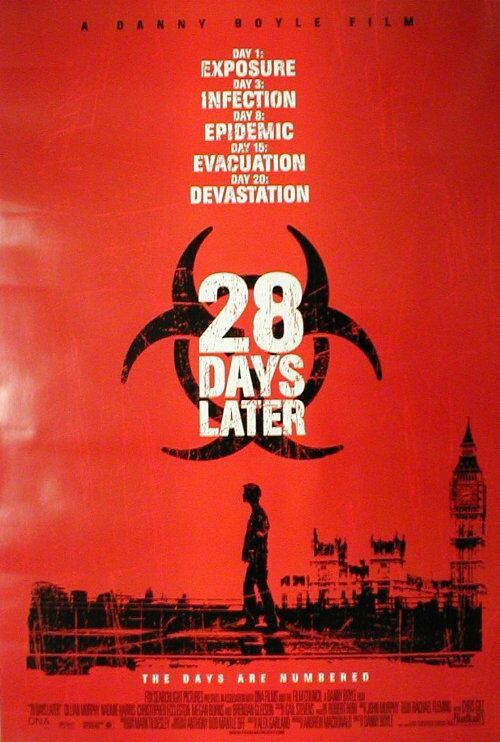
What the Film Is About
“28 Days Later” is a harrowing journey through a radically altered Britain, exploring the fragile edges of civilization in the aftermath of a viral outbreak. Rather than focusing on the origins of the disaster, the film is primarily concerned with how humans respond to extreme crisis—both the desperate clinging to hope and the collapse of moral certainties. At its heart, the story is an exploration of survival—physical, emotional, and moral—through the eyes of a small, ad hoc group of survivors who have little reason to trust or rely on each other except for necessity. The emotional core revolves around their struggle to retain humanity and connection within a world that increasingly no longer rewards or recognizes such values.
As the characters move through bleak urban landscapes and lawless countryside, they’re forced to continuously renegotiate the meaning of safety, loyalty, and compassion. Their journey is less about defeating a concrete enemy—the infected are often just background threats—and more about confronting what remains of civilization within themselves and others. The wars raging are internal as much as external, and the film is relentless in its questioning of whether anything good can endure when order crumbles.
Core Themes
At its core, “28 Days Later” explores the boundaries of civilization and the astonishing speed with which they can be erased. The film probes the thin veneer separating law from chaos, and the readiness with which individuals—and, by extension, societies—might abandon humane values in the face of existential threat. One central theme is the fluid nature of morality: what is right or wrong when survival is at stake? The moral codes of the old world are shown to erode as characters are confronted with impossible choices, from risking lives to questioning loyalty.
Another key theme is the search for connection and meaning amidst chaos. The bonds formed between the protagonists—particularly Jim, Selena, and Hannah—become lifelines, suggesting that empathy and solidarity are not merely luxuries but crucial tools for survival. Yet, the film also unflinchingly examines the darker aspects of human adaptation: violent tribalism, the temptation of authoritarian control, and the manipulation of vulnerability. The military outpost sequence represents a microcosm of this, showing how quickly power can corrupt and how easily desperate men can rationalize inhumanity.
When the movie was released in 2002, the world was grappling with recent trauma from events such as 9/11, while concerns about new pandemics and social fragmentation were increasingly present. The film’s themes remain strikingly relevant today, reflecting ongoing anxieties about societal breakdown, the fragility of social contracts, and our capacity for both compassion and brutality in crisis. “28 Days Later” resonates because it is less about monsters outside and more about the monsters—hopeful and terrifying—we find within.
Symbolism & Motifs
Symbolism in “28 Days Later” is woven through its relentless visual and narrative motifs. The omnipresent motif of emptiness—abandoned cityscapes, empty streets, and deserted landmarks—serves as a stark symbol of lost civilization and the impermanence of what we take for granted. This emptiness is not just physical, but existential, suggesting a void left by the collapse of social order and shared meaning.
Blood is another recurring symbol, representing both the thin line between safety and catastrophe and the inescapable proximity of danger. The film’s depiction of infection—rapid, violent, and almost impossible to avoid—embodies the notion that our downfall may come from within, not just from external threats. The infected themselves are not traditional monsters but hyperactive reflections of human rage, holding up a mirror to the unchecked aggression lurking beneath societal norms.
Light and darkness play central symbolic roles as well. Sunlit scenes tend to offer rare moments of reprieve and the possibility of hope, while shadowy interiors and nightfall usher in heightened danger and moral ambiguity. Nature, often portrayed as reclaiming urban space, hints at both the fragility of human constructs and the potential for renewal—albeit harsh and indifferent to human suffering. Ultimately, these motifs reinforce the film’s core question: what survives when the trappings of modern life are swept away?
Key Scenes
Key Scene 1
One crucial scene is Jim’s solitary wandering through the deserted London streets at the film’s opening. This sequence, largely devoid of dialogue and other people, is emotionally vital because it does more than establish the setting—it externalizes the protagonist’s confusion and the viewer’s disorientation in a world now governed by uncertainty. The emptiness reveals the extent of loss, while familiar landmarks devoid of life evoke both nostalgia and dread. Symbolically, this moment sets the tone for the film’s exploration of isolation—not only physical but existential—and signals the scale of the societal collapse that will frame the characters’ emotional arcs throughout the narrative.
Key Scene 2
Another pivotal scene occurs when the survivors arrive at the military outpost. What initially appears to be a sanctuary quickly becomes a site of moral crisis. The soldiers, instead of offering safety, impose their own vision of order through coercion and violence. This segment challenges the central themes of trust, communal values, and the meaning of authority. It underscores the film’s perspective that true threats are not just from the mindless infected but also from those who, in the absence of oversight, embrace cruelty and domination. The outpost scenario becomes an indictment of power unmoored from compassion and serves as a test for the protagonists, whose ideals and instincts are pitted against raw survivalism.
Key Scene 3
The third key scene comes near the film’s climax, where Jim, initially a gentle and uncertain figure, commits shocking acts of violence to rescue his newfound family. This transformation is more than self-defense; it represents the blurring of boundaries between humanity and savagery under pressure. The aftermath, where Selena momentarily cannot distinguish Jim from the infected, crystallizes one of the film’s deepest questions: can violence be justified if it is done out of love or loyalty, and at what cost to one’s identity? This moment marks the protagonist’s loss of innocence and the survivors’ acceptance that saving one’s soul may be as hard as staying alive. The ambiguous hopefulness of the final moments suggests that while humanity can endure horrific experiences, it is perpetually at risk of losing itself.
Common Interpretations
Critics and audiences frequently interpret “28 Days Later” as a meditation on the fragility of civilization and the persistence of primal instincts beneath modern identities. One dominant reading focuses on the collapse of social order and the rapid emergence of new, often brutal, systems of control. Another interpretation emphasizes the critique of authoritarianism, especially seen in how the military characters adopt extreme measures that echo real-world fears of martial law and abuse of power.
Others view the film as an allegory for contemporary anxieties: from the global spread of disease to cultural fears about terrorism and loss of civil liberties post-9/11. The “rage virus” itself is often seen not just as a sci-fi horror element, but as a metaphor for unchecked aggression—both personal and societal. Despite these heavy themes, many also see the film as fundamentally about connection: the way kindness, love, and shared struggle can exist and even flourish in the ashes of disaster. The ambiguous ending leaves room for both despair and optimism, allowing viewers to project their own hopes and fears onto the survivors’ uncertain future.
While there are debates about whether the film is most critical of external threats (like disease or violence) or internal failings (such as our capacity for cruelty), almost all interpretations acknowledge that “28 Days Later” is ultimately about what it means to be human when everything is at stake.
Films with Similar Themes
- “The Road” – Like “28 Days Later,” this adaptation of Cormac McCarthy’s novel explores the collapse of civilization and the struggle to maintain humanity and hope in a brutal, ruined world.
- “Children of Men” – This film, set in a dystopian future marked by infertility and societal collapse, examines the persistence of compassion and the possibility of renewal amidst chaos and despair.
- “Dawn of the Dead” (2004) – While more overtly a zombie film, it also interrogates the breakdown of society and questions the nature of human relationships and morality under extreme threat.
- “The Girl with All the Gifts” – This British post-apocalyptic film similarly uses a virus outbreak to reflect on human nature, morality, and the consequences of societal breakdown, with an emphasis on empathy and adaptation.
In conclusion, “28 Days Later” is ultimately a film about the dual capacity for destruction and empathy within humanity. By stripping away civilization’s comforts, it asks what remains: fear, tribalism, and violence, or the stubborn light of kindness, loyalty, and hope. Made in an era shadowed by new forms of insecurity, the film remains timely in its warnings and aspirations, reminding us that the lines between civilization and savagery, despair and possibility, are always thinner than we think. Its enduring impact lies less in its visions of terror and more in its unflinching honesty about human nature—fragile, formidable, and always worth fighting for.