
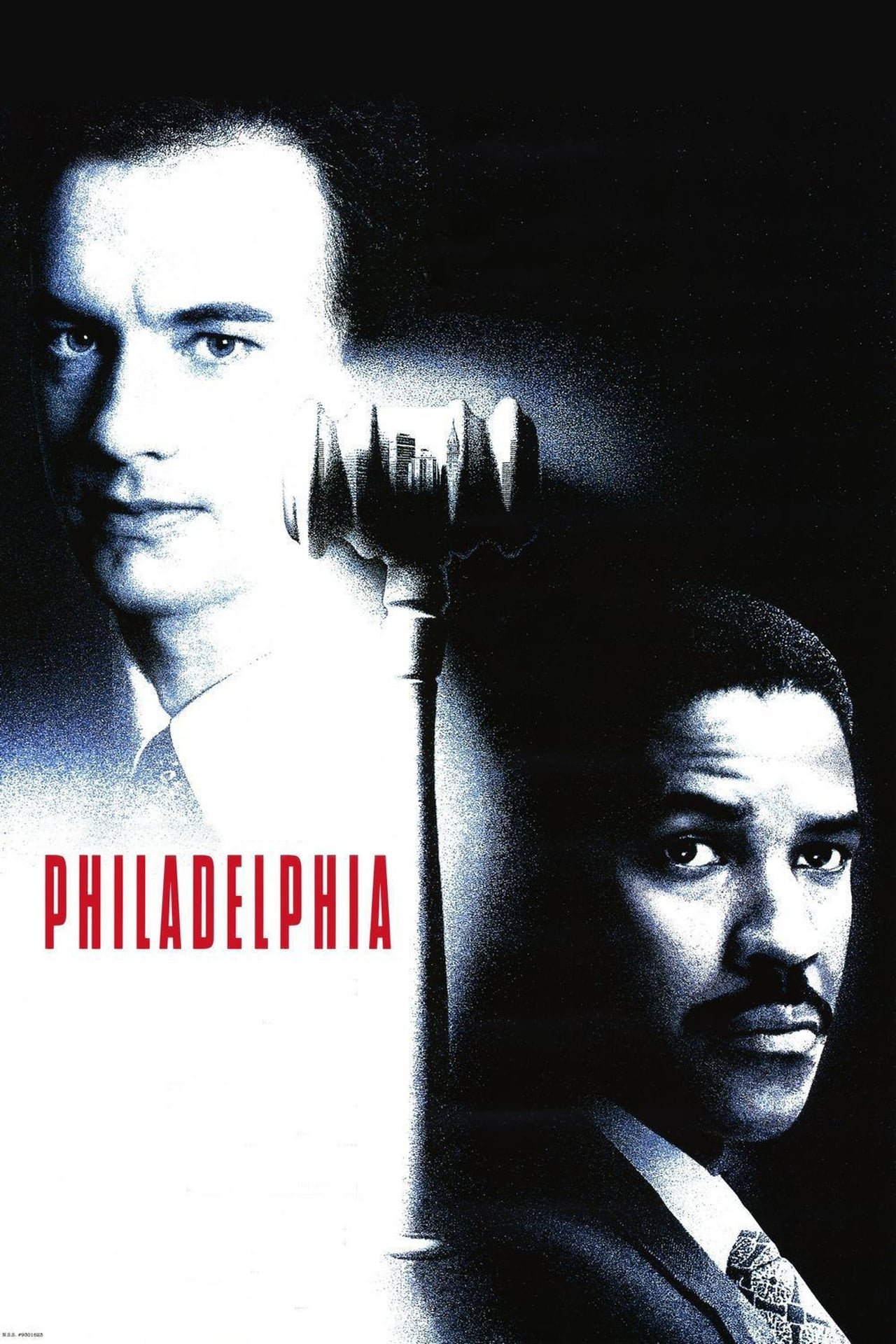
I remember the first time I saw “Philadelphia” not as a cinephile hunting for Oscar gold, but as a teenager who thought Tom Hanks belonged to the world of “Big” and gentle comedies. I was unprepared for the emotional weight the film placed in my lap: a kind of blunt-force empathy that I couldn’t shake for weeks. “Philadelphia” didn’t just move me because of what it showed, but because of what I realized I hadn’t been taught to see—shame, vulnerability, injustice—portrayed with such simple gravity. The experience was almost confessional; the movie kept whispering truths society had kept hushed, and in watching it, I felt complicit in those silences.
What the Film Is About
At its core, “Philadelphia” charts the deeply personal and urgent journey of Andrew Beckett (Tom Hanks), a talented lawyer who finds himself fired after his HIV status and sexuality become known to his law firm. The emotional engine of the film is less about Beckett’s legal battle than it is about the quiet devastation that comes with being ‘othered’, and the courage it takes for a man—almost literally on his last breath—to demand dignity from the society that betrays him. Watching Beckett, I am always left with the sensation of a spirit refusing to be eclipsed by prejudice, even as his body withers. It’s a film about fighting—not just in a courtroom, but in hospital waiting rooms, city streets, and the silent space between allies and adversaries.
What fascinates me about “Philadelphia” is that it’s not just a study of one man’s suffering, but an illustration of the walls that exist between people: fear, ignorance, and the learned reflexes that shape our ideas about justice and compassion. Denzel Washington’s character, Joe Miller, represents every shade of suspicion and transformation possible in the American experience—his arc from discomfort to advocacy feels honest and earned. The film quietly interrogates the wider implications of its conflict: not just whether the law can deliver justice, but whether empathy can penetrate the defenses we build around ourselves.
Core Themes
If I’m forced to distill “Philadelphia” to a handful of its most resonant ideas, the first is social stigma and the brutality of exclusion. In 1993, AIDS was not just a diagnosis—it was a cultural indictment, an automatic sentence of fear-based isolation. The film confronts this directly, and what I find powerful is how it crafts scenes meant not to shock, but to discomfort. It demands the audience ask themselves why they feel uneasy, and in doing so, it forces a confrontation with their own biases.
Another theme that lingers in my mind is the tensile interplay between justice and humanity. For all its courtroom theatrics, the script is at pains to reveal law as a tool that only becomes moral through the courage of individuals. It’s Miller’s initial prejudice—and his slow, stumbling journey to overcome it—that forms the real crucible of empathy. The film asks, sometimes with brutal frankness: Who do we allow to represent us? Who do we fight for when the cost is personal discomfort?
These themes are hardly relics. Even today, the lines traced by stigma—against the sick, the marginalized, or the merely different—haven’t faded. Watching “Philadelphia” after decades of “progress” remains a discomforting mirror, reflecting what society so easily buries whenever it’s expedient.
Symbolism & Motifs
There’s a motif that runs through “Philadelphia” like a low, insistent drumbeat: invisible wounds made visible. Director Jonathan Demme fills the movie with shots of hands—reaching, shaking, recoiling—and these become symbols of both invitation and rejection. The physical gestures of law, medicine, and simple human care land with unequal weight depending on who is being touched. This is not accidental: the virus itself is invisible, but its effects, like social exclusion, become palpable in every physical exchange.
Visual motifs around isolation stand out to me. Beckett often appears alone in wide, artfully vacant rooms, emphasizing the psychic exile at the heart of his experience. In a world dense with people, Beckett’s solitude is never truly relieved, even in moments of triumph. Photographs become a recurring symbol—a family snapshot in Beckett’s apartment, the meticulously framed faces in the courtroom—reminding us what is at stake: not jurisprudence, but the right to be seen and remembered as fully human.
Key Scenes
The Opera and the Floodgates of Emotion
One moment has always thunderstruck me—the scene where Beckett, ravaged yet momentarily transcendent, explains to Miller why opera moves him so intensely. As Maria Callas’s aria soars, the camera finds Beckett’s battered body and luminous face; he is all vulnerability, finally communicating what is unspoken in the language of law. This isn’t mere performance, it’s cinematic communion—a naked assertion that suffering, love, and beauty coexist. It’s the film’s purest distillation of empathy, and it annihilates distance between the characters, and between the film and its audience.
‘Can You Explain This?’—The Deposition
Early in the trial, during Beckett’s deposition, his former employers lay out coded bigotry in clinical, lawyerly terms. “Can you explain this?” they ask, pointing to facial lesions in photographs. The question—so cold, so invasive—feels like a demand not just for evidence, but for self-justification in the face of dehumanization. I can’t watch this scene without feeling physically ill; it’s an autopsy performed on dignity itself. It reminds me how prejudice is often concealed by the thinnest of professional veneers.
Joe’s Epiphany in the Library
The law library sequence, where Joe Miller is shunned by strangers’ glances and Beckett’s presence causes discomfort in the staid silence, works subtly. This is not a grandstanding moment, but a quiet ache—the slow realization that the social contract has failed. Joe’s empathy begins here, not in public declarations but in private embarrassment and shame, forcing him to reconsider his alliances and fight for principles he’s only just begun to understand.
Common Interpretations
Many critics, especially on the film’s initial release, framed “Philadelphia” as Hollywood’s safe foray into the AIDS crisis: earnest, sanitized, palatable for mainstream digestion. Some argued it skirted the raw, angry edges of queer experience for the benefit of winning hearts rather than changing minds. I do see the careful balancing act Demme employs, but I don’t believe the film’s restraint dilutes its message. For me, the very act of bringing this subject—and these faces—into the multiplexes of Middle America was, and remains, radical. Where others saw a lack of anger, I see a moral patience: the hope that reasoned storytelling, rather than preachy confrontation, might move the needle, however slightly.
I also think the chemistry between Hanks and Washington resists easy readings of the film as a ‘lesson’ movie. Their relationship is thorny, transactional, and refreshingly unsentimental. If some critics found that too “soft,” I find it honest. Empathy, after all, is rarely epiphanic; more often, it’s a slow negotiation with oneself.
Films with Similar Themes
- Longtime Companion – Chronicling the AIDS epidemic’s impact on a group of friends, this film shares Philadelphia’s commitment to tracing loss and social stigma through intimate, personal stories.
- Boys Don’t Cry – Like “Philadelphia,” this film uses the courtroom and public persecution to highlight the violence wrought by prejudice—and the quiet acts of courage that defy it.
- Milk – The depiction of Harvey Milk’s fight for equality echoes Beckett’s struggle, as both protagonists refuse to accept invisibility or silence in the face of systemic discrimination.
- The Normal Heart – Larry Kramer’s deeply angry, passionate dissection of early AIDS activism stands as a thematic complement to the patience of “Philadelphia,” offering another side to the crisis’s emotional and political urgency.
Final Reflections: Why “Philadelphia” Still Ripples
For new viewers, “Philadelphia” should not be treated merely as a time capsule but as a living, breathing confrontation with the American tendency to otherize. If you watch it today, let yourself feel the discomfort—the social judgments, the soft but lethal cruelties—and see what it tells you about now. Understanding its themes is less about historical empathy than it is about having the courage to bring those lessons forward. The film is an invitation to see in others’ suffering not a spectacle, but an imperative to act differently.
Related Reviews
If you found value in my perspective, you might also enjoy exploring my thoughts on other cinematic landmarks such as Dead Man Walking and Brokeback Mountain.
To broaden this interpretation, you may also explore how critics and audiences responded over time.
🎬 Check out today's best-selling movies on Amazon!
View Deals on Amazon