
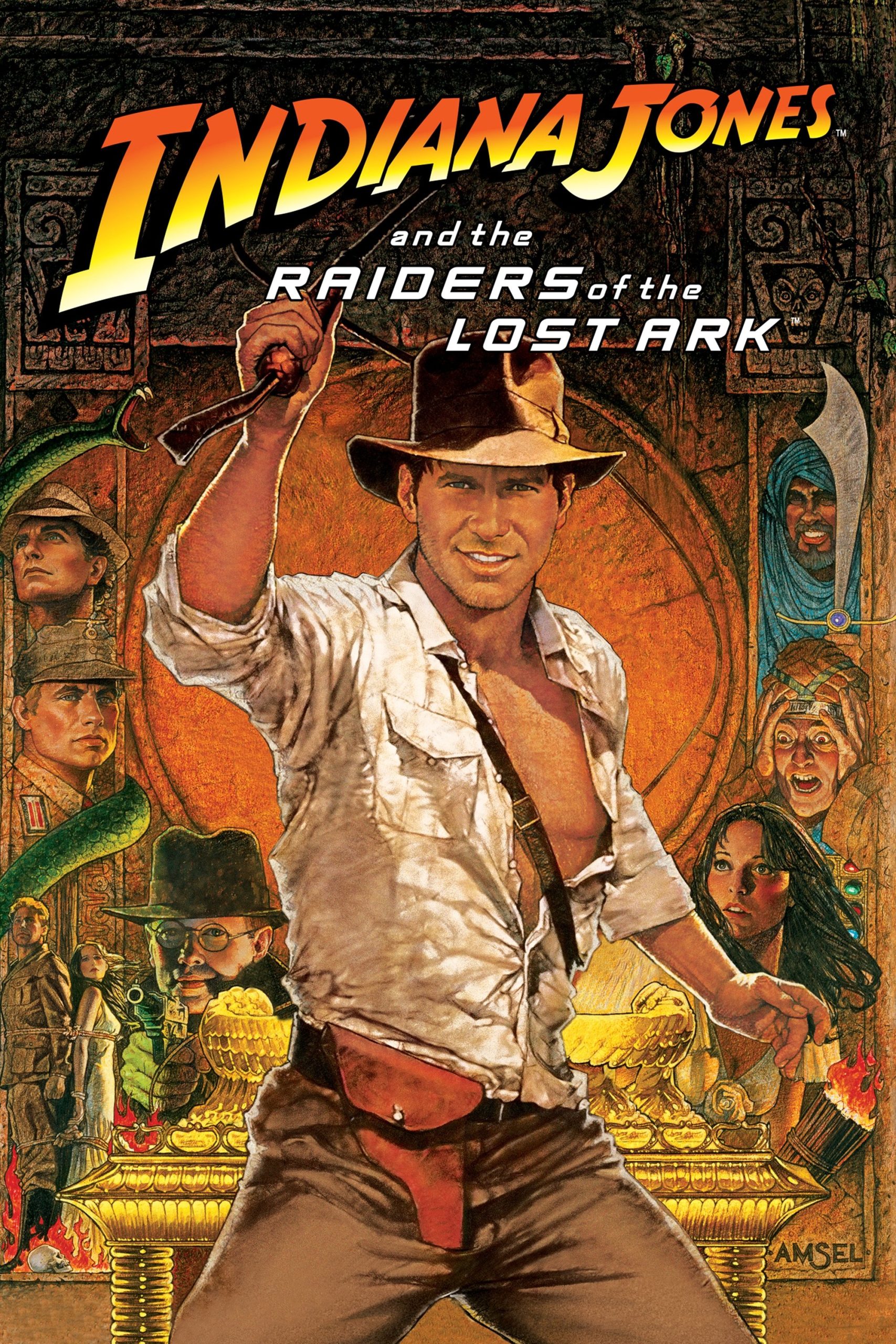
The first time I watched “Raiders of the Lost Ark,” I was barely old enough to grasp the full historical setting, but I vividly remember the sensation—a tight churn of excitement, fear, and joy as Harrison Ford’s Indiana Jones whipped across the screen. This film didn’t simply present an adventure; it seemed to invite me into a mythology that straddled both the real and the impossible, the ancient and the modern. Over the years, I’ve found myself returning not just for the chase scenes or the triumph of good over cartoonish evil, but for something subtler—how “Raiders” reanimates the past, and with it, challenges our ideas of heroism, colonial longing, and the magic of cinema itself.
Unearthing More Than Treasure: The Emotional Expedition
At its core, “Raiders of the Lost Ark” is propelled by a relentless longing—for discovery, for power, for understanding what is meant to remain unknowable. Indiana Jones may present himself as a detached academic, but I’ve always felt that beneath his wry surface, he is rarely immune to awe or dread. The film’s emotional journey is founded on a conflict between rationality and faith, between the security of maps and the chaos that comes when you trespass on sacred ground.
Despite its reputation as a thrill ride, I experience “Raiders” as a sort of meditation on obsession. Indy isn’t just after the Ark because it’s priceless—he’s also chasing personal validation, professional rivalry, and a deeper sense of belonging to something ancient. The characters around him—the tenacious Marion, enigmatic Belloq, menacing Toht—are driven by similarly tangled motives, blurring the boundary between villain and hero. Each step into the darkness of a temple or bar reveals new layers of fear and yearning, making this more than a simple quest story, but a journey into the unknown regions of the soul.
Faith, Power, and the Allure of the Unattainable: Themes That Endure
Whenever I reflect on the enduring popularity of “Raiders,” I see it anchored in its themes—the tension between faith and skepticism, the seductive danger of absolute power, and the consequences of cultural hubris. In 1981, these concepts resonated as cautionary tales for an America grappling with its identity after the restless changes of the 1970s. Today, they feel even sharper.
Of all the film’s themes, the most potent for me is the dance between knowledge and reverence. The Ark, representing both historical artifact and divine mystery, exposes the limits of human understanding. Indy’s intellect is formidable, yet he learns humility when grasping for forces he can’t control. “Raiders” seems to say that no matter how advanced we become—no matter our technology or ambition—there’s an inherent peril in trying to possess power that is, by definition, beyond the realm of human stewardship. This stands as a meditation on the cost of arrogance, particularly the Western impulse to claim ownership over the cultures and relics of others.
The film’s playful nostalgia for pulp serials is matched by a pointed unease: the line between hero and looter is razor thin. In 1981, this tension was novel, but watching as a modern viewer, I’m mindful of how “Raiders” remains a parable for our uneasy relationship with the past—how fascination can easily tip into exploitation.
Serpents, Shadows, and Lost Things: The Visual Lexicon
What makes “Raiders” so utterly compelling, for me, is its rich tapestry of visual motifs and symbols that run through every scene. Spielberg and cinematographer Douglas Slocombe engineered powerful leitmotifs that both thrill and unsettle.
Snakes take on an outsized symbolic role—not only as Indy’s single, humbling fear, but also as representatives of primordial danger lurking beneath ordered civilization. The Well of Souls is not simply a tomb; it is a place where the rational academic is forced to confront his primal self. Snakes sliding through arcane ruins offer a representation of ancient chaos—furtive, predatory, indestructible.
The use of light and shadow, too, is more than mere atmosphere. I see every silhouette—Indy backlit in a doorway, the Ark glowing through its crate—as a visual cue that points to dualities: knowledge and ignorance, reverence and transgression. Characters are constantly seen half-in, half-out of the light, reflecting their own divided motivations.
The Ark itself is the film’s chief symbol, and its eventual biblical wrath is a reminder that not all secrets should be revealed. The gleaming golden box is both an object of desire and a Pandora’s box—once opened, it can’t simply be possessed, but exacts a devastating cost.
Unforgettable Tableaux: Scenes That Define the Journey
The Jungle’s Embrace: Opening Sequence
The film’s prologue is now almost mythical—a microcosm of the entire adventure. As Indy navigates a series of archaic traps to reach an idol, we’re thrown into a ballet of ingenuity, physicality, and terror. What strikes me is not just the genius of Spielberg’s blocking or the tactile horror of darts and spikes, but the vulnerability of the so-called hero. This meticulously crafted set piece establishes the motif that knowledge alone is insufficient in a world shaped by ancient safeguards and unpredictable betrayals.
“Snakes…Why Did It Have to Be Snakes?”: Descent into the Well of Souls
Here, spectacle yields to interior struggle. Faced with a writhing floor, Indy’s legendary cool cracks, grounding the film’s larger-than-life exploits in human frailty. As Indy and Sallah lower themselves into the darkness, I’m always moved by how the soundtrack of hissing, the wriggle of scales, and the flicker of light create a sense of overwhelming claustrophobia. It’s a confrontation with the very heart of fear, underlining how true adventure is inseparable from deep discomfort.
Divine Fire: Opening of the Ark
If the film’s first half rushes with physical peril, its climax is almost operatic. The Nazis, convinced of scientific dominion, unleash supernatural fury by opening the Ark. This sequence—clouds swirling above, spirits emerging from within, faces melted in a literal depiction of hubris punished—always leaves me breathless. I see this as a spellbinding marriage of practical effects, sound design, and mythic resonance, dramatizing the futility of attempting to own the sacred. Spielberg transforms spectacle into a cautionary vision, one where awe and horror are intertwined and the ultimate authority remains wholly untamed.
Debates in the Shadows: Classic Readings and My Own Take
Critics have long parsed “Raiders” through the lens of its serial inspirations, lauding it as a high-water mark of genre filmmaking as well as a postmodern reinvention of the pulp tradition. It’s common to read that Spielberg and Lucas constructed Indiana Jones as a tribute to the do-gooding explorer, another American mythos projected across the 20th-century screen. Some interpretations focus on the film’s energetic escapism, seeing the Ark as a McGuffin—important only in motivating the chase, not in thematic substance.
I’ve always found this too reductive. For me, “Raiders” laces its surface-level thrills with unmistakable anxiety about the very nature of adventure and exploration itself. I’m deeply aware, each time I watch, of the discomfort in glorifying the Western archaeologist as a hero—for every daring leap or riddle solved, there’s a shadow of cultural appropriation and violence just off-screen. While some read Marion as an archetypal damsel-turned-partner, I see in her a complex portrait of resourcefulness, regret, and resilience, even if the film sometimes constrains her agency.
Where others focus on the lightness, I cannot ignore the heaviness—the knowledge that all adventures, no matter how virtuous in intent, exist in the ambiguous space between stewardship and theft. This, I believe, is the fissure at the center of “Raiders”: it is both an exhilarating affirmation of mythic heroism and a subtle critique of it.
Cinematic Kin: Journeys in the Shadow of the Ark
- The Mummy (1999): A similarly raucous mix of archaeology, adventure, and supernatural peril, where possession of the past begets disaster.
- Romancing the Stone (1984): A wink-filled twist on the adventure genre that explores both treasure-hunting and the human heart.
- The Treasure of the Sierra Madre (1948): A darker meditation on obsession, greed, and the moral cost of seeking fortune among ruins.
- National Treasure (2004): An explicit descendant of the Indiana Jones legacy, offering a lighter, more puzzle-driven hunt for hidden histories.
The Ark’s Luster in a Modern Light
Revisiting “Raiders of the Lost Ark” now, I’m continually struck by its dynamism—how its artistry, humor, and audacity survive every technological and cultural shift. The film’s DNA is embedded in almost every subsequent cinematic adventure, but it also asks us to interrogate the very narratives we cherish. Its magic lies in its ability to both dazzle and disturb, to ignite dreams while refusing easy answers. For anyone willing to peer beyond the rolling boulders, “Raiders” remains a rare treasure—one that refuses to relinquish its mysteries, and, in so doing, ensures our enduring fascination.
If This Essay Resonated…
If you found value in my perspective on “Raiders of the Lost Ark,” you may also enjoy my analyses of “The Treasure of the Sierra Madre” and “The Mummy (1999).”
To broaden this interpretation, you may also explore how critics and audiences responded over time.
🎬 Check out today's best-selling movies on Amazon!
View Deals on Amazon