
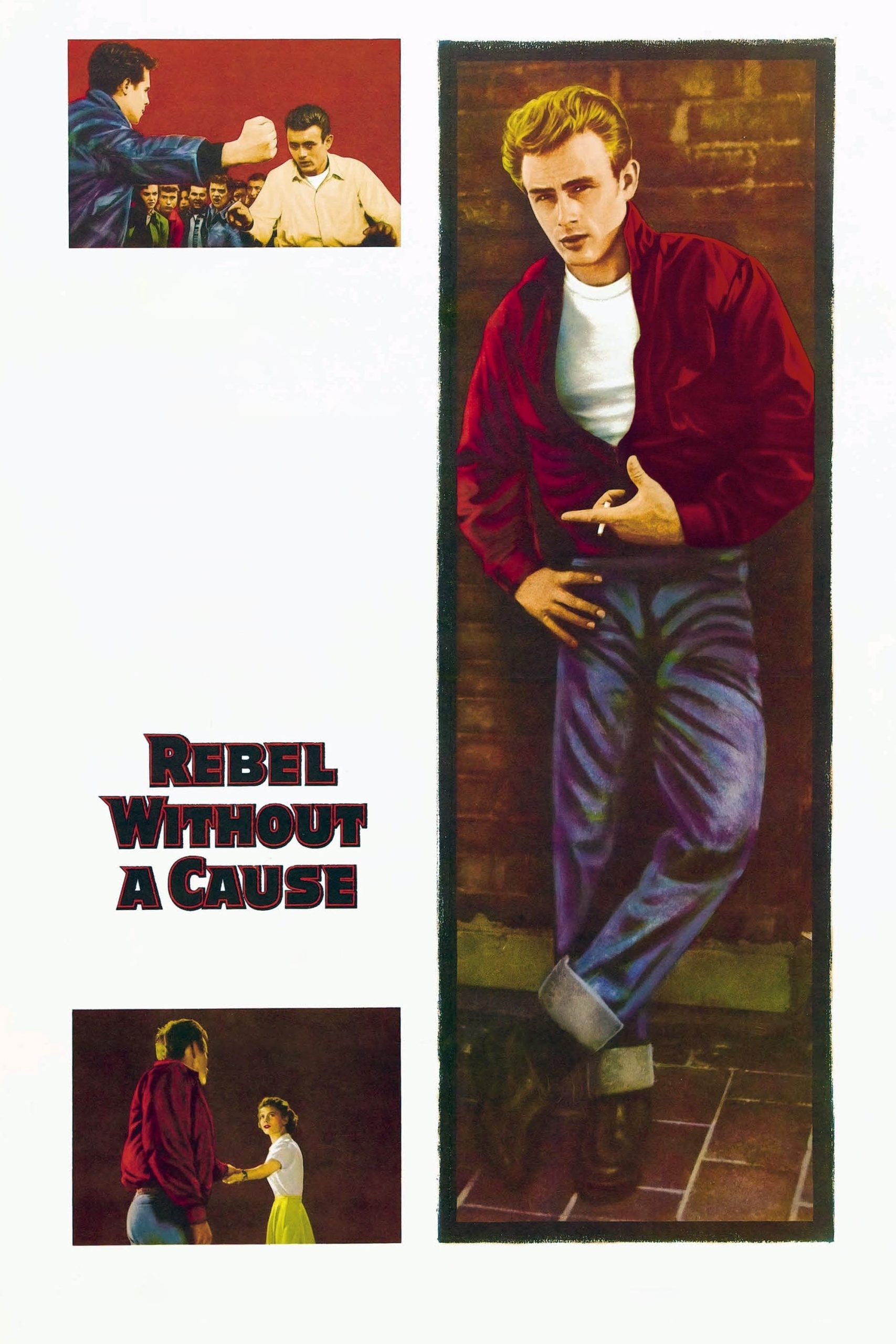
Watching “Rebel Without a Cause,” I always feel a sensation unlike that left by any other classic of its era. The first viewings of this film didn’t seem to give me the warm nostalgia that I expected from a 1950s Hollywood drama. Instead, it left me with a distinct kind of ache—a sharp yearning for understanding, for connection, and for a place in the world amidst impossible contradictions. No matter how many times I revisit Nicholas Ray’s landmark, I’m captivated not by the posturing of its adolescent heroes or even the tragic arc of James Dean but by its rare ability to bottle the volatility of youth, the agony of misunderstood longing, and the gray tremors of uncertainty that define the transition from childhood to adulthood. I return to it seeking not answers, but the reminder that confusion and chaos within are sometimes the most honest truths cinema can reveal.
Beneath the Surface: Emotional Earthquakes and Family Faultlines
I’ve never seen “Rebel Without a Cause” merely as a chronicle of teenage delinquency or youthful stubbornness. On each viewing, what strikes me is the film’s refusal to reduce its central characters to easy stereotypes. For me, Jim Stark isn’t the quintessential rebel—he’s not posturing for the camera, not aiming for notoriety. Instead, he is a young man so desperate to find his place that each impulsive action feels both random and inevitable. I’m drawn to the way the film positions emotional rupture not as spectacle but as a kind of quiet earthquake, reverberating beneath every scene.
From the film’s opening frames, there is a sense of alienation I recognize in Jim’s every gesture—his awkward interactions, frustrated attempts at connection, his utter inability to interpret the confounding rules of the adult world. What surprises me is how much grief pulses silently through the narrative. The core conflict isn’t rebellion for rebellion’s sake, but a desperate search for authenticity and family in the face of absent or broken parental models. Judy is wounded by her father’s coldness, Plato drifts in terror of loneliness, and Jim’s parents flounder in an endless cycle of misunderstanding. Their collision is inevitable—these are souls flayed open, forced to improvise intimacy and trust when none have been properly modeled for them. When I watch this film, I rarely see youthful arrogance; instead, I see the cost of emotional neglect and the precarious improvisations of fragile hearts longing for recognition.
Outsiders Among Outsiders: Themes That Refuse to Age
Though it’s apparent that “Rebel Without a Cause” is a capsule of 1950s America—buoyant with chrome cars and suburban aspiration—its urgent themes remain explosively relevant. The most striking theme is alienation, not simply from family but from the rigid systems of authority, both societal and domestic, that refuse to understand or nurture. Even now, after nearly seven decades, I find that the film’s critique of generational communication breakdown is painfully contemporary. The inability of Jim’s parents to articulate or even perceive his pain feels like a chilling prophecy for so many modern familial dynamics, in which connection is forever lost in translation.
The struggle to construct identity emerges powerfully through every character’s arc. Jim, Judy, and Plato are all cast as outsiders, forced by their environment and by their own uncertainties to forge roles that are alternately authentic and performative. How much of Jim’s rebellion is chosen, how much is imposed by expectation or misunderstood need? I frequently wonder whether “rebel” is a label society creates when it fails to confront pain. Moreover, the film’s handling of masculinity and gender roles struck me as not only radical for its time but also unsettlingly fresh: Jim’s father, apron-bound and emotionally neutered, and Jim’s desperate pleas for paternal strength, are indictments of a postwar ideal that leaves no room for vulnerability. The domestic sphere, meant to be a sanctuary, is instead a site of fracture.
When comparing the 1955 context with today, what jars me most is that the existential unease at the film’s core—a longing for connection and meaningful identity amidst social and parental confusion—has arguably only deepened over time. Today’s youth face different external markers, but the rift between generations and the difficulty of building a coherent self under pressure from all sides feel as acute as ever. What “Rebel Without a Cause” exposes is the danger of institutions that reflexively protect tradition rather than engage with vulnerability and interiority.
Crimson Jackets and Planetariums: The Language of Symbols
Symbolism in this film does not operate as mere visual garnish but as emotional shorthand. Jim’s cherry-red jacket is perhaps the most famously loaded costume in all of 1950s cinema, and each time I see it, I am struck anew by its duality: at once a badge of daring individualism and a camouflage for deep insecurity. When Jim dons it, he is at his most performative, but also his most exposed—he is visible, yes, but visible as a target. The jacket becomes a membrane between a boy’s desire for recognition and the world’s hostile gaze.
The deserted mansion, with its peeling grandeur and shadowed halls, is for me not just a backdrop but a haunted metaphor for the inner lives of these young misfits. The home is broken, desperate for repair—a physical echo of the longing for shelter and trust that animates every one of these characters. Plato’s constant search for belonging leads him literally and figuratively into empty, echoing spaces, embodying the film’s meditation on the costs of emotional homelessness.
Most potent of all, however, is the planetarium—a recurring site that bookends the drama. The impersonal sweep of the cosmos stands in marked contrast to the personal confusion of the young. The universe, vast and indifferent, is a chilling backdrop for the pettiness and profundity of human pain. The ultimate indifference of the stars holds up a cruel mirror: our crises, our rebellions, are both momentous and, in the grand scale, fleeting. Yet, as I watch Jim and his friends trapped in the literal and symbolic night, I feel the sincerity of their yearning for meaning—an astronaut’s loneliness cast back at the void.
Beneath the Neon: Pivotal Scenes That Haunt Me
The Knife Fight: The Ritual of Proving Oneself
When Buzz and Jim square off in the desolate school courtyard, knives glinting in the deepening dusk, I feel the weight of more than adolescent bravado. This isn’t a choreography of violence so much as a desperate attempt for acknowledgment, a mutual recognition of gravitas between two boys alienated by the facades they are forced to wear. The choreography is both awkward and intensely choreographed, capturing the pomp of a tribal ritual. It is in this moment that I am reminded that danger becomes a language when no other words are possible—every feint and parry sings with a longing to be seen, taken seriously. Here, the knife is not just a threat, but an invitation to connection—connection, heartbreakingly, through the possibility of pain.
At the Edge of Forever: The “Chickie Run” and the Limits of Defiance
If any sequence defines the mythic status of American youth, it is the “chickie run.” The roar of the engines, the headlights slicing through night, the roaring ocean below—all of it feels at once exhilarating and funereal. This is ritualized destruction masquerading as bravado: a race toward nowhere, orchestrated because these children, denied genuine rites of passage, invent their own. Sitting on the edge of my seat, I always marvel at the paradox—Jim wants so badly to belong, yet belonging here means risking annihilation. The tragedy is not the car in the chasm, but the knowledge that such risks are the only methods these young people have to test their value to each other and themselves. The echo of crashing metal is an elegy for the possibility of innocence.
The Planetarium Confrontation: Lost Among the Stars
The climactic standoff inside the Griffith Observatory remains, for me, one of the most emotionally charged sequences in film history. All roads converge here—the heartbreak of parental neglect, the hysteria of peer pressure, the futility of misunderstood gestures. Plato’s literal and psychic breakdown is filmed with an almost expressionist glow, light peering through the domed ceiling as the universe rotates above. Jim’s desperate attempts to comfort Plato, to be the friend and family he lacks, are laced with dread, love, and impotence. Inside this symbol of cosmic eternity, three young people huddle together against the void—one slips beyond reach, but the others, for a brief moment, grasp solace. Every time I watch, I am devastated by how insistently the scene argues that empathy, though too late for Plato, can pierce even the thickest celestial silence.
Theories and Misreadings: Untangling Common Views
I’ve encountered countless interpretations of “Rebel Without a Cause,” and while many are insightful, some oversimplify the work’s radical ambivalence. The most popular reading posits Jim Stark as the emblem of pure teenage rebellion, a one-dimensional symbol for the “disaffected postwar generation.” Yet, for me, this reading misses the nervous lyricism that courses through the performance. Dean’s Jim doesn’t rebel simply for the thrill or to spurn authority; his gestures are more frightened than empowered. To dub him a mere rebel is to smooth over the cracks of vulnerability and confusion that Nicholas Ray so artfully exposes.
Another common reading focuses on the film as a case study in familial breakdown—arguing that its critique is specific to 1950s America and the anxieties of the nuclear family. I find that this is both true and not enough. The trauma depicted reaches deeper than period specificity. When I watch Jim’s parents squabble, I see not a “1950s problem” but the eternal dilemmas of communication, power, and the responsibilities of love. My own interpretation sees the film as a meditation on the impossibility of neat resolution. There is no true catharsis, only the perennial return to misunderstanding and the stubborn hope for connection.
Additionally, critics have long pointed to Plato as a coded queer figure, interpreting his outsiderness and particular attachment to Jim as a product of 1950s sexual repression. While undeniable in the text’s subtext, I am always wary of flattening Plato into a single symbolic role. That he resonates as an orphan, a solitary soul yearning for family, is what makes his tragedy so searing. This is a film about all who find themselves on the margins—because of sexuality, family, economics, or mere mischance—and it gives voice to that silent ache.
Echoes Through Celluloid: Sibling Films of Misfit Anguish
- The 400 Blows (1959) – François Truffaut’s landmark offers a French lens on youthful disaffection and misunderstanding, echoing Ray’s tender heartbreak.
- East of Eden (1955) – Another James Dean opus, this film explores family wounds and fraternal rivalry with equal ferocity and sensitivity.
- Over the Edge (1979) – The adolescent revolt of suburban teens in late-1970s America, rendered with a similar sense of empathy for outsiders.
- Christine (1983) – A horror twist on misfit longing and loyalty, blending car culture, adolescent volatility, and the shadowy spaces where yearning curdles into obsession.
Why This Film Still Cuts Deep
For all its mythic status, “Rebel Without a Cause” remains startlingly direct in its depiction of pain, want, and hope. I recommend it not because it depicts rebellion, but because it captures the bewilderment and beauty of yearning for a place in the world. Modern audiences, despite differences in style and speech, will recognize themselves in these lost, searching faces. The honesty of Nicholas Ray’s vision and the rawness of James Dean’s performance remain electrifying. Watching it today is to be reminded not of a vanished era but of the persistence of human vulnerability—and of cinema’s enduring power to illuminate it.
If you found value in my perspective, you may also want to read my thoughts on “East of Eden” and “The 400 Blows.”
To broaden this interpretation, you may also explore how critics and audiences responded over time.
🎬 Check out today's best-selling movies on Amazon!
View Deals on Amazon