
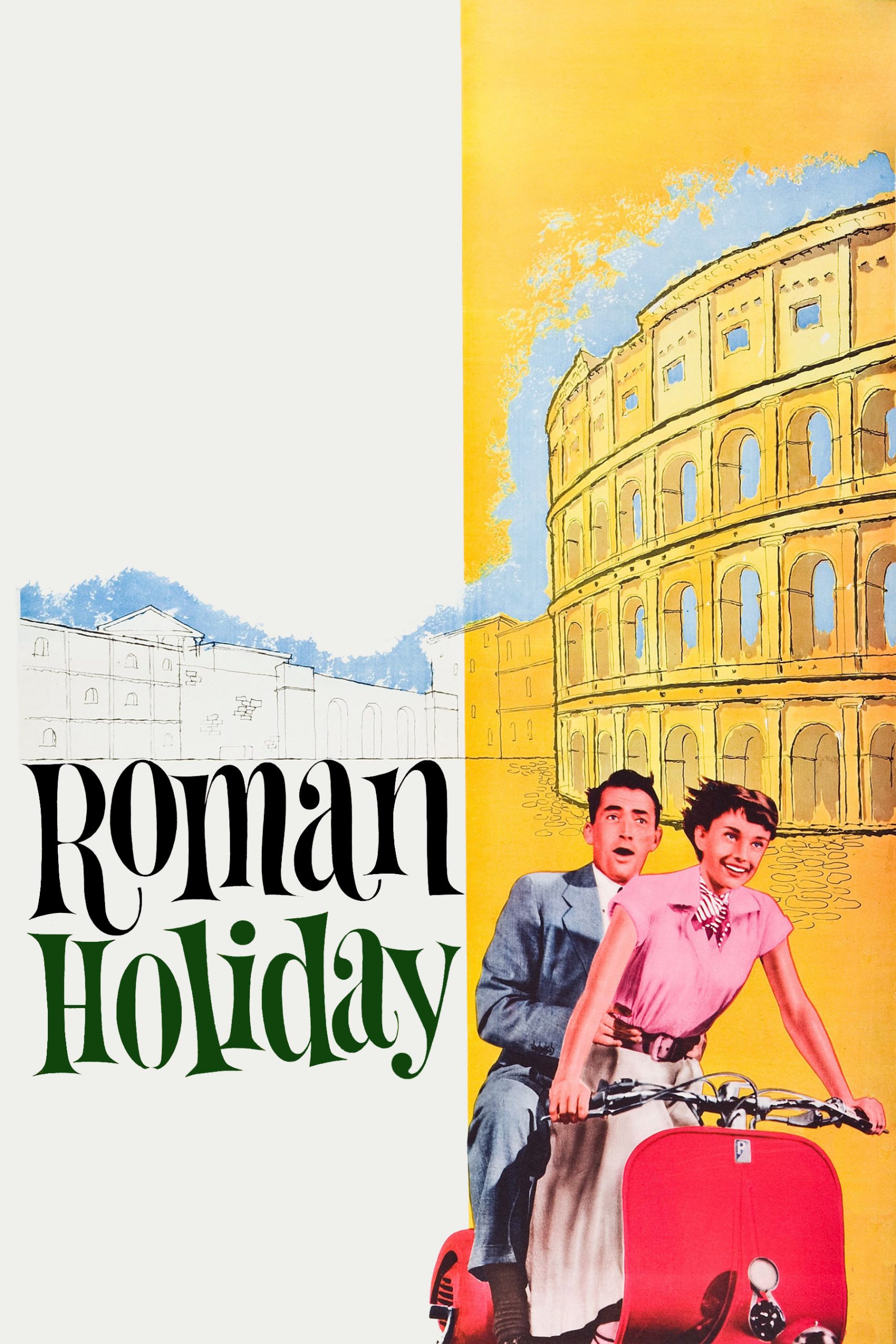
There are few classic films I revisit as frequently—both in spirit and on my screen—as “Roman Holiday”. It is a film that I find myself craving not only for its story or setting, but for the ineffable sense of possibility it evokes. There is a soft ache in watching Audrey Hepburn’s Princess Ann, luminous and vulnerable, asserting her right to transient freedom. The ache is not just hers; it becomes mine, and, I suspect, that of anyone who still believes in the magic of secret adventures and the human need for a day off from life’s dictated responsibilities. Each revisit, I am struck anew by how deeply this neatly packaged romantic comedy manages to stir feelings of wistfulness, rebellion, and resignation, making it one of my most personal cinematic touchstones.
Fairy Tales in Sunlight: A Day Outside the Palace Gates
When I reflect on the emotional spine of “Roman Holiday”, I am most swept away by its central paradox: the fairy tale is not about dreams coming true in perpetual motion, but about their temporary, tantalizing visitation. Princess Ann’s escape is less an act of rebellion than a plea for simple humanity. She is suffocating under the regimen of royal life, her every gesture scripted, her every word rehearsed. We meet her not as an enigmatic figurehead but as a young woman caving beneath the pressure, desperate for a breath of uncurated air. For me, this resonates far beyond the pale confines of monarchy; it taps into the universal longing to be free of expectation, to be anonymously ordinary and spontaneously alive.
The emotional journey of “Roman Holiday” is propelled by this conflict between bound duty and personal yearning—a journey I find mirrors so many of our own, regardless of social station. Watching Ann’s day in Rome unfurl—the wild impulsivity of cutting her hair, the childlike glee of riding a Vespa, the timid discovery of love’s thrill—reminds me of every daydream I’ve had about upending my own routines for something unforeseen. The conflict, then, is not with an antagonist or romantic rival, but within Ann herself, and in the end, within all of us who must reconcile ideal and obligation. The emotional journey is as much about accepting the day’s brevity as it is about savoring its freedom.
Freedom’s Fleeting Hourglass: Core Themes Then and Now
I find myself perpetually drawn back to the way “Roman Holiday” interrogates the dual pulls of individual desire and public identity. In 1953, this theme was undeniably daring: society’s power structures, both patriarchal and geopolitical, dominated public and private discourse. Ann’s story—her craving to be lost and unknown—is poignant precisely because it was so rare for a woman, especially a princess, to admit (let alone act on) such desires. Her escape becomes an allegory for any suppressed soul seeking a few stolen hours outside their prescribed role.
What is remarkable to me is how this tension retains its sharpness today. Modernity may promise us more agency, but the pressure to perform—to live by others’ rhythms, to post the right pictures, say the right lines—can feel no less suffocating. Watching Ann walk through Rome anonymously is like revisiting my own desires to escape the world’s gaze. Joe Bradley (Gregory Peck), supposedly her guide and reporter, is himself living a reduced version of freedom, defined less by the pursuit of truth and more by professional self-preservation. Liberty, choice, escape—these remain urgent, contemporary themes.
But what truly lends “Roman Holiday” its thematic richness is not its indictment of duty, but its acceptance of reality’s limits. The film, instead of engineering a fantasy ending, affirms that such perfect days are fleeting and, in fact, precious because of their impermanence. I admire this bittersweet honesty. To me, it is a reminder that romance and rebellion can exist exquisitely within boundaries, even if those boundaries cannot be dissolved.
Not Just Postcards: Roman Symbols and Quiet Echoes
Every time I watch “Roman Holiday”, I am reminded not only of the film’s narrative, but of its visual dialogue with its setting and characters. Rome is no mere background, nor is it presented as a tourist’s caricature. It becomes an active symbol—a city of ancient power and modern possibility, where secrets can be kept and identities rediscovered. The movie bathes in natural light, utilizing on-location shooting brilliantly (a rarity in the early 1950s). This grants authenticity to Ann’s escape: the city, bustling and vibrant, is an invitation for her rebirth, a literal playground for transformation.
Several motifs reinforce the central tensions. The motif of the clock or timepiece—from Ann’s tightly regulated schedule to the critical passing hours—cements the idea that freedom is always on a borrowed timeline. Scissors, in the pivotal haircutting scene, become a symbol of both autonomy and the irreversible nature of certain choices. The Vespa, whizzing somewhat uncontrollably through Roman streets, is a playful emblem of reckless joy, pushing Ann outside her comfort zone in both thrill and imminent chaos.
I’m especially taken with the motif of barriers—gates, guards, curtains—which signal Ann’s movement from sequestration to openness. They frame her journey, but never quite entirely disappear. Perhaps the most resonant for me is the camera—not just Joe’s literal press camera, but the film’s own gaze, which alternates between observation and intrusion, reminding us how hard true anonymity is to find. “Roman Holiday” is acutely aware of how romance, identity, and liberty are always shadowed by those who watch and record.
Roman Adventures: Three Crucial Cinematic Moments
The Liberation Haircut: Ann’s First Step Into the World
The moment Ann, played with tremulous hope by Hepburn, sits in that Roman salon and insists on a new hairstyle always strikes me as one of the most quietly radical acts committed on celluloid. It is cinematic proof that emancipation need not be loud or grand. With every lock that falls, Ann carves out space between herself and her former self. Even the reactions of the stylist and the watching patrons reinforce how transgressive this is—here is a princess, discarding her own image. It is the film’s visual cue for transformation, and, to me, one of the greatest depictions of agency in classic cinema.
The Mouth of Truth: Playful Intimacy and the Risk of Discovery
If “Roman Holiday” can be said to have a heartbeat, it might well pulse fastest in the memorable “Mouth of Truth” scene. As a child, I laughed at Joe’s faux agony; as an adult, I see the complex choreography between honesty and self-protection. This ancient Roman artifact, said to bite the hand of liars, becomes a clever canvas for Joe and Ann’s evolving relationship. Their flirtation is layered with subtext—Joe lies (about not recognizing her), Ann pretends not to be who she is—and here, with hands hidden in the mouth, both test the boundaries of truth and illusion. The scene’s blend of danger, vulnerability, and humor crystallizes the precariousness of their whole adventure.
Departure and Renunciation: The Silent Farewell
No critique of this film is complete without mention of its closing sequence. The narrow press conference, the agonized glances, Ann’s final turn as she exits—these images live in my memory more vividly than any kiss or declaration. There is no grand climax, no racing to the airport; instead, the moment is defined by what is unsaid, by stances and silence. I have seldom seen another film so expertly navigate the agony of returning to one’s old world after glimpsing another. This is the apex of bittersweet cinema, a scene where both characters, and myself as a viewer, mourn what cannot continue—all while cherishing what briefly, gloriously was.
Mirror and Myth: Tangled Interpretations
Over the years, I’ve engaged with countless readings of “Roman Holiday”: a feminist rescue of female autonomy, an early subversion of romantic expectations, even a veiled critique of contemporary politics. Most critics highlight the progressive aspects of Ann’s agency, or they praise the refusal of a traditional “happily ever after.” While I agree with these views to a degree—indeed, I admire the film’s choices—I find they sometimes risk flattening the film’s emotional complexity.
To me, the true power of “Roman Holiday” lies not solely in its subversiveness, but in its refusal to let either love or liberation triumph entirely. I see in Ann’s journey an honoring of limits: she gets one day, not a new life, and that acknowledgment makes the film sting and soar in equal measure. The modern viewer might wish for Ann to cast away her crown entirely; I come away grateful that she (and the film) recognize that freedom sometimes must live in memory, rather than reality. Rather than choosing rebellion or submission, “Roman Holiday” immortalizes the poignant middle—brief escape, then dignified return.
Other Tales of Runaway Hearts
- “Breakfast at Tiffany’s” (1961) – Also starring Hepburn, this film poetically examines urban escape and the conflict between public persona and private longing.
- “Lost in Translation” (2003) – Two strangers find connection and self-discovery against the backdrop of a foreign city, balancing fleeting intimacy with inevitable separation.
- “Before Sunrise” (1995) – A young couple’s magical, temporary day together echoes the bittersweet brevity and emotional risks of Ann and Joe’s Roman adventure.
- “Anastasia” (1956) – The search for identity and the question of true belonging run parallel to Ann’s struggle between royal obligation and personal desire.
Arrivederci, But Never Goodbye: The Film’s Enduring Allure
Even after so many viewings, “Roman Holiday” retains for me the feeling of an undiscovered street corner: familiar, but always inviting pause and wonder. It is an essential lesson on the ache and beauty of impermanence. Today, with our own palettes of expectations and responsibilities, Ann’s Roman adventure remains as moving as ever. It reminds me, and, I suspect, countless others, that sometimes a single, honest day can mean more than a lifetime lived by rote.
If you found value in my perspective, you might enjoy my reflections on “Brief Encounter” and “The Umbrellas of Cherbourg”.
To broaden this interpretation, you may also explore how critics and audiences responded over time.
🎬 Check out today's best-selling movies on Amazon!
View Deals on Amazon