
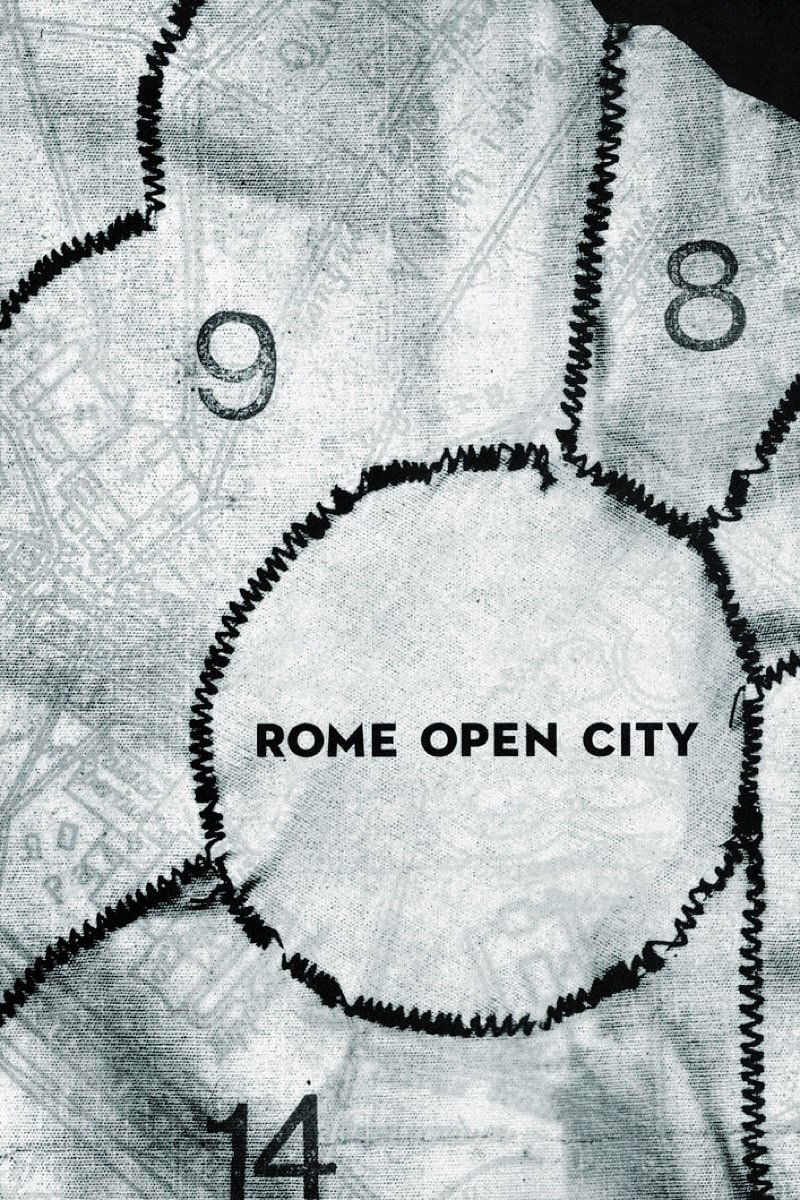
After my first encounter with Roberto Rossellini’s “Rome, Open City,” I found myself staring at blank pages, grasping for language that could possibly do the film justice. For years, I’d thought of Italian neorealism as important but distant—an era locked behind glass. But this film broke the glass for me, not with spectacle or grandeur, but with its brutal intimacy, quiet fury, and aching humanity. My reaction was not theoretical: it was visceral. The final moments left a kind of ache I associated less with cinema and more with real, lived tragedy. If I came to the film expecting to admire its innovation, I left wrung out by its urgent pleadings, convinced that truth in art stings hardest when it cuts close to the bone.
Siege and Survival: Testing the Spirit of a City
“Rome, Open City” drops us into an urban landscape at once familiar and alien—the battered quarters of Nazi-occupied Rome during the winter of 1943-44. From the first scenes, I felt the encroaching pressure, as if the walls of the city themselves recoiled from each gunshot and each midnight knock at the door. The film’s emotional journey is, for me, less a tidy narrative arc and more a raw mosaic of survival, resistance, and profound spiritual trial.
I was struck by how Rossellini renders the daily lives of ordinary Romans as sites of heroism. The streetwise children, the widows, the priest—their world is not an abstract one of ideology but of moral choices, pressed upon them by the constant threat of violence, privation, and betrayal. The story weaves together multiple fates—Pina, the pregnant widow-to-be, her fiancé Francesco, the communist engineer; Don Pietro, whose simple faith becomes radical in the face of evil; and Manfredi, the hunted resistance leader. In each, I saw the complex interplay of resignation and hope, endurance and defiance. The conflict is not just a matter of Allies and Axis, but of the soul’s struggle to remain free under occupation.
Emotionally, the film operates in the gut. The narrative moves with a sense of inevitable calamity, but the details crackle with agency and specificity. Even as I watched characters succumb or survive by inches, I sensed the fluid boundaries between victim and resister, cowardice and heroism. Rossellini never grants the comfort of distance; he binds us to his city and its torments, inviting not pity but solidarity with its battered—yet unbroken—people.
Wounds of Occupation: Grappling with Morality in a Shattered World
Central to my experience with “Rome, Open City” is its grappling with the enduring questions of complicity, courage, and spiritual resilience. In 1945, when the film first appeared in devastated postwar Italy, its refusal to romanticize either suffering or resistance was seismic. The wounds of fascism were still raw, and Rossellini’s decision to anchor his story in citizenry rather than leaders was, itself, an act of moral restitution.
At its core, the film interrogates the possible forms of resistance under tyranny. Rossellini presents a spectrum—from active partisans to those who help, hide, or falter. The regime’s violence is not only physical but psychological, infecting families and churches alike. In Don Pietro, I saw the emblem of faith weaponized for decency, a priest who risks everything not for glory, but for simple human solidarity. The theme echoes broader questions from the war—how far can ordinary people go to remain human in inhuman times?
What I find more enduring, though, is the film’s refusal of easy catharsis. There is no pristine hero, no victory parade. Instead, “Rome, Open City” honors those who fail and fall, and gives equal weight to failure, ambiguity, and survival. It resonates differently today, especially in a world where lines between villain and victim, resistance and compromise, are blurred by geopolitics and spectacle. Watching now, I’m reminded how moral choices remain complex under occupation—a message that echoes through modern conflicts and authoritarian regimes. The film’s invocation of communal mourning, and its insistence that no one is immune to despair or temptation, feels as urgent now as ever.
Shadows and Statues: Visual Echoes of a City Besieged
Rossellini’s language is that of the street: crumbling walls, vacant lots, dark corridors, and the restless energy of children scrambling over ruins. The visual motifs throughout “Rome, Open City” are not mere decoration, but markers of psychological and social reality. The city itself becomes a primary symbol, absorbing trauma even as it shelters those in flight.
One image that lingers with me is the repetitive framing of doorways and windows—transitional spaces where secrets are whispered, plans are made, or catastrophe erupts. These are thresholds between safety and exposure. The motif recurs with tragic irony: the door that separates Pina from Francesco, the confessional that protects and betrays Manfredi, the entryways where the SS might burst in at any hour. I feel a mounting anxiety each time the camera hesitates in these spaces, suggesting that in war, even threshold moments are fraught with peril.
Religious symbolism threads through the film but never overwhelms it. Don Pietro’s cross, the repeated shots of churches, the children’s funeral procession—these serve both as reminders of tradition and as critiques of institutional failures. For me, the most powerful motif is that of wounded innocence: children mimicking adults, half-understanding the world’s cruelty, yet showing a resilience that outstrips their age. The city’s statues and battered stones echo their endurance, suggesting a civilization blasted but unyielding.
Three Crucibles: Defining Moments in an Occupied Rome
Pina’s Street: The Collapse of Ordinary Hope
I struggle to discuss the scene of Pina’s death without revisiting the physical jolt I felt upon first seeing it. As the trucks pull away with Francesco among the rounded-up prisoners, Anna Magnani’s Pina surges forward, driven by sheer instinct, only to be gunned down on the street. The randomness and public nature of her killing—the child flinching beside her, the neighbors’ stunned silence—strips away cinematic convention. Here, every façade of normalcy is shattered. As a viewer, I felt implicated, unable to retreat into safety. Rossellini stages the collapse of hope as a communal, not just personal, devastation.
Don Pietro’s Ordeal: Faith Burned and Proven
In Don Pietro’s final confrontation with the Nazi commandant, the film distills its most agonizing themes. The priest’s refusal to break under torture, his trembling compassion for Manfredi, and his final, unceremonious execution outside the city—these scenes frame faith as an act not of dogma, but of radical solidarity with the persecuted. I find this sequence almost unbearable in its restraint: the horror is understated, yet the moral stakes are immense. For me, Don Pietro’s martyrdom cements the film’s belief in quiet, unsanctimonious heroism. His last look at the children watching from afar is a benediction and a plea for the future.
Children in the Rubble: The Endurance of Innocence
The closing moments, when the children wander away from Don Pietro’s corpse towards the city skyline, haunt me still. After so much pain and loss, Rossellini refuses to end with closure. Instead, he centers the children—the next generation—as uncertain inheritors of sacrifice. Their silence speaks volumes: they are both traumatized and capable, survivors forced into adulthood by history’s cruelties. This scene embodies the film’s mixture of grief and hope, and for me, offers a muted, ambiguous faith in the future.
Rewriting History: How We See, and See Differently
Critical consensus on “Rome, Open City” often lauds its status as the foundational text of Italian neorealism, its raw documentary immediacy, and its elevation of the ordinary to the level of myth. Many esteemed critics, including André Bazin, have emphasized its fusion of realism and melodrama, its use of non-professional actors, its location shooting amongst the actual ruins of Rome. The common interpretation sees it as a collective elegy and rallying cry for postwar Europe.
Yet, when I revisit these arguments, I feel they sometimes overlook the intimate emotional daring that marks the film’s artistry. The neorealist label, true as it may be, cannot quite account for the heightened emotional states or the almost biblical dignity Rossellini grants his characters. While the film excoriates fascist cruelty, it also scrutinizes the weaknesses and self-preserving instincts within the resistance. For me, the film’s most radical aspect is its insistence on ambiguity: good people waver, heroes are undone, and endurance sometimes simply means not surrendering.
I also sense a depth of spiritual inquiry less discussed in mainstream criticism. The film’s Catholic motifs intertwine with its questioning of faith under duress—not just religious faith, but faith in one’s fellow humans, in a shattered civilization. My reading of Rossellini’s Rome is less doctrinal than existential—a world where meaning is fashioned moment by moment, in the crucible of necessity and desperation. Where some see a call to arms, I see a reckoning with the limits of courage and the cost of survival.
Echoes in Cinema: Films That Share This Battle Cry
- Paisan (1946) – Rossellini’s own follow-up, broadening the scope to trace Italy’s struggle to liberation through kaleidoscopic narratives, reaffirming the intertwined fates of ordinary people and soldiers.
- Shoeshine (Sciuscià, 1946) – Vittorio De Sica’s deeply moving portrait of postwar juvenile hardship, offering a similarly unsparing look at innocence betrayed and the costs of chaos.
- Army of Shadows (1969) – Jean-Pierre Melville’s French resistance tale, which echoes the moral ambiguity, betrayals, and necessary cruelty of those fighting occupation from inside the shadows.
- The Battle of Algiers (1966) – Gillo Pontecorvo’s searing, quasi-documentary vision of anti-colonial insurgency, built around the same raw urgency, ethical complexity, and street-level storytelling.
Stepping Into the Light: Rome’s Wounds in the Modern Gaze
If I had to argue for watching “Rome, Open City” today, it would not be for historical edification alone. Its power lies in its unquiet relevance—the sense that, in the face of new tyrannies and eroding certainties, Rossellini’s shattered city still has lessons to teach us. To view the film now is to encounter a cinema alive with risk, dissent, and frailty. We see not only what was, but what persists, when individuals refuse to vanish in the shadow of terror. For me, “Rome, Open City” remains a plea for vigilance, solidarity, and the indestructible dignity of those who live—and resist—in the margins of catastrophe.
Related Reviews
If you found value in my perspective, you may also enjoy my analyses of:
- Ladri di biciclette (Bicycle Thieves)
- Au Revoir Les Enfants
To broaden this interpretation, you may also explore how critics and audiences responded over time.
🎬 Check out today's best-selling movies on Amazon!
View Deals on Amazon