
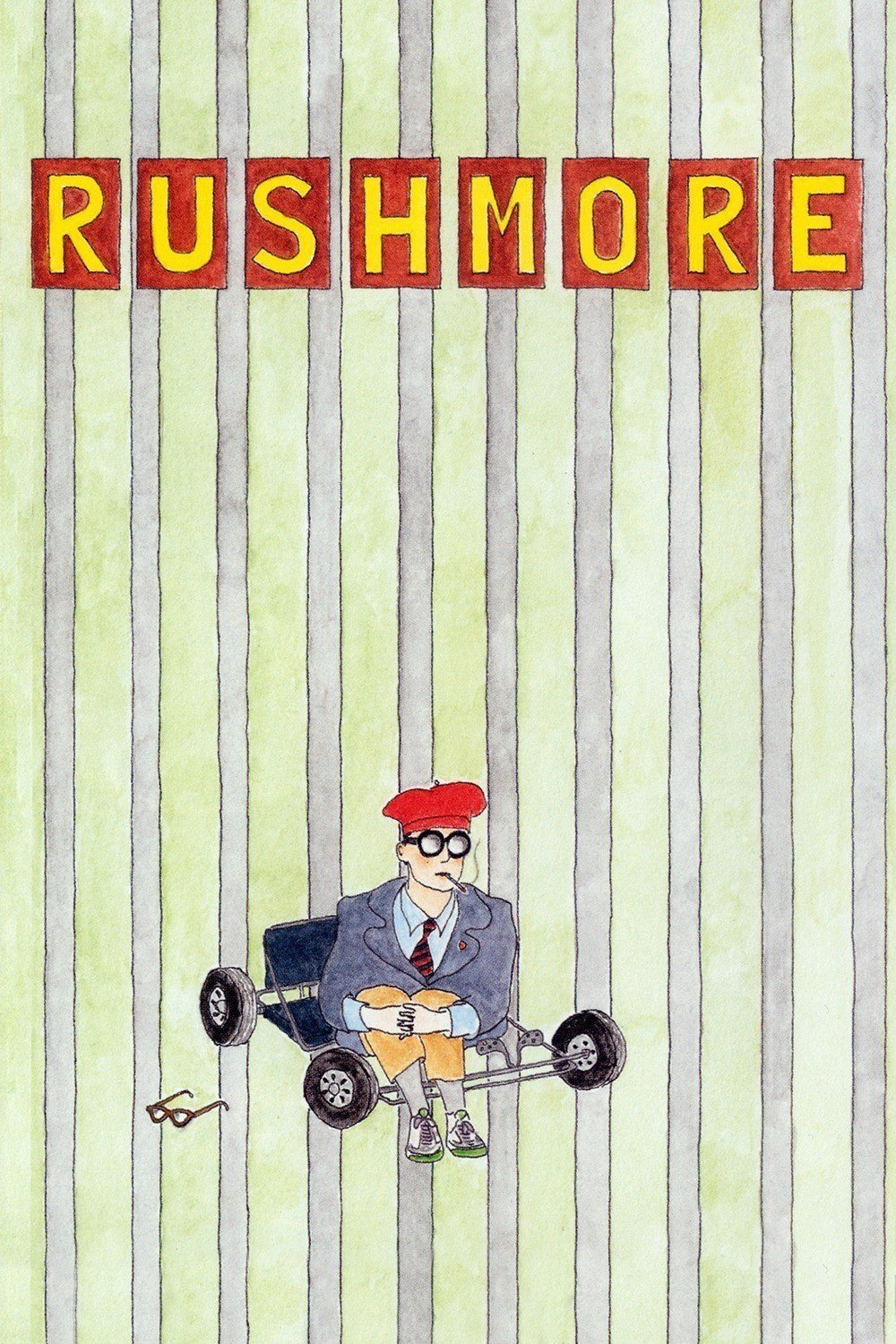
There are movies I revisit not for escape, but for a strange sense of nostalgia for a life I never lived. “Rushmore,” unmistakably a Wes Anderson creation with all its wit and idiosyncrasy, is one such film. The first time I watched Max Fischer’s misadventures unfold, I found a character at once so alien to me in his bravado and so familiar in his longing for validation that I felt strangely exposed. It’s not the coming-of-age story in any conventional sense—no summer camp, no great sports win, no climactic loss of innocence. Instead, “Rushmore” feels like an ode to every fiercely awkward outsider who ever loved too hard and tried too much, hoping that effort alone might rearrange the world in their favor. And, perhaps most powerfully, it’s a film that finds deep humor and almost aching poignancy in those overreaches.
On the Rocks at Grover Cleveland: A Tale of Obsessive Aspirations
The emotional journey “Rushmore” traces is less about achieving change and more about understanding one’s limitations and desires. At its core, the film follows Max Fischer, a precocious, overcommitted student at Rushmore Academy who finds himself floundering not only academically but existentially. This is not a triumphal tale of a misfit outwitting the authorities, but an intimate chronicle of self-delusion, humiliation, and, almost paradoxically, hope.
Max’s conflict isn’t with the world, despite initial appearances, but with himself—his refusal to accept that love, approval, and accomplishment aren’t simply rewards for cleverness or outsized effort. Every club founded, every play produced, every insistent act of courtship with his beloved Miss Cross—these are less acts of engagement and more shields against a gnawing sense of inadequacy. And so, when his friendship with Herman Blume, an adult equally at sea in life’s middle chapters, fractures over their mutual affection for Rosemary Cross, the heartbreak feels raw not for its romance, but for its childishness. The film’s emotional drive, to me, lives in this bittersweet recognition: that growing up means letting go of the fantasy that the world bends easily to our desires.
Dreamers, Loners, and the Search for Significance: Thematic Undercurrents in Rushmore
When “Rushmore” arrived in 1998,
American cinema was awash with comedies about adolescence, but none captured the intricate dance of irony and sincerity quite like this. The themes Anderson and co-writer Owen Wilson dissect—obsession, longing, and the search for identity—echo beyond the film’s vintage production design and literate script.
First and foremost, “Rushmore” is about overreaching. Max’s ambition is at once exhilarating and agonizing; he is constantly striving for a narrative that doesn’t match reality. In 1998, his behavior read as an amusing hyperbole—an exaggeration of every Type-A student. Today, in an era of hustle culture, precocious entrepreneurship, and curated online personas, Max’s obsession feels not only relevant, but perhaps prophetic. Our anxieties over achievement and approval have only intensified, and what was once a call for eccentricity now reads as a warning, or at least a mirror, for a generation trained to obsessively brand their own stories.
Another theme that resonates for me is the painful humor of inadequacy. Max is not the underdog we root for because he’s mistreated; he’s the underdog because he’s out of his depth, emotionally. The film’s unflinching look at humiliation—its parade of failures, suspensions, and spectacularly ill-advised gestures—has a universality that transcends its specific milieu. In retrospect, I see this as an early precursor to comedies rooted in cringe and awkward empathy rather than slapstick.
Finally, the idea of found family—Max’s search for connection among outsiders—remains a poignant throughline. Whether we’re talking about the alienation of the late nineties or the atomization of our current decade, that need for understanding and camaraderie is timeless. “Rushmore” manages to evoke the melancholy and hope of these pursuits in ways that remain both sharp and vivid.
Red Berets, Aquatic Fantasies, and Theatrical Tableaux: Visual Storytelling in Rushmore
Wes Anderson is seldom subtle about his style, and in “Rushmore,” his love of calculated whimsy is on full display. The film’s visual motifs—paired color schemes, symmetrical compositions, and recurring objects—build not only the world around Max, but also offer small windows into his psychology.
The red beret is among the film’s most persistent symbols. It is at once a badge of individuality and a cloak of self-delusion, signaling Max’s wish to stand apart while hiding his vulnerability. The color red, in fact, recurs throughout the production: in school uniforms, in props, in the set dressing of key locations. For me, the saturation of this bold hue underlines not just youth and passion, but also the volatility of unrestrained feeling.
Aquatic symbolism also threads throughout the film. The aquarium at the bar where Max and Blume first bond, the fish tank in Miss Cross’s classroom, and the elaborate, militaristic underwater play he stages in the film’s third act—all suggest a longing for escape. Water becomes a metaphor for dreams and the unreality of Max’s ambitions: the world as it might be, endlessly mutable under the surface yet perpetually out of reach.
Anderson’s penchant for theatricality—most evident in the school plays Max writes and directs—serves a dual purpose. Not only do these moments provide comic spectacle, but they also mirror Max’s tendency to stage-manage his own life. The boundaries between reality and fantasy blur, and the line between performance and personhood collapses. I’m always struck by how these tableaus, so artificial in appearance, capture something honest: the awkward, often heroic attempts we make to write ourselves into being.
When the Curtain Falls: Three Defining Sequences in Rushmore
“I Saved Latin. What Did You Ever Do?”
This scene crystallizes Max’s delusions of grandeur and his deep-seated insecurity. After being expelled from Rushmore, he patrols the halls one last time, donning the posture of martyr and misunderstood genius. The line, delivered with wounded petulance, is both hilarious and heartbreaking. Here is Max at his most self-aggrandizing—simultaneously begging for validation and stoking his own legend. The emotional contradiction strikes me every time: this is a young man desperate to be remembered, but unsure for what.
The Bees Attack Blume
The escalating sabotage between Max and Blume isn’t merely comic relief—it’s a microcosm of the film’s central conflict. When Max unleashes a swarm of bees in Blume’s hotel room, the prank is both juvenile and oddly cathartic. What I find remarkable is that this rivalry, which could easily tip into cruelty, never loses its air of childishness. That innocence, even amidst the escalation, constantly repositions the film back into a mode of empathy: for every actor in this absurd little war, humiliation is rooted in longing, not vindictiveness.
The Vietnam Play
The final act’s explosive school play, with its over-the-top sets and pyrotechnics, is Max Fischer’s magnum opus and the film’s metaphorical curtain call. The reconciliation of Max and Blume, staged amid chaos, underscores the film’s deep belief in art as a site for forgiveness, self-realization, and communal healing. The play is ridiculous, bombastic, and out-of-scale—just like Max’s aspirations. Yet in pulling together old friends and estranged enemies to witness it, the event becomes a genuine act of unity. It’s a reminder of the strange, messy joy in creation, and the power of shared experience to reforge relationships.
Rushmore on the Psychoanalyst’s Couch: Interpretations and Misreadings
“Rushmore” has been dissected endlessly, often through the lens of Anderson’s signature style. Common readings focus on Max as a model of alienated, gifted youth—either an antihero whose ambition is praiseworthy or, alternately, a narcissist whose redemption is unearned. Many critics and viewers have positioned the film as a sly parody of prep-school coming-of-age dramas, subverting expectations by making its protagonist not a victim, but his own worst enemy.
Where I diverge from these takes is in the film’s treatment of emotional honesty. For me, “Rushmore” isn’t really satirical—it’s deeply sincere about the agony of trying to matter, of reaching for something (or someone) when you’re ill-equipped for the journey. I see Anderson not so much mocking Max as holding him up with compassion. The film recognizes that our formative humiliations never leave us; they simply become funnier with time and less damning. The “quirkiness” often cited by detractors is, to my mind, a cloak for the film’s emotional rawness. Beneath Anderson’s ornament, the stakes always feel personal and true.
In this way, “Rushmore” stands apart from the precocious-teen canon not for its style, but for its deep well of empathy. The humor is never cruel, the failures are never absolute, and the search for love—be it romantic, platonic, or artistic—never mocked outright.
Kindred Spirits: Films Echoing Rushmore’s Melancholy Wit
- The Royal Tenenbaums (2001) – Another Anderson triumph, charting familial dysfunction with similar visual flair and bittersweet comedy.
- The Graduate (1967) – Explores dislocation and inappropriate yearning from a different generational lens but shares Rushmore’s blend of irony and heartbreak.
- Igby Goes Down (2002) – Focuses on disaffected youth, dark humor, and the search for identity in a world of privilege.
- Election (1999) – Delivers sharp, satirical takes on ambition and rivalry within the school setting, steeped in black comedy.
Last Bell Rings: The Enduring Value of Max Fischer’s World
Watching “Rushmore” now, over two decades later, I’m struck anew by its specificity and its warmth. The film remains a masterclass in balancing homage and innovation, crafting poignant comedy from the failures and dreams of adolescence. Its insights—about longing, about the joys and wounds of participation, and about the ways we make peace with being ordinary—have only deepened with time.
If anything, “Rushmore” is more essential than ever, suggesting that awkwardness is its own form of authenticity, and that the pursuit of unlikely dreams offers meaning, even in defeat. I recommend it not to viewers in search of nostalgia, but for anyone seeking proof that awkwardness, when approached with humor and empathy, can be a kind of grace.
If These School Hallways Spoke: Related Reviews
If you found value in my perspective on “Rushmore,” you might also enjoy my long-form critiques of:
- “The Royal Tenenbaums”
- “Election”
To broaden this interpretation, you may also explore how critics and audiences responded over time.
🎬 Check out today's best-selling movies on Amazon!
View Deals on Amazon