
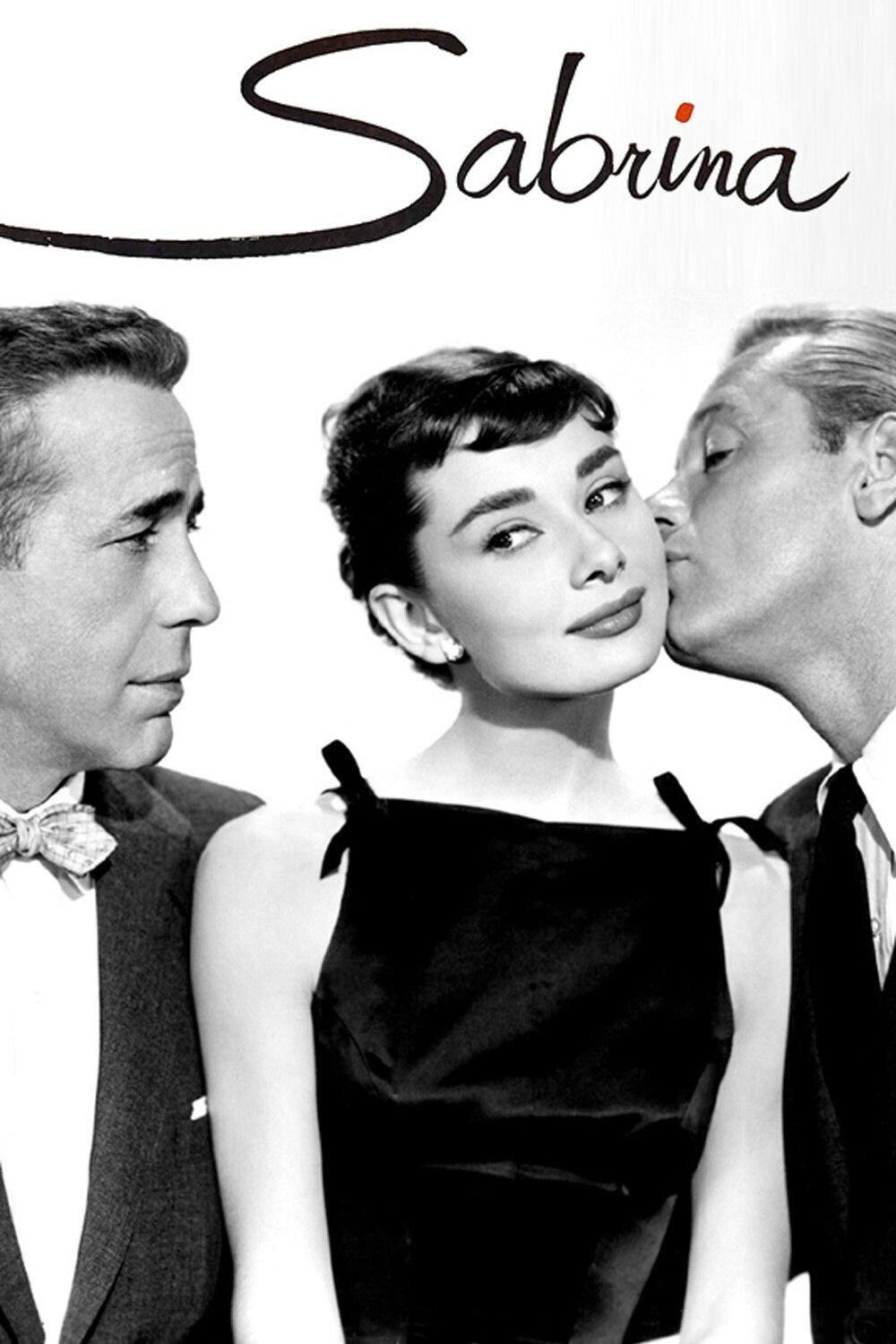
When I first watched “Sabrina,” I felt less like a spectator and more like a confidant gently ushered into a world of longing, transformation, and the elusive dance between dreams and reality. The film has an atmosphere that is both effervescent and laden with unspoken yearning—a quality that has haunted me ever since.
Refined Facades and Hidden Yearnings
What strikes me most about “Sabrina” is not just the romantic entanglements, but the way every character wears a mask, hiding their truest self beneath polished manners and inherited expectation. The Larrabee estate gleams with a proud, cold affluence, but inside, each character is quietly starving for a different life. Sabrina herself, played by Audrey Hepburn with an aching vulnerability, is not simply a chauffeur’s daughter hoping to catch the eye of a wealthy man—she is a young woman aching to be seen for who she truly is, rather than where she comes from.
Each Larrabee brother epitomizes a different response to the burdens of privilege. David, the playboy, floats through life without consequence, yet it’s clear there’s a loneliness in his endless pursuit of novelty. Linus, on the other hand, has armored himself in logic and business acumen, shutting out any possibility of joy. Both are imprisoned by the roles their upbringing carved for them, and it takes Sabrina’s transformation for these facades to begin to crumble.
Paris: A Symbol of Becoming
The film’s invocation of Paris is not merely geographical—it is spiritual. When Sabrina departs for Paris, she is not only leaving behind her unrequited love for David, but the suffocating constraints of her own smallness within the Larrabee world. I see her Parisian interlude as a symbolic cocoon, a place where a person can shed inherited identities and learn to inhabit a new, self-fashioned skin.
Hepburn’s arrival back at the Larrabee estate, transformed and illuminated, is an almost mythic event. Yet I’m struck by how the magic of Paris is not about clothes or sophistication, but the quiet confidence that comes from self-acceptance. Her transformation unsettles everyone, because it exposes the stagnation at the heart of the world she left behind. The estate, once stable and immutable, suddenly seems like a snow globe that’s been violently shaken.
Love as Disruption, Not Rescue
Unlike so many romantic comedies of its era, “Sabrina” does not present love as a neat solution to life’s problems. Rather, love in this film is an agent of disruption—a force that compels each character to question who they are and what they want. I find it compelling that Sabrina, Linus, and even David are forced to confront the inconvenient truths about themselves once desire enters the equation.
Linus’s reluctant attraction to Sabrina is not born out of convenience or social climbing, but out of an authentic recognition of her spirit. The way Humphrey Bogart, with his famously craggy visage, softens in Sabrina’s presence, is a physical manifestation of the film’s central tension: the yearning to be touched, to be altered by another. For Linus, loving Sabrina is a terrifying risk—one that threatens to topple the carefully constructed architecture of his life, but which ultimately offers the hope of genuine happiness.
Class, Mobility, and the Illusion of Boundaries
Beneath its sophisticated surface, “Sabrina” is a biting meditation on class boundaries and the American myth of social mobility. The Larrabee family represents the entrenched power of old money, but Sabrina’s journey foregrounds the idea that authenticity and self-possession can allow one to traverse boundaries that seemed otherwise impenetrable.
I am fascinated by how the film melds its fairy-tale elements with a subtle critique of the class system. Sabrina’s new confidence is seductive, but it’s not enough on its own to erase the distinctions between her world and that of the Larrabees. The film neither fully endorses nor fully subverts the fantasy of class transcendence, but instead lingers in the tension between aspiration and reality. There is both hope and sorrow in Sabrina’s upward movement—hope in that she is finally seen, sorrow in the recognition that such transformations are the exception, not the rule.
The Alchemy of Light and Shadow
Much of the film’s meaning, for me, is found in the way director Billy Wilder plays with light and darkness. The luminosity that follows Sabrina after her return from Paris is mirrored by the actual cinematography—soft, glowing, almost dreamlike. In stark contrast, the cold, pragmatic world of Linus is rendered in harsh, angular lines, until Sabrina’s presence gradually brings warmth and pliability to those spaces.
This interplay of light and shadow is more than a visual motif—it’s a metaphor for the film’s central question: whether it is possible to bring hope into a world ossified by habit, to let longing illuminate places that have grown cold. It’s no accident that the most transformative moments happen at dusk or in half-lit rooms, where the boundaries between possibility and reality begin to blur.
The Comedy of Manners as Mask and Mirror
Wilder’s script revels in the genre conventions of the romantic comedy and the comedy of manners, but beneath the quick banter and witty repartee lies something more akin to tragedy. The etiquette and rituals of the Larrabee household are at once a source of comfort and imprisonment, drawing attention to how easily lives can be circumscribed by custom.
I am especially intrigued by how humor in “Sabrina” is used as a defense mechanism. The jokes are often a way to stave off pain or to distract from unease—Linus’s dry wit, David’s careless quips, Sabrina’s own nervous laughter. The film’s most poignant moments often arrive in the silences between jokes, when the characters’ true feelings, so carefully suppressed, begin to seep through.
Audrey Hepburn’s Ethereal Rebellion
Much has been made of Audrey Hepburn’s costumes in “Sabrina.” Edith Head’s designs, with contributions from Givenchy, are legendary, but I believe their power lies not simply in their elegance, but in how they externalize Sabrina’s inner journey. Hepburn’s Sabrina is ethereal, yet there is a core of steel beneath the chiffon and tulle. Her beauty is not ornamental, but insurgent—a quiet challenge to a world that would prefer her invisible.
Watching Hepburn’s performance, I am struck by the way she turns vulnerability into strength. Her wide-eyed innocence is never naïve; instead, it becomes a kind of weapon, undoing the cynicism of those around her. Sabrina’s rebellion is subtle, but it reverberates through every frame—she is a disruptor not by force, but by presence.
Melancholy in the Midst of Glamour
One of the most enduring qualities of “Sabrina” is its undercurrent of melancholy. For all its glamour, the film is suffused with a sense of absence and regret. The grand parties, the sparkling dialogue, the lush settings—all of these seem to exist in tension with a profound loneliness that shadows each character.
I am continually moved by how Wilder allows pain to coexist with pleasure, showing that even fairy tales can be bittersweet. The ending, in which Linus and Sabrina leave together for Paris, is hopeful, but it is not an escape from reality so much as a leap into the unknown. The film acknowledges that happiness, when it comes, is always imperfect and hard-won.
The Echoes of Desire: Why ‘Sabrina’ Still Resonates
What lingers with me long after the credits roll is the film’s understanding of longing—not just romantic yearning, but the ache to be seen, to change, to belong. “Sabrina” endures because it recognizes that transformation is never easy or complete; that we are all, in some sense, caught between who we are and who we hope to become.
The film’s artistry lies in its ambivalence. It does not offer easy answers or tidy resolutions. Instead, it wraps its characters—and its audience—in the soft, perilous light of hope. I find myself returning to “Sabrina” whenever I need to be reminded that beauty and pain, joy and sorrow, are always intertwined; that the pursuit of happiness often begins with the courage to step out of the shadows.
If You Loved “Sabrina”: Two Cinematic Kindred Spirits
- “Roman Holiday”
- “The Philadelphia Story”
If you’re curious about how this film was originally perceived or how it compares to similar works of its era, these resources may be helpful.
🎬 Check out today's best-selling movies on Amazon!
View Deals on Amazon