
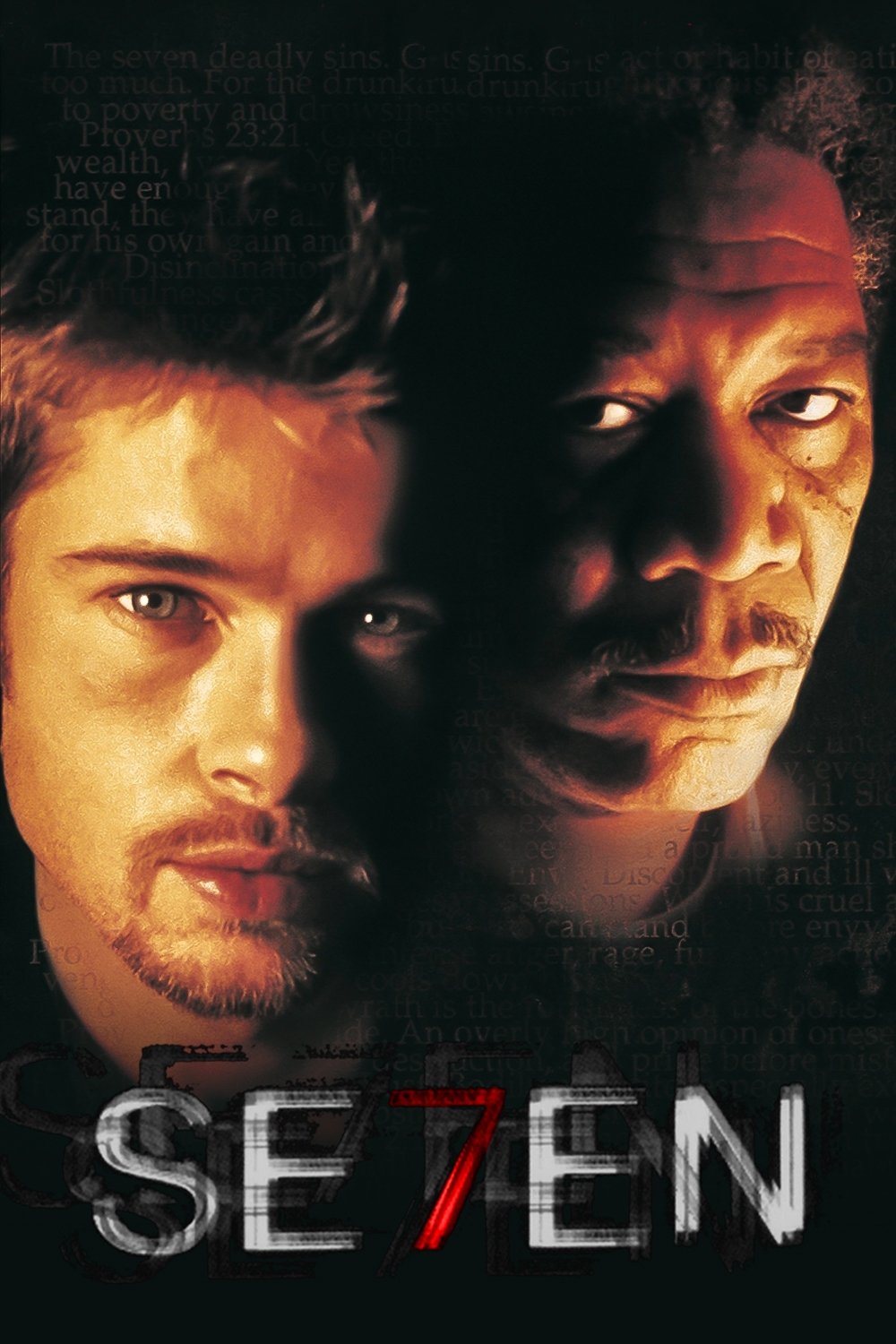
Some films leave my consciousness the moment the credits roll—but not Se7en. My mind revisits its rain-soaked streets and shadowy corners time and again, compelled by an unshakable sense of unease. I remember the first time I watched Se7en: I emerged feeling somehow tainted, quietly stunned by the film’s refusal to offer safety or closure. I sat in silence, wrestling with a creeping realization that this, more than a detective story, was a meticulously engineered descent into darkness. The film doesn’t just depict evil; it impregnates every frame with it—forcing me, repeatedly, to question the boundaries between justice and vengeance, fatalism and hope.
An Unrelenting Spiral Into Moral Chaos
For me, the essence of Se7en lies not simply in its brutal plot or grisly murders, but in the emotional labyrinth through which it drags the audience. We are not given the comfort of detached observation—instead, director David Fincher fuses us, tethered and unwilling, to detectives Somerset and Mills as they pursue a killer who claims to expose humanity’s collective sins. The journey is as psychological as it is physical; every interaction, every dead end, every rain-drenched frame piles on emotional weight.
Se7en is less a whodunit and more an existential crucible. I witnessed glimmers of hope and order slowly extinguished by cynicism and dread. Somerset’s resigned fatalism and Mills’ raw hopefulness become antagonists in themselves—two minds strained and gnawed at by the killer’s calculated horrors. By the time the final sin is revealed, I no longer watched with the optimism that justice would triumph. Instead, I felt nudged to recognize the threat lurking not just in the antagonist, but in the systems, indifference, and apathy within us all. Se7en’s primary conflict isn’t detective versus killer, but humanity versus its own capacity for corruption.
Corruption and Decay: Themes Reflected in Shadow
I find Se7en’s core theme to be the inescapability of evil—not only as an external force, but as an integral element in the machinery of daily life. In 1995, audiences were fresh from the optimism of the late ’80s and reeling from the ugly reality of urban decay and systemic neglect. Fincher’s film, with its city “that’s like hell,” as Somerset mutters, seemed to articulate a growing cultural pessimism. The metropolis in Se7en is more than setting; it’s a warning, a cauldron of indifference and hidden violence.
Today, watching the film feels even more prescient. The anxieties about institutional failure, moral relativism, and unaddressed rot have only grown deeper. Somerset’s wariness and Mills’ earnest trust in the system clash in ways that now seem almost archetypal: the weary fatalist versus the idealistic newcomer. Se7en’s exploration of apathy, cynicism, and the limitations of law enforcement is not just timely—it’s perpetual.
Yet, the film’s ultimate preoccupation is with the futility of trying to contain evil, or even understand it. John Doe is not, for me, a madman seeking chaos, but a philosopher-turned-executioner, stripping away the veils of comfort and civilization. In today’s world of rising cynicism and moral fatigue, Se7en remains a mirror for collective anxieties: that beneath our efforts, darkness not only persists—it adapts.
Signs in the Gloom: Fincher’s Obsessive Imagery
What consistently moves me about Se7en is how Fincher wields symbolism with surgical precision. The city is always shrouded in rain and gloom, suggesting a world where even the cleansing force of water cannot wash away its filth. The persistent weather is not simply atmospheric but a character in itself, looming and oppressive. Rain, for me, becomes the embodiment of the characters’ Sisyphean stumbling—cleansing nothing, only deepening the rot.
Another visual motif that grips me is the constant presence of books, notebooks, and written decrees. Doe’s journals speak to a compulsive need to order and categorize sin; the detectives’ case files echo a bureaucratic effort to categorize horror. Literacy, in the world of Se7en, does not save; it dissects, obsesses, and records. Doe’s apartment, stuffed with regimented horror, is a library of suffering—a cataloging of all that is irretrievably wrong.
The use of light—rare and always fleeting—offers a symbolic grasp at hope or revelation. Yet, as I look closer, I see that illumination always arrives too late. Light invades the darkness only long enough to expose another horror, to grant Somerset or Mills a brief, powerless glimpse before the next veil falls. In Se7en, the act of seeing is never redemptive.
The Anatomy of Despair: Scenes That Define Se7en
The Gluttony Discovery—A Grim Introduction
From the opening crime scene, I knew Se7en would pull no punches. The apartment—saturated with flesh, filth, and flies—confronts not only the detectives but also me, the viewer, with the consequences of excess and apathy. It’s not simply a horror set-piece: Fincher’s relentless attention to detail, the grotesque abundance of food, the muddy palette, all hammer in humanity’s boundless capacity for self-destruction. The Gluttony scene is a thesis statement—this world is ugly, and justice is already several steps behind.
Somerset in the Library—A Fugitive Sanctuary
This quietly haunting sequence, as Somerset immerses himself in the study of the seven deadly sins, is Se7en at its most meditative. The harshness of the world outside is replaced by Bach’s music and the glow of desk lamps. But here, knowledge is double-edged: research does not conquer evil but draws Somerset deeper into despair. I felt the futility bleeding through each flip of the page. There is no secret wisdom in these books that can save anyone.
“What’s in the Box?”—The Irrevocable Climax
No scene in Se7en, or perhaps in all of ’90s cinema, devastates like the infamous climax in the desert. Doe’s plan, revealed as inexorable fate, plays out with the bitter logic of tragedy. I watched Mills’ face fracture, moment by moment, as the film’s impossibly cruel twist is made known. For me, this scene is the definitive argument that evil’s victory is not always grandiose—it’s wretched and personal. “What’s in the box?” becomes a refrain of all unresolved horror, all the truths we desperately wish to unsee.
Framing the Darkness: Readings and Rebuttals
Critics often describe Se7en as a neo-noir masterpiece, lauding its atmosphere, commitment to moral ambiguity, and meticulously crafted world-building. Some see it as a meditation on religious morality, others as an indictment of urban decay or law enforcement’s impotence.
I find these takes valid, but they do not fully encapsulate my experience. For me, Se7en’s most haunting quality is its suggestion that evil is not an aberration but a structural reality—woven through systems, spaces, and even banality. At times, reading Se7en simply as an indictment of religion or the criminal mind feels reductive. The film’s great power is in denying us certainty, leaving me in a liminal space where neither justice nor retribution provides relief.
Some viewers fault the film for nihilism or sensational violence. I disagree. To me, Se7en never revels in pain for its own sake; instead, every act of cruelty is calibrated to probe the viewer’s endurance and empathy. Its violence is both an accusation and a challenge: How long will I look? How much horror can I integrate into my sense of the possible?
Navigating the Abyss: Kindred Cinematic Journeys
- Zodiac – Another Fincher meditation on obsession, unresolved horror, and the cost of pursuing meaning in chaos.
- The Silence of the Lambs – A psychological descent and a battle of wills with evil as both puzzle and predator.
- Prisoners – A modern parable of desperation, moral compromise, and the consequences of vengeance.
- Memories of Murder – Bong Joon-ho’s vision of futility, procedural breakdown, and existential doubt within a real-case context.
The Final Toll: Watching Se7en Today
As I revisit Se7en in the present, its merciless atmosphere, masterful storytelling, and philosophical audacity feel not less relevant, but more. The film’s capacity to unsettle me, to force a confrontation with the abyss, remains as potent now as in 1995. Its refusal to moralize, sentimentalize, or provide easy relief is its artistic courage.
For those willing to look unblinking at human frailty and institutional decay, Se7en offers an experience not of escapism but reckoning. Its vision may be unrelenting, but it’s also transformative—a demonstration that cinema can still shake me to my core, decades on.
Want More of My Reflections?
If you found value in my perspective here, you may also appreciate my deep-dive analyses on “Zodiac” and “Prisoners”—two films that, like Se7en, refuse to flinch in the face of darkness.
To broaden this interpretation, you may also explore how critics and audiences responded over time.
🎬 Check out today's best-selling movies on Amazon!
View Deals on Amazon