
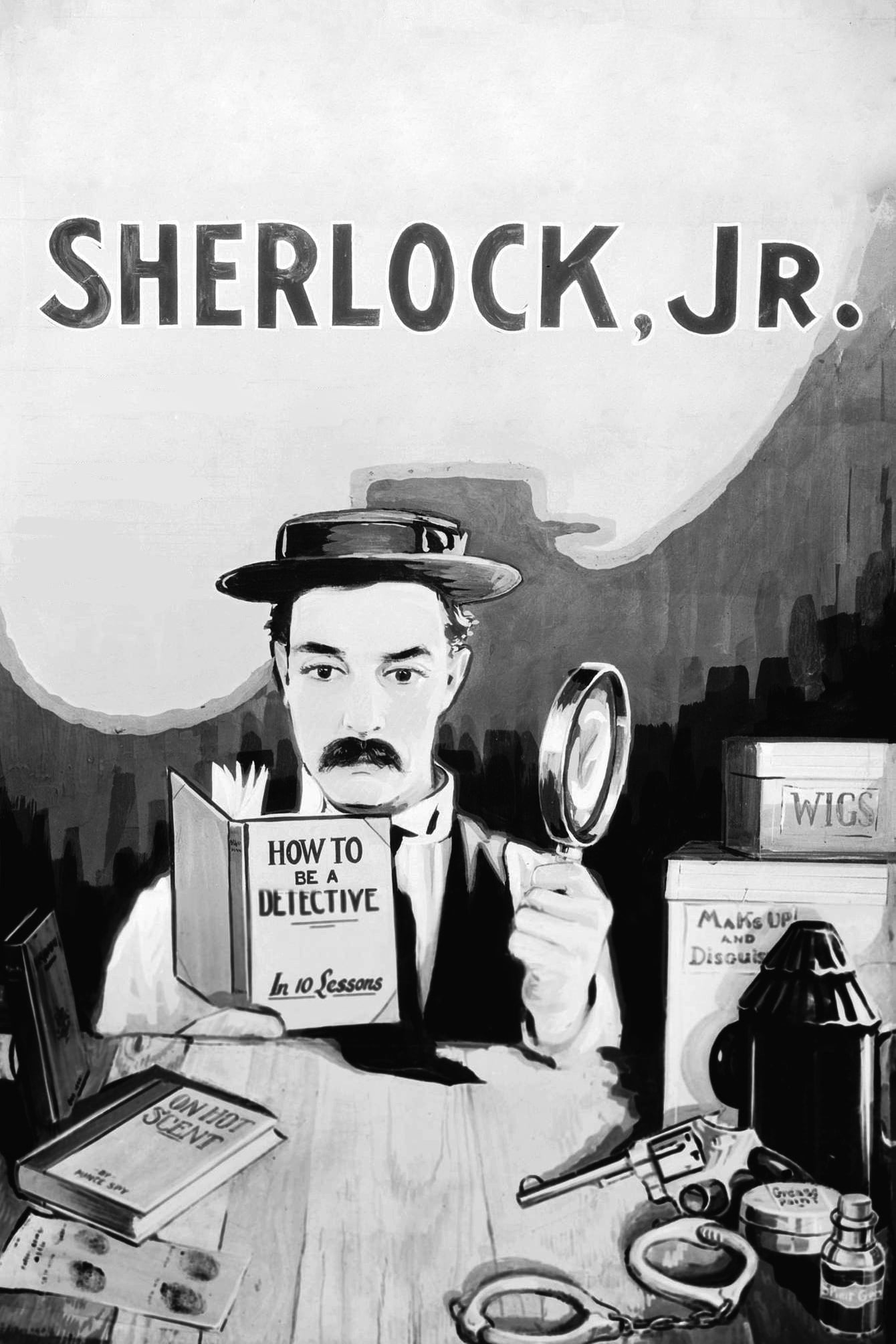
I have always been captivated by the transformative power of silent cinema, but sitting before Buster Keaton’s “Sherlock Jr.”, I felt the peculiar sensation of seeing both the art and artist waging a quiet battle with reality. To me, this brisk comedy is no simple relic; it is a fever dream where cinematic fantasy, slapstick humor, and raw yearning for self-betterment blend in ways that remain, even a century later, both universal and subversively modern. I found myself spellbound, not merely by the technical bravura, but by the intimate, bruised desire to escape into one’s own projected self—a desire that, even now, remains as resonant as ever.
When Reality Evaporates: The Emotional Turbulence of Sherlock Jr.
At its core, “Sherlock Jr.” traces the fretful, comic journey of a modest movie projectionist—played by Keaton—whose everyday failures and humiliations propel him into the shimmering world of dreams. This is not just a story about escaping circumstance; it’s a tightrope walk between disillusionment and hope, played out in the sharply etched features of a young man who wants desperately to be more than the sum of his misfortunes. I experience his emotional arc less as a linear story and more like a set of swirling, overlapping circles. Each time Buster’s character tries (and fails) to assert himself, he ricochets back between fantasy and disheartening reality, grasping for recognition from the girl he loves and for a piece of heroism in his own story.
This emotional back-and-forth isn’t mere slapstick. The journey is sublimely personal, expressing the double bind Keaton’s projectionist faces: he is arrested by his ordinariness, and, with every trip through failure, is only further propelled into dreaming. When he finally dozes off and steps straight into the movie screen—becoming his idolized detective alter ego—I can’t help but see reflected there my own longing to break free from the tedium and helplessness of daily life. The emotional journey of “Sherlock Jr.”, for me, is a gently devastating portrait of a man torn between the inescapability of life’s limitations and the tantalizing lure of impossible possibility.
Through the Looking Glass: Yearning and Illusion in Two Worlds
Illusion and identity are the breathing pulse of “Sherlock Jr.”. I am deeply drawn to how the film explores the idea of reconstructing oneself—disguising trembling hopes with comic bravado as Keaton’s projectionist dreams himself into the detective, Sherlock Jr. This is not only wish-fulfillment; it is a shrewd meditation on the thin membrane between reality and artifice. The moment Keaton steps into the swirling, ever-shifting world of the film-within-the-film, the boundaries of movie logic bend. Instantly, cinema itself becomes a metaphor for longing and transcendence.
In 1924, audiences saw “Sherlock Jr.” as both a technical marvel and a reflection on the very idea of cinema. The Roaring Twenties were an era of dizzying social change, and Keaton’s fantasies of self-invention perfectly mirrored the sense of infinite possibility (but also broad anxiety) of his age. The ability to imagine oneself as someone entirely new held tremendous, contemporary resonance. Rewatching the film today, however, I am even more attuned to the quiet insecurities beneath its frantic comedy—the way Keaton’s hero, in his projection dreams, aspires and falls short, again and again. For our era, saturated with performativity and online self-curation, the film’s themes of identity and escapism have only multiplied in relevance. Where Keaton flickered between two worlds, we now shuttle between countless digital realities—a testament, I believe, to the film’s ongoing insight.
Mirrors, Glass, and the Perpetual Slipping Away
Perhaps my favorite aspect of “Sherlock Jr.” is its relentless play with mirrors, screens, and the idea of doubling. These visual motifs are not mere flourishes; they speak to the story’s conviction that nothing in life—least of all selfhood—remains stable for long. From the glass-splintered ticket booth to the brilliant, surreal sequence where Keaton tries to match a man on the other side of a mirror, the film is saturated with windows between worlds. The screen itself becomes a threshold, inviting us into an unstable, trickster universe where the real and the imagined blur indistinguishably.
Recurring symbols—the pawn ticket, the detective magnifying glass, and the recurring motif of doors and passageways—deepen this. The pawn ticket, swapped and misunderstood, is less an actual object than a stand-in for misunderstood intentions and lost opportunity. The detective glass, meanwhile, isn’t merely a tool; it’s a symbol of the film’s obsession with seeing deeper truths—and with the partial, elusive nature of those truths. Even the very act of projection, the mechanical magic Keaton performs in the theater, becomes a metaphor for the broader, human yearning to see oneself as someone more heroic and competent than real life allows.
The Orchestra of Gags: Three Defining Moments
Through the Screen: A Leap into the Impossible
The first moment that utterly floored me is when our downtrodden projectionist dreams himself, body and soul, into the movie screen. Unlike other films of the time, Keaton doesn’t merely “imagine” another world—he physically leaps from his seat and, through deft in-camera work, steps into a reality formed entirely by cinematic illusion. It’s a technical marvel—reported to have taken days to shoot precisely—and yet it plays as a deliriously simple miracle. Each cut finds him in a new locale (a garden, a snowy cliff, a raging sea), and his confusion is ours. For me, this is the embodiment of cinema as wish-fulfillment, and a sly joke about how out of place we often feel in our own attempts to inhabit Big Dreams.
The Billiard Ball Scene: Danger and Synchronization
If there’s a single scene that distills Keaton’s tightrope-walk between risk and jest, it’s the sequence in which his detective alter ego unwittingly avoids being murdered. An enemy places a bomb and then a poisoned billiard ball, but fate, clumsiness, and sheer timing save Keaton at every turn. The tension escalates not only by the threat, but in my view, by the exquisite synchronization of action and chance. Keaton risks his life for the gag, and the billiard table becomes a miniature universe of shifting luck—one echoing the larger uncertainties of his life and dreams. Every time I watch it, I catch myself holding my breath, both at the ingenuity and the underlying message: sometimes we survive not by virtue, but by pure, dumb luck, much like our hapless hero.
The Motorcycle Chase: Chaos in Motion
The climactic motorcycle chase is more than just a bravura set piece—it’s the culmination of Keaton’s willingness to stake everything physically and emotionally. Flying down city streets, clinging to handlebars with no driver, Keaton’s body is pitched into chaos, punctuated by hair’s breadth escapes. The stunts are legendary for their danger, but I was just as awestruck by the editing, rhythm, and sheer inventiveness. It’s as if the film is racing past the limits of real experience, daring us not just to laugh, but to feel the vertiginous thrill and peril of chasing our own ideals. In this mad dash, “Sherlock Jr.” reminds me that the boundary between triumph and total disaster is frighteningly thin—a motif at the very heart of Keaton’s vision.
Reinterpreting Shadows: Common Critique Versus Personal Encounter
Critics often approach “Sherlock Jr.” as a textbook case of early meta-cinema, pointing rightly to its film-within-a-film structure and jaw-dropping technical effects. It is rightly hailed for pioneering visual storytelling methods—sequential editing, forced perspective, double exposure—which have influenced countless directors (from Woody Allen to Michel Gondry) since. I acknowledge these canonical readings, but my experience pushes me elsewhere. Where many see a winking commentary on moviemaking, I am most haunted by the film’s loneliness. The spectacle never erases the gentleness, the isolation, or the painful shyness of its protagonist. For me, “Sherlock Jr.” unfolds not as a celebration of the cinema dream factory, but as a subtly tragic document—a film that understands the risks of living too much inside one’s imagination.
I diverge, too, from readings that position the protagonist merely as a universal everyman. He is, for me, a startlingly modern figure: awkward, yearning, obsessed with the borders of identity and performance, his ultimate triumph is ambiguous. Even in the final scene, where he reunites (awkwardly, shyly) with his sweetheart and apes the gestures he’s seen on the movie screen, there is a sadness beneath the surface. He is, perhaps, forever split—neither quite at home in life, nor in fantasy. It’s a perspective that leaves the comedy tinged with something more mature and unresolved—a mood that few films, then or now, attempt, let alone achieve.
Celluloid Cousins: Films That Share the Spell
- The Purple Rose of Cairo (1985) – Woody Allen’s meta-romance spins similar themes of movie-magic and escapism, with characters stepping through the silver screen in search of meaningful lives.
- Playtime (1967) – Jacques Tati’s masterwork shares Keaton’s love for precise, balletic gags—using framing and mise-en-scène to blur modern life and constructed fantasy.
- Being John Malkovich (1999) – Spike Jonze’s surreal comedy explores the agony and absurdity of living out someone else’s dream, echoing Keaton’s intrigue with identity through fantasy.
- The Science of Sleep (2006) – Michel Gondry’s whimsical exploration of dream logic employs visual invention reminiscent of “Sherlock Jr.” to probe the psychic boundary between reality and imagination.
Why These Illusions Endure
To return to “Sherlock Jr.” today is to find a film more alive, touching, and urgent than most movies made with digital excess and boundless budgets. For me, its staying power derives not just from Buster Keaton’s inventiveness, but from his profound empathy for the dreamer in crisis. It is a film that makes visible the strange, unbridgeable gap between who we are and who we long to be—and finds both comedy and heartbreak in the chase. As we increasingly slip between realities (film, internet, dreams, and screens), “Sherlock Jr.” keeps reminding me what it means to dream desperately, fail spectacularly, and try again anyway.
- Modern Times
- The General
To broaden this interpretation, you may also explore how critics and audiences responded over time.
🎬 Check out today's best-selling movies on Amazon!
View Deals on Amazon