
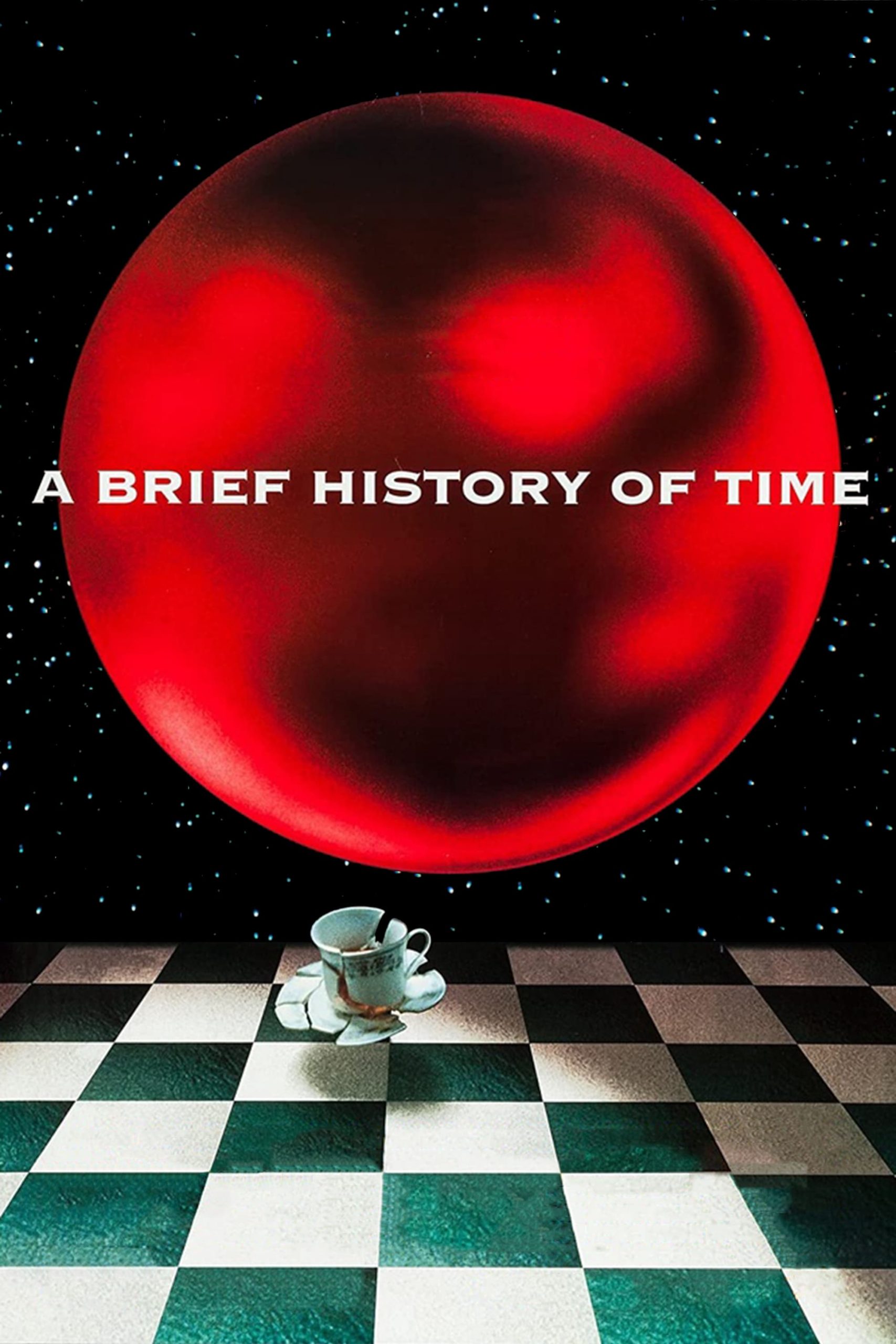
What the Film Is About
“A Brief History of Time” (1991), directed by Errol Morris, is not simply a documentary about physics, nor is it a conventional biographical portrait of Stephen Hawking. Instead, the film embarks on an intellectual and emotional journey through the twin mysteries of the cosmos and the human will. At its core, it asks how a fragile human being, vulnerable to the ravages of disease and mortality, seeks to understand the fundamental laws governing the universe. The narrative intertwines Hawking’s personal struggles with ALS and his quest to articulate the architecture of time and space, drawing a poignant parallel between the vastness of the cosmos and the limits of human existence.
Rather than following a strict linear progression, the film traverses layers of memory, scientific theory, and philosophical reflection. Hawking, his family, colleagues, and archival footage become intertwined, each adding perspective to the enigma of both Hawking’s mind and the universe. The documentary ultimately traces a journey from external, observable phenomena to the interior lives of those who seek to explain it, suggesting that science is inseparable from the human stories behind its breakthroughs.
Core Themes
At its heart, “A Brief History of Time” is a meditation on the intersection of knowledge, resilience, and the human thirst for meaning. Several core themes emerge throughout Errol Morris’s film:
- The Search for Understanding: The film repeatedly returns to the idea that humans are driven to comprehend the universe, even in the face of its overwhelming complexity and mystery. Through Hawking’s voice and those who know him, the documentary considers whether the universe’s secrets are truly within grasp and what it means to seek them.
- Limits and Possibility: Hawking’s physical decline due to ALS—his increasing confinement—serves as a powerful metaphor for the limitations inherent in human existence. At the same time, the expansion of his mind and his scientific achievement highlight humanity’s extraordinary capacity to transcend those very limits.
- Time and Mortality: Time, both as a scientific concept and as a lived human reality, dominates the film. The inexorable movement toward entropy and death mirrors Hawking’s own struggle against his illness. This dual focus invites viewers to consider how confronting mortality shapes our creative and intellectual output.
- Faith, Wonder, and the Limits of Science: The film gently grapples with the tension between scientific rationality and the lingering mysteries science cannot fully explain. The interviews with friends and family suggest that awe and humility are inevitable consequences of truly engaging with the infinite.
Released at the dawn of the 1990s—an era when cosmology and popular science were gaining mainstream visibility, and conversations around disability, perseverance, and the value of life were shifting—these themes spoke directly to cultural anxieties and aspirations. Today, as new discoveries and uncertainties continue to reshape our understanding of the universe, the film’s meditation on the relationship between human limits and the infinite remains strikingly relevant.
Symbolism & Motifs
The film skillfully employs recurring symbols and motifs, both visually and narratively, to reinforce its deeper meanings.
- Clocks and Watches: Timepieces frequently appear throughout the documentary, a direct nod to Hawking’s influence on our understanding of time but also a memento mori—reminders of mortality and the irreversible flow of time. These objects symbolize both scientific precision and the deeply human anxiety about time running out.
- Black Holes as Metaphor: While black holes are central to Hawking’s scientific work, their recurring appearance also serves as a rich metaphor. They represent the mysteries that science can approach yet never fully illuminate, and perhaps also the unknowns at the heart of human existence—loss, oblivion, and what lies beyond perception.
- The Voice Synthesizer: Hawking’s computerized voice, a result of his physical limitations, becomes a motif representing adaptation and resilience. It is the vehicle through which grand cosmic ideas are communicated, reinforcing the theme of overcoming constraint.
- Light and Darkness: The interplay of illumination and shadow in the film’s imagery echoes both scientific concepts and existential inquiry. Moments of clarity—whether in Hawking’s thought or the personal recollections of his associates—are juxtaposed with uncertainty, mirroring the eternal oscillation between knowledge and mystery.
These motifs are carefully woven into the film’s aesthetic, lending it a contemplative, almost poetic quality, and underscoring the unity of the scientific and the existential.
Key Scenes
Key Scene 1
One of the film’s most emotionally resonant scenes is an interview with Hawking’s mother, Isobel, who describes her son’s insatiable curiosity as a child—his frequent, probing questions about the world and the stars above. This recollection is crucial because it grounds Hawking’s subsequent scientific contributions in a deeply personal, almost universal, human drive: the need to know. Here, the film subtly asserts that legendary intellectual feats emerge from the commonplace wonder experienced by all children, and that the pursuit of knowledge is a form of defiance against the limits imposed by chance, genetics, or fate.
Key Scene 2
Another pivotal sequence focuses on Hawking’s adoption of the computerized voice synthesizer, necessitated by the loss of his speech. The transition is not merely technological but philosophical—a transformation of identity. In this scene, friends, colleagues, and Hawking himself reflect on the change, emphasizing both the profound loss and the unique ‘voice’ with which Hawking is now associated worldwide. This moment crystallizes the film’s exploration of adaptation: the mind’s undiminished capability amid physical deterioration, and the way identity can be reasserted through radical change.
Key Scene 3
Late in the film, Hawking reflects on the possibility of one unified theory, a “theory of everything,” which could explain the origins and fate of the universe. He acknowledges, however, that the closer we get to such understanding, the more profound the mysteries become. This scene stands as the film’s quiet climax: a statement that scientific inquiry is both an ascent and a confrontation with the unknown, that humility and wonder must coexist with reason. The scene’s contemplative tone leaves viewers with a sense that even if ultimate knowledge remains out of reach, the search remains fundamentally meaningful—perhaps even more so because of its uncertainty.
Common Interpretations
Critics and audiences have often interpreted “A Brief History of Time” as a celebration of human resilience and intellectual courage—an affirmation that even the most limited circumstances can yield extraordinary insight when paired with unyielding curiosity. Many see it as a potent metaphor for the relationship between the finite and the infinite, with Hawking’s struggle and achievements rendering the abstract challenges of cosmology emotionally immediate.
Some readings focus on the film’s broader existential dimension, arguing that it uses the specifics of Hawking’s life and the science he championed to prompt universal questions: What do we make of our brief existence? Is the universe ultimately comprehensible? Others have highlighted the dual narrative structure—science and biography—as a demonstration of how human meaning is inextricable from abstract discovery.
While some viewers have criticized the film for its occasional opacity when delving into scientific theory, most agree that its greatness lies in its ability to evoke awe without reducing either the science or Hawking’s biography to mere inspiration. Instead, Morris’s film insists on the dignity of unanswerable questions and the grace of the search for truth.
Films with Similar Themes
- The Theory of Everything – This drama covers Hawking’s personal and professional life, echoing themes of resilience, genius, and the interplay between physical limitation and intellectual expansion.
- Einstein and Eddington – This historical drama explores scientific discovery against personal and societal upheaval, paralleling the pursuit for cosmological understanding and the need for collaboration under difficult circumstances.
- My Left Foot – Focusing on Christy Brown, an artist with cerebral palsy, this film shares “A Brief History of Time’s” fascination with physical constraint, creative adaptation, and the enduring spirit of inquiry.
- Particle Fever – This documentary about the Large Hadron Collider captures the excitement and existential speculation of pursuing fundamental truths about the universe, resonating with Hawking’s quest for a unified theory.
In summary, “A Brief History of Time” is ultimately a meditation on the irrepressible human need to search for meaning, both in the grandest cosmic questions and the smallest particulars of personal experience. Through Stephen Hawking’s life and work, the film bridges the distance between the unknowable vastness of the universe and the intimate mysteries of human resilience. It invites us to accept ambiguity, cherish inquiry, and find significance not solely in answers, but also in the pursuit itself. In doing so, it reflects not only on the era’s scientific leaps and cultural shifts, but also on timeless truths about curiosity, humility, and the enmeshment of mind and cosmos.
🎬 Check out today's best-selling movies on Amazon!
View Deals on Amazon