
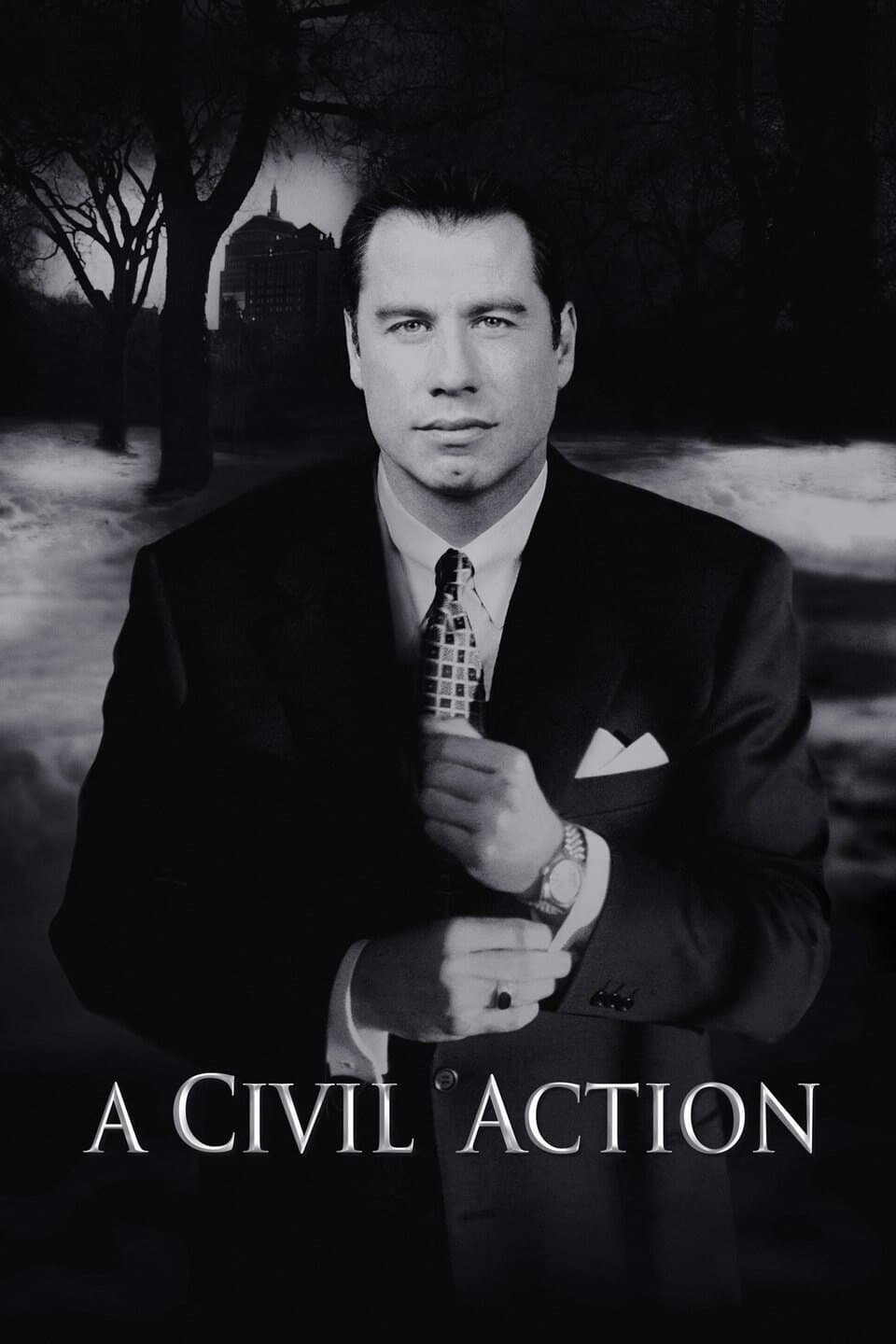
What the Film Is About
“A Civil Action” is a legal drama that pivots less on courtroom theatrics and more on the relentless emotional and ethical unraveling of its protagonist, personal injury lawyer Jan Schlichtmann. The film charts Jan’s transformation, beginning as a self-assured, profit-driven attorney and gradually evolving into a man deeply invested in the moral dimensions of justice. At its core, this is a story of ordinary people’s suffering and one man’s awakening to the true cost of fighting for what is right—even when the odds and the entire system are stacked against him.
Amid the physical and emotional toll wrought on the families who have suffered, the narrative zeroes in on a tortuous legal battle against corporate giants accused of polluting a small town’s water supply. The journey does not deliver triumphant justice in expected ways; instead, it reveals the complexities and potential futility of seeking moral victory through legal systems designed, ironically, to protect institutions as much as individuals.
Core Themes
The film intimately explores themes of justice, the consequences of unchecked corporate power, and the limitations of the legal system. At its heart is a confrontation between the ethical impulse to pursue justice for the powerless and the cold, pragmatic calculus of legal and financial survival. The movie raises searching questions about the nature of right and wrong: Can justice ever be truly attained when the mechanisms for pursuing it are subject to human frailty, greed, and institutional indifference?
The theme of personal sacrifice is equally central. Jan’s journey is marked by the gradual erosion of his material wealth, professional status, and personal relationships—all for a cause initially embraced as a lucrative opportunity, then redefined by a sense of obligation that borders on obsession. This narrative arc mirrors timeless debates about altruism, self-interest, and the conflict between private morality and public responsibility. Released in 1998, when public awareness of environmental hazards and corporate accountability was surging, the film highlighted issues—such as toxic pollution, community advocacy, and the role of trial law in effecting social change—that remain highly relevant in an era marked by recurring ecological crises and corporate scandals.
Beyond the specifics of environmental law, “A Civil Action” is about the ways individuals and societies choose to respond to injustice: the temptations to look away, to settle, or to fight on against impossible odds. In this sense, the film’s themes transcend its immediate context, probing the depths of human resilience and the enduring, if fragile, hope for fairness within flawed systems.
Symbolism & Motifs
Throughout “A Civil Action,” recurring motifs and symbols deepen the film’s interrogation of morality, institutional inertia, and consequence. Water, omnipresent as both victim and vector, operates as a principal symbol. Its contamination stands not just for environmental damage but for the invisible, insidious spread of moral neglect and the enduring consequences of corporate malfeasance. The water’s flow through the town’s daily life becomes a metaphor for the inextricable link between corporations’ actions and human suffering.
Another persistent motif is money, which recurs not only as a pragmatic concern but also as a symbol of personal values and the soul’s vulnerabilities. Scenes continually return to discussions of settlements, legal costs, and bankruptcy—not just as plot mechanics, but as reminders of the way justice itself is commodified and measured against financial thresholds. The film’s visual palette reinforces this, shifting from the polished confidence of Jan’s early office surroundings to the stark emptiness accompanying his downfall—a visual metaphor for the hollow victories of a system out of balance.
Legal documents and paperwork clutter the mise-en-scène, representing both the power and the paralysis of the law. These piles of paper symbolize how human suffering can be abstracted into data points, affidavits, and motions, easily overlooked or purposely obfuscated behind bureaucratic walls. These motifs converge to challenge the viewer: what is the true cost of justice, and who bears it?
Key Scenes
Key Scene 1
Early in the film, Jan Schlichtmann’s initial meeting with the families whose children have died introduces a turning point in his internal journey. This is not a scene of grandiloquence or overt drama, but of subtle recognition—Jan, accustomed to valuing cases in terms of monetary worth, is confronted directly by the raw, wordless grief of the victims. The scene is crucial because it initiates the film’s central ethical dilemma: the tension between seeing clients as numbers versus recognizing them as individuals suffering incalculable loss. The emotional charge here sets the film’s trajectory, sowing the seeds for Jan’s eventual transformation and signaling to the viewer that the stakes are fundamentally human, not just financial or legal.
Key Scene 2
When Jan is forced to face a devastating settlement offer, the internal and external conflicts of the film reach an acute pitch. This scene powerfully dramatizes the central themes: ambition and idealism colliding with practical constraints, the threat of total financial ruin, and the weight of deciding for others. As Jan agonizes over whether to settle (amid pressure from his law partners and the families), the film distills the cost of righteousness. It asks whether the pursuit of justice is always justifiable if it ends in loss for all involved, or if pragmatism is sometimes the greater good. The scene deepens our understanding of Jan’s evolving character—the lawyer who once prized money above all else, now prepared to risk everything for a principle, regardless of the outcome.
Key Scene 3
The final courtroom and aftermath scenes depict Jan, now alone and bankrupt, handing over the case files to the Environmental Protection Agency. This moment functions as the film’s denouement and philosophical statement. Despite his defeat in conventional terms, Jan’s persistence incites broader governmental action, leading to future justice even if it is deferred and incomplete. The film’s resolution underscores its core message: justice is rarely immediate or tidy, and sometimes, victory lies in simply refusing to give up—even if the personal cost is catastrophic. This turning point reframes the narrative: the true win is not the courtroom triumph, but igniting a chain reaction that forces the system to reckon, however late or imperfectly, with the injustices it perpetuates.
Common Interpretations
“A Civil Action” is typically interpreted as a sobering meditation on the virtues and limits of the American justice system. Critics often see the film as a critique of the way financial interests—corporate or legal—can distort the search for truth and accountability, turning cases of pain and tragedy into exercises in damage control and risk calculation. Many read Jan’s story as emblematic of the modern dilemma faced by socially conscious individuals: the near impossibility of effecting real change against systems designed to endure, and the personal toll exacted from those who try.
There is debate about the film’s tone of optimism versus cynicism. Some audiences find hope in the narrative’s implication that persistence can yield eventual results, even if indirect or delayed—suggesting that challenging injustice is always worthwhile, regardless of outcome. Others see the ending as an indictment of institutional apathy and a warning about the futility of individual action within vast bureaucratic machines. Both readings hold that the film asks hard questions rather than offering comfort or closure.
Another common interpretation focuses on the personal journey of Jan Schlichtmann, with the film seen as a parable about ego, obsession, and self-discovery. His downfall and subsequent humility are read as evidence that moral victories often come with immense personal cost, and that true advocacy may require the surrender of self-interest entirely. Thus, the film is widely understood as more than a legal drama—it is a philosophical exploration of the costs and contradictions inherent in the quest for justice.
Films with Similar Themes
- Erin Brockovich – Explores the fight against corporate environmental abuse, centering on a determined individual challenging a powerful institution in pursuit of justice for local families affected by water contamination.
- The Verdict – Focuses on a flawed but idealistic lawyer’s struggle to achieve justice for powerless clients, highlighting the tension between personal redemption and the prejudices of the legal system.
- Michael Clayton – Delves into the ethical dilemmas and personal costs faced by legal professionals grappling with corporate malfeasance and the corrupting influence of money and power.
- Dark Waters – Follows a real-life legal battle against a major corporation accused of environmental pollution, echoing themes of persistence, personal sacrifice, and the slow, often agonizing pursuit of accountability.
Ultimately, “A Civil Action” communicates the immense difficulty and complexity of seeking justice within systems shaped by money, power, and human frailty. It reflects its era’s anxieties about corporate responsibility and environmental catastrophe, yet its true message is timeless: the pursuit of what is right often demands sacrifice and may yield only small victories. Yet, these acts of stubborn hope—imperfect and costly as they are—inch society forward. Through its unvarnished portrayal of moral struggle, the film provokes us to question not just the cost, but the meaning of justice, reminding us that progress is less about triumph than about refusing indifference in the face of suffering.
🎬 Check out today's best-selling movies on Amazon!
View Deals on Amazon