
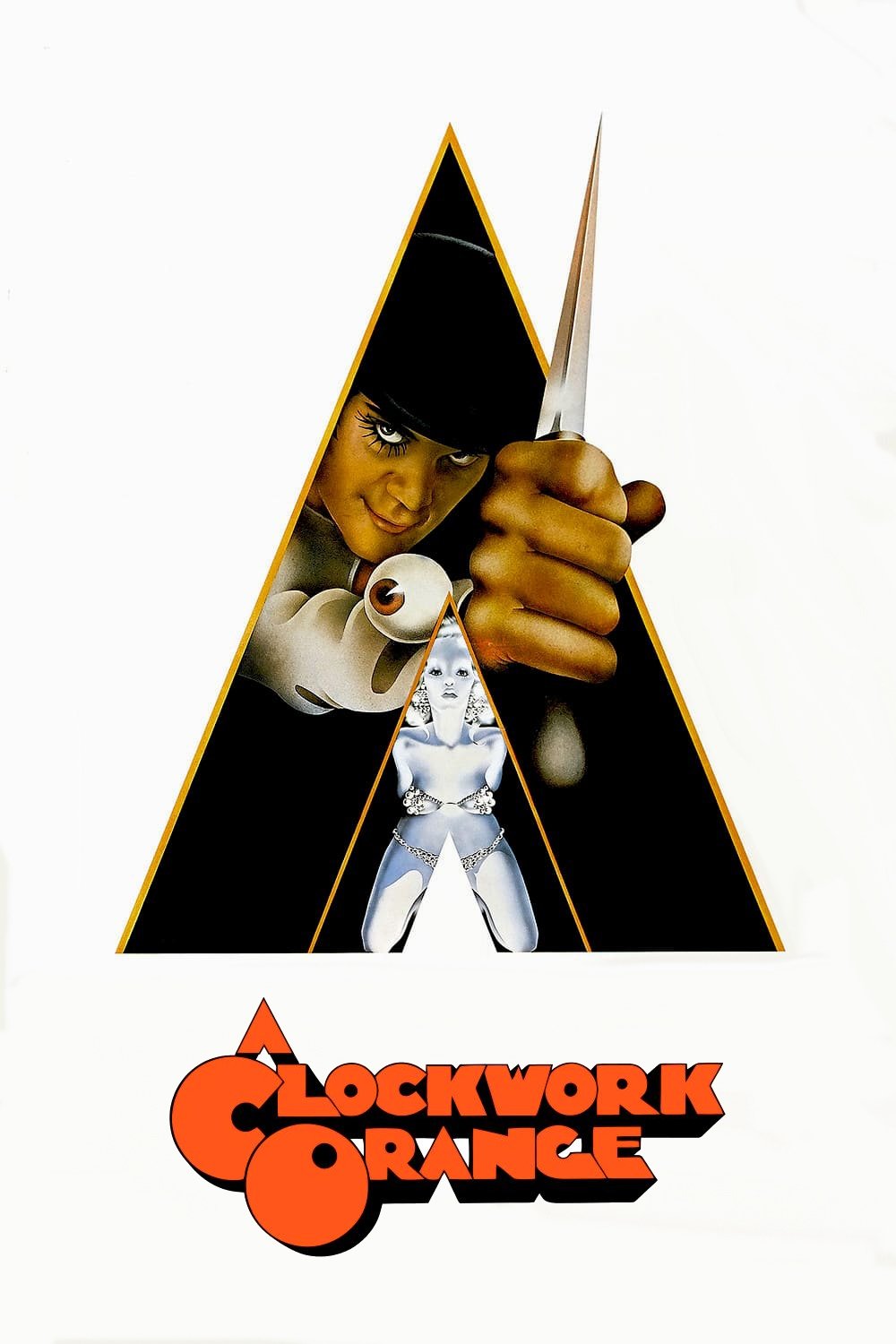
What the Film Is About
“A Clockwork Orange,” directed by Stanley Kubrick, presents a dystopian vision of near-future Britain through the eyes of Alex DeLarge, a charismatic yet sociopathic youth who revels in violence and transgression. At its heart, the film is not simply about crime and punishment but is a disturbing meditation on free will, the mechanics of moral choice, and the machinery of social control. Viewers are thrust into an emotional journey that oscillates between disgust and empathy, forced to grapple with the implications of a society willing to violate individual autonomy for the sake of order. The central conflict centers not just on Alex versus the world, but on the tension between the unruly impulses of human nature and the rigid structures imposed by authority.
The narrative direction follows Alex’s transformation—from a gleeful perpetrator of juvenile mayhem, to a subject of state-sponsored psychological conditioning, and ultimately, to a pawn tossed between political and social forces. The film’s emotional impact derives from this rollercoaster: revulsion at violence, suspicion of governmental cure-alls, and an unsettling lack of closure.
Core Themes
The core themes of “A Clockwork Orange” revolve around the ethics of free will, the morality of punishment, and the inherent violence in both individuals and institutions. Central to the film’s philosophical inquiry is the question: Is it better for someone to choose evil than to be forced into goodness? Through Alex’s journey, Kubrick interrogates the idea of moral agency, suggesting that goodness only has value if it is chosen.
The film also explores the theme of systemic power—how governments, under the guise of reform or safety, can become as dehumanizing and violent as the criminals they seek to control. The Ludovico Technique, which deprives Alex of his ability to choose, becomes a symbol of the state’s willingness to sacrifice individuality for conformity.
At the time of its release in 1971, these themes resonated with social anxieties about authoritarianism, juvenile delinquency, and the limits of behavioral science—concerns that arose against the tumultuous backdrop of the late 1960s and early 1970s: counterculture, unrest, and politicized debates over law and order. Today, the film’s relevance persists as questions about criminal justice reform, surveillance, and personal autonomy remain central to societal debates.
Additional themes include the seductive pull of violence (and its representation in media), the cycle of punishment and revenge, and the fragility of identity when stripped by external forces. Kubrick’s unflinching perspective challenges viewers to reflect on their own boundaries of empathy, justice, and humanity.
Symbolism & Motifs
Kubrick’s film is rich in visual and narrative symbolism, reinforcing its deeper messages through recurring imagery and motifs. One of the most distinctive is Beethoven’s music, especially the Ninth Symphony, which becomes entwined with Alex’s sense of self and pleasure. It represents the ambiguous overlap between culture and savagery, beauty and violence.
The image of the “clockwork orange”—something organic rendered mechanical—recurs as both an idea and an aesthetic. This paradox encapsulates the film’s primary concern: a human being made to function as a predictable machine. The Ludovico Technique itself, with its cold clinical apparatus and eye-clamps, visually symbolizes the forced mechanization of morality.
Color and costume also function symbolically. The stark white outfits and codpieces worn by Alex and his gang, for example, evoke both innocence and menace, sexual aggression and theatrical absurdity. The milk bar (the Korova Milkbar) with its drug-laden milk, is a setting where innocence (milk) is corrupted—ritual violence is routinely planned and enjoyed.
Repetition emerges as a motif: Alex’s acts of violence mirror the institutional violence he later receives, blurring the moral distinction between individual transgression and societal response. The use of wide-angle, symmetrical shots and artificial décor create an unsettling, stylized environment, suggesting that dystopia lurks not just in the future, but within the familiar contours of modern life.
Key Scenes
Key Scene 1
The opening sequence in the Korova Milkbar, with Alex and his droogs seated and staring directly at the camera, is crucial to understanding the film’s intent. This tableau immediately confronts the viewer with the interplay between innocence and depravity—youthful faces and childish pleasure juxtaposed with predatory intent. The deliberate staging and direct gaze establish the film’s challenge to audiences: to recognize the attraction of transgression and the seductive qualities of violent imagery. The milk, laced with drugs, further hints at a society where even basics are corrupted. This scene forces viewers to question their own complicity as spectators and sets the tone for the film’s critique of both voyeurism and moral detachment.
Key Scene 2
A pivotal moment occurs during Alex’s forced exposure to violent imagery as part of the Ludovico Technique. Strapped to a chair and unable to look away, Alex’s physiological revulsion is conditioned not just to violence but to his beloved Beethoven, an act that fuses his aesthetic appreciation with pain. This scene deepens the film’s central philosophical dilemma: the eradication of choice. While society seeks to “cure” Alex, it does so by stripping him of the capacity for moral judgment, rendering him incapable of agency or authentic change. The audience is left to wonder whether externally imposed goodness can be considered good at all, and whether the state’s violence is a true solution or merely a mirrored brutality.
Key Scene 3
The concluding scene, echoing the opening with its surreal and theatrical tone, presents Alex supposedly “cured” of his aversions. As operatic music swells, his fantasies of violence return, undiminished, signifying the failure of forced reform. Rather than narrative closure, this denouement functions as an acid punchline: the machinery of social control has proved futile, and the inherent chaos of human nature persists. The ambiguity of Alex’s final words—“I was cured, all right”—deliberately unsettles viewers, ultimately leaving the ethical questions unresolved but insisting on the primacy of choice, even when that choice is destructive.
Common Interpretations
“A Clockwork Orange” has sparked decades of debate among critics and audiences. One prevailing interpretation views the film as a defense of individual liberty, however dark its manifestations. In this reading, Kubrick is less concerned with condoning Alex’s violence than with highlighting the dangers of a state that would override free will in pursuit of order. The film is often seen as a warning against the overreach of behavioral science, and an exploration of the ethical limits of social engineering.
Another substantial interpretation emphasizes the film’s examination of violence and its function in society. Some see the unflinching depiction of brutality as both a critique of society’s fascination with violence and an interrogation of its roots—whether in culture, upbringing, or innate impulse. There is ongoing debate over whether the film’s stylized violence is an incitement, a satire, or a chilling reflection on audience desensitization.
A third interpretation highlights the film’s pessimism about human nature and institutions. Alex, the state, the reformers, and the media are all portrayed as self-serving, manipulative, and morally ambiguous, suggesting a world where genuine goodness—if it exists at all—is vanishingly rare.
While some critics accuse the film of nihilism, others point to its ambiguous ending as an invitation for viewers to confront their own attitudes toward power, agency, and responsibility. Few would deny the film’s capacity to unsettle and provoke, making it more relevant as a cultural touchstone than a comfortable work of moral instruction.
Films with Similar Themes
- Brazil (1985) – This dystopian satire by Terry Gilliam explores bureaucratic totalitarianism and the crushing of individual identity under an impersonal, technocratic state, sharing Kubrick’s preoccupation with the machinery of control and the absurdity of social systems.
- One Flew Over the Cuckoo’s Nest (1975) – Milos Forman’s film interrogates the conflict between institutional authority and personal autonomy, particularly in the context of psychiatric “treatment” and enforced conformity.
- If…. (1968) – Lindsay Anderson’s boarding school drama uses stylized violence and rebellion to reflect on the costs of authority and the temptations of anarchy, offering a parallel to Kubrick’s focus on youth, revolt, and systematized repression.
- Fight Club (1999) – David Fincher’s cult classic tackles issues of masculinity, violence, consumerism, and societal alienation, adopting a similarly provocative tone and narrative ambiguity as “A Clockwork Orange.”
Ultimately, “A Clockwork Orange” stands as a scathing interrogation of the tension between free will and social order, asking whether true morality can exist without the possibility of choice—even evil choice. At its most provocative, the film insists that to make human beings “good” by force is to strip them of their essential humanity, transforming them into clockwork oranges: organic on the outside, but hollow, mechanical within. Rendered in Kubrick’s unique blend of cold satire and aesthetic spectacle, the film endures not as a guide to behavior, but as an unflinching mirror held up to the violence, hypocrisy, and unresolved dilemmas of modern life.
🎬 Check out today's best-selling movies on Amazon!
View Deals on Amazon