
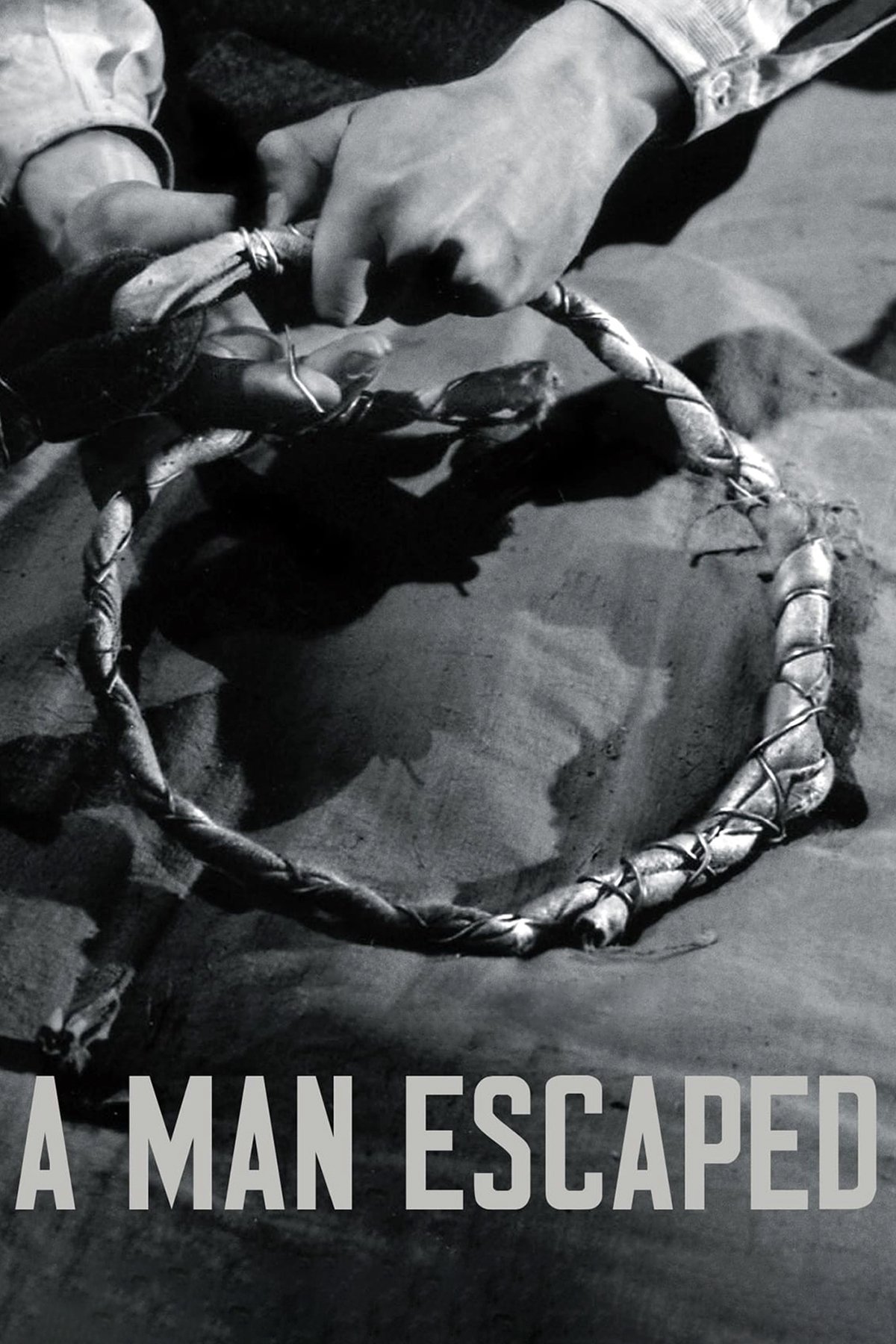
What the Film Is About
“A Man Escaped,” directed by Robert Bresson and released in 1956, follows the harrowing emotional journey of a French Resistance fighter captured by the Nazis during World War II. At its core, the film is a meditation on an individual’s will to survive under extreme repression and the silent, psychological battle between despair and hope. Rather than focusing on large-scale action or melodrama, Bresson steers the narrative through subtle moments of tension, inner resolve, and the meticulous preparation for a single, all-consuming goal: escape. The film’s central conflict becomes not just the physical constraints of a prison, but the mental and spiritual barriers faced by someone isolated, uncertain, and determined to reclaim agency over their fate.
Through a philosophical lens, the film charts the protagonist’s internal evolution from fear to hope, amplified by an atmosphere of constant peril, suspicion, and existential anxiety. “A Man Escaped” draws viewers into the subjective experience of entrapment, focusing on the smallest gestures and choices that allow dignity, purpose, and camaraderie to flourish even in oppressive circumstances.
Core Themes
The primary themes woven throughout “A Man Escaped” are the resilience of the human spirit, the existential quest for freedom, and the moral ambiguity inherent in wartime. The film interrogates what it means to resist—both physically and ethically—against insurmountable odds while maintaining one’s integrity. Central is the theme of hope versus despair: the protagonist’s incremental progress toward escape serves as a metaphor for refusing to surrender to fate, no matter how overwhelming the circumstances.
Another significant theme is the role of faith—not only religious faith, but faith in oneself, in the possibility of change, and in others. The protagonist is frequently confronted with choices that test trust and cooperation, especially when the arrival of a cellmate forces him to weigh self-preservation against solidarity. The film also addresses the value of methodical patience, illustrating how attention to detail and quiet perseverance become acts of defiance.
At the time of its release, the film held special resonance in a France still reckoning with the aftermath of occupation, resistance, and collaboration. Its focus on individual courage foregrounded questions of moral responsibility under totalitarian regimes. Today, “A Man Escaped” continues to resonate because it addresses universal questions: How does one maintain freedom and personhood when faced with dehumanizing systems? What forms of resistance remain when brute force shuts every door? The film suggests that dignity arises not automatically, but through conscious, repeated acts of will.
Symbolism & Motifs
Bresson employs a precise visual language, with recurring motifs and symbols that reinforce the film’s existential weight. The prison cell itself becomes a powerful symbol: at once suffocating and, paradoxically, a space for transformation. Within these claustrophobic confines, everyday objects—spoons, wires, scraps of cloth—are transformed into tools of liberation, symbolizing the latent potential within the mundane and the marginalized.
Hands serve as a dominant motif throughout the film. Bresson’s camera lingers on the protagonist’s hands as he tests walls, fashions ropes, and shapes tools. This focus on manual action underscores the theme of agency—the idea that, even amid extreme powerlessness, creative, determined action enables a form of self-definition. Silence and sound are also significant motifs. The prison’s oppressive quiet is punctuated by coded knocks and whispered exchanges, suggesting that communication and connection persist even when words are forbidden.
Finally, the motif of doors and barriers punctuates the narrative, symbolizing both literal and figurative boundaries. Each locked gate or guarded threshold reflects not just physical limitations, but moments of existential decision: to persist, to risk, or to yield. The act of moving through these doors—either in hope or in resignation—connects directly to the film’s meditation on the will to transcend circumstances.
Key Scenes
Key Scene 1
One crucial scene involves the protagonist’s decision to trust his new cellmate with his escape plan. This moment resonates on both emotional and symbolic levels—it embodies the leap of faith required when personal survival is set against the possibility of betrayal. In this intimate, wordless exchange, the film articulates its faith in human connection amidst suspicion and isolation. At stake is not simply the logistics of escape, but the possibility of shared dignity and risk, suggesting that solidarity is as vital to survival as ingenuity or courage.
Key Scene 2
Another pivotal scene focuses on the meticulous, almost ritualistic preparation for the escape. This sequence, drawn out in silence and with almost monastic attention to procedure, quietly dramatizes the theme of persistence as resistance. Each deliberate act—tying knots, filing bars, concealing evidence—becomes a statement about autonomy and meaning. Through these gestures, the protagonist asserts control over the terms of his existence, turning acts of survival into moral accomplishments. This builds a deeper sense of purpose, reinforcing Bresson’s vision that freedom is achieved as much through the mind and will as through physical actions.
Key Scene 3
The final escape sequence stands as the ultimate synthesis of the film’s themes and motifs. As tension mounts, each sound and movement echo with symbolic significance. The moment the protagonist and his companion finally cross the last barrier, the film does not frame their escape as triumphant spectacle but as the culmination of a larger existential journey. In this concluding statement, Bresson affirms not only the value of liberation but also the moral and spiritual transformation achieved through perseverance, faith, and hope. The film’s message settles on the idea that the courage to persist—regardless of outcome—is itself a form of transcendence.
Common Interpretations
Critics and audiences have widely interpreted “A Man Escaped” as a profound meditation on spiritual resistance and the search for meaning in suffering. Many see the film as a parable about transcendence, where the meticulous depiction of prison life and escape planning mirrors the human struggle to rise above despair. Some readings note Christian undertones—highlighting the protagonist’s references to faith, the parallel to spiritual rebirth, and the notion of salvation through struggle. While some critics focus on the political dimensions, emphasizing its allegory of resistance against authoritarian oppression, others view it through an existential lens, arguing that its true subject is the inner drama of the individual who defines himself through conscious action.
A smaller but significant interpretation considers Bresson’s minimalist style as part of the meaning itself: the refusal of embellishment, the use of non-professional actors, and the focus on detail all suggest a philosophy of honesty and integrity. These choices lead viewers to confront the essential nature of the film’s themes without distraction, thereby participating in the protagonist’s experience of clarity, discipline, and hope.
While most interpretations agree on the film’s affirmation of resilience and agency, debates continue around the role of fate versus free will. Some see the escape as an act of faith rewarded, others as an assertion of human autonomy in a world defined by arbitrary or indifferent systems.
Films with Similar Themes
- La Grande Illusion (1937) – Explores camaraderie, dignity, and class divides among POWs during World War I, focusing on the endurance of human connections in prison.
- Stalag 17 (1953) – Examines suspicion, loyalty, and resistance among internees in a German POW camp, echoing themes of trust and individual versus collective survival strategies.
- The Shawshank Redemption (1994) – Centers on hope, resilience, and spiritual liberation within prison walls, sharing Bresson’s focus on the transformative power of small acts.
- Au Hasard Balthazar (1966) – Also directed by Bresson, this film places the themes of suffering, faith, and dignity in a very different narrative context, but with the same minimalist, spiritual approach.
In sum, “A Man Escaped” ultimately communicates that the persistence of hope and individual agency is not just an act of self-preservation, but a profound statement about the human spirit. Rooted in real events and made in a nation still healing from occupation, the film argues for the possibility of dignity and meaning in the most dehumanizing of conditions. Through its spareness, patience, and focus on the ordinary, it transcends its time and context to become a universal meditation on freedom, faith, and the value of maintaining one’s soul against all odds.
🎬 Check out today's best-selling movies on Amazon!
View Deals on Amazon