
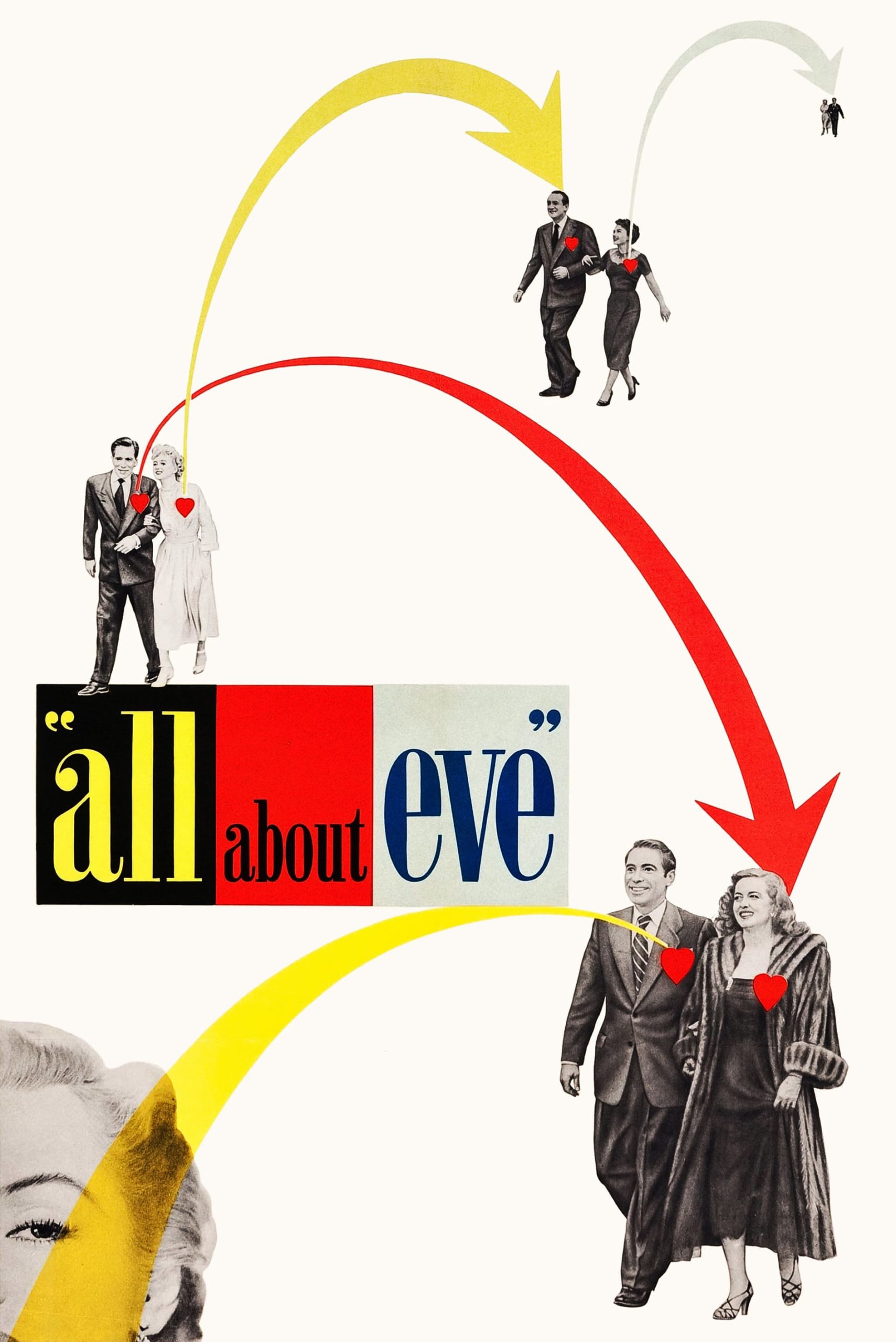
What the Film Is About
“All About Eve” immerses viewers in the competitive and emotionally charged domain of Broadway theater, following the collision between seasoned star Margo Channing and her ambitious young admirer, Eve Harrington. Rather than focusing solely on backstage intrigue or professional rivalry, the film zeroes in on the anxieties and vulnerabilities buried beneath public personas. It presents a layered exploration of ambition and self-deception, as characters wrestle with shifting power dynamics, personal integrity, and the transient nature of fame.
At its core, the film reveals the emotional toll of aging in a world obsessed with youth, the double-edged allure of admiration, and the price of success. The primary conflict is not simply between two women, but between authenticity and artifice—between those who cling to hard-earned identities and those who reinvent themselves to survive or dominate.
Core Themes
The central themes of “All About Eve” revolve around ambition, identity, aging, gendered power structures, and authenticity. The film explores how personal desire for recognition and security can spiral into manipulation, both overt and subtle. Ambition is depicted as a potent force, capable of fueling achievement but also of corrupting character and distorting relationships. Through Eve’s calculated ascent and Margo’s increasing insecurity, the narrative interrogates what individuals are willing to sacrifice for validation or survival within a harshly judgmental industry.
The film also scrutinizes the societal pressures placed upon women, particularly those who age in the spotlight. Released in 1950—at a time when Hollywood and theater roles for older women were rapidly shrinking—the story mirrors real anxieties of actresses forced to compete with younger rivals. These themes, deeply rooted in postwar American culture, remain painfully relevant today as industries and social discourses continue to grapple with issues of ageism, gender equity, and the authenticity of public image.
Beyond the world of theater, “All About Eve” addresses universal questions about personal authenticity and the psychological cost of performing for an audience, literal or figurative. The tension between genuine identity and meticulously constructed facade speaks to ongoing concerns in media-saturated societies where behavioral self-presentation is constantly scrutinized and commodified.
Symbolism & Motifs
“All About Eve” deploys a series of motifs and symbols to deepen its commentary on performance and deception. The recurring presence of mirrors and dressing room lights throughout the film underscores the preoccupation with self-image, reflection, and the blurry boundaries between private reality and public performance. These visual elements reinforce the idea that every character, not just the actresses, is trapped in their own version of a performance—whether that means projecting confidence, feigning innocence, or disguising ambition.
Another pivotal motif is the theater itself—not merely as a setting, but as a metaphor for life’s inherent theatricality and the roles people inhabit within social hierarchies. The cyclical nature of fame, success, and obsolescence is dramatized through the repeated celebration of achievements (such as awards and curtain calls), only to be juxtaposed with moments of vulnerability backstage.
Additionally, the film frequently returns to the imagery of costumes, not merely as tools of characterization but as symbolic armors and masks. Costuming choices emphasize transformation, camouflage, and the seductive or treacherous art of reinvention. This motif is especially potent in Eve’s journey, as she adopts mannerisms, speech patterns, and ultimately the public adulation that once surrounded Margo.
Key Scenes
Key Scene 1
One of the film’s most iconic sequences unfolds at Margo’s party. Faced with professional setbacks and encroaching self-doubt, Margo delivers the famous line, “Fasten your seatbelts, it’s going to be a bumpy night.” The scene operates on both emotional and metaphorical levels. On its surface, it’s Margo asserting a measure of control over social chaos. More deeply, the moment exposes the cracks beneath her sharp-tongued wit, revealing mounting anxieties about aging and irrelevance. The party scene establishes a crucial emotional environment filled with shifting alliances, subtle power plays, and the threat lurking in Eve’s seemingly supportive presence. It encapsulates the film’s view of the public/private battle for recognition and love.
Key Scene 2
A second pivotal scene features the confrontation between Eve and Karen in the restroom. Here, Eve drops her façade of meekness and unveils her true manipulative nature, blackmailing Karen to secure her position as Margo’s understudy. The encounter upends easy distinctions between villain and victim, challenging the audience to reassess their sympathies. It exposes the sometimes transactional nature of loyalty and friendship in an environment fraught with competition and scarcity. This scene underscores the corrosive effects of ambition untethered from conscience, and lays bare the way self-interest can pervert relationships supposedly built on trust.
Key Scene 3
The film’s climactic sequence arrives when Eve wins her award at the Sarah Siddons Society gathering, only to encounter Phoebe—a young fan eager to emulate Eve’s path. In this chilling final moment, Phoebe is found literally mimicking Eve in front of a mirror, her eyes glinting with ambition. This tableau turns the narrative into a cycle, revealing the endless repetition of desire, manipulation, and displacement in the pursuit of glory. It’s the director’s final statement on the ephemeral nature of acclaim and the relentless churn of the “next generation,” reinforcing how the forces of ambition and insecurity are inescapable for anyone who seeks the limelight.
Common Interpretations
“All About Eve” has been the subject of extensive interpretation by both critics and audiences. A dominant reading frames the film as a meditation on the perils of ambition—specifically, how relentless pursuit of success can undermine integrity and poison relationships. Many see Eve as a cautionary figure, embodying the dangers of excessive ambition, while Margo emerges as a complicated heroine forced to confront her insecurities and rediscover her authentic self.
Another widespread interpretation emphasizes the film’s exploration of gender roles, aging, and societal expectations. Critics frequently highlight how the story dramatizes the precariousness of female power in a youth-obsessed, male-dominated environment, noting that sympathy is ultimately shared among all the women who are, in various ways, punished for their ambition or desire.
Some viewers interpret “All About Eve” as a broader allegory of show business itself, with characters standing in for archetypes—the ingénue, the fading star, the critic, the manipulator—trapped in an endless cycle of performance and replacement. The film’s razor-sharp dialogue, layered performances, and its refusal to endorse simple moral binaries have generated debate about whether the ultimate message is cynical or sympathetic regarding human nature and the cost of aspiration.
Films with Similar Themes
- Sunset Boulevard (1950) – Explores the destructive effects of fame and the fear of aging in the entertainment industry, paralleling Margo Channing’s anxieties about obsolescence and the revolving door of ambition.
- Black Swan (2010) – Examines the psychological pressures of performance, ambition, and identity fragmentation in a competitive environment, echoing Eve’s willingness to lose herself for success.
- Birdman (2014) – Deals with the shifting boundary between performance and reality and the struggle to remain relevant amid generational change, echoing the meta-theatrical lens of “All About Eve.”
- A Star Is Born (various versions) – Depicts the cyclical pattern of rising and falling fame, with one performer’s ascent juxtaposed against another’s decline, thematically mirroring the relationship between Margo and Eve.
In sum, “All About Eve” stands as a meticulous examination of the ambiguous, often contradictory impulses driving personal ambition and public adulation. It explores the ways in which individuals both crave and fear the spotlight, the shifting tides of power among women in patriarchal institutions, and the perpetual cycle of desire and displacement inherent within any arena fixated on youth and novelty. Far from a simple morality tale, the film remains a complex, compassionate portrait of flawed human beings struggling to define themselves against the judgments of their peers, their audiences, and—most hauntingly—their own reflections.
🎬 Check out today's best-selling movies on Amazon!
View Deals on Amazon