
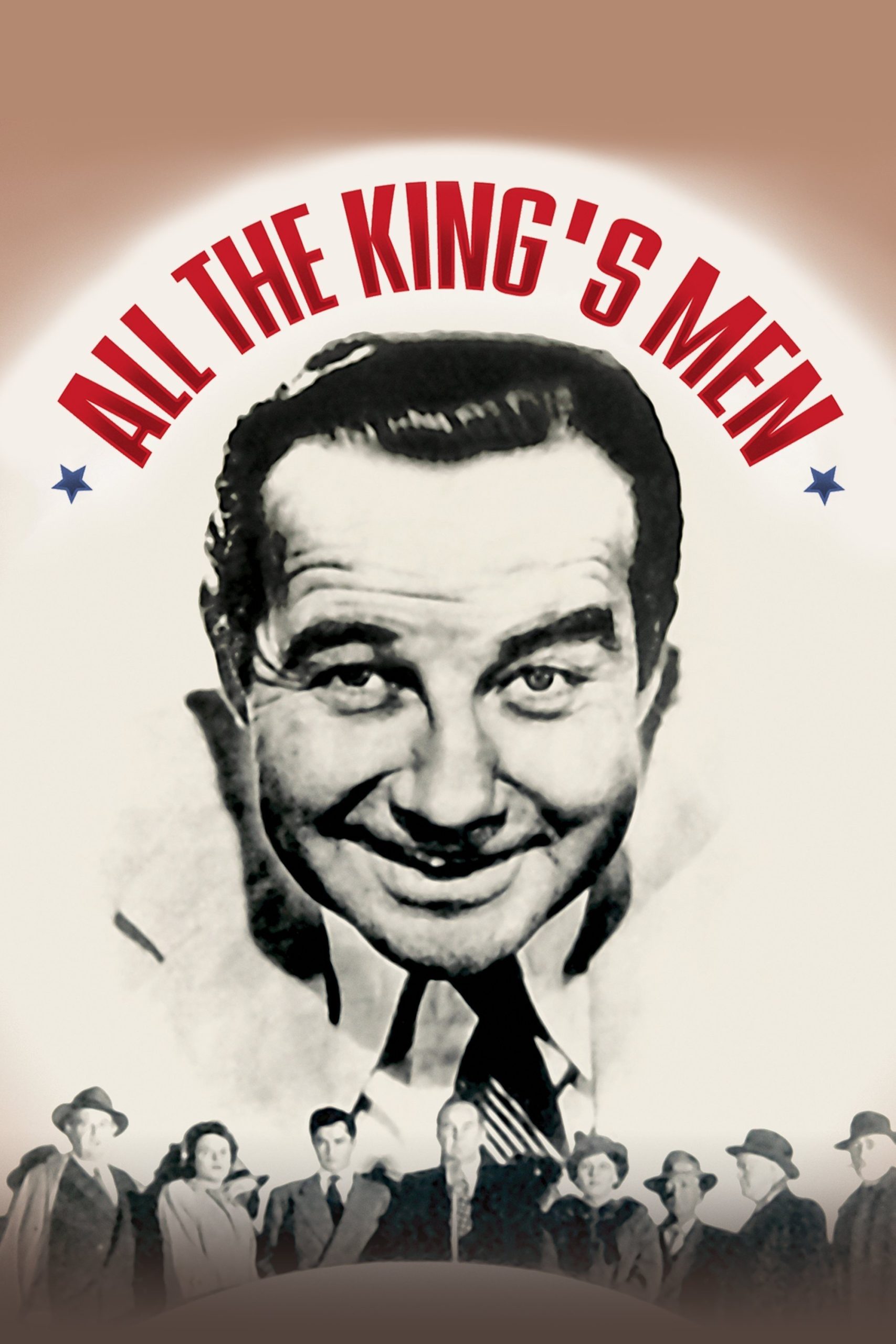
What the Film Is About
“All the King’s Men” (1949) is a searing drama about the rise and fall of Willie Stark, an idealistic man who transforms into a ruthless political powerhouse. The film traces his emotional journey from a humble, well-meaning reformer to a deeply compromised leader, surrounded by loyalists, enablers, and adversaries. The central conflict revolves around the blurry line between righteousness and corruption, as both Stark’s supporters and enemies become entangled in the moral mire of political ambition. The narrative direction steers the audience through personal betrayals and public spectacles, revealing the human vulnerabilities behind the heavy machinery of power.
At its core, the film is less concerned with exposé-style politics, and more with the seductive and destructive effects of power on an individual’s soul and the people swept up in his orbit. Emotional stakes are high, as personal ideals erode under pressure and almost every major character faces a reckoning with disillusionment, complicity, or guilt, culminating in tragedy and introspection.
Core Themes
One of the film’s most significant themes is the corrupting nature of power. Willie Stark initially represents the common man—ambitious, sincere, and determined to challenge a broken system. However, as he amasses influence, the idealism that once drove him is gradually eroded, replaced by cynicism, manipulation, and eventually, tyranny. This transition is neither abrupt nor purely malicious; it is depicted as a seduction, suggesting that the machinery of politics can warp even the most well-intentioned individuals.
Closely intertwined is the theme of moral compromise. The narrative demonstrates how individuals justify unethical decisions for what they perceive as a greater good. Stark’s associates and adversaries alike must wrestle with where to draw the line between loyalty and integrity. These conflicts are deeply personal, revealing how external pressures and rationalizations can alter even one’s most deeply-held principles.
Identity and self-destruction emerge as further layers. Characters are constantly testing the boundaries of their own ethics, often losing sight of their true selves. Stark’s metamorphosis highlights the danger of losing personal accountability amidst triumph and adulation. This speaks to timeless anxieties about authenticity and ambition—a man can become the very monster he set out to defeat.
Upon its release, these themes resonated strongly in a post-World War II America. Mistrust of institutions and anxiety over demagogues reflected worries about authoritarianism and democratic erosion, themes that remain urgently relevant. Today, “All the King’s Men” endures precisely because it interrogates the fragility of conscience and the ease with which noble visions can decay within flawed human systems.
Symbolism & Motifs
The film is suffused with visual and narrative motifs that reinforce its central ideas. Notably, the frequent recurrence of mirrors and reflective surfaces serves as a metaphor for self-examination—characters are often confronted with distorted versions of themselves as their actions accumulate consequences they cannot escape. The motif of the “crowd”—sometimes adoring, sometimes menacing—underscores the dangers of populism and the volatility of public opinion; power is both derived from and endangered by the masses.
Another powerful symbol is Willie Stark’s campaign speeches, which grow grander and more theatrical as his character transforms. These public performances contrast sharply with his private moments of doubt, suggesting that public personas can overwhelm the truth of private conscience. The transition from rural meeting halls to grand marble government buildings visually captures Stark’s loss of touch with his populist roots and his drift toward institutionalized authority.
Finally, the recurring motif of legal documents, contracts, and secret files marks the way in which power is both solidified and undermined through access to information and threats. Stark’s reliance on blackmail reflects a perversion of justice—what begins as a crusade against corruption ends with him perpetuating it, his hands just as dirty as those he once condemned.
Key Scenes
Key Scene 1
One of the most revealing scenes occurs as Willie Stark gives his first passionate public speech after being manipulated by local political bosses. Initially devastated by betrayal, Stark suddenly casts aside his prepared text and speaks candidly to the crowd, exposing the backroom deals and dirty tricks of the establishment. This moment is crucial: it channels the raw emotion of a man who has seen the inside of the system’s rot and vows to challenge it from within. Emotionally, the scene is infused with righteous fury, hope, and conviction. Symbolically, it represents the birth of Stark as a populist force, yet also plants the seeds of demagoguery—his connection with the masses reveals both the promise and peril of unfettered charisma.
Key Scene 2
Later in the film, a tense confrontation between Stark and his confidante Jack Burden crystallizes the emotional and ethical core of the narrative. Burden, once a detached observer, is drawn ever deeper into Stark’s web, eventually charged with unearthing damaging information on an old friend. The resulting conversation is laden with themes of shame, loyalty, and the shattering of personal boundaries. This scene challenges easy interpretations of good and evil; it shows how loyalty can be manipulated into complicity and how the machinery of political life creates casualties out of innocent relationships. Burden’s internal struggle spotlights how the pursuit of justice can lead to self-betrayal when ends are thought to justify means.
Key Scene 3
The film’s denouement—a climactic assassination—serves as a devastating final statement on the dangers of unchecked ambition and the cycle of violence it engenders. In these closing moments, the shattering of order echoes the themes of Greek tragedy: fate catching up with hubris, and the idea that personal actions send ripples far beyond their intended target. The visceral impact of this turning point drives the film’s meaning home—no one emerges unscathed, and the supposed victory of a man of the people ends not with reform but with ruin. This conclusion does not offer false catharsis but instead insists on the lasting consequences of moral failure.
Common Interpretations
“All the King’s Men” has been widely interpreted as a cautionary tale about the allure and cost of political power. For many critics, Willie Stark’s journey is less about a single fall from grace than a meditation on how systems grind down and ultimately remake individuals who dare to challenge them. The film, based on Robert Penn Warren’s Pulitzer Prize-winning novel, has often been read as thinly-veiled commentary on Huey Long, the populist Louisiana governor and senator. However, the film’s storytelling moves beyond biography to become a universal parable about idealism corrupted by the realities of governance.
Some interpretations emphasize the tragic elements, likening the narrative to classic Greek or Shakespearean tragedy, where hubris and fate intertwine. Stark’s rise and devastation are not simply personal but emblematic of larger truths about ambition and the inherent dangers of believing oneself uniquely virtuous or indispensable. Other critics underscore the film’s critique of collective complicity: Stark’s supporters, including Jack Burden, serve as mirrors to the audience, drawing attention to the shades of gray running through all human institutions.
There is also a thread of interpretation that views the film as an appraisal of American democracy. Rather than indicting the system itself, the film suggests that democracy’s functioning is only as healthy as the character of those who participate in it, from leaders to followers. Yet, most mainstream interpretations see it as both a portrait of tragic downfall and a warning about the perils of conflating ends and means in public life.
Films with Similar Themes
- Citizen Kane (1941) – Like “All the King’s Men,” this film explores the rise and fall of a powerful figure whose initial ideals are compromised by his pursuit of influence, offering a meditation on the price of ambition and the corrosive effect of power on personal integrity.
- The Great Dictator (1940) – Charlie Chaplin’s film shares a concern with demagoguery and the seductive but destructive power of populist rhetoric, interrogating both personal failings and collective responsibility amid political turmoil.
- Mr. Smith Goes to Washington (1939) – While this film is more optimistic, it similarly examines the challenges faced by an idealist in a corrupt political landscape, focusing on the struggle to maintain integrity against systemic pressures.
- A Face in the Crowd (1957) – This later film directly addresses the media’s influence on public perception and the moral compromises inherent in seeking mass approval, extending many of the themes of charisma and corruption found in “All the King’s Men.”
In sum, “All the King’s Men” holds up a mirror to both its era and our own, underscoring how easily the machinery of institutions can warp human nature under the guise of achieving good. Its enduring relevance lies in its unwavering gaze at the temptations that beset leaders—and the perils awaiting anyone who confuses the right to govern with the right to rule without limits. The film ultimately asserts that moral character and personal judgment are all that stand between justice and decay, challenging audiences to consider the delicate balance between idealism and the pragmatic reality of power.
🎬 Check out today's best-selling movies on Amazon!
View Deals on Amazon