
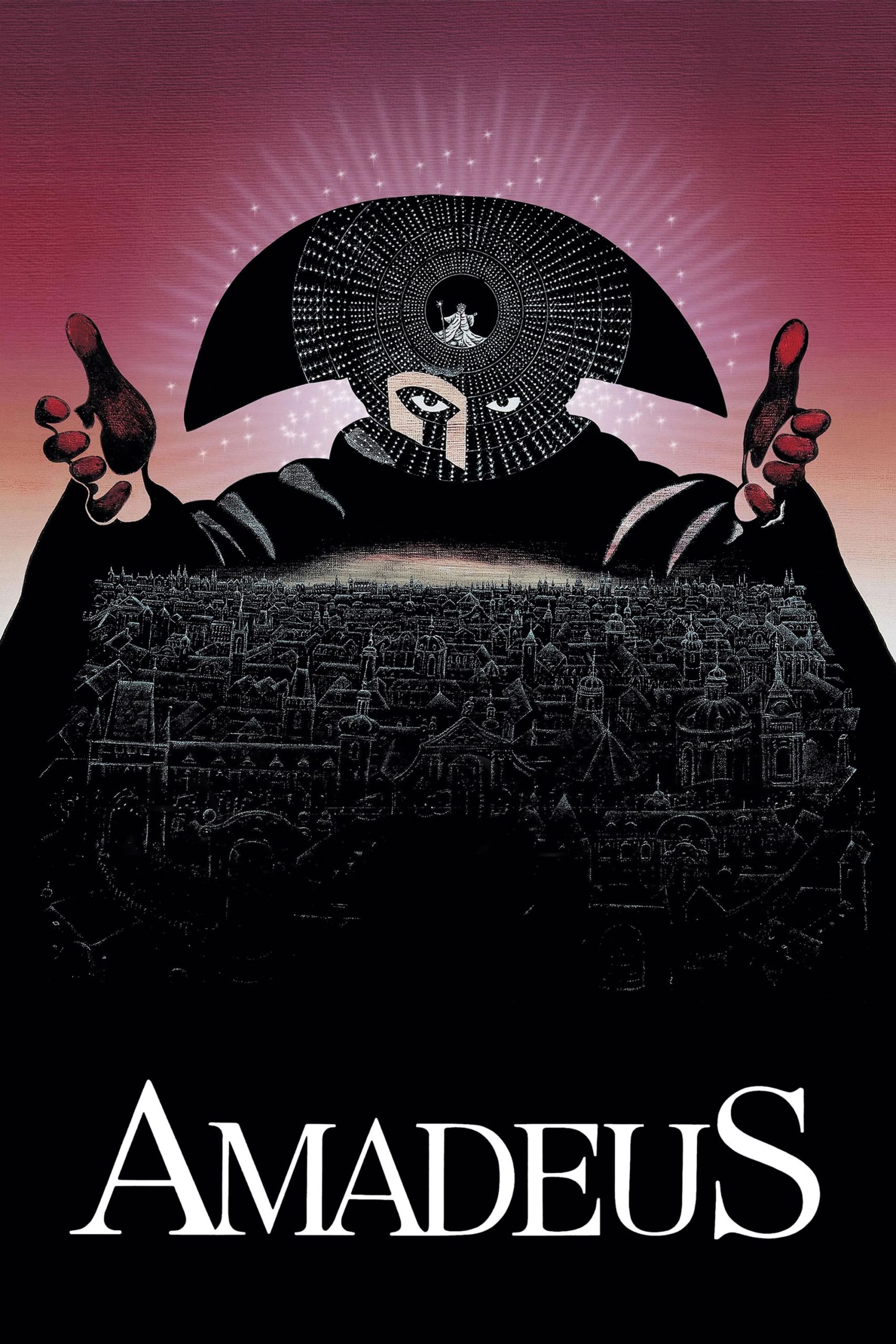
What the Film Is About
I have always been fascinated by how “Amadeus” portrays the agony of being ordinary. “Amadeus,” directed by Miloš Forman, is a sumptuous psychological and emotional exploration of genius, jealousy, and spiritual crisis. Rather than offering a straightforward biography of Wolfgang Amadeus Mozart, the film recounts the composer’s meteoric rise and tragic fall through the unreliable, tormented eyes of his bitter rival, Antonio Salieri. Emotionally, the story is a study in obsession and self-destruction: Salieri is consumed by his envy of Mozart’s effortless brilliance, but he is equally plagued by his need to understand why the divine would grant genius to someone so seemingly childish and vulgar. The film’s central conflict pulses between artistic adoration and personal resentment, elevating questions about the nature of talent, the justice (or injustice) of fate, and the complex relationship between faith and mediocrity. The narrative becomes less about Mozart’s life than about Salieri’s psychological descent, fueling an emotional journey that is both personal and universal.
Core Themes
In my view, the most painful theme here is the recognition of sublime beauty that one can never hope to create.
“Amadeus” is a film deeply invested in the tension between mediocrity and genius. Its central thematic preoccupation is the agony of recognizing sublime beauty and greatness while being destined to merely witness, rather than embody, such gifts. The story explores the corrosive effects of jealousy: Salieri’s admiration of Mozart turns into envy and then existential despair, as he attempts to reconcile his devotion to God with his inability to match Mozart’s talent. The film also scrutinizes the capriciousness of divine favor, inviting questions about whether talent is a gift, a curse, or a cosmic accident. Other themes include the cost of artistic creation, the burden of legacy, and the disconnect between artistic work and personal morality—Mozart’s art is transcendent, even as his behavior is often infantile and self-destructive.
When “Amadeus” was released in 1984, these themes resonated strongly with a postmodern audience skeptical of romantic myths about art, yet desperate for meaning in an age of materialism and cynicism. The questions it raises about talent, envy, and the value of art remain strikingly contemporary: we still live in a world that makes celebrities out of prodigies while often overlooking the labor and the wounds of those who stand in their shadow. By focusing on the pain of being ordinary, the film touches on something fundamentally human—the yearning for significance, and the suffering that comes from witnessing greatness we cannot attain.
Symbolism & Motifs
“Amadeus” weaves its deeper meanings through powerful symbols and motifs. Chief among them is music itself—not just as background, but as a living testament to both transcendence and distance. Mozart’s compositions are presented as near-divine communications, inaccessible to all but a chosen few. For Salieri, music becomes a tormenting reminder of his own limitations—a symbol of unattainable grace.
Religious imagery permeates the film, intensifying Salieri’s crisis. His prayers, his bargains with God, and his detestation of the “angel-voiced” Mozart all serve as motifs that conjure questions of faith, sin, and damnation. The mask worn by the “ghostly” patron (Salieri in disguise) in the second act visually encapsulates themes of duplicity, guilt, and the hidden face of evil masked as virtue. Recurrent images of food and gluttony parallel both physical and creative appetites, hinting at Mozart’s excesses and the insatiable hunger for more—be it fame, admiration, or spiritual confirmation.
The motif of laughter threads throughout, most dramatically embodied in Mozart’s boisterous, uncontrollable laugh—a laughter that is both a celebration of life and a mocking echo against Salieri’s pretensions of seriousness and restraint. This laughter becomes a soundscape for Salieri’s torment, a motif that alternately attracts and repels, embodying chaotic genius and unrestrained joy that the older composer cannot understand or imitate.
Key Scenes
Key Scene 1
The first crucial moment is the early encounter in which Salieri first hears Mozart’s music performed in Vienna. The scene’s emotional importance is immense: as Salieri listens, the film visually and sonically transports the viewer into his subjective experience—the music’s beauty is overwhelming, miraculous, and utterly out of reach. This moment frames Salieri’s entire struggle: he identifies Mozart’s genius as sacred, feels unworthy of it, and is caught between awe and resentment. It establishes both his worship of Mozart and the seed of envy that will bring him to ruin. What makes this scene so vital is not plot mechanics, but the way it communicates the emotional violence of realizing another possesses the gift you crave most deeply.
Key Scene 2
A pivotal late scene centers on Salieri helping an ailing, feverish Mozart complete the “Requiem Mass.” Here, the film reaches its most poignant meditation on collaboration, rivalry, and the meaning of creation. As Salieri assists with the composition, he glimpses, for the first and last time, genuine creative intimacy with Mozart, awed by the younger man’s prodigious, fevered imagination. Yet beneath this is the irony that Salieri’s most meaningful creative experience is the act of shaping another’s genius rather than producing his own. The mingling of cooperation and competition in this scene dramatizes the intertwining of affirmation and annihilation at the heart of Salieri’s journey.
Key Scene 3
The film’s concluding sequence—an older, institutionalized Salieri offering “absolution” to his fellow asylum inmates—serves as its final statement. Branded as the patron saint of the mediocre, Salieri sarcastically forgives everyone’s ordinariness, including his own. This brilliant scene transforms the narrative from an individual tragedy into a universal meditation on human limits. By confessing his own failings and ‘forgiving’ mediocrity, Salieri invites viewers to interrogate their own dreams and disappointments, making the film’s message one of bitter self-awareness: that greatness is rare, and that for most, the struggle lies not in attaining genius, but in enduring its absence.
Common Interpretations
“Amadeus” is most commonly read as a meditation on jealousy and the uneven distribution of talent. Critics often focus on Salieri as the personification of mediocrity, using his perspective to explore how envy can consume and destroy. Another widely accepted interpretation frames the narrative as an allegory of failed faith: Salieri believes in a just, rewarding God, but Mozart’s existence shatters that faith by upending expectations of moral and artistic reward. Some see the film as a subversive portrait of the artist, one that debunks notions of the virtuous, tormented genius by showing Mozart as both divine and deeply flawed. Viewers and scholars also debate whether Salieri is a villain or a tragic antihero—his actions are cruel, but his suffering is profoundly human and relatable, leading to sympathy as well as condemnation.
A less dominant, yet thought-provoking interpretation emphasizes the unreliable narrator structure: the events we witness are filtered through Salieri’s embittered memory, suggesting the story is an emotional truth rather than a literal account. This allows the film to explore the psychology of guilt and memory, as Salieri’s confession becomes a desperate attempt to make sense of his pain, and perhaps, to seek absolution from a world that barely remembers his own contributions.
Films with Similar Themes
- Shine (1996) – This film explores the cost of prodigious talent and psychological instability, centering on the pianist David Helfgott. Like “Amadeus,” it interrogates the price individuals pay for genius.
- Black Swan (2010) – Darren Aronofsky’s portrait of artistic obsession and psychological deterioration echoes Salieri’s destructive envy and the dangerous pursuit of perfection.
- Whiplash (2014) – Through its focus on the student-mentor relationship, this film examines the thin line between encouragement and abuse, questioning whether greatness emerges from suffering, admiration, or rivalry.
- There Will Be Blood (2007) – While centered on a different world, this film shares with “Amadeus” a fascination with ambition, the destructive power of obsession, and the moral consequences of envy.
Ultimately, “Amadeus” tells us that the longing to transcend ordinariness—whether as an artist, a believer, or simply as a human being—is a source of both grandeur and torment. The film remains a timeless reflection on the violence of ambition, the mystery of talent, and the struggle to find purpose in a world where greatness is rare and often misunderstood. By using the historical setting of classical Vienna to reveal timeless anxieties, “Amadeus” holds a mirror to society’s obsession with success and the quiet agony experienced by those who live in its shadow.
To expand your understanding, you may want to explore how modern viewers interpret this film today.
Watching this film again, I realized that we are all, in some way, like Salieri—struggling to accept our limits. It’s this human element that makes “Amadeus” a masterpiece for me.
For modern viewers, this film is best approached as a work that communicates its ideas through character interaction rather than spectacle.
Understanding its themes in this way can help contemporary audiences appreciate its relevance without requiring historical or academic background.
🎬 Check out today's best-selling movies on Amazon!
View Deals on Amazon