
What the Film Is About
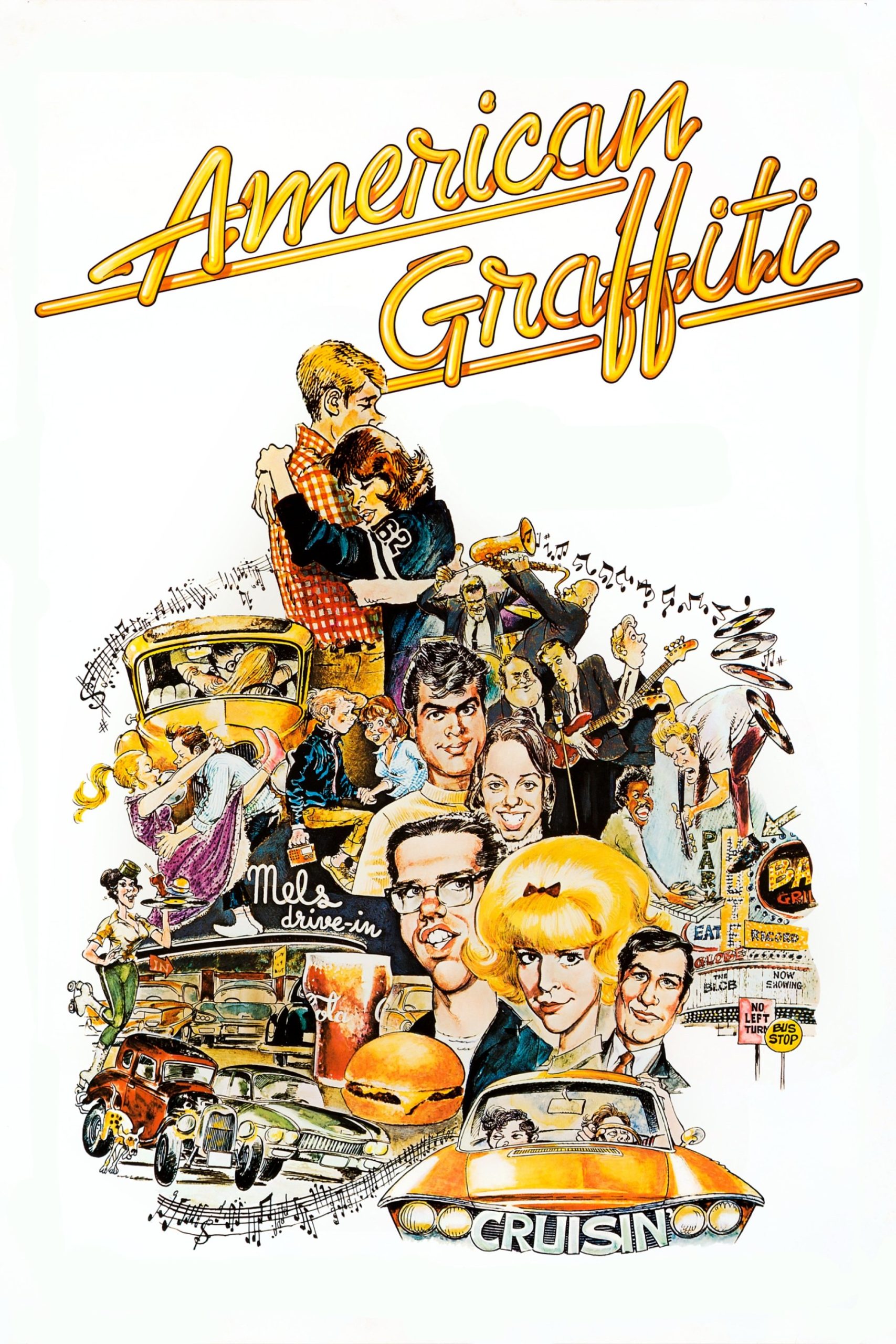
At its heart, “American Graffiti” is a nostalgic exploration of a pivotal moment in American adolescence. Set over the course of a single night in 1962 in a small California town, the film follows a group of recent high school graduates as they cruise the local boulevard, torn between the comfort of the familiar and the uncertainty of adulthood. Each character’s arc offers a window into the universal tension between holding on to youth and facing the responsibilities of growing up.
The narrative is woven from a deep sense of longing, both for the innocence of the past and for the unknown possibilities of the future. The film is less about plot-driven action than about capturing an emotional crossroads—where choices, regrets, and the passage of time intersect. Its bittersweet mood is heightened by the knowledge, for both characters and audience, that an era is quietly ending.
Core Themes
“American Graffiti” is a rich tapestry of themes that tap into both the era it depicts and the time of its release. Central among these is the anxiety and anticipation that accompany transitions—between adolescence and adulthood, hometown comfort and the wider world, nostalgia and progress. The film investigates what it means to leave behind one’s roots, questioning whether growing up involves loss, gain, or a complex combination of both.
Identity is another key concern. Each main character faces moments when their sense of self is tested by the expectations of their friends, family, and community. The struggle to define one’s future—whether to stay in a well-known world or to risk change by moving forward—echoes personal and national uncertainties of the early 1960s, and also reflected the cultural anxieties of the early 1970s, when the film was released. Amid the backdrop of Vietnam, Watergate, and generational upheaval, “American Graffiti” invites viewers to look back at a seemingly more innocent time, yet also questions whether such innocence was ever real.
The passage of time itself emerges as a central theme—the fleeting nature of youth and the inevitable march toward adulthood. By immersing viewers in a vibrant, soundtracked night, the film presents time as both precious and unforgiving. This resonates for audiences across generations, especially in the ways milestones and goodbyes linger in memory.
Symbolism & Motifs
“American Graffiti” employs visual and aural symbolism that deepens its meditation on time, change, and American life. The most prominent motif is the act of cruising—cars circling endlessly through town, headlights glowing in the dark. The cars and the roads themselves symbolize freedom, status, and the friction between motion and stagnation. For the teenagers, their vehicles are extensions of their identities, and yet they are literally driving in circles, suggesting both the exhilaration and futility of their search for meaning.
The soundtrack, made of wall-to-wall period rock and roll hits, functions as a character in its own right—a constant undercurrent that evokes the idealized energy of youth but also anchors the story in a precise historical moment. Songs blare from radios as a communal language, but the ever-present music also underscores the passage of time and the transience of fads, relationships, and innocence.
Another powerful symbolic element is the nighttime setting. The darkness evokes a liminal state: the end of one era on the verge of a new dawn. Streetlights, neon signs, and car headlights punctuate the gloom, suggesting moments of clarity within the larger unknown. The film’s closing dawn hints at the beginning of adulthood—a time when childhood shadows recede, never to fully return.
Key Scenes
Key Scene 1
A defining scene unfolds when Curt Henderson, conflicted about leaving for college, glimpses the elusive blonde in the white Thunderbird. This fleeting moment is charged with longing and possibility—the mysterious figure represents both a romantic fantasy and a symbol of the future that’s just out of reach. The encounter is emotionally resonant because it externalizes Curt’s uncertainty; instead of a direct confrontation, the film uses visual distance to capture the ache of choices not yet made and the allure of roads not taken.
Key Scene 2
Later in the night, the car crash involving the reckless drag race becomes a powerful metaphor for risk and consequence. The rivalry between John Milner and Bob Falfa builds throughout the film, channeling bravado and fear of obsolescence. The aftermath of the crash shatters the illusion of invincibility, forcing both characters and their friends to confront their vulnerability and the real-life dangers lurking beneath the surface of their adventures. This moment is a sobering interruption to the night’s carefree flow and invites viewers to reflect on the costs of bravado and the illusion of endless adolescence.
Key Scene 3
As dawn arrives, Curt catches his last glimpse of the mysterious blonde and boards the plane that will carry him away from his hometown. The scene is quiet and contemplative, marking a profound internal shift. This final image encapsulates the film’s message: that moving forward means accepting uncertainty and loss, but also trusting in new beginnings. The fleeting vision of the Thunderbird driving below the ascending plane is not just a farewell to childhood loves and dreams, but a symbolic blessing on the journey ahead—a poignant acknowledgment that the places and people we leave behind shape who we become.
Common Interpretations
Critics and audiences almost universally interpret “American Graffiti” as both a loving eulogy to a lost era and a nuanced reflection on growing up. Many see it as director George Lucas’s deeply personal tribute to his own adolescence, infused with a wistful awareness that such moments can never be recaptured, only remembered. For some, the film embodies a longing for the perceived simplicity and innocence of pre-1960s America, before the country was upended by social and political turmoil.
Others, however, emphasize the film’s subtle undercurrent of unease, reading its nostalgia as bittersweet rather than celebratory. The final on-screen fates of the main characters (revealed in postscript text) underscore the inevitable unpredictability—and sometimes tragedy—of adult life. Debate persists over whether the film endorses nostalgia or gently critiques it; its refusal to resolve this tension is core to its enduring relevance. Instead of offering easy answers, “American Graffiti” invites viewers to consider both the comforts and the limitations of looking back.
Films with Similar Themes
- Dazed and Confused (1993) – Like “American Graffiti,” Richard Linklater’s film is set over the course of a single night, tracking the rites of passage and existential anxieties of youth on the brink of change. Both films use period music and ensemble casts to evoke the bittersweet thrill of transition.
- The Last Picture Show (1971) – Focusing on teenagers in a small Texas town in the early 1950s, this film explores disillusionment, sexuality, and the slow decay of hometown communities, mirroring “American Graffiti’s” reflection on loss and coming of age.
- Stand by Me (1986) – Based on Stephen King’s novella, this coming-of-age story centers on a group of boys on a formative journey, echoing the themes of nostalgia, innocence, and the poignant clarity that comes with leaving childhood behind.
- Rebel Without a Cause (1955) – James Dean’s quintessential teen drama captures the restlessness of adolescence, familial pressure, and the search for identity—core struggles shared with the protagonists of “American Graffiti.”
Ultimately, “American Graffiti” communicates a complex message about youth, memory, and the passage of time. By immersing its audience in a moment of transition—personal and historical alike—the film acknowledges both the allure and the futility of nostalgia. It suggests that growing up always involves leaving something behind, and that our longing for the past is inseparable from our need to move forward. In depicting one night in the life of a group of teenagers, “American Graffiti” offers a universal meditation on how identity is forged, how innocence is inevitably lost, and how the echoes of the past continue to shape the present and future.
To broaden this interpretation, you may also explore how critics and audiences responded over time.
For modern viewers, this film is best approached as a work that communicates its ideas through character interaction rather than spectacle.
Understanding its themes in this way can help contemporary audiences appreciate its relevance without requiring historical or academic background.
🎬 Check out today's best-selling movies on Amazon!
View Deals on Amazon