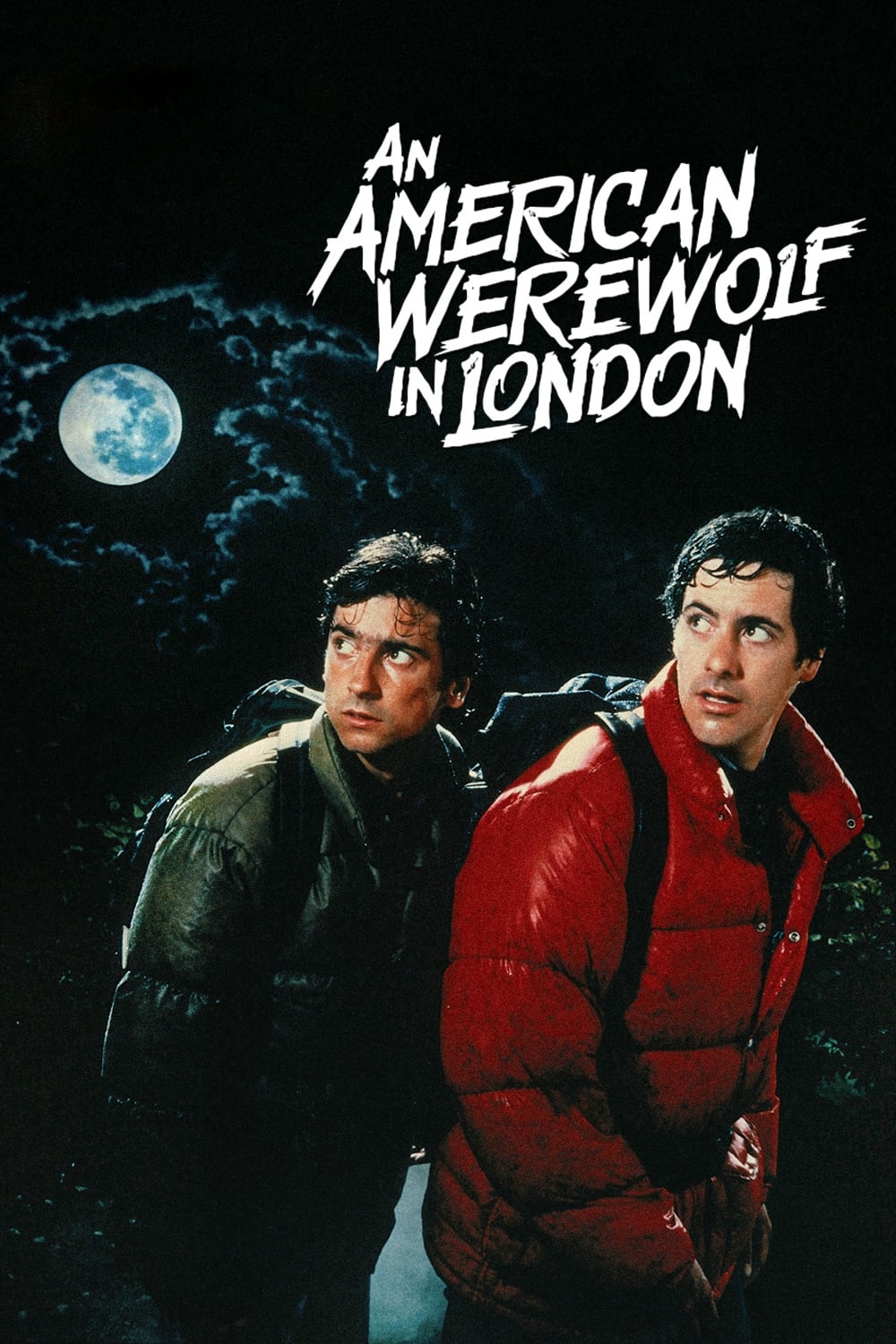
When I first watched “An American Werewolf in London,” it wasn’t at a midnight screening or as a recommendation from some horror aficionado—I stumbled upon it accidentally on a cloudy Sunday afternoon, channel-surfing with no expectations. That unintended encounter swiftly changed how I regarded the boundaries of horror and comedy, making me rethink what it means for a film to be unsettling yet gleefully absurd. I remember feeling genuinely uneasy in one moment, only to laugh in the next, my sense of genre safety completely upended. This emotional whiplash, so rare and precious in cinema, keeps drawing me back, not only to rewatch the film but to reconsider my own understanding of fear, humor, and human vulnerability with each revisit.
What the Film Is About
On its surface, “An American Werewolf in London” tells the story of two American backpackers, David and Jack, whose ill-fated trek across the Yorkshire moors leads to a savage attack and a ghastly curse. What fascinates me isn’t just the mechanics of lycanthropy, but the way the film charts David’s dissolving grip on reality. Each step in his transformation is mirrored by a growing sense of alienation—from his friend, from the bustling London around him, and, ultimately, from his own sense of self. There’s a lingering ache here: the agony of witnessing your own humanity receding while the world remains stubbornly indifferent.
For me, the real drama emerges in David’s emotional journey from confusion to terror to bleakly comic resignation. The film isn’t merely telling a monster story—it’s grappling with what it means to become other and the isolation that follows. As David wrestles with visions of Jack’s decaying ghost and the mounting horror of his situation, he becomes a tragicomic figure. This tension between horror and laughter is, to my mind, the film’s greatest achievement: it forces me to confront the absurdity and inevitability of loss, all while keeping one foot in the supernatural. The emotional core of the movie is not the gory metamorphosis, but the quiet moments of denial, guilt, and ultimately, acceptance that haunt David far more than his own escalating violence.
Core Themes
Chief among the film’s themes is the question of identity and metamorphosis. I see David’s journey as an allegory for any unwanted transformation—be it grief, trauma, or the inexorable approach of adulthood. The werewolf’s shape-shifting is more than just body horror; it’s a stand-in for all the ways life forcibly remakes us against our will. When David insists, “I’m not crazy!”, I see a desperate plea to remain tethered to an identity that’s slipping away.
Isolation and alienation reverberate throughout the film—David is perpetually a foreigner, not just geographically but existentially. Even before his transformation, there’s a sense of not belonging, exacerbated by the eerie, hostile villagers and, later, the mechanized indifference of London. For me, this remains intensely relatable, especially today. Modern urban life, crammed with strangers and surveillance, often feels like a backdrop for invisible suffering. In 1981, this theme spoke to the anxieties of a world facing cultural upheaval and urban anonymity; today, it feels no less piercing in an era of digital connection and social detachment.
There’s also a sly undercurrent of mortality and the denial of death. David’s nightly visits from Jack—a rapidly decomposing reminder of his fate—force him (and by extension, the audience) to confront the inescapability of death. The film’s irreverence toward this subject, punctuated by dark humor in the most horrific moments, has always struck me as both brutally honest and oddly comforting. It’s as if the film is saying: if death is absurd, perhaps we can laugh, however bitterly, in its face.
Symbolism & Motifs
The recurring imagery of the full moon is the film’s most overt symbol, but it’s how the moon is deployed that interests me. Each appearance signals not just physical danger, but an impending rupture in identity. It’s a reminder that, no matter how civilized or contained we feel, the lunar pull—whatever it represents for us—will eventually exert its force. The moon’s cold, luminous presence always unsettles me, projecting a kind of cosmic indifference that matches the film’s dark comic tone.
The motif of mirrors and reflection recurs throughout the film—David glimpsing his changing face, catching his new bestial eyes in the glass. These moments drive home the horror of self-recognition: the transformation isn’t only physical but existential. In my own experience, there is nothing more terrifying than seeing yourself become something unrecognizable, and these mirror shots render that fear visually inescapable.
I also can’t help but notice how public spaces—tube stations, busy roads, crowded movie theaters—transform into sites of vulnerability and predation. London is filmed not as a grand metropolis, but as a labyrinth of shadowy, indifferent corridors where the dangers David faces are both supernatural and deeply banal. I find this vision of the city especially compelling; it’s as if the spaces meant to protect us only magnify the horror of being alone in a crowd.
Key Scenes
Key Scene 1
The attack on the moors is, without question, the axis on which the entire film pivots. From the moment Jack and David step off the main road, the world becomes strange and hostile—the foggy vastness of the moor a terrifying, borderless purgatory. What fascinates me is the way impending violence is telegraphed through silence and negative space; the actual attack is swift, brutal, bewildering. In this scene, I feel the crushing helplessness of not only being preyed upon, but being completely outside any system of help or understanding. The randomness and savagery of the attack set the emotional tone for the rest of the film: trauma without resolution, injury without full explanation.
Key Scene 2
The transformation sequence—now legendary in film history—is just as grueling emotionally as it is technically astonishing. Every time I watch David convulse and contort in his flat, each snap and hair sprout registers as a violation of body and psyche alike. The sequence is intimate, unflinching, garishly lit. What I find so powerful here is the lack of euphemism: the agony of change is rendered without mercy, and David’s screams echo the existential horror of becoming ‘other.’ It’s not only a marvel of practical effects, but a deeply human expression of fear, pain, and surrender.
Key Scene 3
The final confrontation in Piccadilly Circus—chaotic, bloody, careening from black comedy to genuine tragedy—pulls together the movie’s tonal contradictions. I’m always struck by the way pandemonium erupts in the most mundane of urban spaces, spilling over into the ordinary business of London life. The horror is no longer contained; it explodes outward, implicating the indifferent public and underlining the idea that suffering, once unleashed, can’t be neatly secluded. The abruptness of David’s demise—so sudden and matter-of-fact—leaves me with the sense that, in the end, our monsters don’t get cathartic farewells, just the cold wash of reality.
Common Interpretations
Critics frequently interpret “An American Werewolf in London” as a subversive take on classic horror, lauding its blend of humor and gore as revolutionary. Many highlight its elaborate transformation scene as a breakthrough moment for special effects, treating the film as a technical milestone as much as a narrative one. I don’t disagree, but I’ve always felt these readings, while valid, risk missing the emotional core. For me, the film is less about genre innovation and more about grief and the sheer absurdity of fate. The horror-comedy interplay isn’t just clever pastiche; it’s a way to make the inescapable trauma of change feel bearable through laughter. Where others see an ingenious riff on monster movies, I see a devastating meditation on what happens when you lose control of your own story.
Films with Similar Themes
- The Fly (1986) – Both films use monstrous transformation as a metaphor for losing oneself, physical deterioration, and existential dread.
- Let the Right One In (2008) – Explores themes of isolation, innocence corrupted, and the conflict of love and monstrosity amid bleak surroundings.
- Ginger Snaps (2000) – Focuses on transformation and alienation, using lycanthropy as an allegory for adolescence and outsiderhood.
- Don’t Look Now (1973) – Blends horror, grief, and a sense of the uncanny, making the protagonist’s emotional journey just as frightening as any supernatural threat.
Conclusion
Today, I think “An American Werewolf in London” remains a potent, sometimes disquieting, always entertaining window into what it means to confront change alone. Approaching the film with an awareness of its emotional and symbolic layers only deepens its impact. It’s not just a genre hybrid; it’s an ode to the human (and inhuman) costs of transformation and alienation. If you allow its humor to sharpen its horror, and its horror to sharpen its humor, you’ll get much more than a monster movie—you’ll get a film that laughs in the dark, inviting you to stare back at your own reflections and shadows.
To broaden this interpretation, you may also explore how critics and audiences responded over time.
🎬 Check out today's best-selling movies on Amazon!
View Deals on Amazon