
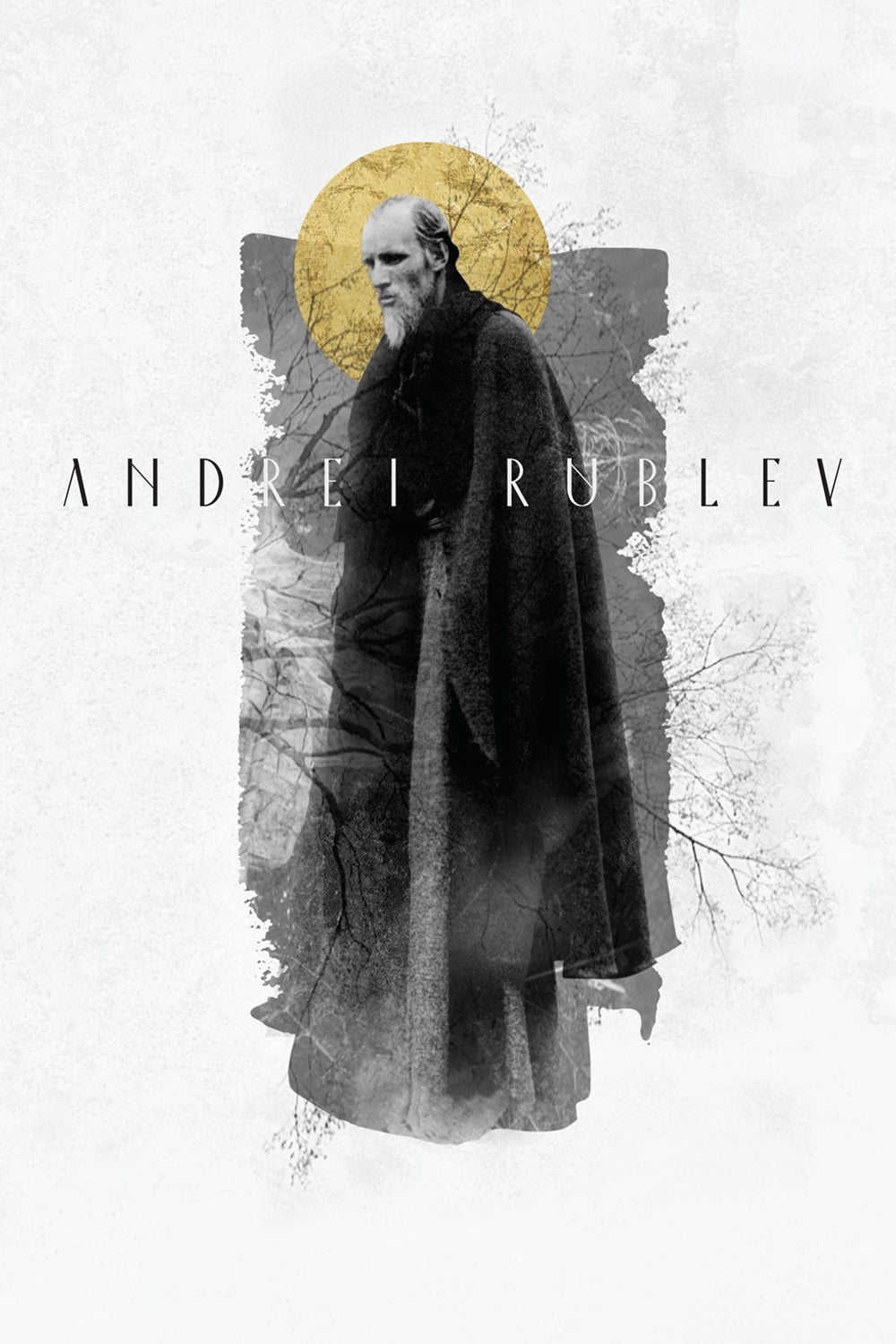
What the Film Is About
I remember the first time I watched Andrei Rublev, I felt like I’d been pulled into a haunted, sacred wilderness—a world where faith and violence collided in every shadow. What struck me most wasn’t just the chronicle of a medieval painter’s journey, but the bruising odyssey of a soul searching for meaning in a world torn apart by chaos. At its heart, the film is—at least as I experienced it—a profound meditation on creativity and moral conviction, set against the backdrop of a Russia wracked by war and upheaval. There’s a sense that Tarkovsky isn’t interested in the easy drama of biography; instead, he’s intent on mapping the contours of Rublev’s inner life as he endures spiritual crises and witnesses the horrors of his era. I didn’t come away remembering every plot detail; rather, the emotional residue lingered: the feeling of moving through a landscape shattered by brutality, yet pierced by moments of transcendent beauty and hope.
What truly moves me about this film is its exploration of silence—not just Rublev’s vow for a time, but the greater silence between God and humanity. All the violence, doubt, and fleeting moments of solidarity feel like ripples in a deep, dark pool. What do we offer, as artists or as people of conscience, in a world that constantly threatens to annihilate all that’s gentle and luminous? For me, the film’s narrative direction is inexorably tied to this question: the journey from innocence through disillusionment, toward a hard-fought renewal of purpose.
Core Themes
If I had to distill the main ideas that unfurl with aching clarity as I watch Andrei Rublev, I keep returning to the responsibility of the artist, the cost of faith, and the possibility of grace in a violent world. More than most films, this one refuses glib answers; instead, it keeps circling back to the mess of creation itself—whether in paint or in human choices. I see Tarkovsky wrestling with the ambiguity of power and the never-ending tension between the urge to bear witness and the temptation to retreat into silence. For Rublev, his art is both expression and torment; he’s paralyzed by the suffering around him, questioning the value of beauty in a time of horror.
What I find remarkable is the film’s engagement with individual conscience—Rublev’s journey feels like an allegory for anyone searching for meaning in a culture that rewards cruelty as much as compassion. The questions pulsing at the core of the film—how can you stay human when the world rewards inhumanity? Is beauty enough, or is it a distraction?—echo as urgently now as they did in the 1960s Soviet Union, when the wounds of World War II and Stalinist repression still shaped every artistic expression. Back then, Tarkovsky’s refusal to offer simple glorification—or even unambiguous hope—was itself a brave act. Today, those same themes of integrity, resilience, and the tension between faith and doubt still resonate in a fractured, uncertain world.
Symbolism & Motifs
What gives Andrei Rublev such emotional force for me is Tarkovsky’s spellbinding use of recurring symbols and motifs that thread through the film. Take the rain and mud: again and again, I noticed how these elements swallowed the characters, rendering them almost indistinguishable from the suffering land itself. The river crossings felt to me like passages between states of being—innocence, experience, hope, despair. Water becomes purification, threat, and possibility all at once.
I was continually struck by the motif of silence versus speech. It’s not just that Rublev takes a vow of silence at one point; it’s that conversations are always fraught with misunderstanding and the limits of language. Paintings—so we’re told by their absence as much as by their appearance—seem like the last language left to articulate the ineffable. The visual motif of the empty wall, awaiting a fresco, looms as a challenge: in a world that devours the soul, what is left to say?
Animals, too, haunt this landscape. Horses thread through the film, evoking both freedom and vulnerability. Their suffering mirrors the plight of the people, and their presence at moments of death or flight seems to me more than incidental—they’re witnesses, like Rublev, struggling to survive an era hell-bent on destruction. Icons themselves become double-edged symbols: they promise transcendence, but their making is as fraught as any act of resistance. What lingers for me is less the literal content of these images and more their aura—they become sites of hope and agony alike.
Key Scenes
Key Scene 1
If I’m honest, one of the moments that still reverberates within me is the horrific sacking of the cathedral by Tatar raiders. It isn’t just the ghastliness of the violence; it’s the shattering of the sacred space—what was a sanctuary is desecrated, its people brutalized. I saw this as more than a historical footnote; to me, it’s the embodiment of what Rublev (and by extension Tarkovsky) fears most: that the light of creation can be snuffed out in an instant by carnage and hatred. It’s here that Rublev’s faith falters most deeply; confronted with unspeakable suffering, he chooses silence, symbolizing both his horror and paralysis. This resonated for me as a cry against the destruction of culture itself, and a meditation on the cost of bearing witness.
Key Scene 2
The scene that haunts me nearly as much is the sequence with Boriska, the young bell-maker. This is the point where the film pivots from despair to a kind of guarded hope. Watching Boriska bluff and agonize his way through the casting of the bell—utterly alone, yet driven by a mysterious conviction—I saw reflected all the anxiety of creation, every doubt and every desperate hope. Here, the act of creation is an act of faith, even in the face of impossible odds. The community’s coming together—not despite suffering, but because of it—feels like a reclamation of dignity. Boriska’s ultimate breakdown, when the bell rings true, is for me one of the most honest portrayals of the agony and ecstasy of making something meaningful. It’s also here that Rublev finds a reason to speak and create again, as if recognizing, through Boriska, that art is both an offering and a wound.
Key Scene 3
For me, the final black-and-white sequence before the film explodes into color—showing the icons Rublev would one day create—feels like a final, wordless affirmation of why any of it matters. After all the squalor and doubt, Tarkovsky grants us a vision of beauty that transcends suffering. The camera lingers on painted faces etched with longing, serenity, suffering—these are not just images, but testaments. I interpret this as Tarkovsky’s answer to the film’s driving questions: even if the world refuses grace, we must still make it manifest. In this moment, history and art fuse—a gesture of hope so fragile it made me ache. The switch from despairing monochrome to luminous color is a personal, cinematic prayer: creation can redeem even the darkest world, if only fleetingly.
Common Interpretations
Whenever I talk to film lovers or read criticism surrounding Andrei Rublev, I’m reminded that the film lives on precisely because it eludes a single meaning. Some, especially those writing from within the shadow of Soviet repression, have viewed it primarily as an allegory of the suffering of the Russian artist—Rublev’s journey mirroring Tarkovsky’s own struggle to create under censorship and suspicion. This interpretation emphasizes the film’s skepticism of power and the necessity (and peril) of bearing witness through art.
Others see it, as I often do, as a spiritual exploration. Not an easy affirmation of faith, but an inquiry into what it means to keep believing—however tentatively—when everything tangible crumbles. The artist’s vow of silence, in this light, becomes humanity’s perennial crisis of doubt. Still, there’s also a social reading: that the violence and impersonal suffering visited upon individuals is not just personal tragedy but commentary on Russian history itself—its cyclical violence, its search for redemption.
I’ve even come across viewers who regard the film as a meditation on the process of artistic creation itself—almost meta-cinematic in nature. For them, Boriska’s bell-making and Rublev’s painting serve as metaphors for any painstaking, uncertain attempt at expression, including Tarkovsky’s own. Whether it is a religious, historical, or artistic parable, the film’s power comes from its refusal to reduce suffering to meaninglessness—or meaning to mere consolation.
Films with Similar Themes
- The Passion of Joan of Arc – This film resonates with me for its intense depiction of spiritual trial and the loneliness of mystical conviction in a violent, hostile world. Both films ask if faith or artistry can endure such agony.
- Kundun – Like Rublev, the Dalai Lama’s story centers on a spiritual leader navigating political upheaval, embodying the struggle for moral clarity in the face of repression and loss.
- Ivan the Terrible, Parts I & II – Eisenstein’s masterpiece, for me, offers a similarly epic meditation on Russian identity, power, and the isolation of visionary figures within violent systems.
- The Sacrifice – Another of Tarkovsky’s luminous meditations, this film again explores the cost and necessity of faith, linking personal sacrifice to historical cataclysm and artistic transcendence.
When I step back from the unsparing brutality and luminous beauty of Andrei Rublev, I’m left with the sense that Tarkovsky is telling me something deeply personal and universally resonant: the world may conspire against compassion, the darkness may feel absolute, but even then, the act of creating—of making beauty from pain—is a form of resistance and hope. The film ultimately insists that we cannot look away, cannot abdicate the obligation to bear witness. To persist in art, love, or faith—no matter how broken the world—is perhaps the truest statement anyone can make about human nature, and about the Russia (and world) of Rublev’s, Tarkovsky’s, or our own era.
If you’re curious about how this film was originally perceived or how it compares to similar works of its era, these resources may be helpful.
Related Reviews
If you found value in my perspective, you might also enjoy exploring my thoughts on other cinematic landmarks such as The Passion of Joan of Arc and The Sacrifice.
🎬 Check out today's best-selling movies on Amazon!
View Deals on Amazon