
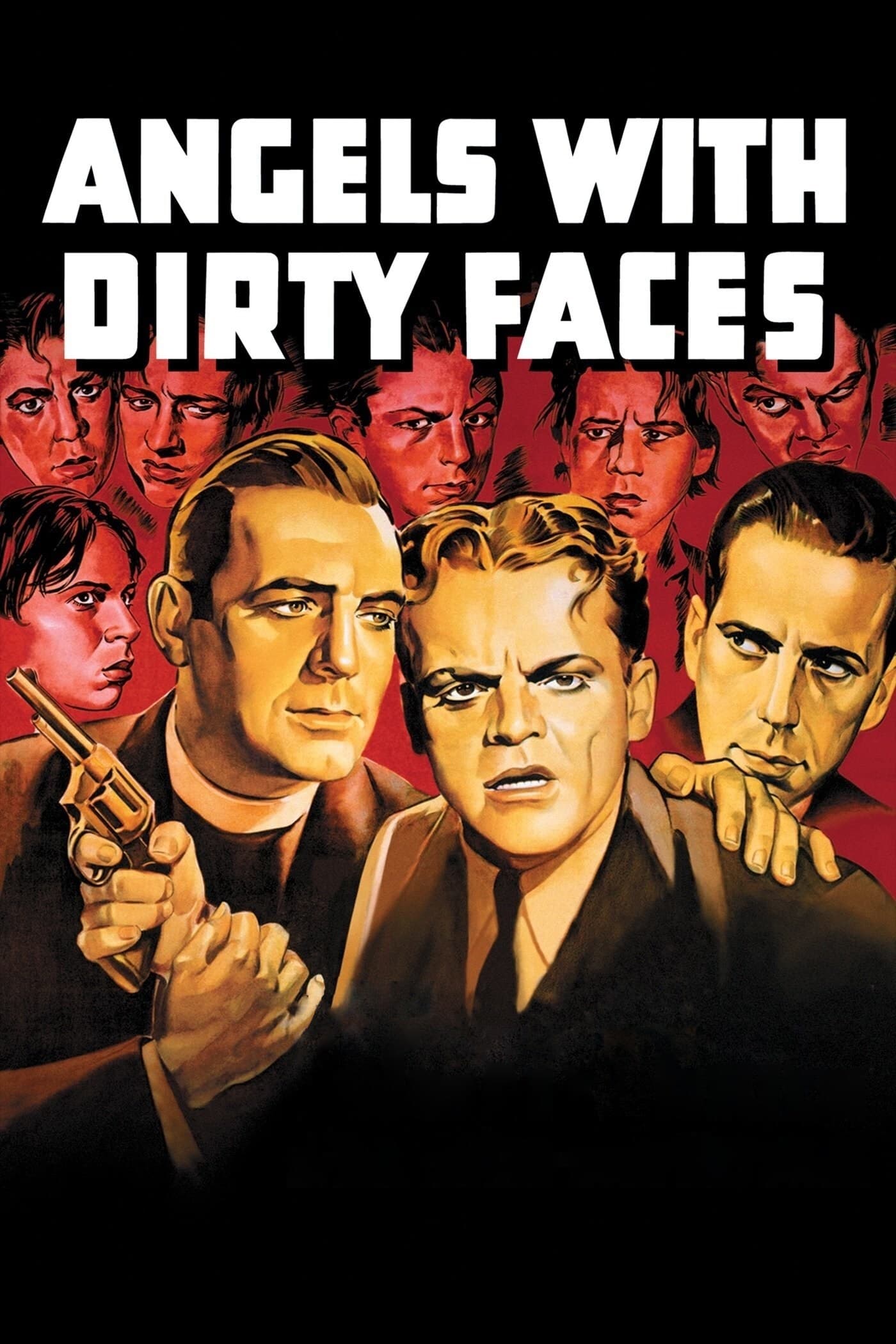
I first encountered “Angels with Dirty Faces” when I was 16, half-dreaming in the dim glow of a black-and-white television set. My father was a streetwise New Yorker, and the sharp lines and sharper morality of 1930s crime films caught his eye. But what struck me wasn’t just the thrum of gangster gunfire or the theatrical bravado of James Cagney; it was the tension between hero worship and heartbreak. There’s a moment, about halfway through, when one of the Dead End Kids half-smiles at Rocky Sullivan, and in that fleeting look, I saw the longing so many urban kids felt then—and perhaps still do now—for someone to admire, whatever the cost. That mixture of admiration and ambiguity is what continues to draw me to “Angels with Dirty Faces,” a film less interested in crime than in the painfully human need for redemption, guidance, and identity.
What the Film Is About
To me, “Angels with Dirty Faces” is a labyrinthine waltz between innocence and corruption, staged on shadowed city streets. While the broad strokes follow childhood friends Rocky and Jerry—one a hardened gangster, the other a priest—it’s their emotional contest and mutual longing for lost brotherhood that stings most. Both men are haunted by the same slum childhood, driven apart not by fate alone, but by the choices they make—choices that ripple through the community like a virus. Each time Rocky flashes that cocky, lopsided grin, the world remembers the boy he used to be, and in Jerry, we see not just a reformer but a man desperately trying to save himself by saving others. The film isn’t content with a simple morality play; it aches with the complication of loyalty and the true price of hero worship.
The central conflict is, on its surface, a fight for the souls of the neighborhood’s young delinquents, but what keeps gnawing at me is how the story laces together private guilt and public performance. Rocky’s swagger is intoxicating, yes, but so is his vulnerability when the mask slips. As a viewer, I fluctuate between exhilaration and dread—awed by the charisma of a man who can command any room, but terrified of the world he inspires. Jerry, meanwhile, is less a mere voice of conscience than the embodiment of possibility: the idea that, through relentless compassion, even the most desolate streets can yield to hope. The film ultimately asks whether redemption is ever possible for those who fall—whether, to borrow Jerry’s faith, the lost can indeed be found.
Core Themes
The heart of “Angels with Dirty Faces” is tangled in themes of redemption, idolization, and social responsibility. What hooks me, viewing this decades after its premiere, is the stubborn relevance of these struggles. At the end of the Great Depression, young people—especially in America’s urban ghettos—looked for any figure who might model survival or purpose. The film’s gang of street kids, for all their wisecracks and bravado, are desperate to become men in a world that offers them very few models besides the lawless.
The theme of power and influence looms largest for me. Rocky is both the product and puppeteer of his environment; he has power because his community lets him have it, and his charisma is dangerous precisely because it’s so seductive. Watching from the distance of the 21st century, the mechanisms feel achingly familiar—media magnates, pop stars, social media titans—each framed as saviors or demons for a younger generation fumbling for purpose. Yet in the 1930s, power was grittier, more immediate, and always tinged with violence. The film asks, “What does it mean to be a role model when the streets teach you that integrity gets you nowhere?”
Identity, too, is at the film’s core—not just personal identity, but communal. Jerry and Rocky are mirror images split by one crucial turn: as adults, they are forced to contend not just with who they wanted to be, but with who the world needs them to become. The film’s enduring presence, for me, is found in its refusal to give easy answers: Rocky cannot simply “be good,” and Jerry cannot force the boys to obey him by piety alone. In every era, including our own, we navigate these gray zones—how much do our heroes save us or entrap us? What responsibility do the “lucky” or “redeemed” owe to those who remain lost?
Symbolism & Motifs
From the moment Rocky and Jerry as boys are chased down the narrow alleyways, the film stakes everything on its use of darkness and confinement. Those long, hard shadows—so characteristic of Warner Bros. gangster pictures—aren’t just cosmetic. They symbolize the moral ambiguity that defines every character. The city is a labyrinth, the tenements near-impossible to escape, mirroring the boys’ lack of clear options in life. For me, whenever I see those looming fire escapes and rain-slicked streets, I feel the uneasy press of fate.
Another recurring motif is the basketball court, where the Dead End Kids gather. The court represents their only sanctuary—a place where they are free, if only momentarily, from the strictures of both law and lawlessness. That Rocky strolls onto the court, welcomed and revered, while Jerry stands at the margins, tells me everything about the lure of easy power. Sport, often a symbol of aspiration and honest competition in American film, is here tainted by the specter of criminal glory.
Finally, cigarettes serve as a potent symbol throughout. They’re not just props for Cagney’s hands but badges of adulthood, risk, and expected bravado. When young Soapy bums a cigarette, it’s not about rebellion alone—it’s about claiming a kinship with Rocky, with manhood itself. Every puff, for me, is a small, dangerous step toward the abyss.
Key Scenes
Key Scene 1: Rocky’s Reunion at the Boys’ Club
The early scene where Rocky returns to find the Dead End Kids lounging at the gym hits me with complicated nostalgia. His effortless authority—teaching them basketball tricks, tossing wisecracks, gently asserting order—casts a spell over both boys and audience. This moment, more than any shootout, establishes the stakes: Rocky is more than a hoodlum; to these kids, he is the promise of excitement, freedom, and brotherhood. I always feel an uneasy thrill watching how swiftly they align themselves with him, mirroring, perhaps, my own willingness to be swept up by charismatic figures, on screen or off.
Key Scene 2: Jerry’s Plea in the Prison
I can never shake the image of Jerry standing before Rocky in that cold, echoing prison cell, begging his childhood friend to “turn yellow” on the way to the chair—to show the boys that crime is ultimately cowardice, not glory. The agony here is palpable—not just for Rocky, but for Jerry, who is forced to weaponize shame for the greater good. Each time I witness this, I am torn: is it right to ask a man, even a murderer, to destroy his dignity for a moral lesson? The scene is a brutal reminder that the choices we make are rarely clean, and that the paths to redemption often wound us more deeply than expected.
Key Scene 3: Rocky’s Final Walk to the Chair
The film’s most famous—and for me, most devastating—scene arrives in the final moments. Rocky, still sneering, is dragged toward execution. Suddenly, faced with the abyss beyond heroism, he breaks—screaming, pleading, sobbing in terror. The horror on Cagney’s face is unforgettable, and so is the ambiguity: did Rocky “turn yellow” for the boys, or because, when faced with death, courage always deserts us? I feel no satisfaction watching this; only bitter relief and renewed uncertainty about whether redemption can ever be authentically achieved. The image burns, not because of the spectacle of violence, but because we sense that every myth we build—even the ones meant to save—require a human cost.
Common Interpretations
Critics traditionally interpret “Angels with Dirty Faces” as a tale of gangster redemption, a morality play about the dangers of crime and the salvific power of purpose—through Jerry’s crusade and Rocky’s last-minute sacrifice. The message, in this reading, is tidy: youth must be guided, the state has a corrective duty, and even the fallen can rise through acts of selflessness.
I have always resisted this simplicity. For me, the film is less about redemption than about the exhaustion of hope. Rocky’s final act is ambiguous, almost unbearable in its opacity. Did he debase himself for Jerry and the kids, or did he simply break? The Dead End Kids, left on the margins, don’t celebrate or condemn—there’s only bewilderment. I read this ending not as an endorsement of institutional morality, but as a haunting question about how much even our best intentions can truly save others. The film, in my eyes, warns us not to romanticize salvation or fall too easily for narratives of heroic reform.
Films with Similar Themes
- Dead End (1937): Like “Angels with Dirty Faces,” this film centers on urban youth caught between poverty, crime, and fleeting visions of escape. The threat of corrupted innocence and the allure of gangster figures create a similar emotional resonance.
- The Public Enemy (1931): The journey of a charismatic but doomed gangster, again played by Cagney, explores the destructive appeal of antiheroes and the cyclical nature of urban violence.
- Boys Town (1938): A compassionate priest tries to rescue troubled boys from a criminal fate, paralleling Jerry’s role and the theme of social intervention shaping young lives.
- City of God (2002): Though set worlds and decades apart, this Brazilian film echoes many of the same issues: the magnetism and tragedy of criminal role models, and the heartache of trying to create real change in environments rigged against hope.
Conclusion
Modern viewers can approach “Angels with Dirty Faces” not just as a relic of the studio era but as a living cry against the easy answers of crime-and-punishment stories. What sustains its relevance, in my view, is its willingness to dwell in uncertainty—to let us feel both the seductive pull and the moral nausea of myth-making. Understanding its themes—of idolization, communal failure, and the unresolvable tension between justice and mercy—adds immeasurable value, teaching us to look harder at our own models of heroism and, crucially, at our capacity for compassion where it is hardest won.
Related Reviews
If you found value in my perspective, you might also enjoy exploring my thoughts on other cinematic landmarks such as “The Public Enemy” and “Dead End”.
To broaden this interpretation, you may also explore how critics and audiences responded over time.
🎬 Check out today's best-selling movies on Amazon!
View Deals on Amazon