
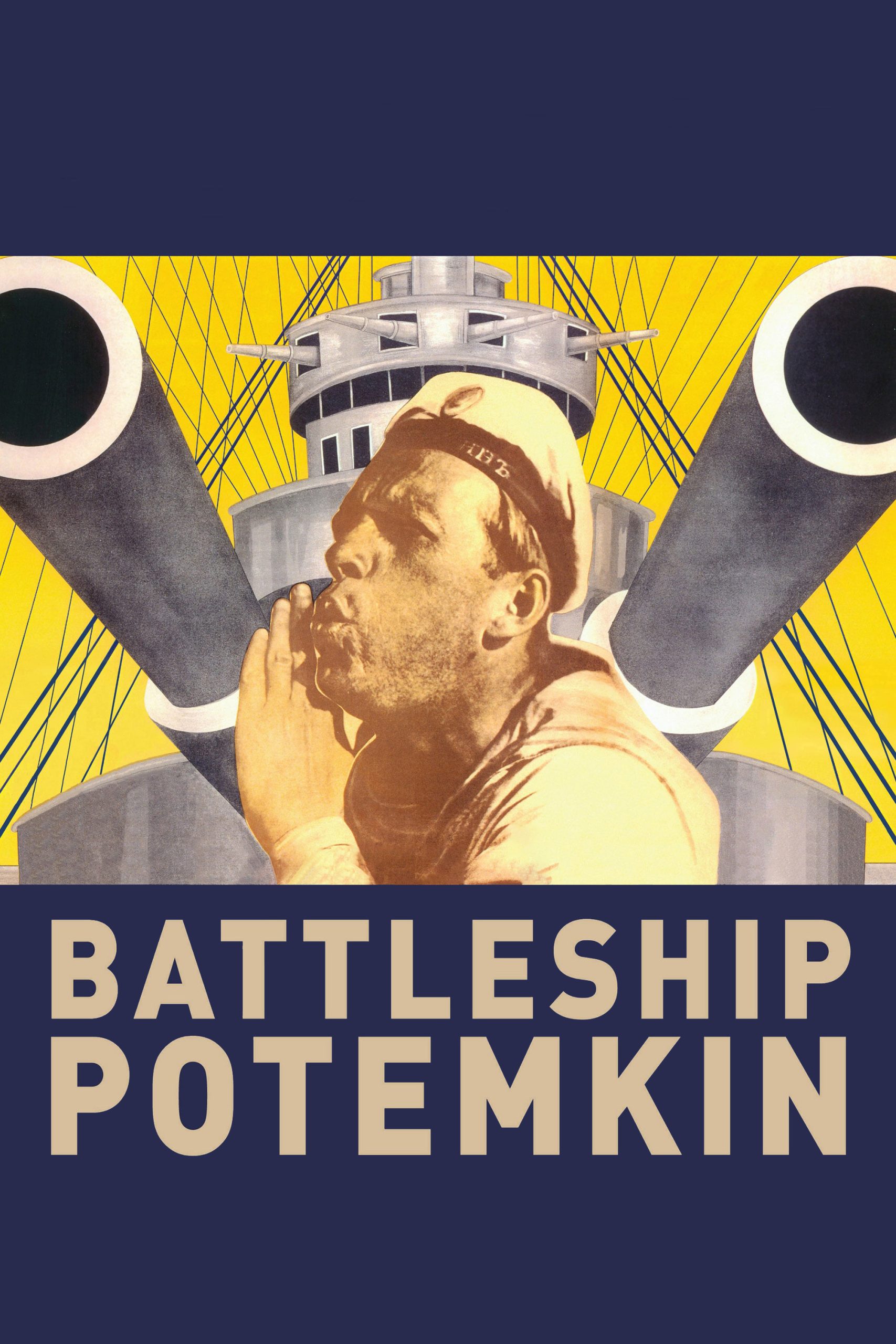
The Shockwave of Rebellion Hits Me in the Gut
There is a particular morning I remember—sitting alone in front of a battered screen, watching “Battleship Potemkin” for the first time. I did not feel as though I was simply observing history; I felt thrust into its machinery, every frame a ricocheting bullet. This is not a film that gently whispers its intentions—it seizes you and demands you reckon with the birth of revolution, the anatomy of uprising, and the weight of collective suffering. My first experience with Eisenstein’s masterpiece wasn’t just cinematic, it was visceral, something that thumped along with my own pulse as the sailors’ anger crested. The movie doesn’t so much tell a story as it erupts, and it’s impossible to escape unscathed.
Visions of Unity and the Power of the Crowd
What lingers for me is not just the infamous Odessa Steps sequence, but the overwhelming sense that individuality dissolves in the tempest of shared outrage—a crowd becomes a singular, breathing organism. Eisenstein’s camera doesn’t settle on heroes in the conventional sense. The faces, anguished and determined, crowd the frame, forcing me to consider that historical change is not the result of lone saviors but of many hands, many voices raised together, indistinguishable from one another in their struggle and their hope. This collective identity isn’t just portrayed; it is celebrated as the agent of seismic change. The film taught me that solidarity is both a shield and a weapon in the hands of the oppressed.
The Unrelenting Pulse of Montage
I’ve seen countless films, but few have made me as aware of the raw construction of imagery as “Battleship Potemkin.” Eisenstein’s montage technique isn’t decoration—it is the very logic of the uprising. The relentless rhythm of editing is the revolution’s heartbeat, forcing me to feel urgency, confusion, horror, and exhilaration all at once. The juxtapositions—faces contorted in agony, boots descending on stone steps, a child’s carriage tumbling—don’t just document brutality; they make me complicit in the chaos. As I watch, I realize that I’m not being given the option to stand at a distance. The violence is not just physical but emotional, a series of psychic blows.
The Scream of the Oppressed, the Silence of the Elite
I always return to the moments where the mutinous sailors and the oppressed citizens voice their suffering—not just in words, but in the silent language of faces and bodies. The officers and the Cossacks, on the other hand, remain almost abstract in their cruelty, a faceless force whose power comes from their refusal to acknowledge pain. The film’s true horror is not only violence but the indifference that enables it. By focusing my attention on the cost of that indifference, Eisenstein quietly indicts not just the Tsarist regime, but any system that flattens people beneath the weight of authority. It’s a warning that chills me because it is universal, stretching far beyond 1905 Russia.
Icons and the Invention of Revolutionary Myth
As the film unfolded before me, I found myself drawn into its carefully constructed mythmaking. The broken plate, inscribed with “Give us this day our daily bread,” becomes a relic—a fragment of despair transformed into a revolutionary icon. The raised fists, the fluttering red flag (even in a black-and-white film, the color is imagined), the mother who falls on the steps—these are not just narrative elements, they are symbols, crystallized moments of collective trauma and hope. I realized that Eisenstein was not only recreating history, he was inventing the visual language by which all future revolutions would be imagined. Potemkin’s meaning is not just in what it shows, but in how it has taught generations to see defiance.
Bodies in Motion, History in Flux
Rarely have I seen bodies given such weight in a film. The motion of the sailors—hesitant, then bold—mirrors the tentative steps of a people learning their own strength. The violence against the crowd is not only individualized but also choreographed, as if history itself is dancing a grotesque ballet on those stone steps. I remember physically recoiling at the sharpness of it—the way Eisenstein’s camera searches for physical suffering but also for the moment when suffering turns to rage. The film insists that history is not written in ink, but in flesh and blood, in every bruise and cry and final, shattering moment of resistance.
The Red Flag and the Ghost of Hope
What I find most haunting—long after the final shot—are the images of the red flag, painstakingly hand-tinted in some prints. The color red is not just a signal for revolution; it becomes the ghost of hope that haunts the black-and-white world of oppression. The flag is ragged, sometimes makeshift, but it is always there, fluttering defiantly as an answer to violence. I see that the film’s message is not blind optimism, but resilient faith: change is possible not because the world is just, but because people insist on justice. The red flag is not a promise of victory, but an invocation—an invitation to believe that resistance matters, especially when it seems most futile.
Why “Battleship Potemkin” Still Feels Dangerous
Each time I return to this film, I am surprised by how threatening it still feels. “Battleship Potemkin” is a cinematic Molotov cocktail, crafted to make audiences uneasy, angry, inspired. Its meaning is not buried in subtlety; rather, it is brandished like a weapon. The film dares me to see the world not as it is, but as it could be, if enough people decide that suffering must end. It doesn’t matter that the specifics of the story are now nearly a century old; the pulse of protest, the anguish of loss, and the assertion of collective will are as urgent now as they were in Eisenstein’s time. The film’s artistry is inseparable from its activism—I’m left with the sense that to be moved by “Potemkin” is to accept the necessity of revolt, in whatever form it takes.
If These Storms Move You, Watch Next
After the emotional and intellectual tumult of “Battleship Potemkin,” I always find myself searching for films that echo its energy, its uncompromising vision, and its exploration of revolution and humanity in crisis. Two classics come to mind:
- “October: Ten Days That Shook the World” (1928)
- “The Passion of Joan of Arc” (1928)
If you’re curious about how this film was originally perceived or how it compares to similar works of its era, these resources may be helpful.
🎬 Check out today's best-selling movies on Amazon!
View Deals on Amazon