
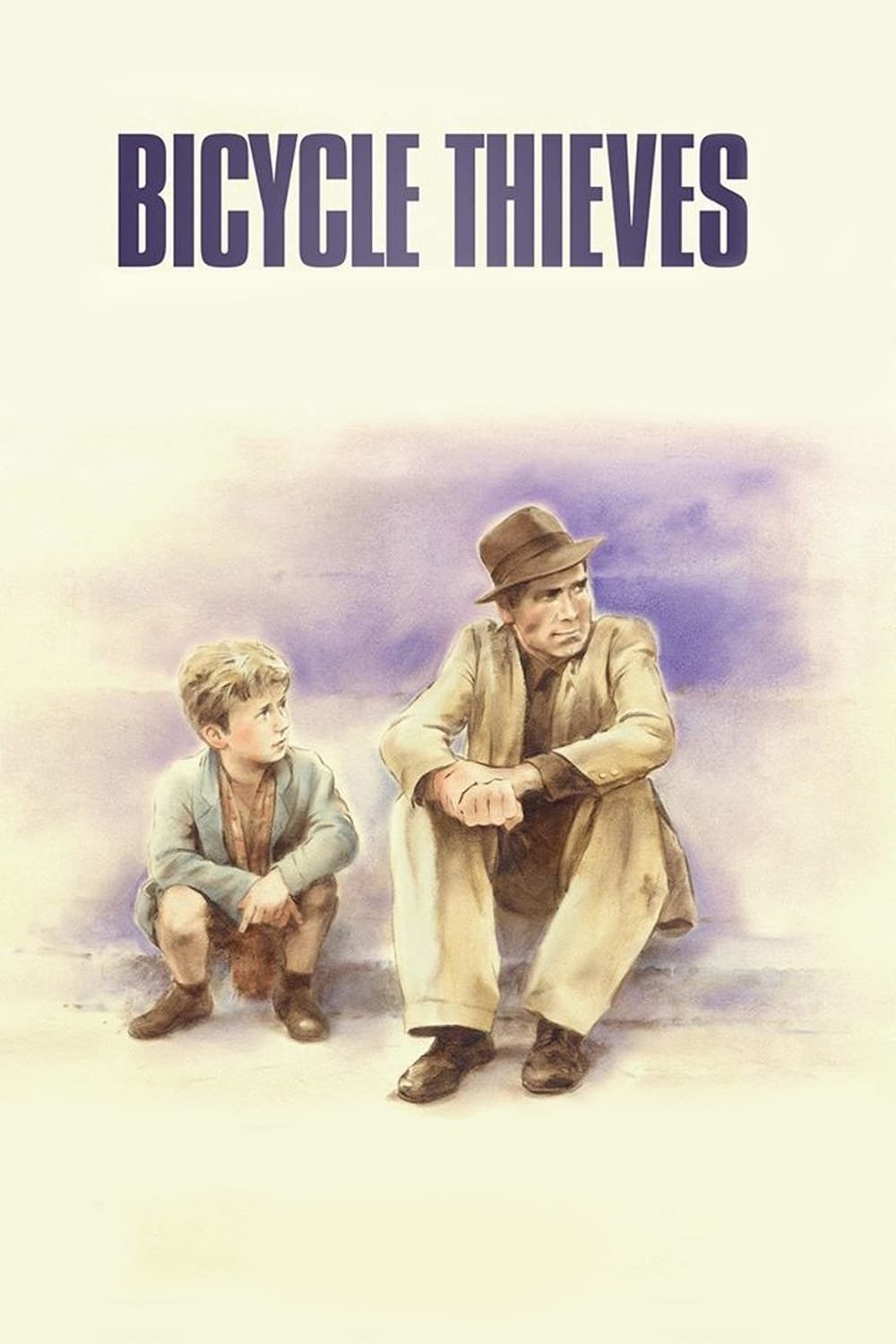
The Weight of Emptiness: My First Encounter with Desperation
The first time I watched Bicycle Thieves, I felt as if I was peering through a window not just into postwar Rome, but into my own fears about dignity, survival, and the quiet erosion of hope. This isn’t a film that keeps its pain at arm’s length. From the opening frames, there’s a raw honesty in every gesture, every silence. It unsettled me, not because of melodramatic events or cinematic spectacle, but because it strips away comfort and exposes what remains when life reduces a person to the barest essentials—work, family, and the need to belong.
Rome Without Romance: The Asphalt Stage
I was struck by how the city itself refuses to play the role of the romantic backdrop usually reserved for cinematic Rome. Instead, Rome becomes a stage for anxiety, humiliation, and longing. Its palazzos and cobblestones are not tourist icons but obstacles or indifferent witnesses to human struggle. What moved me was how the director, Vittorio De Sica, uses urban space not merely as a setting, but as an active force, pressing in on the characters, making even the search for a stolen bicycle feel Sisyphean.
There’s a persistent sense that the city is both hungry and heartless, swallowing up those who fall behind. This is not a story of heroism; it is a chronicle of powerlessness, made all the more harrowing by the ordinariness of Antonio and Bruno’s world. The very act of walking through those alleys—shoulders hunched, eyes darting—is a refusal to vanish, even when the odds are crushing.
Fatherhood Shattered and Reassembled
I find the relationship between Antonio and his son Bruno to be the bruised heart of the film, devastating in its authenticity. Here, fatherhood is not mythologized. I sense Antonio’s desperation to be more than a provider; he wants to be a hero, an example, the anchor of security for his son. Yet the film relentlessly peels away these illusions, showing how economic desperation can erode self-respect and the delicate trust between generations.
The moments of tenderness—Antonio buying Bruno a meal, his protective grip on the boy’s hand—are followed by eruptions of frustration, the kind that comes when a man is forced to measure his worth in material terms. I can’t forget the way Bruno looks at his father: with admiration, anxiety, and, later, a flicker of disappointment. This relationship exposes how poverty doesn’t merely strip people of things, but corrodes the bonds of love and identity.
The Bicycle as a Phantom Limb
The titular bicycle is more than a plot device. For me, it’s almost an extension of Antonio’s body—a prosthetic that allows him to participate in society, to feed his family, to matter. Its theft is not just a crime; it is an amputation. This small, everyday object becomes a totem of modern survival—without it, agency collapses. I find it tragic how the search for the bicycle is really a search for lost agency and dignity, unattainable not because of fate but because of a social structure that leaves no room for error.
Each scene in which Antonio glimpses a similar bicycle, only to realize it’s not his, feels like a replay of lost possibilities. The film insists that the smallest misfortune can spiral into existential crisis when the safety net is threadbare. For Antonio, reclaiming the bicycle becomes an act of reclamation for his very sense of self. The fact that the world is indifferent to his loss, that even the police are powerless, underlines the near-nihilism of his predicament.
Shadows of Community and the Myth of Solidarity
I came to this film expecting to find a sense of solidarity among the dispossessed, but De Sica subverts my hope at every turn. The people Antonio encounters—churchgoers, fortune tellers, union members—are as isolated as he is. There is no united proletariat, only fragmented individuals scrambling for their own scraps of hope. The brief moments when strangers intervene are often transactional, fleeting, or burdened with their own desperation.
This atomization of community felt especially painful to me. Solidarity is revealed as a myth, and the only tenderness left is familial, and even that is under siege. The film exposes the limits of compassion under social and economic pressure: when survival is the only goal, empathy becomes a luxury.
The Absurdity of Morality Amid Ruin
Bicycle Thieves asks its audience: What does morality mean when the world is rigged against you? Watching Antonio hover on the brink of theft, I found myself questioning my own sense of right and wrong. The film refuses to moralize; it shows how deprivation reconfigures the boundaries between victim and perpetrator. Antonio’s final, humiliating attempt to steal a bicycle is devastating because it feels both inevitable and intolerable.
What struck me most was how the film conjures empathy not through justifying wrongdoing, but by revealing the structures that make wrongdoing logical, even necessary. It’s not just his bicycle that’s been stolen; it’s his innocence, his place in the moral order of things. Watching Antonio’s fall is like watching an ordinary man being pulled under by invisible currents—punished not for his flaws, but for having been exposed to a merciless system.
Bruno’s Gaze: Witness and Legacy
For me, the most haunting aspect of Bicycle Thieves is Bruno, whose presence transforms the film from tragedy into something even more complex. Every glance, every question he asks, is a reminder that children witness and internalize the failures of their parents and the society around them. Bruno is not simply a bystander; he is the inheritor of Antonio’s defeats, watching in real time as the adult world’s frailties are laid bare.
I am haunted by the film’s final shot: father and son, hand in hand, swallowed by the crowd. There is no catharsis, no triumph. De Sica leaves us with the unsettling knowledge that the cycle of desperation and disillusionment will continue, perhaps even more bleakly in Bruno’s generation. The film’s meaning lingers in that unanswered question—what future is possible when hope is so easily stolen?
Why Bicycle Thieves Still Hurts
Whenever I return to this film, I don’t just see a story from a vanished era. I see an X-ray of capitalism’s violence, of the way dignity is whittled away not by villains, but by ordinary indifference and necessity. The film’s enduring power lies in its refusal to offer easy solutions or ideological comfort; it exposes the limits of individual will in a world governed by scarcity. This is not a message of defeatism, but of clarity: understanding the fragility of decency is the first step toward compassion, perhaps even resistance.
De Sica’s artistry, his focus on non-actors, and his willingness to dwell in discomfort, all serve a single, piercing purpose: to make us feel the consequences of social failure in the pit of our own stomachs. The pain of Bicycle Thieves is not abstract; it is intimate, universal, and inescapable. I finish every viewing a little more aware of the invisible struggles unfolding in every city, every era.
For Those Who Need More
If you found yourself moved by this film’s relentless honesty and social conscience, I would urge you to seek out “The Grapes of Wrath” and “Germany Year Zero.” Both offer their own unflinching looks at dignity, family bonds, and survival amid ruin.
If you’re curious about how this film was originally perceived or how it compares to similar works of its era, these resources may be helpful.
🎬 Check out today's best-selling movies on Amazon!
View Deals on Amazon