
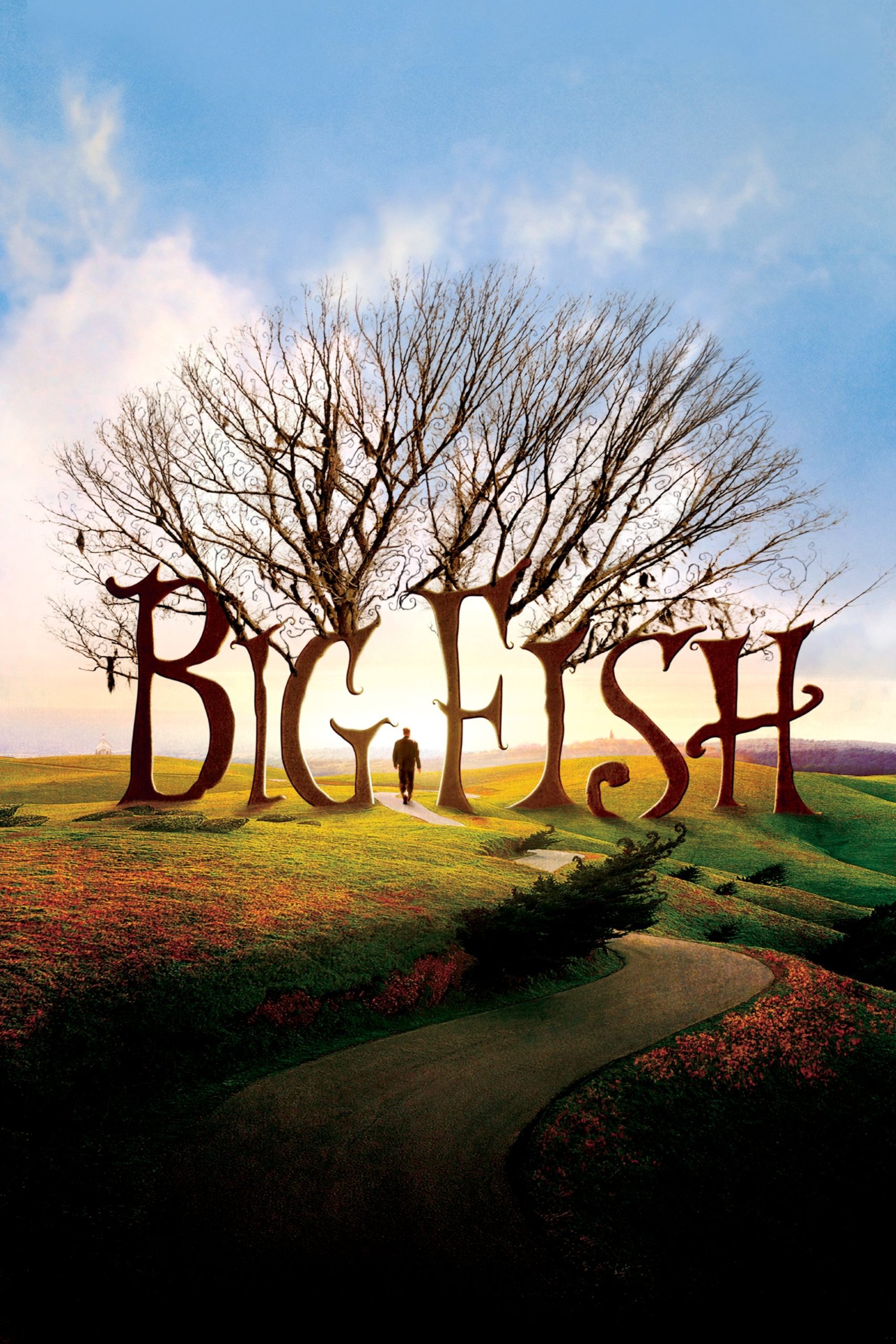
It’s rare that a film feels as if it has always existed somewhere deep in the subconscious, as if the stories it tells are somehow entangled with my own family’s outlandish tales and tiny mythologies. My first encounter with “Big Fish” was completely accidental—a stormy night, a scratched-up DVD borrowed from a friend, and no expectation of being moved. I expected quirky fantasy, but what I discovered was something deeply personal and oddly universal: a film that doesn’t just ask me to suspend disbelief, but to interrogate the very reasons I crave stories in the first place. It’s the winding labyrinth between a parent’s tall tales and a child’s hunger for truth that has kept me coming back to Burton’s colorful world, finding new corners of myself reflected in its shimmering illusions.
What the Film Is About
At its heart, “Big Fish” is a cinematic meditation on the emotional currents that surge between parents and children—how love, frustration, misunderstanding, and eventual acceptance swirl together in an unending dance. The battleground here isn’t good versus evil or chaos versus order, but rather imagination against reality, and myth against fact. We follow Will Bloom as he struggles to separate his larger-than-life father, Edward, from the tales Edward has spun. The film’s tension emerges not from external circumstance, but from Will’s gnawing doubt: does knowing the literal truth about his father matter more than embracing a life shaped by stories?
Tim Burton, often accused of favoring style over substance, instead crafts a deeply affecting journey that transcends traditional narrative. “Big Fish” becomes, for me, an emotional kaleidoscope—each scene angling refracted light onto the core question: is the “real” person ever enough, or do we all secretly yearn for magic, meaning, and a touch of the impossible? By the time the film concludes, I’m reminded that it’s not just the stories we inherit that matter, but how we come to interpret them as adults, forming our own truths from a mixture of memory, fiction, and longing.
Core Themes
The film’s guiding theme, as I see it, is the tension between fact and fantasy. Edward Bloom’s fairy-tale retellings are more than the products of an overactive imagination; they are vehicles for survival, for shaping identity, and for giving chaos a structure. I find it particularly resonant in today’s world, where objective truths are increasingly elusive and storytelling itself is both weapon and refuge. In 2003, when American audiences still smarted from recent tragedies and yearned for escapism, Burton’s film offered catharsis: a way to process grief, loss, and generational misunderstanding through exuberant mythmaking.
Another central theme is reconciliation—between generations, memories, and worldviews. Will’s emotional journey requires accepting his father as both exaggerator and authentic human being. For me, this resonates at a profound level: our relatives’ stories, however unlikely, become the scaffolding for our identities. The question of legacy—what children are left with, whether tale or truth—feels unresolved and painfully universal. “Big Fish” argues that the act of storytelling might itself be an act of love, even if the story is embroidered—a message that feels ever more urgent as families fragment in a distracted, hyper-rational age.
Symbolism & Motifs
No film in recent memory wields visual symbolism quite like “Big Fish.” Water, ever-present and mutable, flows through almost every frame. Lakes, rivers, rain: they serve as both boundary and passage, literally marking transitions between life, death, and memory. For me, water represents the uncertainty of memory—fluid, sometimes murky, always flowing somewhere unseen. The recurring motif of the giant fish leaps straight from the subconscious; it’s both an unattainable dream and the slippery nature of truth itself.
The circus imagery captivates me as more than just whimsy. The fantastical world of Calloway’s circus is a heightened parallel to Edward’s own penchant for showmanship, underscoring how the extraordinary can illuminate the ordinary. I found myself fixated on the daffodils—fields of which Edward conjures in grand romantic display for Sandra. The flowers, for me, symbolize devotion made manifest, a physical embodiment of love’s exaggeration, and a reminder that myth often blooms from mundane seeds. Throughout the film, these motifs do far more than decorate; they anchor Burton’s visuals in deeply personal anxieties about love, mortality, and the liminal space between.
Key Scenes
The River’s Edge—An Ending in Metaphor
Of all the film’s moments, the final river scene haunts me the most. Will, at last, weaves his own story for his dying father, completing the cycle of storytelling generation to generation. This is where the film’s emotional thesis crystallizes: closure arrives not through revelation, but imagination. When Will carries Edward to the river, surrounded by the cast of his father’s stories, the act of myth-making becomes a liberating, loving gesture. It’s a pivotal moment, reminding me that understanding isn’t always about facts, but about finding a language of connection.
The Daffodil Field—Spectacle as Sincerity
Edward’s grand gesture—covering Sandra’s yard in a blanket of daffodils—lands somewhere between ridiculous fantasy and breathtaking devotion. This scene nails the film’s belief that sincerity can live within exaggeration. For me, the sheer ludicrousness of the act is exactly the point: true gestures of love rarely fit inside conventional bounds, and sometimes it takes an outlandish act to capture the enormity of feeling.
The Witch’s Eye—Seeing Truths and Fears
The early childhood encounter with the witch, and her prophetic glass eye, sets the thematic tone for the film. Choosing whether to see one’s death—and by extension, one’s fate—colors Edward’s worldview with radical acceptance. I see this scene as emblematic of why certain people build legends around themselves: not to avoid mortality, but to embrace the magic in every possibility.
Common Interpretations
Many critics read “Big Fish” as a parable of redemption and reconciliation, focusing on the emotional rapprochement between father and son. Some have praised Burton’s willingness to allow fantasy to overwhelm reality, while others have dismissed the film as sentimental and evasive—accusing it of substituting whimsy for genuine insight. I understand those critiques, but to me they miss the courage it takes to treat joy, spectacle, and myth as worthy of adult attention. Yes, the film teeters on the edge of saccharine, but that very openness to sentiment is its strength: it is unashamed in suggesting that exaggeration and love go hand-in-hand, and that sometimes, the greatest kindness we can offer each other is to let fiction become memory.
Unlike those who see Burton’s aesthetic as a distancing mechanism, I find it draws me in to heightened intimacy. The gloss of fantasy is not a mask but a magnifying glass, inviting viewers—especially those with strained familial ties—to imagine their own relationships reframed in storybook terms. The fantasy is the truth, in a certain light, and that is a reading I return to every time I revisit “Big Fish.”
Films with Similar Themes
- The Princess Bride (1987): Storytelling as both escape and connection, blurring fantasy and lived experience as a way to pass meaning across generations.
- Forrest Gump (1994): A protagonist whose life story stretches plausibility, yet reveals how myths and personal narratives shape our cultural understanding of the past.
- Finding Neverland (2004): Focuses on the personal cost and magic of invention, paralleling the tension between reality and the stories we tell to protect ourselves and others.
- The Fall (2006): Explores the transformative power of imagination amidst suffering, where storytelling becomes both an act of survival and connection.
Conclusion
For anyone approaching “Big Fish” today, I would suggest leaving literal-minded skepticism at the door. The film’s rewards lie in its invitation to embrace stories as emotional truth—even when they resist factual inspection. Understanding the film’s themes won’t resolve all the contradictions between fact and fiction, but it will deepen the experience of watching. If there’s a lesson I continue to carry, it’s this: we are all, in some way, the storytellers of our own lives, and sometimes the wildest lies hold the gentlest truths.
Related Reviews
If you found value in my perspective, you might also enjoy exploring my thoughts on other cinematic landmarks such as Edward Scissorhands and Forrest Gump.
To broaden this interpretation, you may also explore how critics and audiences responded over time.
🎬 Check out today's best-selling movies on Amazon!
View Deals on Amazon