
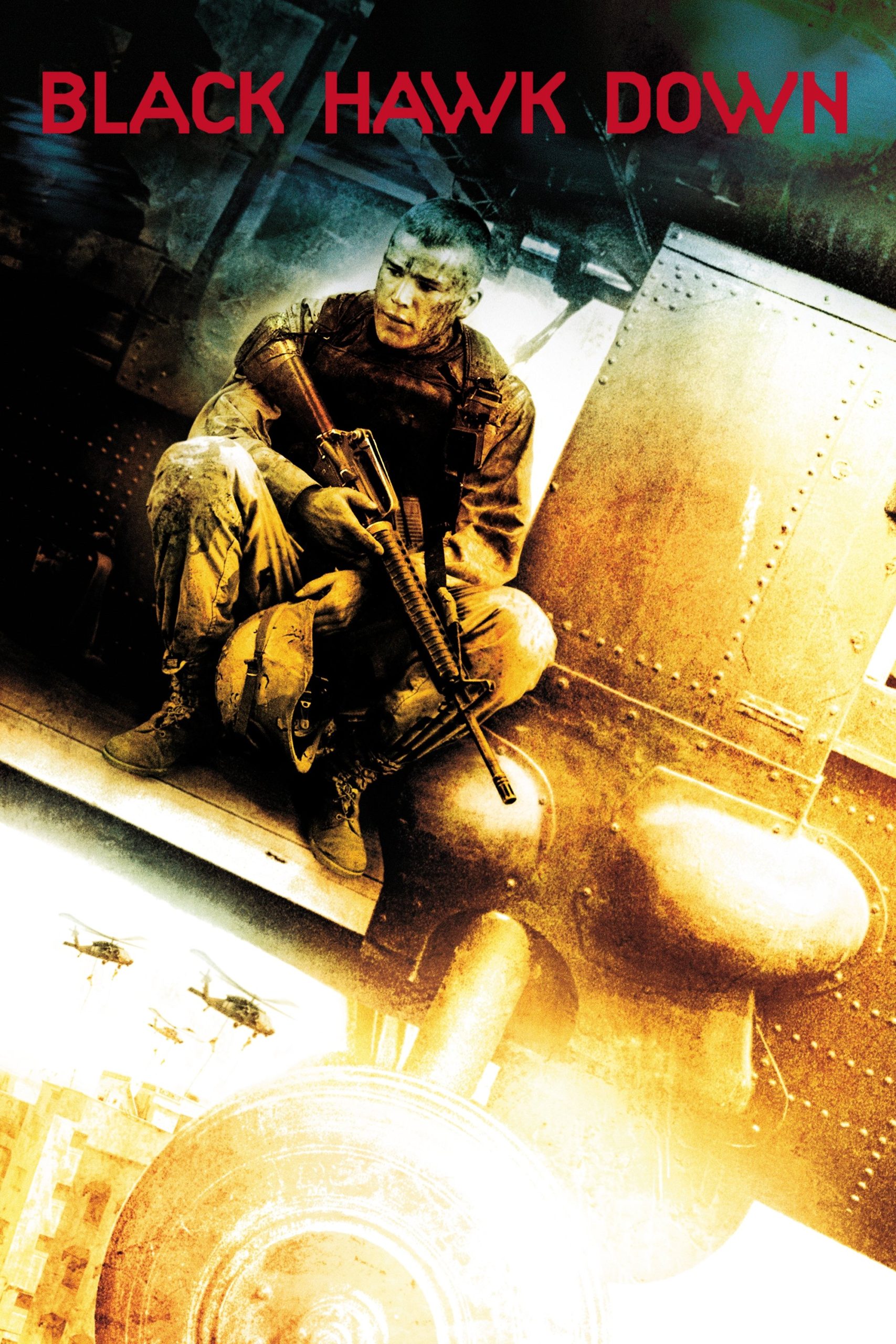
Thrown Into the Maelstrom: My Immersion in the Noise and Grit
When I first watched Black Hawk Down, I felt thrust into a world that pulsed with the frenzy of survival, stripped of clean heroics or tidy justifications. My heart pounded alongside the soldiers, but quickly, a different sort of emotional fatigue set in—a creeping sense of futility. Ridley Scott’s vision doesn’t glamorize combat; it isolates, deafens, numbs, and reduces war to the chaos of men fighting for their lives, their mission’s context dissolving in the roar of gunfire and confusion. My experience with this film is not one of narrative satisfaction, but of being assaulted by the relentless unpredictability of violence—an immersion so total it forced me to consider not only what war does to bodies, but what it does to meaning itself.
Morality Disintegrates Under Fire
Watching these American soldiers scramble through Mogadishu’s labyrinthine streets, the notion of “right” and “wrong” blurs at the edges. The film’s moral ambiguity is not subtle—it’s an abrasive element that scrapes away at the viewer’s sense of certainty. I found myself wondering: are these soldiers heroes, invaders, victims, or all three at once? There’s no guiding hand providing answers. Instead, the camera lingers on decisions made in seconds, the shattering consequences unfolding immediately, and I contemplate the toll these split-second judgments extract.
Scott’s camera doesn’t condemn or lionize. I sensed a relentless neutrality—almost a coldness—as if the film wants me to feel every ounce of kinetic panic without ever letting me escape into sentimentality. By refusing to contextualize, explain, or justify, the film forces me to confront the chaos head-on, and I can’t help but consider how morality—the kind taught in classrooms and parliaments—simply disintegrates in the grind of bullets and debris.
The Weight of Futility
I cannot escape the overwhelming sense of futility that crushes the characters—and me, as an observer. The soundtrack of the film is not only the clatter of rifles but a deeper, almost subconscious drone of “why are we here, and what difference does any of this make?” The mission’s original purpose—helping the Somali people—melts away under layers of pain, fear, and confusion; the “big picture” is lost, replaced by desperate improvisation and survival. At first, I sought a kind of narrative arc, a reason for the suffering. But Scott resists this, emphasizing how quickly reasons become irrelevant when survival is the only imperative.
This isn’t just a critique of American interventionism, though that’s threaded plainly through the chaos. Scott is fascinated by the spectacle of plans unraveling, by how little wars resemble the speeches that launch them. Watching the soldiers’ confusion mirrored mine—caught in a city whose streets and customs were alien, their very presence devolving into a series of failures and unintended consequences. The futility is not accidental; it’s at the heart of the film’s message, gnawing at any easy justification for war.
Anonymity in the Crossfire
What struck me most viscerally was the way the film’s visual grammar erases individuality. Soldiers, civilians, even enemies—all blur together beneath helmets, uniforms, dust, and blood. The camera rarely lingers long enough for me to get comfortable with anyone. I felt myself reaching for a protagonist, someone to pin my empathy on, and the film quietly denied me that comfort. This is not an oversight but a deliberate choice. War here is a collective experience, one that obliterates the uniqueness of faces and stories in favor of a more universal helplessness.
But anonymity isn’t just visual. Listening to the radio chatter, the chaos of commands, and the unending drone of confusion, I felt the psychological effect of dehumanization—the way soldiers, and by extension, audiences, must sometimes dissociate to survive. The casualties aren’t just bodies in the street; they’re also the thousands of small moments of self that get swallowed in the struggle to get out alive.
The City as Antagonist
Mogadishu itself is portrayed not as a setting, but as an omnipresent, antagonistic force. The film renders the city with a kind of hostile sentience; alleyways close in, rooftops bristle with threat, and every shadow pulses with menace. For me, the city is a character—one that doesn’t care about the soldiers’ intentions, their fears, or their codes of honor.
The labyrinthine streets become a metaphor for the larger problem of intervention: no matter how well-trained or well-equipped, the outsiders’ plans unravel within a culture and terrain they simply do not understand. I felt this tension in my bones—every attempt to anticipate or control the environment leads to further entrapment. Scott’s mise-en-scène is relentless: dust, heat, and noise crush every attempt at clarity, and I found myself nearly as lost as the characters, recognizing how easily virtue and valor are swallowed by the indifferent city.
The Absence of Glory
Though some critics have accused the film of glorifying war, I could not disagree more. Black Hawk Down is loud, relentless, and sometimes beautiful in its brutality, but there is no triumph here—no slow-motion heroics or swelling orchestration to assure us that sacrifice yields victory. The closest the film comes to sentimentality is in glimpses of camaraderie—fleeting moments that dissolve into further tragedy or exhaustion.
What I see, instead, is the stripping away of all posturing. Characters act, they bleed, they die, and they do so without the comfort of any greater meaning handed to them or to me. Scott refuses to offer the audience narrative closure because, in his worldview, there is none; the myth of redemptive violence is quietly, persistently dismantled. I felt hollow, unsettled, and that, I believe, is the point: the reality of war is not victory but its aftertaste of loss and uncertainty.
Sound and Fury: Emotional Exhaustion as Message
Rarely have I encountered a film where the unrelenting sound design and frenetic editing serve not merely as technique but as commentary. The noise—both literal and metaphorical—becomes a character, battering the audience into submission just as it does the soldiers. At first, I was exhilarated by the pace, the quick cuts, the adrenaline spikes. But fatigue quickly set in, and soon I felt overwhelmed, battered, and desperate for respite.
This exhaustion is intentional. Scott’s relentless pacing and immersive chaos are not merely to thrill but to simulate the psychological wear of combat—and, just as importantly, to erode any appetite for it. By the time the closing credits rolled, I felt emptied—a fatigue that lingered long after the final shot. The film’s message, delivered not in words but in the unyielding storm of images and sound, is that war is not an adventure but an ordeal with no heroes’ welcome on the far side.
Empathy Lost and Found in the Chaos
I was struck by how the film toys with—and ultimately confounds—my capacity for empathy. The first half tempts me to root for the soldiers, to take their side reflexively. But the camera’s gaze is equally unflinching toward the suffering of Somali civilians—bodies caught in crossfire, families shattered with no warning or reason. I am forced to confront an uncomfortable truth: in the machinery of warfare, empathy becomes a casualty, and the neat lines dividing “us” and “them” dissolve into a universal sorrow.
Yet, there are moments—brief, almost accidental—where empathy surfaces. A soldier hesitates before pulling the trigger. A medic tries, in vain, to save a life. These moments sting precisely because they are so rare, so fragile, and so easily crushed by the next explosion or ambush. Black Hawk Down suggests that the greatest tragedy of war may be this: that it erodes even our ability to care, leaving us numb and hollow in the aftermath.
Legacy of Disillusionment: Why Black Hawk Down Still Stings
Years after my first immersion, I find Black Hawk Down remains a touchstone for how cinema can force uncomfortable reckonings. It’s not a film that offers answers or solace; it’s a wound that refuses to close, a reminder that the stories nations tell themselves about war are rarely reflected on the ground. When I revisit the film, I’m haunted by its refusal to assign blame or declare winners, its insistence on portraying war as human frailty made manifest. Scott’s artistry lies in his commitment to the raw, ugly truth that, in war, humanity itself is always under siege.
Kindred Spirits in Classic Cinema
If the relentless chaos and moral ambiguity of Black Hawk Down resonated with you as they did with me, I can wholeheartedly recommend two classic films whose themes echo its bleak symphony: Paths of Glory and The Battle of Algiers. Each confronts the oppressive machinery of war, the futility of violence, and the cost to the human soul—never letting us forget that the greatest casualties are rarely those we expect.
If you’re curious about how this film was originally perceived or how it compares to similar works of its era, these resources may be helpful.
🎬 Check out today's best-selling movies on Amazon!
View Deals on Amazon