
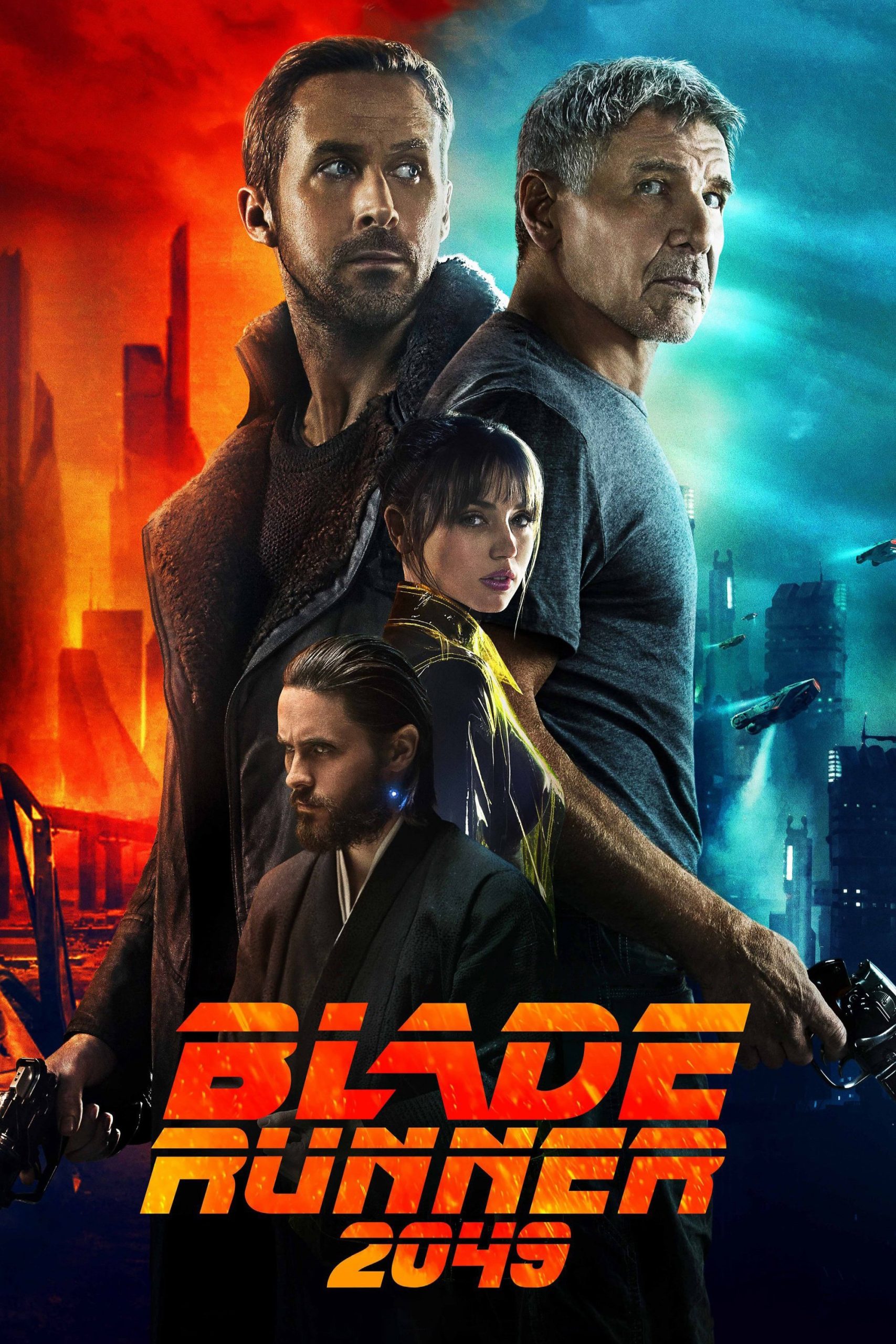
The Hollow Ache of Memory: My Personal Entry Point
I don’t think I’ll ever forget the first time I watched Blade Runner 2049. The rain-streaked neon, the way silence pressed on the soundtrack after a synth swell, the sense that every gesture was haunted by something unspoken. More than most films built on dystopian bones, this one gnawed at me from the inside. It’s not a film that asks only, “what is real?” — that old chestnut. It aches with a more private question: if the truth of our lives is built on fragile memories—real or artificial—where does meaning actually live?
Desolation Painted in Light and Sound
It’s impossible for me to separate the film’s emotional undercurrent from its visual language. I remember watching K, our replicant protagonist, lost in the misty gold of the wastelands or pinned beneath the invasive glow of skyscraper ads. Every frame aches with loneliness, as if the world itself has become so hollow that even its colors feel faded and estranged. This isn’t just future noir for noir’s sake. Denis Villeneuve and Roger Deakins seem determined to make the act of seeing itself feel spectral, untouchable. Every city vista, every abandoned ruin, asks me to consider what’s left after progress and memory have both failed us.
Artificial Souls: The Impossible Quest for Purpose
What aches most in Blade Runner 2049, as I see it, is the hunger for dignity in a world built on stratified meaning. K’s journey, at first, seems clinical: a replicant charged with retiring his own kind. But as he becomes tangled in clues pointing toward a possible miracle—a replicant child—his longing to be special, to be chosen, to matter, becomes the film’s heartbeat. I feel the desperation with which he clings to the hope that his own memories are real, that he, not some other replicant, might represent the future. Of course, the film’s cruelest revelation is that the search for meaning is universal—and the universe itself is indifferent. There’s no chosen one; there’s only the tender ache of wanting to be significant.
The Tyranny and Tenderness of Memory
If there’s one motif that truly strikes me, it’s the film’s obsession with memory: not merely as recollection, but as an engine for identity, hope, and suffering. The scene with the memory artist, Ana Stelline, is a quiet gut-punch. Watching her conjure perfect, bittersweet fragments for others—a job she does because she herself is too vulnerable to live outside—I’m reminded that memories shape us even when, or especially when, they’re not our own. The film’s finest cruelty is in showing how authenticity and fabrication become indistinguishable at a certain emotional threshold. When K weeps at the realization that his cherished childhood memory never belonged to him, I feel not just his despair, but the film’s larger point: meaning is not derived from truth, but from the intensity with which we need something to be true.
Longing in the Age of the Uncanny
One aspect that continues to haunt me is the relationship between K and Joi, the digital companion manufactured to be everything he wants. Some have dismissed their bond as hollow—a simulacrum loving a simulacrum. To me, this is the point. The sequence where Joi hires a human surrogate to “sync” with her, offering K an illusion of touch, is both beautiful and tragic. This longing for intimacy, even through artificial means, is the film’s most quietly radical gesture. Here, I see the film arguing that connection is always, in some ways, mediated and artificial—but that doesn’t lessen its emotional power. K’s devotion to Joi, and hers to him, expose the porousness of what we call “real” affection.
The Weight of Unknowable Futures
What does it mean to rebel against one’s programming? The film’s villains and visionaries—Wallace, the replicant resistance, Deckard—embody different answers. Wallace is obsessed with creating life, yet cannot fathom the mysteries of natural birth. Deckard, a relic from a previous era, is weighed down by regret and love. The resistance, meanwhile, see K as neither savior nor hero—just another lost soul. The film refuses to give us easy redemption or revolution. By the final act, I realize that the future is not a promise, but a question: what will we do, now that we know we are alone with our yearning?
Existential Dread Rendered in Architecture
I can’t help but marvel at how the landscapes themselves speak without words. Los Angeles sprawls like a cancerous memory, its skyline fractured by corporate ambition. The orphanage, a labyrinth of forgotten children, looms with a sense of stolen histories. The Las Vegas ruins are a feverish hallucination, history’s echo caught in radioactive haze. The architecture of the film is the architecture of despair—and yet, it’s rendered with aching beauty. Every structure is a monument to things lost: innocence, certainty, humanity itself. In these spaces, I sense the film’s deepest yearning—for the possibility that ruins can become sanctuaries, that brokenness might offer its own kind of grace.
Hope’s Quiet Persistence Amid Collapse
For all its desolation, Blade Runner 2049 doesn’t deny hope—only certainty. The final moments, with K collapsed on the steps as snow falls, are some of the most quietly moving I’ve seen. He isn’t triumphant; he isn’t even sure if his actions mattered. Yet, in the smallness of his gesture—reuniting Deckard and his daughter—there’s a flicker of transcendence. The film leaves me with the sense that meaning is not bestowed from on high, but built through acts of sacrifice, tenderness, and courage, however fleeting or anonymous. We may never know for sure if our lives matter in the grand design, but the attempt to love, to protect, to hope—that is where significance germinates.
For Seekers of Kindred Shadows
Two classic films haunt the same emotional and philosophical terrain as Blade Runner 2049 for me:
- Stalker (1979): Andrei Tarkovsky’s poetic descent into a forbidden zone, where longing and metaphysical doubt fill every frame.
- Solaris (1972): Also by Tarkovsky, a meditation on memory, grief, and the impossibility of fully knowing oneself or another.
If you’re curious about how this film was originally perceived or how it compares to similar works of its era, these resources may be helpful.
🎬 Check out today's best-selling movies on Amazon!
View Deals on Amazon