
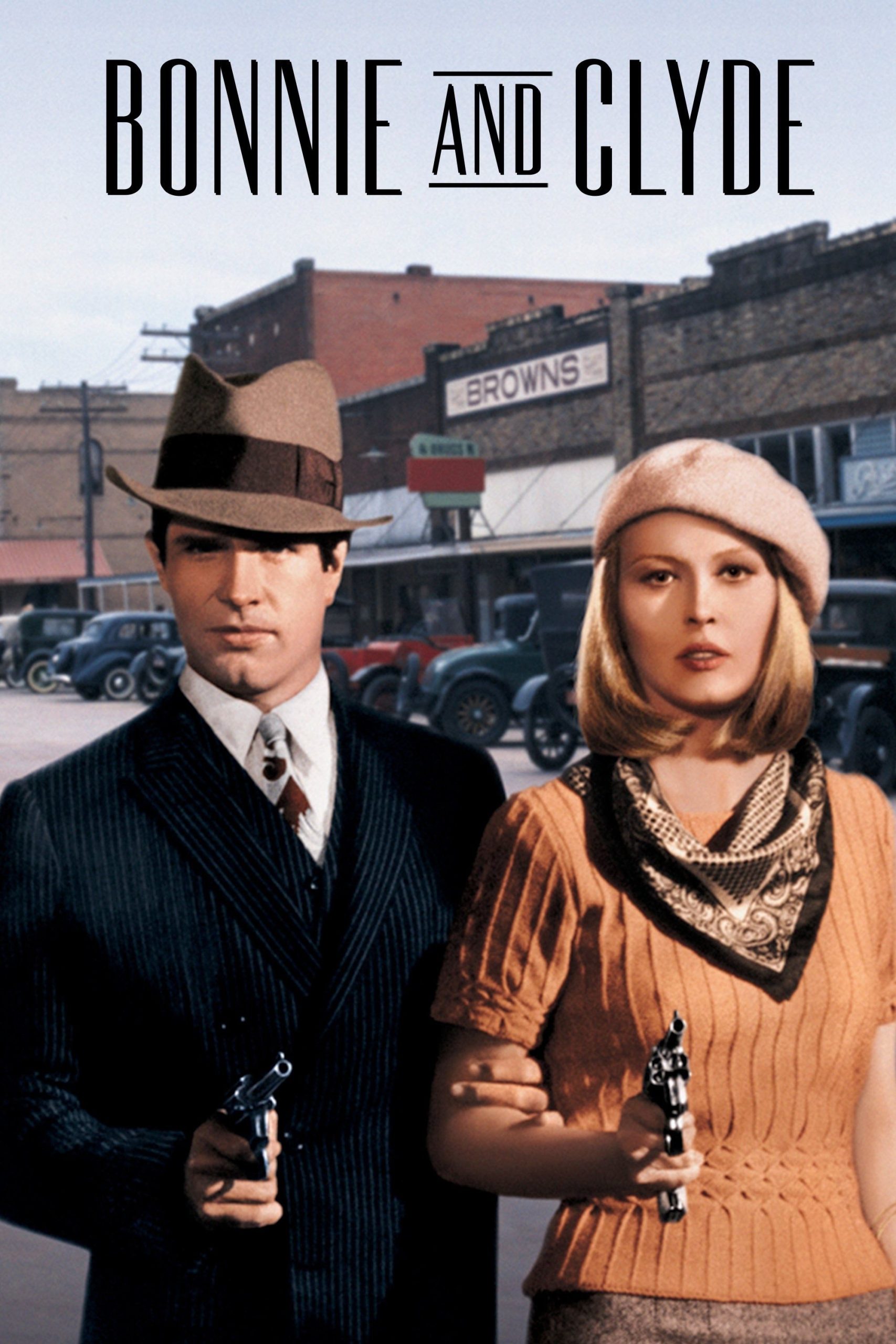
When the Outlaws Looked Back at Me
Some films don’t just invite you in—they pull up a chair, tilt their hat, and dare you to look away. The first time I watched “Bonnie and Clyde” (1967), I felt the screen staring right into my soul, as if asking how much complicity I was willing to own. It’s a film with gunfire, yes, but the real impact is measured in how deeply it challenges my sense of innocence and rebellion. I’ve rarely seen the line between fascination and condemnation blurred in quite this way, and I know I’m not alone in feeling unsettled by the thrill of riding shotgun with doomed lovers.
The Twisted Romance of Glamour and Violence
Every time I revisit “Bonnie and Clyde,” I feel the seductive pull of their world—a place where desperation finds its outlet not in tears, but in theatrical bursts of action. The film dares to fuse romance with violence so recklessly that I end up questioning my own appetite for spectacle. Bonnie (Faye Dunaway) and Clyde (Warren Beatty) aren’t just partners in crime; they’re intoxicated by the energy that erupts between them every time a gun is drawn. That fusion becomes the movie’s heartbeat, pumping with every glance, every shot, every stolen kiss in a dusty car. I start to see that the allure isn’t just for the characters—it’s for us too, as viewers. We want to be swept up in the myth, to believe that being outside the law is a form of liberation. Yet, there’s always the aftertaste of guilt. By making violence beautiful, the film implicates me as one of its accomplices.
America’s Broken Promises Reflected in the Rearview
I can’t watch Bonnie and Clyde’s saga unfold without sensing the weight of the era pressing in on them—and on me. It’s set against the backdrop of the Great Depression, but the malaise feels just as contemporary as it does historical. Every bank they rob is a crumbling institution, both literally and metaphorically. I see a country that has failed its young—left them hungry, angry, and convinced that the only way out is to tear down the old order. The film’s unspoken accusation: these two aren’t just running from the law, they’re running from a society that promised them prosperity and delivered only dust. Their crimes become a twisted, desperate response to the American Dream gone sour. I’m left wondering if the outlaws we mythologize are just casualties of the promises we never kept.
Wrangling with Morality—And Loving Every Minute
Watching “Bonnie and Clyde,” my moral compass starts spinning. I’m never quite sure whom I’m supposed to root for. The lawmen are clumsy, faceless, almost indifferent, while Bonnie and Clyde have faces I can’t forget—faces that are alternately childlike, sensuous, and haunted. The film’s genius lies in its refusal to hand me a simple ethical guide. Am I supposed to cheer the rebels, or mourn their victims? When the violence erupts—sudden, messy, and never cartoonish—I recoil, even as I can’t look away. The film makes me love these outlaws for their audacity and vulnerability, even as it indicts me for my complicity. I think that’s why the ending hits so hard: I’m punished too, for wanting to believe in the romance of the gun.
Finding Freedom in the Frame
The camera in “Bonnie and Clyde” feels alive—darting, lingering, capturing both the thrill of escape and the ache of knowing it can’t last. The film makes freedom look exhilarating and impossible at the same time. When the gang barrels down empty highways, I feel the dust in my teeth, the wind in my hair. But there’s always a fence in the distance, a dead end lurking. Every fleeting moment of joy is chased by the inevitability of loss, and the film never lets me forget that. It’s the visual language of hope and doom, perfectly intertwined. Even when Bonnie laughs, there’s something brittle about it—a sense that she’s only ever a few miles ahead of heartbreak. That’s the freedom the film offers me: a taste, not a promise, and it’s all the more precious for its brevity.
The Cracks in the Gang’s Armor
It’s tempting to see Bonnie and Clyde as a perfectly matched duo, but every scene reminds me how fragile that partnership is. They’re surrounded by misfits, each one a mirror reflecting their own insecurities and ambitions. I can’t help but notice how their little crime family starts to splinter as the stakes rise. C.W. Moss, with his awkward innocence, becomes a stand-in for the audience—caught up in something he barely understands. Blanche Barrow’s hysteria isn’t an overplayed note; it’s the sound of conscience keening through the gunfire. Even within the gang, there’s no true solidarity—just a series of uneasy alignments and betrayals. The film makes me reconsider the idea of “us against the world;” maybe it’s always been every man and woman for themselves, and the tragedy is realizing it too late.
A Legacy of Defiance Carved in Bullet Holes
What resonates most with me isn’t just the story, but the film’s audacity to break, shatter, and remake the rules. When I watch that infamous final scene—violent, shocking, almost balletic in its choreography—I’m struck by how much it changed the language of American cinema. “Bonnie and Clyde” doesn’t just depict violence; it interrogates our appetite for it, our need to mythologize it. The aftermath is ugly and sobering, refusing to give me the satisfaction of a heroic death or a neat resolution. The film asks whether the price of defiance is worth it. Its unanswered questions linger, haunting me long after the credits roll. I think the real revolution here is in how the film makes me see myself—as an American, a lover of stories, and maybe, just a little bit, as an outlaw at heart.
If This Ride Thrilled You, Try These
For those who want to chase down more films that leave you with that same sense of exhilaration tinged with disquiet, I always return to two classics: “Badlands” (1973) and “They Live by Night” (1948). Both capture the intoxicating mix of love, danger, and fatalism that makes “Bonnie and Clyde” so unforgettable. These films don’t just entertain—they provoke, unsettle, and invite you to question whose side of the law you’re really on.
If you’re curious about how this film was originally perceived or how it compares to similar works of its era, these resources may be helpful.
🎬 Check out today's best-selling movies on Amazon!
View Deals on Amazon