
That Fence, That Lie: My First Memory of Barriers
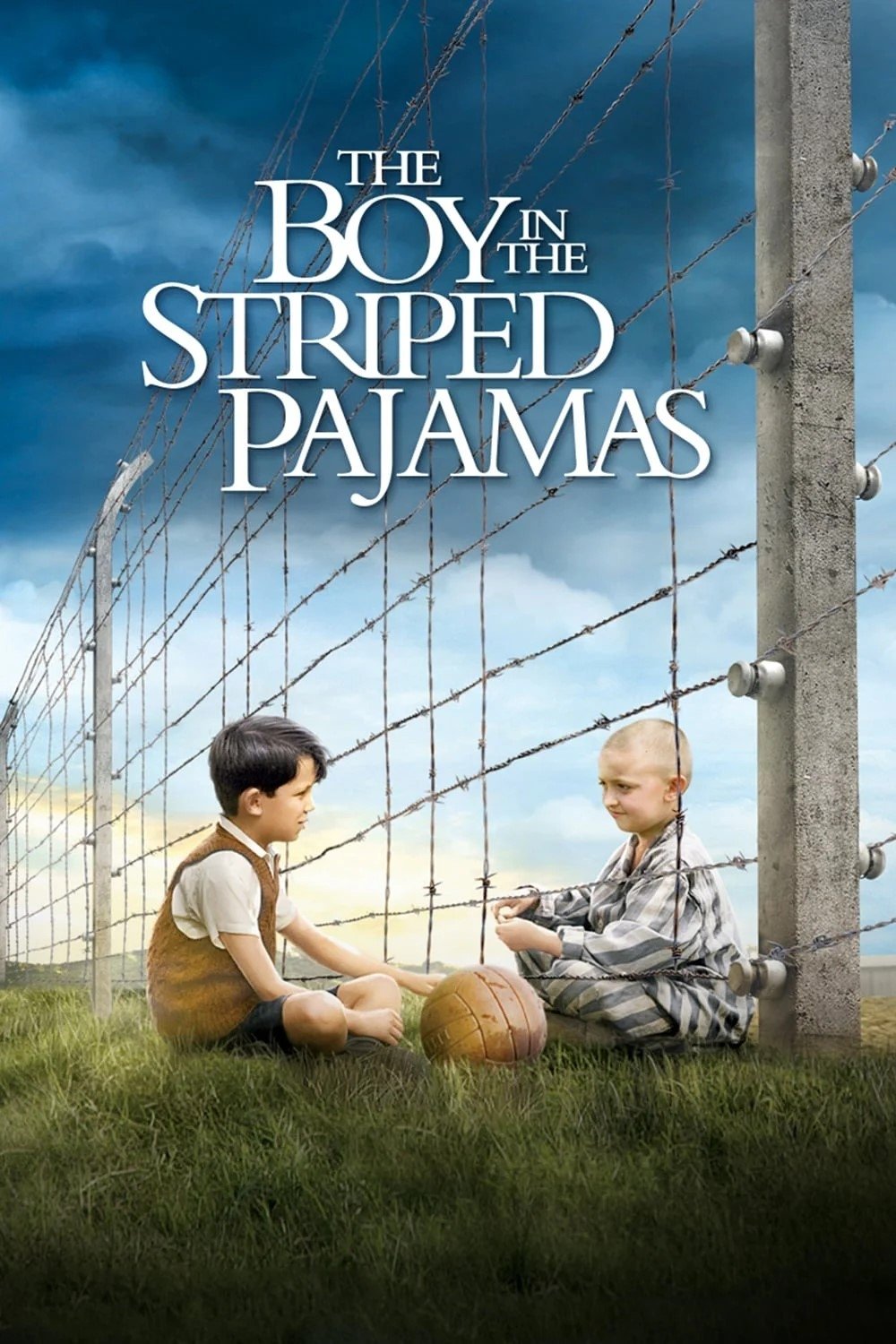
From the moment I first watched The Boy in the Striped Pyjamas, the image that haunted me most wasn’t the ending—shocking as it is—but rather the sight of that simple, ugly fence, cutting the world into two with an ease that children, and perhaps only children, refuse to accept. The film’s central metaphor—the literal and psychological fence—tells a deeper tale about innocence colliding with atrocity than any plot summary ever could. I found myself questioning the fences in my own thinking, the silent complicit lines I draw or inherit. The film quietly, unflinchingly, asks us to look at the contours of our own ignorance and what happens when that innocence meets history’s most brutal truths.
Through Bruno’s Eyes: The Seduction of Not Knowing
Bruno’s perspective is uncomfortable because it is so seductively naïve. I remember bristling at his oblivion, the way he fails to see what is plain to us: the camp, the uniforms, the horror. Yet, the film’s point is not to depict him as willfully blind, but rather to confront me with the failures of imagination that privilege can invite. Bruno is a child of the Nazi elite, but he is also a child—full of curiosity, without malice, raised in a bubble of comforting lies. When he presses his nose to the glass, desperate to understand who “the people on the other side” are, it’s not just a child’s question. It’s the audience’s question, one that indicts us for the luxury of learning history from a safe distance.
The film, in showing Bruno’s incomplete grasp of evil, indicts the adult world for constructing a narrative so convincing that even a bright, compassionate child cannot see past it. I felt implicated in this: how often do I, cushioned by circumstance, choose not to ask the questions whose answers would unsettle me? Bruno’s innocence, then, is not just a virtue; it is a liability, a shield that becomes a prison.
The Deadly Comfort of Storybooks
What struck me on rewatch is how the film weaponizes childhood tropes—a sense of adventure, the fantasy of secret friends, the longing to explore—to expose their limits in the face of real evil. Bruno’s world is shaped by storybooks, by the promise that adventures end well and villains are marked by melodrama, not by bureaucracy. The story he lives in is not the one his family inhabits. For Bruno, the world remains a puzzle to be solved, not a horror to be survived.
By inviting us into Bruno’s private myth—where the striped pyjamas may be a costume, where the camp is a farm—the film forces me to confront how narratives can be used both as comfort and as a smokescreen. The most chilling realization, for me, is that the stories adults tell to protect children can also function to protect us from the truth. How different is this, really, from any regime’s propaganda, or from my own tendency to reframe history in ways that feel manageable? The danger is not only in what is hidden from us, but in what we are willing to remain ignorant of.
Friendship as a Dangerous Act
When I watch the scenes between Bruno and Shmuel, I am always struck by the painful fragility of their friendship. The film refuses to romanticize their bond; instead, it presents every moment as a risk, every kindness as a potential act of betrayal or doom. Friendship here is not a panacea—it is a test, a question about the limits of empathy under monstrous systems.
I’m haunted by that moment when Bruno, faced with the guards’ violence, denies knowing Shmuel. I see in this a microcosm of societal complicity: even the best intentions can falter when fear enters the equation. The film suggests that bravery is not an ever-present state, but a fleeting opportunity—a door that, once closed, might not open again. Yet Bruno’s guilt, and his instinctive attempts to make amends, hint at the possibility—however slim—of a moral awakening, even at the edge of atrocity.
Parents, Monsters, and the Banality of Evil
For all the focus on the boys, I find myself just as captivated by the adults—especially Bruno’s parents, who embody the dangers of compartmentalization. The father is no cartoon villain; he is frightening precisely because he is so ordinary, so convinced of his own decency, so skilled at keeping his public and private selves apart. His mother, meanwhile, is a study in willful denial, her eventual awakening to the camp’s reality a slow, devastating unraveling.
The film’s power lies in its refusal to offer easy villains, except where easy villainy is the point: the guards, brutal and unthinking, are contrasted with parents whose complicity is enabled by love, duty, and the desire for normalcy. “Evil” here is not a distant specter, but something mundane, insidious, dressed in the trappings of family life. I am forced to ask how ordinary people become cogs in systems of cruelty, and whether family bonds excuse or exacerbate their moral failures.
Costumes, Names, and the Language of Exclusion
The title itself—“The Boy in the Striped Pyjamas”—is a child’s misinterpretation, a linguistic barrier that mirrors the physical fence. Clothing becomes a marker of identity and a means of othering; the “striped pyjamas” are not pajamas at all, but prison uniforms, symbols of systematic dehumanization. Bruno’s inability to grasp the true nature of Shmuel’s clothes is more than an innocent error; it is part of the mechanism by which horrific reality is rendered invisible.
Names, too, are freighted with meaning. Bruno cannot pronounce “Auschwitz,” calling it “Out-With”; the euphemism is both a joke and a shield, a way for him to participate in, yet remain separate from, the machinery of genocide. The film uses these errors not to exonerate Bruno, but to show how language itself can be an accomplice to atrocity. The words we choose—out of ignorance or self-preservation—shape what we allow ourselves to see.
The Unbearable Weight of That Ending
By the time the film reaches its final, devastating moments, I am no longer able to see the world through Bruno’s eyes—I am forced to see it through my own. The ending is uncompromising, refusing catharsis or comfort, because any narrative that offers easy redemption would betray the story’s moral core. The tragedy is not only that Bruno dies, but that his death is indistinguishable from those of the countless others the system consumes. The fence that kept him safe has failed, and in that failure, the artificial boundaries—between innocence and guilt, victim and bystander, child and adult—finally collapse.
I’m left with a sense of grief that is personal and political. The film doesn’t permit me to mourn Bruno alone; I must also mourn the millions who died namelessly, who had no chance for rescue, whose suffering was rendered invisible by fences both real and imagined. The final shot lingers, not to shock, but to indict: how many fences have I built, or accepted, in order to feel safe from the suffering of others?
Two Roads, One Question: Which Side of History?
For me, The Boy in the Striped Pyjamas is less a narrative about two children than a moral inquiry directed at every adult who watches it. Its true subject is not innocence lost, but responsibility discovered—the obligation to see, and to act, when confronted with the suffering of others. The film’s artistry lies in using a deceptively simple story to pose a question that has no easy answer: What would I have done, had I lived then? What will I do now?
By centering the story on a child who cannot understand, the filmmakers place the burden of understanding—and action—squarely on me. Every time I revisit this film, the fence grows less abstract. The question grows louder.
Other Echoes of Innocence: Classic Films to Consider
If the resonance of The Boy in the Striped Pyjamas stays with you as it did me, you may find similar depth and discomfort in these two classic works:
- Au revoir les enfants (1987): Louis Malle’s bittersweet film about friendship, complicity, and the Holocaust as seen through the eyes of schoolboys in Nazi-occupied France.
- The Diary of Anne Frank (1959): A haunting adaptation that also confronts innocence and horror, drawing viewers into the daily terror and hope of a Jewish family in hiding.
If you’re curious about how this film was originally perceived or how it compares to similar works of its era, these resources may be helpful.
🎬 Check out today's best-selling movies on Amazon!
View Deals on Amazon