
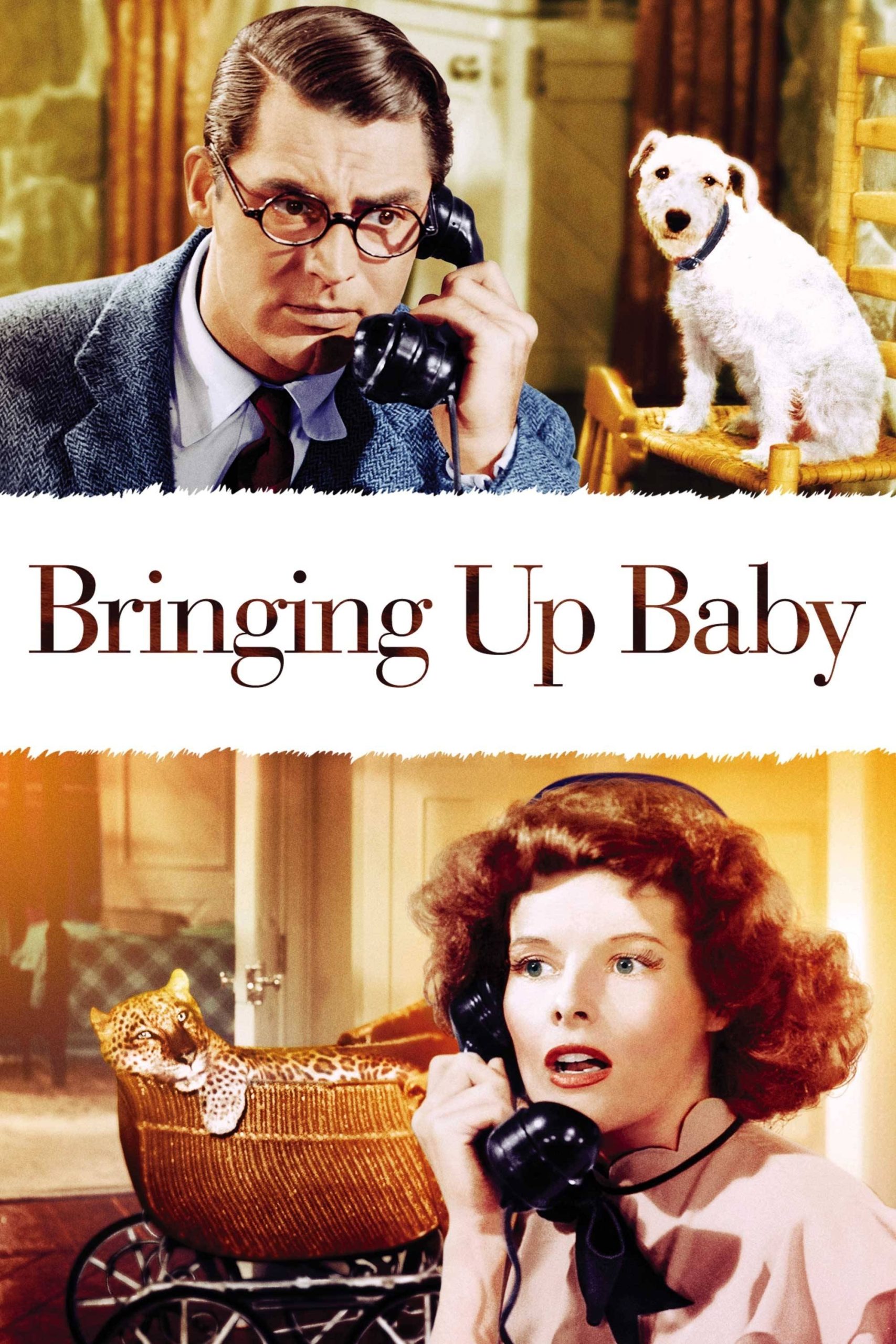
Chaos in Leopard Print: My First Encounter with “Bringing Up Baby”
I can still recall the first time “Bringing Up Baby” crashed across my screen—it felt less like watching a movie and more like tumbling headlong into a glorious, nonsensical storm. The film didn’t just make me laugh; it made me question the borders between order and chaos, between sense and sensation. Beneath the slapstick, I sensed a kind of wild philosophy running ragged through its frames. This isn’t simply a screwball comedy, but a dazzling ballet of disruption—one that probes our desire for control in a world that refuses to be tamed.
Order, Anarchy, and the Romantic Avalanche
On its face, “Bringing Up Baby” pits the meticulously ordered life of David Huxley (Cary Grant), a paleontologist, against the unstoppable force of Susan Vance (Katharine Hepburn), who brings both a leopard and a hurricane into his otherwise bland existence. What struck me most with each viewing is how the film transforms David from a man of logic into someone who, by necessity, must embrace absurdity to survive.
The film’s core is an intricate dance between order and chaos—not as opposites, but as states that bleed into and nourish each other. David’s devotion to his dinosaur skeleton and his impending marriage represent the stasis of a life perfectly organized yet essentially lifeless. Susan, with her impulsive energy, acts as a living embodiment of chaos, upending every expectation and boundary. The leopard, Baby, may be the film’s most visible wild card, but Susan is its true agent of disorder. What “Bringing Up Baby” suggests, in riotous fashion, is that vitality only enters our lives when we allow disorder to disrupt the safety of our routines.
Women as Agents of Change: Susan’s Subversive Charm
When I focus on Susan’s role, I find myself endlessly fascinated by how she weaponizes charm and apparent naivety. She isn’t a supporting character in David’s story; she’s the hurricane that tears down the narrative scaffolding he’s built. Susan’s relentlessness challenges the notion that stability is synonymous with happiness. The more she disrupts, the more alive David becomes, even if he’s on the verge of a nervous breakdown for most of the running time.
What I deeply admire is how Susan’s unpredictability isn’t framed as a flaw, but as a kind of genius—her strategy for living fully. In a genre and era rife with passive female characters, Susan blazes forth as a woman who creates her own reality, dragging the men in her orbit into a world governed by possibility instead of propriety. She is less a love interest and more a force of nature, embodying the exhilarating risk that real intimacy demands.
The Skeleton in the Room: Obsession, Legacy, and What We Leave Behind
I always return to that dinosaur skeleton, looming over the entire narrative like a white elephant. It isn’t just David’s professional obsession—it’s his monument to the past and his fear of the future. The skeleton is order literalized, a relic assembled from fragments, meticulously cataloged to deny the transience of existence. Yet, in the film’s climactic moments, that very skeleton collapses, and with it, the illusion that life can be pieced together and pinned down. What resonates with me is how the film equates the destruction of the skeleton with liberation: Only when David’s obsession is shattered can he fully engage with Susan and the unpredictable flow of living.
It’s as if the film is whispering that true legacy isn’t built from fossilized remains, but from the messy, unrepeatable adventure of loving and being loved.
Comedy as a Weapon: The Subversive Power of Laughter
The first time I truly laughed at “Bringing Up Baby,” I realized how laughter itself becomes subversive. Rather than offering gentle parody, the film weaponizes absurdity to unsettle the patterns of daily life. Each pratfall, each misunderstanding, dismantles not just social norms, but the very idea that life is something we can choreograph.
The film’s comedic rhythm is relentless, but there’s a method in its madness: It invites us to let go, to surrender to a world that operates outside logic or expectation. In doing so, it suggests that laughter is not just a reflex, but a tool for surviving a universe that is, at its core, unruly and unmanageable. Every chase, every mistaken identity, and every wild animal on the loose is a reminder that our precious sense of control is always an illusion.
The Leopard’s Gaze: Animal Instincts and Human Desire
As I reflect on Baby, the leopard, I’m drawn to the wildness she represents—both literal and metaphorical. She’s not merely a comic prop or narrative device, but a symbol for all that resists domestication. Baby is the chaos we try to contain, the instinct we suppress in the name of civilization, yet the film never lets us forget her essential role in catalyzing transformation.
I’m struck by how the film equates desire—animalistic, irrational, overwhelming—with the forces that drive us toward connection. David’s awakening, then, isn’t just about falling in love with Susan; it’s about reconciling his inner “leopard,” his capacity for unpredictability and risk. It’s in the moments when he abandons order and surrenders to confusion that he comes alive, reminding me that our animal impulses are not only inescapable but essential.
Truth in the Farcical: Love as Relinquishing Control
Beneath the chaos, I find myself unexpectedly moved by the film’s perspective on love: it’s not a matter of finding the perfect match, but of finding someone whose madness complements your own. Susan and David are not compatible in the traditional sense; rather, their connection is forged in the crucible of disruption and shared disaster.
To love, the film argues, is to relinquish the fantasy of mastery and embrace the certainty of confusion. The happy ending doesn’t restore order—it celebrates the collapse of all David’s carefully constructed defenses. This, to me, is the film’s most radical statement: that joy lies not in conquering chaos, but in learning to inhabit it together. Amid the farce, I glimpse a humanity that is both vulnerable and triumphant.
A World without Brakes: The Rhythm of Madcap Liberation
One of the most dazzling qualities of “Bringing Up Baby” is its refusal to pause. The film moves at a breakneck tempo, tossing logic to the wind—and in doing so, it gives voice to a uniquely American kind of comic liberation. There is a rhythm of freedom in the film’s endless running and chasing, a sense that life is best approached as an improvisational dance rather than a planned itinerary.
I often find myself breathless by the final act, not simply because of the feverish comedy, but because I recognize a deeper wish being fulfilled: the wish for escape, for a holiday from caution. The film doesn’t just show characters breaking free—it invites me, too, to imagine what might happen if I allowed myself to be swept away by the unpredictable currents of life.
Two More Invitations to Chaos and Delight
If “Bringing Up Baby” left you dizzy, delighted, and wondering what else cinema can do with the forces of chaos and love, I’d urge you to seek out these two classics:
- The Awful Truth – Another Grant vehicle, but a different flavor of romantic mayhem, where love proves itself only after enduring—and embracing—total upheaval.
- His Girl Friday – For sheer velocity of wit and a portrait of romance as a relentless volley of words, this film offers the same wild, irresistible energy as “Bringing Up Baby.”
If you’re curious about how this film was originally perceived or how it compares to similar works of its era, these resources may be helpful.
🎬 Check out today's best-selling movies on Amazon!
View Deals on Amazon