
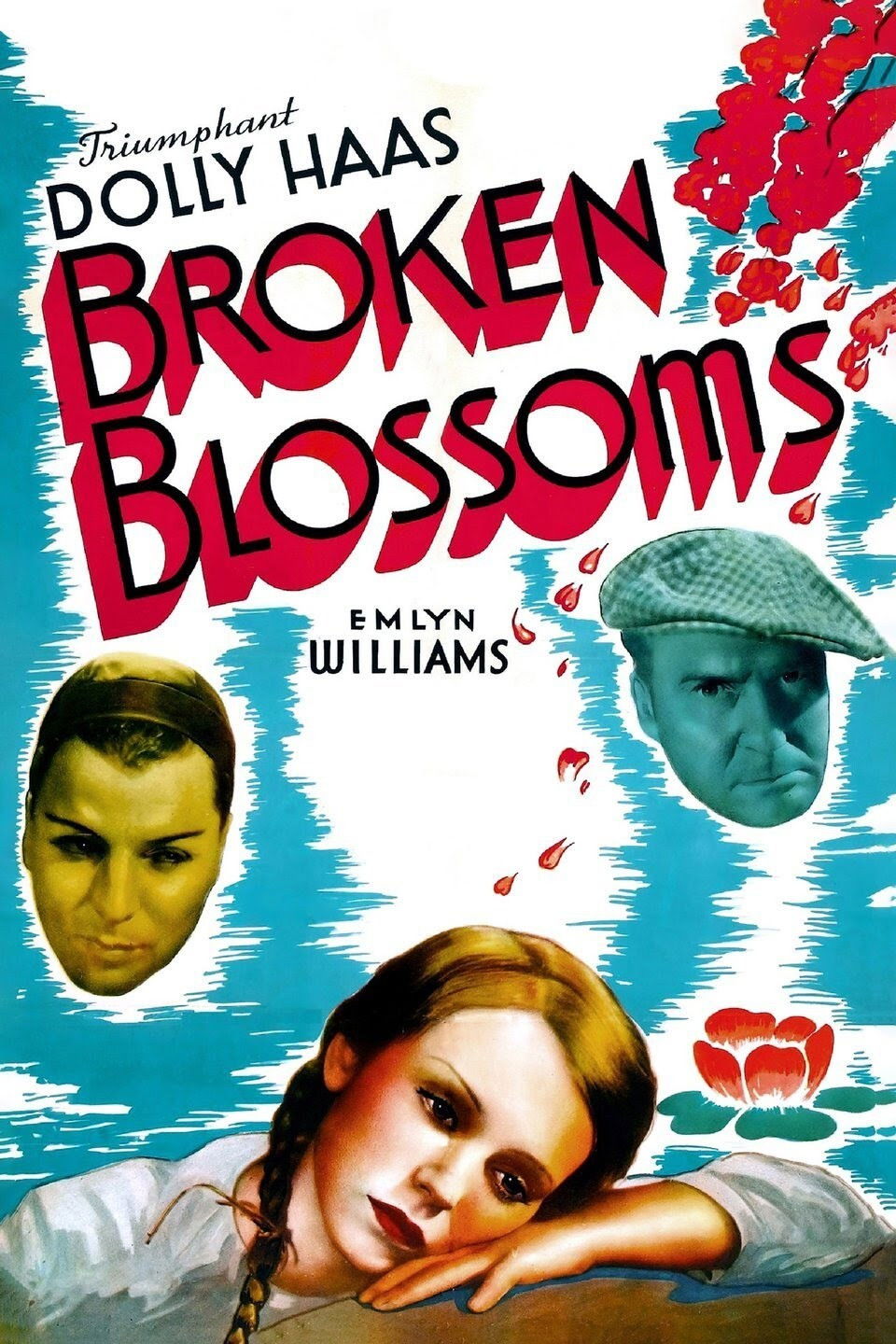
Shadows on Limehouse Walls: My Encounter with “Broken Blossoms”
The first time I watched “Broken Blossoms,” I felt as if I had stepped through a gauzy curtain into a room haunted by heartbreak and longing—a world where every soft-focus shadow seemed heavy with meaning. I kept returning, not for the melodrama or the romance, but for the ache that lingered after the final fade-out. D.W. Griffith’s 1919 film does not simply invite sympathy; it unsettles me, asking me to feel the bruises beneath its fragile poetry. I’ve never shaken free of the way this film makes suffering visible, almost sacred, and I think that’s exactly what Griffith intended.
The Fractured Sanctuary: Love in a Hostile World
I’m always struck by how “Broken Blossoms” turns the smallest London room into a fortress against the onslaught of cruelty. The battered girl Lucy and the gentle “Yellow Man” build their own fragile sanctuary. This is not just a physical space. It becomes a refuge for the battered soul, ignited by the faintest kindness. Griffith seems desperate to believe that tenderness can bloom amid violence, yet everything in the film’s world conspires to crush it. I sense a yearning behind every close-up—an unfulfilled dream that gentle souls, cast adrift in unforgiving streets, might find each other and be safe, if only for a moment.
What resonates most with me is the recognition that the outside world never truly leaves the room. There’s always an echo of footsteps, the threat of intrusion. The sanctuary is a temporary illusion; love is beautiful but brittle, doomed by the brute force of a society that punishes difference and vulnerability. When Lucy clings to the “Yellow Man,” it’s not only for rescue but for the fleeting affirmation that she matters. This film sees love not as salvation, but as a brief, necessary lie we tell ourselves in the face of misery.
Silent Suffering: The Poetics of Pain
If I’m honest, it’s Lillian Gish’s performance that I remember most vividly—her wide, terror-stricken eyes, her trembling hands. Gish embodies suffering so completely that it ceases to be melodramatic and becomes a kind of silent poetry. Griffith’s camera doesn’t simply look at Lucy; it venerates her pain, wrapping it in soft light and patient close-ups, as if pain itself is sacred. The tenderness with which he films Lucy’s suffering is, in a way, unsettling. It forces me to confront the voyeurism of my own sympathy—am I a witness, or an accomplice?
There’s a thin line between empathy and exploitation here. Yet I’m convinced that Griffith wanted the audience to feel discomfort, to see in Lucy’s brokenness a reflection of all the unseen agony around us. The film insists that pain is not only personal but cultural, a consequence of the world’s unchecked brutality. Maybe “Broken Blossoms” is less about plot and more about the challenge of bearing witness: How much suffering can we watch before turning away?
The Unwelcome Stranger: Racism Woven into the Dream
I cannot write about “Broken Blossoms” without confronting its central unease: the figure of the “Yellow Man.” Richard Barthelmess’s portrayal is well-meaning, but the film’s vision of “Chinaman” exoticism is both infantilizing and idealized. Griffith’s outsider is a fantasy—gentle, passive, self-sacrificing—a projection of tragic innocence meant to shame the West. This is a deeply problematic construction, even by 1919 standards. Yet I feel the ache of Griffith’s intent: he wants me to see the hypocrisy and violence of white society, to feel disgust for Lucy’s father and sympathy for her protector.
The irony, of course, is that the film’s plea for tolerance is filtered through stereotype. Griffith both critiques and perpetuates the “othering” of his hero. When I watch the “Yellow Man” wander the Limehouse streets, yearning for peace, I see an allegory for every immigrant’s dream deferred by hostility and suspicion. What the film really exposes, in its muddled way, is the impossibility of belonging for those marked as outsiders. There’s a prophetic sadness in that; Griffith’s vision of cross-cultural compassion is ultimately naïve, hemmed in by the very prejudices he condemns.
Violence, Beauty, and the Limits of Hope
Few films have haunted me with their portrayal of violence the way “Broken Blossoms” has. The brutality of Lucy’s father—played with monstrous force by Donald Crisp—feels less like a character and more like a force of nature. He is the embodiment of unchecked masculinity, the storm that batters innocence to death. Through his violence, the film asks: can beauty survive in a world committed to its destruction?
The answer, Griffith admits, is a bitter one. Beauty is fleeting, fragile, and ultimately powerless. I am always undone by the sequence where Lucy locks herself in the closet, desperately clutching at the bolts as her father rages outside—it’s a masterpiece of suspense and a metaphor for the futility of her resistance. “Broken Blossoms” is not about triumph, but about the inevitability of loss. The film’s delicate lighting and soft focus are not hopeful; they are elegiac, mourning what cannot be saved.
The Language of Light: Cinematic Grace Notes
I find myself repeatedly drawn to the film’s visual style—its swirling fog, its chiaroscuro interiors, the way faces dissolve into shadow. There’s something almost religious in the way Griffith lights his characters, as if searching for beauty in ruin. The film’s style is not just aesthetic—it’s a declaration of faith that cinema can elevate suffering to something meaningful. Every halo of light around Lucy’s head is a silent prayer for mercy.
More than once I’ve wondered if the film’s technical innovations—its expressive close-ups, its painterly compositions—are themselves a form of protest. Griffith uses the tools of cinema to insist that the “small” people, the abused and discarded, are worthy of the grandeur usually reserved for heroes. The visual poetry is not decoration; it’s a political act, reclaiming dignity for the powerless. I imagine audiences in 1919, unaccustomed to such intimacy, must have been startled by the way the camera lingers on suffering, refusing to look away.
The Dream of Escape, Forever Deferred
What makes “Broken Blossoms” linger in my mind is its refusal to offer easy solace. The “Yellow Man” dreams of bringing Buddhist peace to the West, but his dreams shatter on the rocks of reality. Lucy prays for escape, but finds only a brief pause between beatings. The film’s greatest truth is that for some, escape is an illusion—one that flickers, beautiful and unreachable, just out of reach. This is a film where hope exists only in memory, or in the afterlife suggested by the closing images.
I sense that Griffith is offering a lament, not a solution. His vision is all the more heartbreaking because it grasps for transcendence but finds only tragedy. The final tableau, with Lucy at rest and her protector cradling her lifeless body, is both a benediction and a defeat. Broken people, broken dreams, broken blossoms—Griffith circles these images with reverence, reminding me that sometimes the only mercy is to remember.
Reverberations and Reflections: My Personal Reckoning
The older I get, the more I see “Broken Blossoms” as a film about recognition—recognizing pain in another and reaching for connection, however brief. It asks me to look, not away, but closer. If the film is haunted by tragedy, it’s because its characters are denied the dignity of being seen as whole. The world of Limehouse is so sharply drawn, so claustrophobic, that every act of kindness becomes radical. Yet, as a viewer, I’m forced to acknowledge my own complicity—the urge to pity, to distance myself from suffering, rather than to change the world that permits it.
For all its datedness, its stereotypes, and its sentimentality, I find “Broken Blossoms” a stubbornly modern film. It teaches me that kindness is urgent, and that beauty—however brief—matters. The film’s final images don’t let me forget the cost of indifference. I walk away, each time, with the same bruised feeling: the world breaks people, and only love, however fleeting, makes it bearable.
If This Film Moved You, Watch These Two Next
If the sorrow and fragile hope of “Broken Blossoms” left an impression on you, I would urge you to seek out two other classic films that pulse with similar longing and thematic resonance: “The Crowd” (1928) and “The Wind” (1928). Both films capture, in different ways, the sense of isolation and the desperate hope for grace that makes “Broken Blossoms” unforgettable.
If you’re curious about how this film was originally perceived or how it compares to similar works of its era, these resources may be helpful.
🎬 Check out today's best-selling movies on Amazon!
View Deals on Amazon