
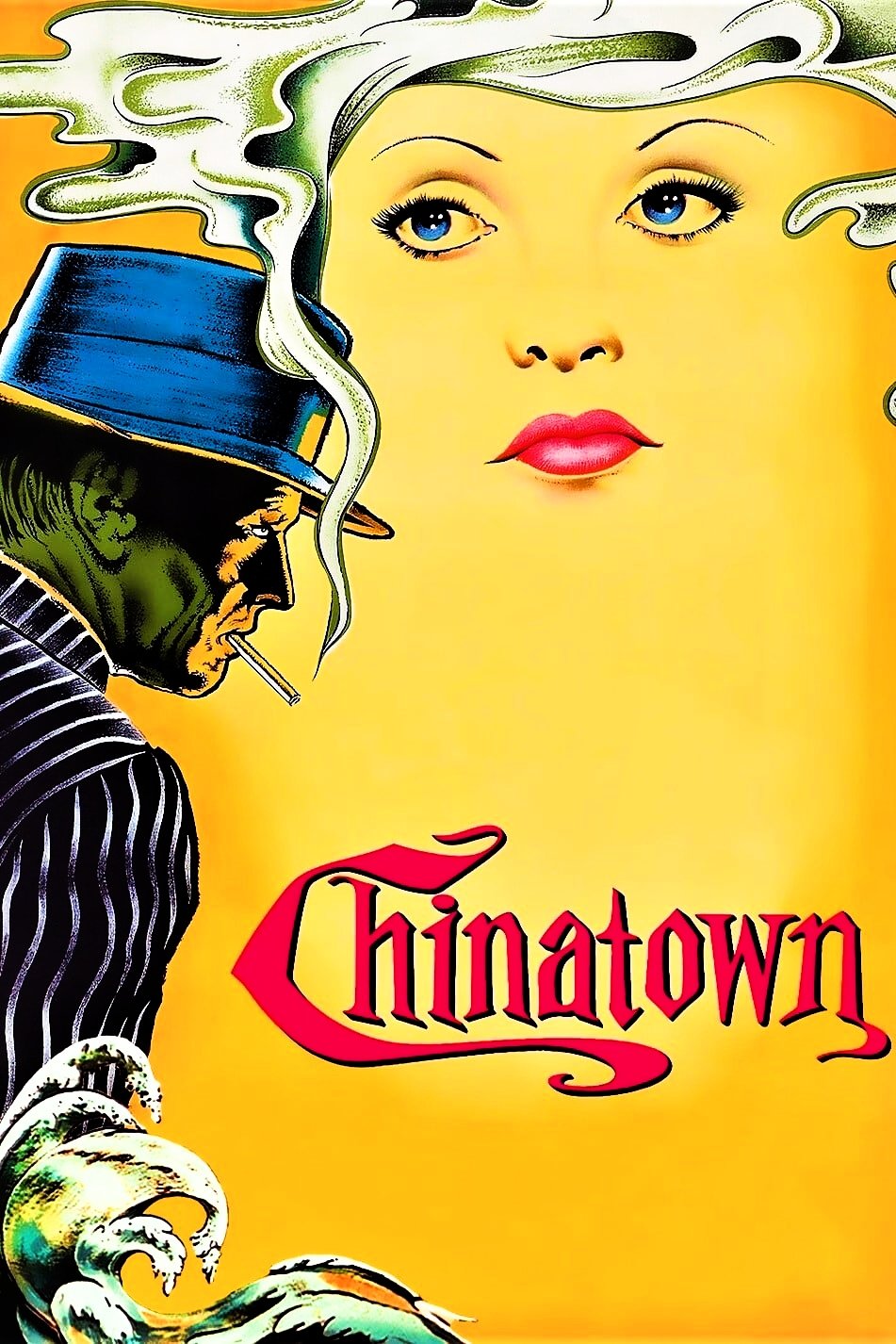
When I first watched “Chinatown,” it washed over me not as a period drama or private-eye mystery, but as a painful revelation—one that I carried for weeks in the aftermath. Los Angeles had always symbolized sunshine and reinvention in my mind, a city promising fresh starts and endless possibility. Yet in “Chinatown,” I encountered a city haunted and carved up, where hope twisted into deception at every corner, and where the scars beneath the surface never truly healed. What gripped me most was not the famous final scene or the noir trappings, but how the film slowly dissolved my trust in every character, most of all the so-called hero.
What the Film Is About
At its heart, “Chinatown” is less about the mechanics of a detective plot and more about a man—Jake Gittes—catching glimmers of truth in a maze where every turn leads to further corruption. His journey is not just a professional assignment but a descent into his own vulnerability: the nagging recognition that he is powerless against the machinery of evil. The film lured me in with the familiar trappings of a whodunit, only to expose an existential horror: knowledge can wound more than ignorance, and virtue is no shield in a world ruled by men like Noah Cross.
I believe the emotional current of “Chinatown” is anchored in futility—*the certainty that efforts to right wrongs will be stifled by entrenched power.* It’s suffocating yet compelling to watch as Gittes moves from smug detachment to desperate involvement, only to lose everything in the end: the case, his idealism, and the woman he fought to protect. The film invites pity but never cheapens the ordeal with sentimentality. It’s about the cost of uncovering the truth in a world that punishes those who try.
Core Themes
One theme I find inescapable is the insidious nature of power and its ability to corrupt not just individuals, but entire cities and histories. The land and water dispute at the plot’s core is a stand-in for the civic betrayal that marks much of American progress. In “Chinatown,” prosperity is a lie financed by blood and deception. The film doesn’t merely expose one bad apple; it indicts the system itself.
Equally potent is the theme of inescapable complicity. Gittes, who prides himself on keeping his hands clean, is gradually ensnared by forces far beyond his control—a metaphor for the times, perhaps, when America was reeling from Watergate and Vietnam, and trust in institutions had evaporated. In 1974, this film felt like a scream in the night, reflecting the public’s shock at the dark engine that had always been running beneath the facade of order.
This relevance persists today because *institutions both public and private remain vulnerable to precisely the kinds of moral rot Polanski’s Los Angeles exposes*. To me, “Chinatown” is a cautionary tale, urging constant vigilance and skepticism, lest history repeat itself in any setting—no matter how sunlit or modern.
Symbolism & Motifs
The film’s Los Angeles setting is drenched in sunlight, yet I’ve never seen light used to such ominous effect. *It exposes but does not clarify; it bakes away illusion only to reveal yet another layer of menace.* For me, the omnipresent brightness is a lie, *masking* the rot; here, darkness would be a relief, an escape from the glare of truth.
Water recurs not only as the financial battleground but as a symbol of both purification and destruction. Each watering hole, reservoir, and dry riverbed hints at the city’s life source—controlled and contaminated by a select few. This image stays with me: water, usually associated with renewal, in “Chinatown” runs only as a corrupt river, a prize for the greedy.
Even the film’s title is a powerful motif. As a word, “Chinatown” stands for confusion, misunderstanding, a place where actions have unintended consequences. In the story, Gittes is warned away from “Chinatown” and, when he enters it again, all illusions of agency dissolve. The very word marks the zone where chaos rules—*no matter the good intentions, nothing can be put right.*
Key Scenes
A Violent Warning at the Reservoir
When Gittes is caught snooping at the reservoir and has his nostril sliced open, it’s not just a shock—it’s an assertion of dominance by the system over the individual. This moment lays the groundwork for the film’s philosophy: in this world, poking your nose where it doesn’t belong comes at a steep price. For me, the sense of violation is almost physical; Gittes is marked, both as a warning to others and as a signal that the stakes are higher than he imagined.
Noah Cross at the Al Fresco Table
The confrontation between Gittes and Noah Cross is perhaps the most chilling moment I can recall in American cinema. Seated outdoors in idyllic sunlight, Cross exudes calm menace as he delivers his philosophy: “You see, Mr. Gittes, most people never have to face the fact that at the right time and the right place, they’re capable of anything.” This exchange is where the full horror of the film’s world is nakedly stated: evil is not inhuman, but part of human potential. It’s a thesis statement masquerading as idle conversation, and its chill lingers far longer than any act of violence.
The Catastrophe in Chinatown
The explosive denouement doesn’t offer catharsis—if anything, it rips hope to pieces. *Evelyn’s desperate flight, the chaos, the fatal gunshot—all erupt in Chinatown,* undoing every effort Gittes makes to shield her and her daughter. The impotent shouts of “Forget it, Jake. It’s Chinatown” encapsulate the void—here, good intentions can do nothing against entrenched evil. The final shot, with Gittes wandering stunned, is the bleakest moment of recognition: knowledge is a curse, action is futile.
Common Interpretations
Most critics agree “Chinatown” is an anti-noir—stylistically gorgeous but ultimately subversive, offering a universe where the detective is powerless, and there are no clear victories. I’ve read interpretations highlighting the clever genre inversion, the way the script by Robert Towne methodically deconstructs the cliches of the 1940s crime film. Many point to the film’s fatalism as a mirror to America’s post-Watergate malaise.
While I agree these readings are accurate, I find them strangely incomplete. What draws me is less the intellectual exercise and more the visceral despair that permeates every frame. Where noir usually offers a puzzle to be solved before the closing credits, “Chinatown” leaves me with a wound—one that refuses to close, because the real tragedy is in systemic injustice, not just personal betrayal. In this sense, the film’s pessimism feels not only modern, but eternal.
Films with Similar Themes
- The Conversation (1974): Both films explore the limits of personal responsibility and the dangers of knowing too much, set against a backdrop of pervasive institutional corruption.
- L.A. Confidential (1997): Another Los Angeles-set noir that probes hidden power, media complicity, and moral ambiguity.
- There Will Be Blood (2007): Like “Chinatown,” it uses a personal story to expose the dark origins of California’s development—centered this time around oil, not water.
- Blue Velvet (1986): A film that, like “Chinatown,” examines the rot simmering beneath pristine suburban surfaces, focused on how innocence collides with omnipresent corruption.
Closing Thoughts: The Lasting Impact of Chinatown
Watching “Chinatown” today, I find its warnings about unchecked ambition and the fragility of justice as urgent as ever. Modern audiences can approach the film as both a work of impeccable craft and a ruthless diagnosis of how easy it is, even now, to become lost in the machinations of the powerful. Gittes’s defeat isn’t just his; it’s an ongoing challenge for any viewer—will we accept face-value narratives, or will we have the courage to confront what lies beneath? To understand “Chinatown” is to accept that the hardest truths are those without tidy solutions.
Related Reviews
If you found value in my perspective, you might also enjoy exploring my thoughts on other cinematic landmarks such as The Third Man and All the President’s Men.
To broaden this interpretation, you may also explore how critics and audiences responded over time.
🎬 Check out today's best-selling movies on Amazon!
View Deals on Amazon