
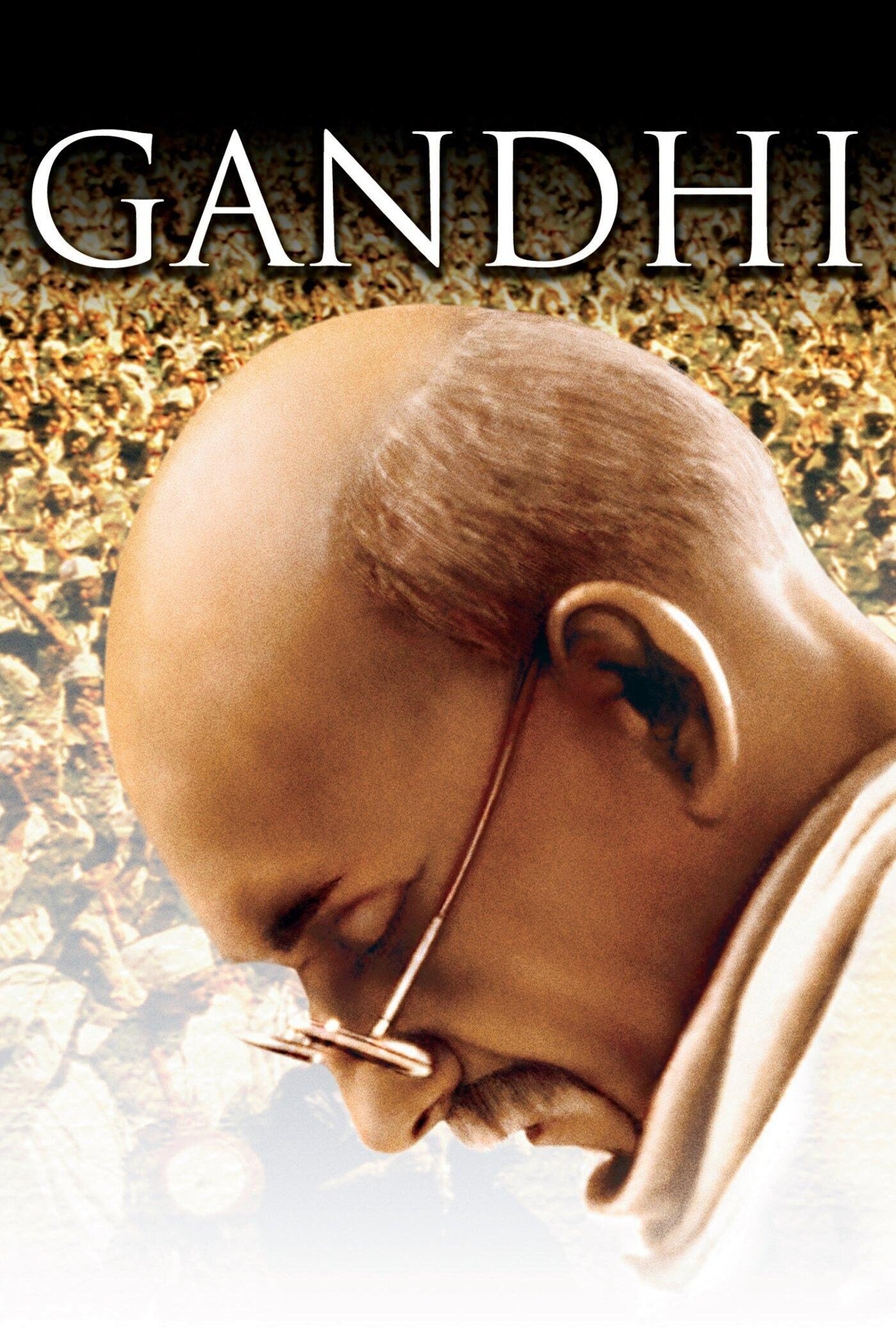
Every time I think of Gandhi, I’m carried back to an afternoon in my childhood when I first watched the film on our boxy living room television. My parents sat beside me, both so still, that I found myself mimicking their silence. I barely grasped the details of colonial history then, but something profound shifted inside me—a sort of hush, an awe, not just for the man depicted but for the paradoxes of power and humility. Over the years, revisiting Gandhi became a ritual, almost a conversation with my own evolving understanding of what resistance and leadership really mean.
What the Film Is About
At its heart, Gandhi is a chronicle of spiritual revolution and the immense personal cost of conviction. The film traces Mohandas K. Gandhi’s transformation from a relatively unremarkable lawyer in South Africa to the fearless yet gentle leader of India’s non-violent resistance against British colonial rule. But it’s never just a biopic to me—it’s an emotional exploration of how an individual wrestles with their conscience amidst titanic historical forces. The central conflict is rarely about heroic action; it’s about the tension between ideals and reality, and the quiet agony behind principled leadership.
The narrative insistently returns to the fragility of hope in a violent world. As I watch Gandhi weather not just external oppression but the internal divisions of his own movement, I sense the film wrestling with a question that’s all too relevant: Is true change ever possible without sacrifice? Every moment spent on Gandhi’s weary face, every sigh or silent pause, builds an almost unbearable empathy for what moral courage demands of flesh and blood—for what it asks of witnesses, like us, who might otherwise slip comfortably into passivity.
Core Themes
The power of nonviolent resistance pulses through every frame of this film—less as a slogan, more as a living, breathing act of faith. Watching the waves of peaceful protest clash against the impervious wall of imperial might, I’m drawn to reflect on the continued relevance of civil disobedience. Especially in periods of social unrest and cultural upheaval, the film’s commitment to truth, dignity, and collective action feels both urgent and unnervingly prescient. In 1982, not far removed from the turbulent post-Vietnam era and civil rights struggles, this theme landed with particular force—a reminder that the “great man” narrative is often carried on the backs of countless “ordinary” people.
Another undercurrent I find consistently compelling is identity and belonging. Gandhi’s personal evolution—his shifting accent, clothing, even dietary habits—becomes a lens on how individuals and nations seek self-definition. The film tactfully addresses internal conflicts: religious divides, class tensions, and the intoxicating lure of vengeance. It’s in these moments, when the path forward seems shrouded in contradiction, that Gandhi’s unwavering commitment to peace feels most radical—and, perhaps, most human. The resonance of this film seems inescapable when current events are still dominated by questions of who speaks for a nation and at what cost.
Symbolism & Motifs
What grabs me, time and time again, is the subtle yet insistent use of visual and narrative motifs. The humble spinning wheel, ever-present in Gandhi’s ashram, emerges as a symbol of both self-reliance and national unity. Its modesty throws into sharp relief the extravagance of the colonial regime—a recurring reminder that great movements are built of simple, repetitive actions rather than grand gestures. When I watch Gandhi teaching others to spin, I see the echo of ordinary people coming together in solidarity, their collective labor forming the backbone of resistance.
Similarly, clothing serves not just as costume but as declaration. Gandhi’s decision to abandon Western clothes for a loincloth is a literal shedding of privilege, yet it is also a calculated visual strategy. I’m always struck by how the camera lingers over fabric—the contrast between British uniforms, the finery of Indian elites, and Gandhi’s austere dress—underscoring the politics embodied in everyday choices. The motif of crowds—at stations, at protests, at funerals—quietly reminds me that this is never the story of a lone visionary, but of a movement swelling with hardship and hope.
Key Scenes
The Salt March: Defiance on Dusty Roads
The depiction of the Salt March, filmed under the brooding Indian sky and crowded with barefoot marchers, has always stopped me in my tracks. This is not merely a procession; it’s the crystallization of nonviolent rebellion, a communal act of mythic endurance. The slow, deliberate walk toward the sea is mirrored by the slow but irresistible cracking of imperial power. I find this moment exhilarating and deeply somber—proof that meaningful protest so often moves at the pace of walking feet, not explosive battles. Attenborough’s direction here is patient, almost reverent, allowing the audience to walk alongside history as it is made.
Jallianwala Bagh: Carnage and Collective Trauma
Few scenes in any film have haunted me like the massacre at Jallianwala Bagh. The carefully composed shots of bodies tumbling, the stunned silence after gunfire—it all converges to create a sense of helpless rage, both then and now. Rather than lingering on spectacle, the film’s gaze is almost too compassionate, refusing to sensationalize suffering. This scene is vital not just for its historical weight, but because it ruthlessly shatters any notion of the struggle as bloodless. Every time I watch, I’m reminded that the price of change is still being paid in so many corners of the world.
Dialogue with General Dyer: Moral Confrontation without Weapons
Later, Gandhi’s face-to-face meeting with General Dyer crystalizes the ethics that define the film. Here, in the space between adversaries, we see the full peril and necessity of empathy. Gandhi’s refusal to hate, his ability to articulate forgiveness amid pain, is filmed with a quiet, unmistakable weight. Rather than a triumph, this encounter is depicted as an open wound—a confrontation that leaves both changed. For me, this moment demonstrates that the fiercest courage is sometimes exercised in soft tones and unwavering conviction, not in shouted slogans or gunfire.
Common Interpretations
Gandhi is often read by critics as a “great man” narrative—a sweeping pageant of heroism embodied in one extraordinary life. Critics have justly praised Ben Kingsley’s astonishingly immersive performance, as well as the film’s elegiac cinematography and meticulous historical recreation. But I sometimes bristle at this consensus. To me, there’s a danger in lionizing Gandhi as a saint above reproach; the film itself, at its best, subtly interrogates this impulse. I read the story not as a polished marble statue erected for veneration, but as a much messier participation in struggle—Gandhi’s own doubts and mistakes are, to me, as central as his triumphs.
Some have criticized the film for its Anglo-centric perspective and omission of certain complexities—such as the role of women, marginalized communities, and opponents within the independence movement. While I agree these are valid points, I find that the film’s greatest value is as a canvas for ongoing discussion rather than an encyclopedia of fact. Its strength, from my view, lies in how it prompts us to ask what kinds of heroism we are still in search of, and at what price.
Films with Similar Themes
- Selma – Explores the power of nonviolent protest and leadership during the American civil rights movement, echoing Gandhi’s strategies of civil disobedience.
- Invictus – Examines post-apartheid reconciliation in South Africa, focusing on leadership, forgiveness, and national identity, resonating with Gandhi’s challenges.
- Hotel Rwanda – Deals with moral courage and compassion amid atrocity, connecting with the ethical dilemmas that underpin Gandhi’s legacy.
- Lincoln – Portrays the political and personal tenacity required to steer a nation through ethical transformation, paralleling Gandhi’s leadership in times of division.
Final Reflections: Approaching Gandhi Today
For viewers stepping into Gandhi today, I recommend entering with an openness to contradiction and an appreciation for nuance. The film rewards both empathy and skepticism; it invites challenging questions about what real change demands from individuals and societies. Understanding its themes transforms this film from a historical epic into a living meditation on conscience, activism, and the slow, cumulative power of solidarity. Each viewing leaves me with new questions—about myself, about power, about how history is written and remembered.
Related Reviews
If you found value in my perspective, you might also enjoy exploring my thoughts on other cinematic landmarks such as Lawrence of Arabia and To Kill a Mockingbird.
To broaden this interpretation, you may also explore how critics and audiences responded over time.
🎬 Check out today's best-selling movies on Amazon!
View Deals on Amazon