
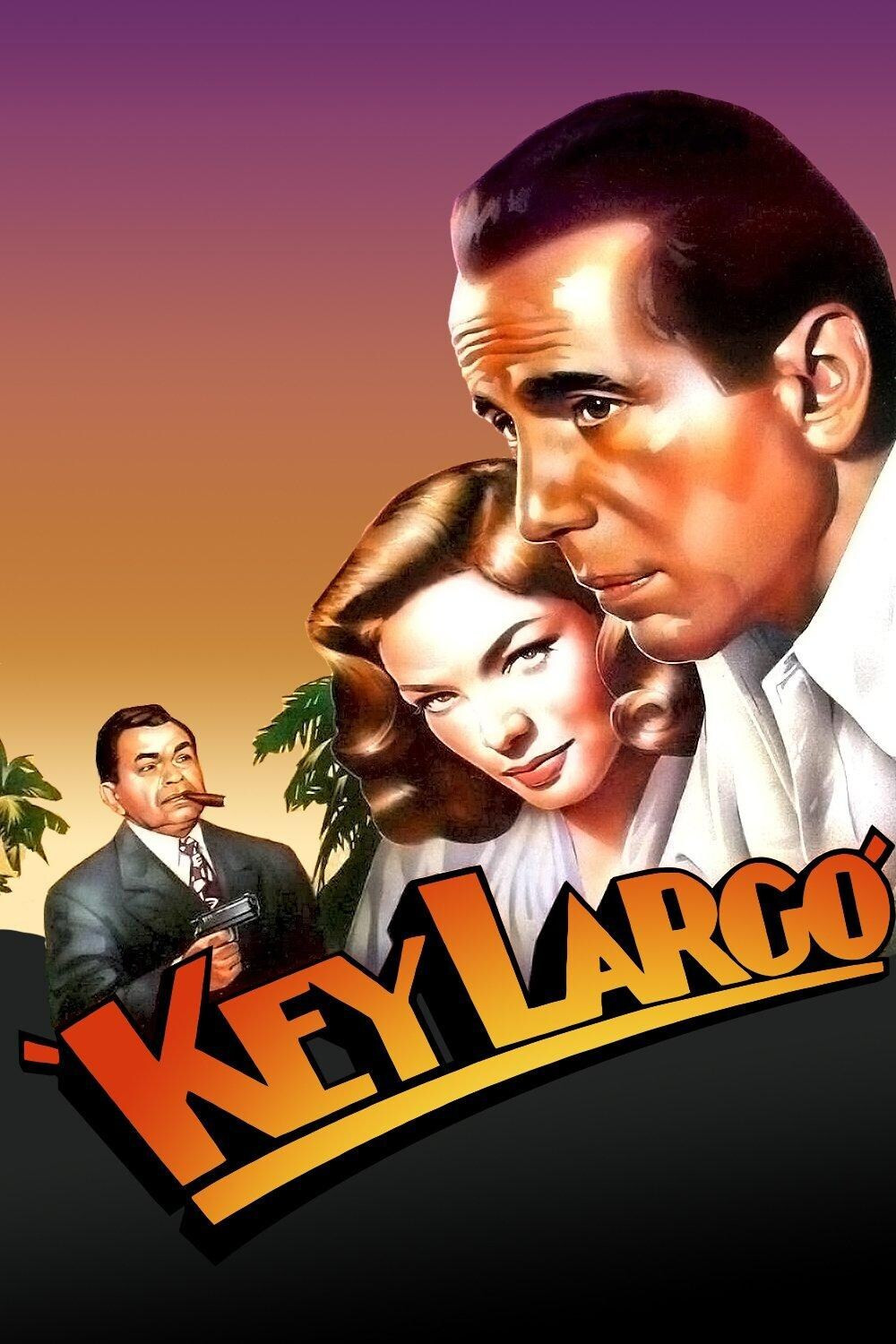
I have always felt an inexplicable attraction to humid, storm-beaten stories in which humans turn claustrophobic spaces into theaters of psychological warfare. “Key Largo,” for me, was not just another classic crime drama from Hollywood’s postwar era. Upon my first viewing, I was absorbed less by its pitch-perfect noir aesthetics than by its ability to snare its characters—and the audience—inside one morally fraught room while the world outside dissolved into wind and rain. The suffocation I felt wasn’t just from the closed doors or drawn curtains but from the collision of past trauma, present threat, and the overwhelming sense of moral inertia. “Key Largo” still seems to press against the glass of its own era, challenging me to reflect on what kind of courage matters when evil enters the room and the easy answers are drowned by thunder.
What the Film Is About
In “Key Largo,” the emotional journey is one of paralysis yielding, in halting steps, to resistance. Frank McCloud (Humphrey Bogart) enters the Hotel Largo haunted by memories of war and the loss of his friend George Temple. He reconnects with George’s widow Nora (Lauren Bacall) and father (Lionel Barrymore), only to discover the hotel is now, quite literally, under siege by a gangster (Edward G. Robinson’s Johnny Rocco) and his cronies. But this is not simply a noir riff on a hostage scenario; it’s a reckoning with the ghost of inaction.
Frank’s central conflict is not an external contest of strength, but an internal struggle over the meaning of courage, moral responsibility, and action in a corrupt world. The film, framed against the oncoming hurricane, forces its characters—and by extension, viewers—to decide: When do you resist evil, and at what cost? It’s a story about finding, or failing to find, the nerve to act when hope feels insubstantial and danger is oppressively real. The tension is all the keener because Rocco is less fearsome for his violence than for his tired cynicism; he is the product of a broken moral climate.
What “Key Largo” tries to articulate, in my view, is the paralyzed conscience of the aftermath generation. These are Americans sobered by global conflict but uncertain how to defend decency at home. It’s a film about the cost of waiting for storms to pass—literal and figurative—rather than facing what truly threatens the soul.
Core Themes
At the mighty heart of “Key Largo” is an exploration of power and impotence. Rocco brings a gangster’s might, but it’s hollow bravado—no longer at the top, he is clinging to relevance with vicious nostalgia. Frank, by contrast, is physically able but emotionally hamstrung, cursed with the knowledge of violence and uncertain what separates justified action from moral compromise. Their battle is not simply over control of the hotel, but over the meaning of courage, heroism, and ethical obligation in a world that has relinquished its innocence.
I find these themes startlingly relevant to our modern anxieties about power, truth, and social paralysis. There’s something unsettling in how easily “Key Largo”’s psychological climate echoes our historical moment: the world post-World War II, shaken by trauma, eager for stability, yet haunted by the suspicion that old threats have only shapeshifted. The film’s debut in 1948, in the shadow of authoritarian specters and fresh battle scars, gave it urgent resonance; yet today, with cynicism thick in the air and the temptation to “wait out the storm” perpetually present, I sense that its challenge remains: Will we act in the face of injustice, or convince ourselves that survival is enough?
Also at play is the theme of identity and redemption. Frank’s journey echoes the American search for purpose two wars deep: who are we, once the grand fight is over? What remains if we fall silent in the face of new forms of violence? The film asks, not did you once act bravely, but will you do so when it matters now?
Symbolism & Motifs
“Key Largo” is saturated with weather as metaphor. The impending hurricane is more than environmental hazard; it is a physical manifestation of the emotional intensity and ideological chaos within the hotel—a storm that mirrors the tempest inside Frank and the larger society. The barometric pressure drops not just in the air, but in the characters’ composure.
The closed, stifling space of the hotel is another powerful symbol. I always see it as a microcosm of America postwar: battered, insular, holding its breath as the storms of history rattle the doors. The lack of escape routes intensifies both vulnerability and complicity; survival here means confrontation, not flight.
Water—both as rain and as the promise of freedom by boat—serves as a motif of both hope and danger. Every time the soundtrack swells with wind or the camera lingers on the rippling tide, I’m reminded that the only way out sometimes is through. And any scene featuring Rocco’s gun is heavy with the symbolism of false authority. The weapon represents not just violence, but the illusion that raw power is the same as moral legitimacy; the gun’s presence corrupts every interaction.
Key Scenes
The Storm Breaks: Tensions Erupt in the Lobby
For me, the film’s thematic crucible comes in the scene where the hurricane is crashing outside and the group is forced together in the hotel’s lobby. The claustrophobia and mounting tension expose every fault line among the characters, with each revealing cowardice, bravado, or cautious hope. Especially poignant is the moment Nora pleads for courage, pressing Frank to act—he recoils, haunted by the weight of his conscience and the memory of war. This is the moment where the audience is most aligned with Frank’s paralysis—the storm outside is nothing compared to the tumult of fear and ethical burden within.
Gaye’s Song: Humanity in Captivity
When Gaye Dawn (Claire Trevor) is forced by Rocco to sing for her drink, the entire film’s concern with dignity and debasement crystallizes. Trevor’s performance feels painfully real: Gaye is by turns desperate, proud, and utterly broken. This scene makes the film’s philosophical stakes personal—no one emerges untouched by cruelty, and the smallest acts of survival demand prices in self-respect. I am always moved by how the camera lingers on Gaye’s trembling face, as if to ask: How many humiliations must the powerless endure before the powerful are satisfied?
The Showdown on the Boat: Final Acts and Consequences
The climactic confrontation between Frank and Rocco on the boat is, for me, as much a battle of will as a shootout. Frank’s gamble isn’t just about saving his own life, but about whether he can finally act—to stand not only against evil, but against the voice that counsels wait, endure. The decision to fight, at enormous risk, is the fulfillment of the film’s argument: real courage is the willingness to act, even if hope and safety remain uncertain. The silence after the gunshots lingers like a benediction: something vital, if battered, has survived.
Common Interpretations
Critics often read “Key Largo” as a postwar noir about the vacuum of leadership and the dangers of complacency in the face of criminal tyranny. Many point out the allegory of Rocco as a fascist holdover, or see the film as a microcosm of American democracy under siege. These analyses are persuasive, and yet, for me, the film is less about politics than about interior resistance. The focus, in my reading, is not on what happens to the nation, but on what happens to Fran—an individual who must decide if personal safety can ever justify inaction.
Where some might argue that Frank is the archetype of the returning, shell-shocked vet, I see him less as a symbol and more as a challenge to the viewer: What, finally, is required to shake us out of comfort and passivity? In my experience, “Key Largo” lingers not for its social statement, but for the way it mirrors the incremental, often reluctant journey to real engagement with evil. The hotel may be America, but it is also the theatre of one man’s conscience.
Films with Similar Themes
- Casablanca (1942) — Thematically connected in its portrayal of the disillusioned wartime hero forced to confront moral responsibility when faced with tyranny and love in exile.
- The Petrified Forest (1936) — Another Bogart hostage drama centering on dislocation, existential dread, and the test of individual courage against nihilist violence.
- Storm Warning (1951) — Deals with courage and complicity in the face of communal evil and fear, here set against the power of mob mentality.
- On the Waterfront (1954) — Explores personal integrity and heroism in the face of organized corruption, with an everyman reluctantly forced into action.
Conclusion
I believe “Key Largo” rewards patient, thoughtful viewing—not for the shocks or the plot twists, but for the slow build of tension and the honest discomfort it generates about what we owe to ourselves and each other. Modern audiences can, and should, approach this film with the understanding that its questions about courage, action, and complicity are as urgent today as in 1948. Below the veneer of genre and storm-tossed suspense, there is a steady heartbeat of ethical inquiry, one that still presses against the boundaries of comfort and assures me that the threats outside are rarely as dangerous as the inertia within.
Related Reviews
If you found value in my perspective, you might also enjoy exploring my thoughts on other cinematic landmarks such as On the Waterfront and The Petrified Forest.
To broaden this interpretation, you may also explore how critics and audiences responded over time.
🎬 Check out today's best-selling movies on Amazon!
View Deals on Amazon