
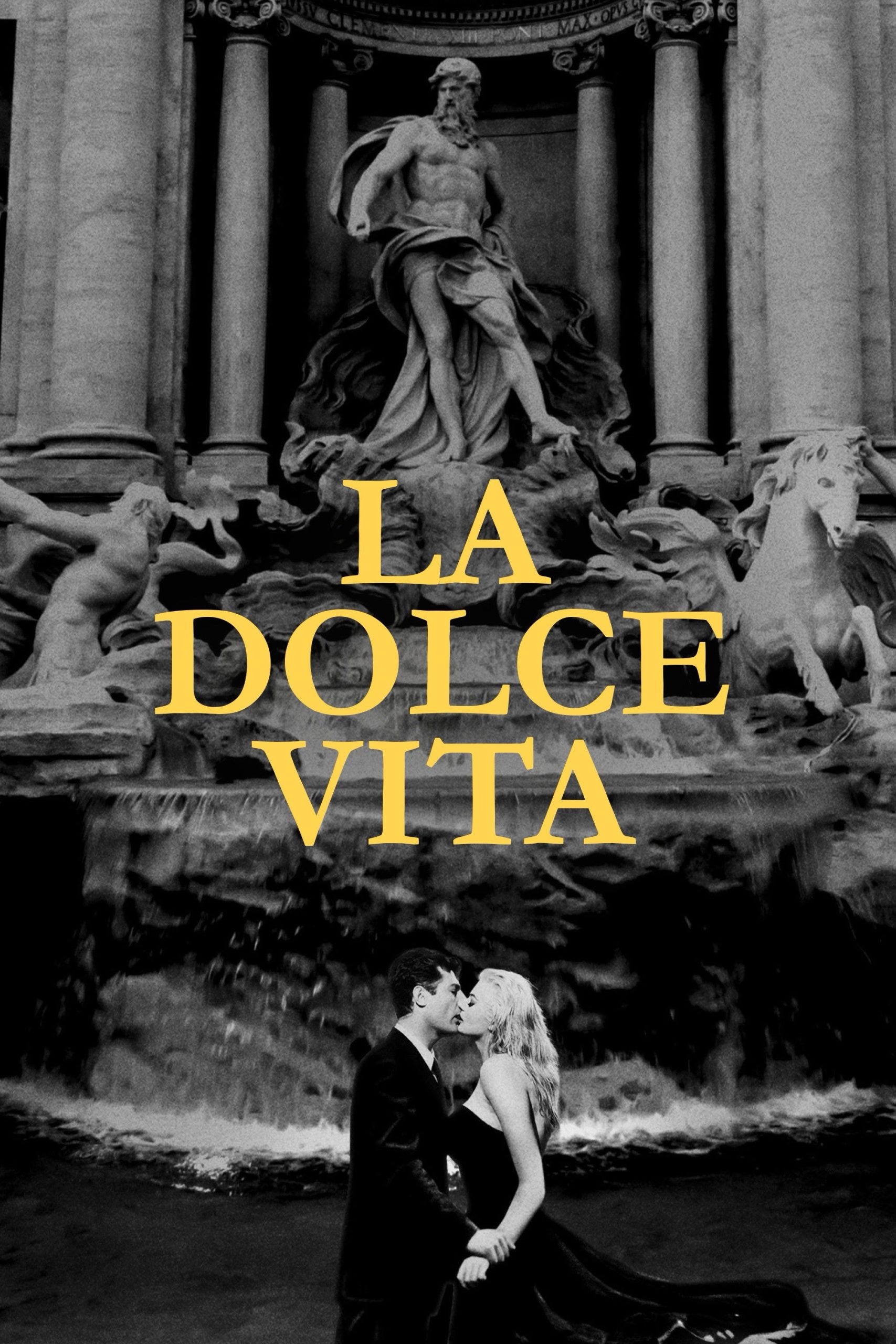
Stumbling Through Rome’s Glitter: My Entrée into the World of “La Dolce Vita”
The first time I watched “La Dolce Vita,” I felt disoriented, as if I had woken up mid-dream, dropped into the chaos of Rome’s night and left to drift alongside Marcello without a map. This film never lets me settle, because it’s not a story that unfolds; it’s a mood that envelops, suffocates, and teases me with glimpses of meaning. Fellini’s camera slithers through parties and empty streets, showing glamour and decay—making me realize how easily pleasure can slip into emptiness. My initial enchantment with the visual feast quickly gave way to that gnawing sense of existential dissatisfaction, the sense that I was watching people—especially Marcello—search for something that no party, no love affair, and no sunrise could deliver.
Marcello’s Mirror: The Search for Identity Among Shadows and Light
Marcello Rubini, with his suit and perfect hair, could easily be mistaken for the epitome of cool European sophistication. But as I watched him move from one glittering event to the next, I started to see him not as a model of suave contentment, but as a man in freefall. What struck me most is how Marcello’s job—chronicling celebrities and nobility—mirrors his own inability to settle on a life of substance or meaning. He’s always recording, never participating, always hungry but never satisfied. And yet, I can’t help but recognize the way he is both seduced and punished by Rome’s possibilities.
Every time Marcello tries to define himself—whether as a writer, a lover, or a friend—he’s thwarted, not only by the world around him, but by his own restless discontent. His selfhood dissolves in the crowds and the camera flashes, making it clear that “La Dolce Vita” is obsessed with the elusive nature of identity, especially in a society that worships surfaces.
Glitter and Rot: Rome as Both Paradise and Inferno
Rome in “La Dolce Vita” is no mere backdrop; it’s a character in its own right, seductive and corrupting in equal measure. Every time Fellini’s lens glides past the ancient ruins and bustling fountains, I’m reminded that the city embodies the contradictions that torment Marcello: history and modernity, sacred and profane, permanence and decay.
The city’s endless nights could almost convince me that life is an endless party, but then dawn comes, cold and exposing. Fellini’s Rome is a labyrinth—inviting but impossible to escape, filled with temptations that reveal their emptiness only when the music stops. In a way, Rome’s beauty becomes cruel, because it promises transcendence while delivering only momentary distraction.
Women as Reflections and Warnings: Sylvia, Emma, and Maddalena
I’m always struck by how the women in “La Dolce Vita” hover between being objects of desire and warnings about desire itself. Sylvia, the movie star whose radiance ignites the film’s most iconic scene at the Trevi Fountain, is luminous but inaccessible—her sensuality dazzling but strangely impersonal. She represents possibility, fantasy, and the fleeting nature of happiness, but her whirlwind presence leaves Marcello (and me, as a viewer) with nothing substantial to hold onto.
Emma, Marcello’s faithful partner, embodies stifling domesticity and a plea for stability he cannot accept. Her desperation both repels and moves me, forcing me to confront the pain of those left behind in the pursuit of pleasure and freedom. Maddalena, meanwhile, floats through the night, wealthy and aimless, her longing echoing Marcello’s own. Each woman is a reflection of Marcello’s choices, but none can save him from himself.
Paparazzi and the Performance of Modern Life
The term “paparazzi” was born from “La Dolce Vita,” and it’s no accident. As I watch the relentless photographers swarm over every event, I realize how prescient Fellini was about modern life’s obsession with the image. The camera is both predator and accomplice, heightening the sense that life itself has become a performance for an audience that is never satisfied. Every character in the film is forced to play a role—whether they want to or not—highlighting the loneliness that results when authenticity is sacrificed for spectacle.
Marcello, caught between observing and being observed, is emblematic of a world in which intimacy and sincerity are drowned out by the click of cameras and the glare of publicity. This is not just a critique of celebrity culture, but a meditation on the way all of us become complicit in our own alienation by embracing surfaces over substance.
The Seductive Allure and Inevitable Disillusionment of Pleasure
What lingers with me most after watching “La Dolce Vita” is not a single image, but an inescapable feeling: the bittersweet recognition that pleasure, when pursued as an end, becomes its own form of torment. The film’s title mocks its characters, offering the promise of sweetness that ultimately dissolves in bitterness. I see Marcello—and, by extension, myself—seduced by beauty, by the party, by the thrill of novelty, only to find that each indulgence leaves him emptier than before.
The final orgiastic party scene is especially haunting. There is laughter, music, and abundance, but these revelers are stranded, cut off from any genuine connection or meaning. The more they seek liberation, the more they become prisoners of their own appetites. It’s this paradox—freedom that enslaves, pleasure that wounds—that gives “La Dolce Vita” its particular sting.
The Unbridgeable Divide: The Innocence of Paola and the Limits of Redemption
There’s a moment near the end when Marcello encounters Paola, the innocent girl from earlier in the film, standing across a shallow stream. She tries to communicate with him, but he can’t hear her, can’t cross over. For me, this final image is devastating in its simplicity. Paola represents the possibility of grace, or maybe a return to authenticity, but Marcello is too far gone, lost in the noise of his own life to answer her call.
This is not a film that offers comfort or false hope. Instead, it sits with the ache of missed chances and the impossibility of returning to innocence. Fellini’s last word is not judgment, but a kind of mournful acceptance that some lines, once crossed, cannot be uncrossed.
Why “La Dolce Vita” Haunts Me Still
What does “La Dolce Vita” really want to say? For me, it’s an inquiry into the price of modernity, the hunger for sensation, and the way longing can mutate into despair. It’s a film that both seduces and wounds, asking me to recognize myself in Marcello’s restless search and endless dissatisfaction. Each time I revisit its world, I’m more certain that its meaning is not found in any single scene, but in the way the film threads beauty and emptiness together, inseparable and ever-present.
The message isn’t that pleasure is bad, or that Rome’s glamour is a lie. It’s that sweetness and bitterness are intertwined, and the pursuit of happiness, if unmoored from meaning, leaves us stranded in the midst of plenty. “La Dolce Vita” never lets me forget that the things we chase most hungrily are often the least likely to bring us peace.
If These Nights Intrigue You: Two Classic Films to Watch Next
For those as captivated as I am by “La Dolce Vita,” I recommend seeking out “L’Avventura”—a film that lingers on emptiness and longing with similar ambiguity—and “The Leopard,” which juxtaposes historical change with personal dissolution in ways that echo Fellini’s bittersweet vision of Rome.
If you’re curious about how this film was originally perceived or how it compares to similar works of its era, these resources may be helpful.
🎬 Check out today's best-selling movies on Amazon!
View Deals on Amazon