
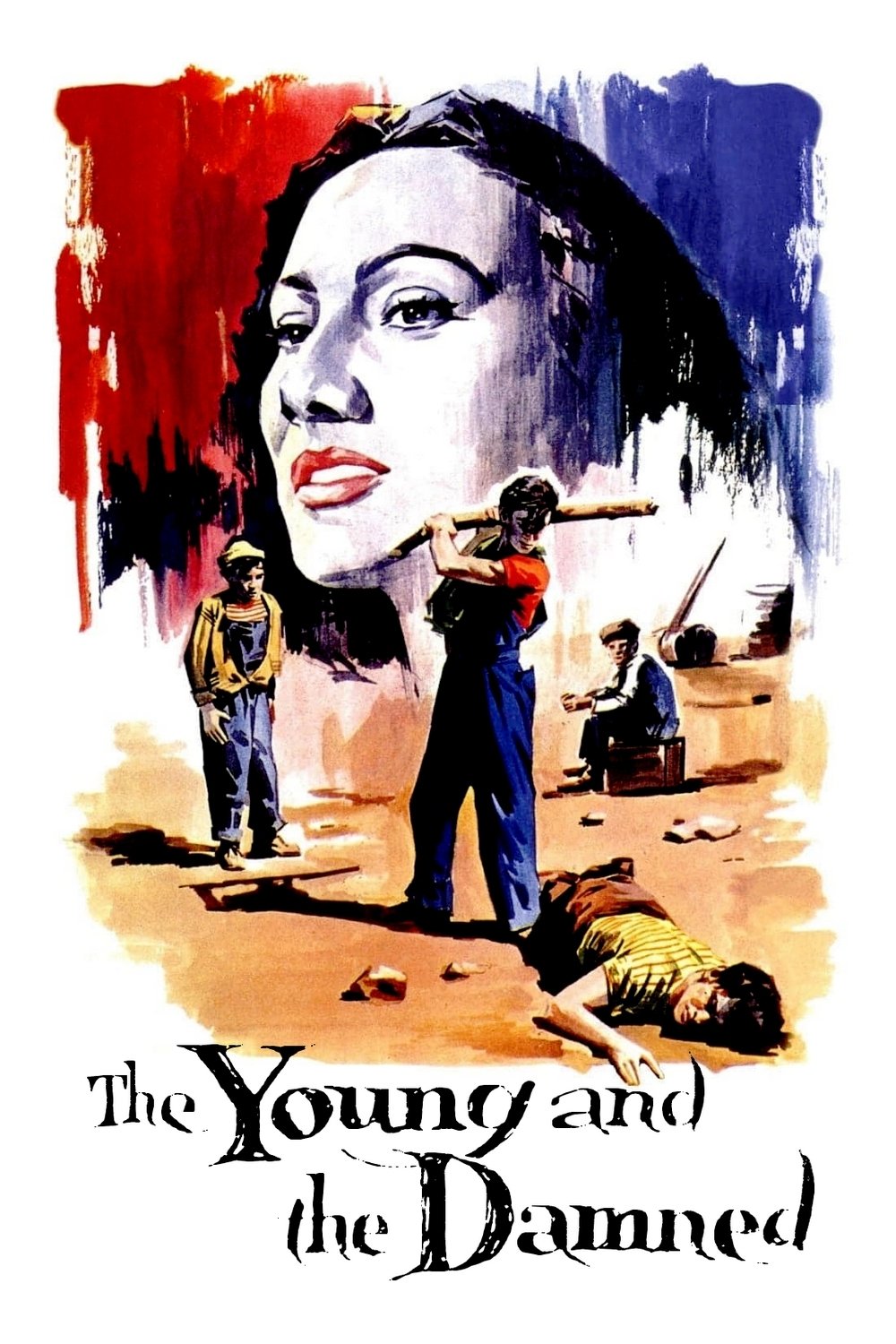
The Bitter Taste of Reality in Every Frame
I remember the first time I watched Los Olvidados, the sensation was less like passive viewing and more like being jolted awake. There was no comforting romance or sentimental plea—Luis Buñuel’s camera seemed to peel away the pretense from the city, revealing a core so raw it stung. Right from the opening sequence, Buñuel signals that this is not a story constructed for easy consumption, but a merciless excavation of childhood in the margins where society’s failures become corrosive daily bread.
Mapping the Emotional Geography of Mexico City’s Outskirts
What struck me most, even before any overt act of violence or despair, was how Buñuel’s Mexico City is rendered as a map of psychic injury. The labyrinth of alleys and windblown dust becomes a character itself—at times cruelly indifferent, at times complicit. Every corner feels booby-trapped with disappointment, every tenement wall hums with the past humiliations of its inhabitants. The city is not a backdrop but a participant, its physical inhospitality mirroring the emotional bleakness gnawing at the film’s children.
The children’s marginalization is not simply situational—it is existential. The city’s geometry denies escape or ascent. When I consider the rooftop scenes, where Pedro and his mother momentarily face the sky, I see a fleeting illusion of hope, ringed by barbed wire and separation. Buñuel uses space not just to box in his characters, but to articulate the impossibility of transcendence within a system built to exclude.
Children as Witnesses and Victims of Adult Failures
I find myself haunted by the way Los Olvidados treats its young protagonists—not as cherubic innocents, but as prematurely aged souls shaped by relentless exposure to cruelty and neglect. There’s nothing maudlin in Buñuel’s gaze; instead, there is a kind of tragic distance. Pedro, Jaibo, and the others navigate a world where adult guardianship is absent or perverse, where kindness is fleeting and trust is a dangerous gamble.
Every adult, whether overtly hostile or weakly complicit, seems to reinforce the children’s dispossession. The mother’s frustration, the teacher’s well-meant but impotent charity, the police’s institutionalized suspicion—all ripple through the kids, who learn quickly that survival sometimes means betraying your fellow sufferer. The film’s attitude toward childhood is unsparing: innocence here isn’t innate, but something to be lost or destroyed before it can take root.
The Enduring Weight of Cycles: Poverty as Fate
What makes the film feel so radical, even now, is how Buñuel refuses any narrative of redemption. He punctures cinematic hope with bitter irony—every effort to escape poverty or violence leads back to the same trap, often with greater force. Pedro’s short-lived attempts at reform drip with an inevitable sense of doom; the script doesn’t allow for fairy-tale interventions, only the churn of generational misfortune.
When I look at the dream sequence—a moment that critics often cite as the film’s surrealist nod—I see not fantasy, but the inside of Pedro’s longing: for his mother’s embrace, for forgiveness, for a future that’s not shrouded in suspicion. But even this vision curdles into futility. Buñuel draws the line clearly: for these forgotten ones, poverty is not a condition to be escaped individually, but a systemic sentence from which there is no pardon.
Violence as Language, Brutality as Inheritance
I recoil at the film’s violence not simply because it is shocking, but because it feels so ruthlessly matter-of-fact. Buñuel roots brutality in the air the children breathe—it becomes a mode of communication, an inheritance passed from one lost generation to the next. Jaibo, the reckless ringleader, is both perpetrator and product of this cycle. His violence is not a pathology but a symptom, a way to carve out power in a world where power is always being wielded against him.
Yet, as I watch Pedro’s slow slide toward the same fate, I’m forced to confront how violence is not only external but internalized. The boys are forced to choose between suffering or inflicting suffering. This moral corrosion, more than any physical act, is the film’s deepest wound: it asks whether survival is possible without complicity, and whether innocence can exist at all amid such relentless hardship.
Surrealism Without Comfort: Nightmares in Daylight
Most of Buñuel’s films flirt with the absurd or surreal, but in Los Olvidados, the dream logic is never an escape—it is a mirror. The infamous egg scene, with its Freudian overtones, unsettles precisely because it feels both symbolic and utterly plausible in this world. Dreams here are not oases but battlegrounds, spaces where longing and dread wrestle for dominance.
This is not surrealism as whimsy or relief, but as a darker register of reality. The film trains us to see the children’s world as fundamentally dreamlike—not in its strangeness, but its relentless uncertainty and instability. There is no sharp line between waking and sleeping, only the persistence of desire and loss, unresolved and unredeemed.
Empathy Without Illusion: The Ethics of Looking
More than once as I watched, I felt Buñuel questioning the very act of making this film. He implicates the viewer—compelling us to ask what it means to witness suffering without being able to alleviate it. The camera lingers, sometimes uncomfortably, on humiliation or pain, but rarely in a way that indulges pity. Instead, I sense a deliberate fostering of discomfort, a prod at the boundaries of empathy and helplessness.
This isn’t misery for its own sake; it’s an indictment. Buñuel wants us to see how easy it is for society to avert its gaze, to dismiss or other the children as lost causes. In refusing to console or exonerate, he asks: who are “the forgotten”—the children brutalized by their context, or the viewers who allow themselves the comfort of forgetting them?
The Haunting Echoes: Why the Pain Lingers Longest
Days after each viewing, I am left with a gnawing sense of unfinished business. Unlike films that wrap up suffering with a neat bow or offer catharsis as consolation, Los Olvidados ends with the thud of reality reasserting itself, a reminder that the world doesn’t pause for heroes or happy endings. The characters slip away not with memorable last words, but with a kind of narrative evaporation—forgotten, as promised, by their city and by cinema itself.
I realize that Buñuel’s greatest act of artistry is this refusal to make the film “about” hope, redemption, or even despair—it is about the persistence of suffering in a world that prefers to ignore it, and the uncomfortable truth that sometimes, simply bearing witness is all that’s left. This is not the comfort of closure, but the challenge of attention—a gift and a demand, both at once.
If This Movie Gripped You
For those who find themselves unable to shake the afterimage of Buñuel’s vision, I recommend seeking out Bicycle Thieves by Vittorio De Sica, for its unsparing gaze at poverty and paternal bonds. Also, Pather Panchali by Satyajit Ray, a film that similarly refuses sentimentality and insists on the dignity of lives lived in adversity.
If you’re curious about how this film was originally perceived or how it compares to similar works of its era, these resources may be helpful.
🎬 Check out today's best-selling movies on Amazon!
View Deals on Amazon