
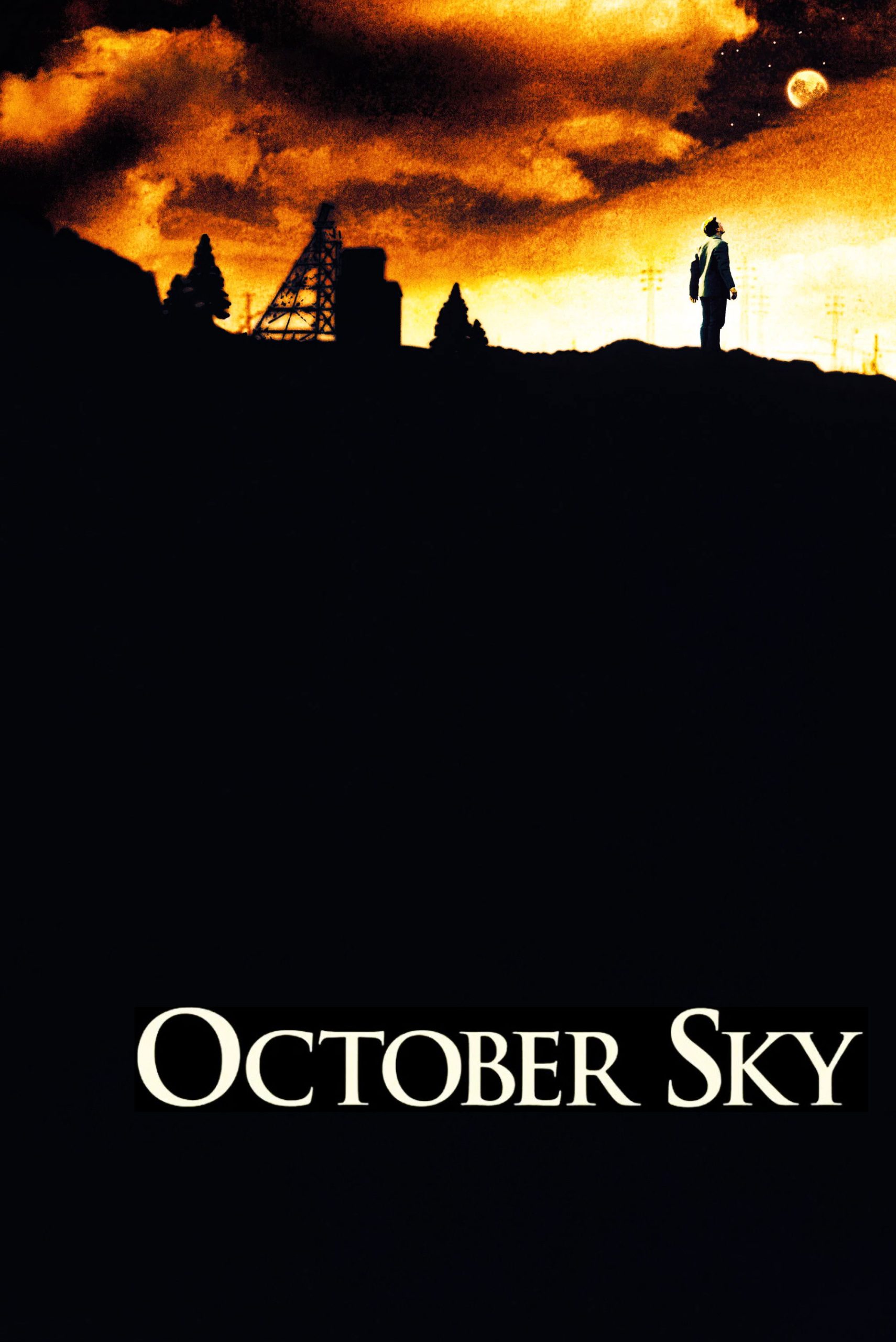
There’s a moment in every cinephile’s life when a film doesn’t just speak to you, it tugs insistently at those places you left buried in adolescence. For me, “October Sky” resides in that rarefied territory. Watching it for the first time wasn’t planned—an accidental television airing during a difficult winter evening. I didn’t expect my guarded optimism, so familiar from small-town youth, to be reflected with such sincerity. But Homer Hickam’s journey, shaped by stubborn dreams and stark realities, cut through my cynicism and left me examining the tangled border between aspiration and surrender, both on screen and within myself.
What the Film Is About
At its core, “October Sky” is a meditation on hope’s friction with circumstance. Set against the somber backdrop of Coalwood, West Virginia, the film follows Homer Hickam (Jake Gyllenhaal) as he grapples with the near-inescapable future laid out by his father, John (Chris Cooper): life down in the mines. Yet Homer’s gaze is repeatedly drawn upward, to Sputnik’s silver streak lighting up the night. The launch is more than a technological marvel—it’s a promise, a symbol of possibility far removed from the sooty certainty under Coalwood’s earth.
This isn’t merely a story of rockets. For me, it’s about spiritual inheritance versus self-invention; the emotional fulcrum pivots on whether one can honor the past without aspiring to a radically different future. The central conflict—the push-and-pull between father and son—breaks the tidy contours of a coming-of-age movie. John represents a tradition rooted in sacrifice and realism. Homer, instead, embodies the reckless, beautiful urge to question boundaries, even when doing so means standing apart. In this subtle struggle, the film reveals the bruising and sorrowful costs of such ambitions, both for individuals and their families.
Through the winding arcs of friendship, mentorship, and fierce determination, the film asks, What does it truly mean to choose your own horizon? For me, it’s not an easy triumph. Every success is tinged with loss: of innocence, of shared understandings, of the comfort that comes with the familiar. “October Sky” finds grace in that tension, and that’s what continues to resonate.
Core Themes
There are several themes woven through “October Sky,” but none more insistent than the struggle for personal agency. Homer’s journey is as much about literal rocket science as it is about carving a sense of autonomy from the dense tradition of place and family. The town itself exerts a gravitational pull; hope is viewed with suspicion, practicalities with reverence. I see in Homer’s story a universal challenge—every generation’s inheritance is to try and do what their parents could not, or would not, dare.
Another recurring thread is the power and cost of mentorship. Miss Riley (Laura Dern) stands out as the embodiment of belief where society offers only doubt. She is the quiet voice that urges Homer to keep reaching, even when few others can envision anything beyond coal dust. Watching her, I’m reminded of the essential role educators and supporters play, often without recognition. The film’s release in 1999 came at a cusp in American culture—imbued with residual late-century hope, yet shadowed by cynicism. The dynamic between ambition and constraint felt vital then, and perhaps, with today’s economic and social challenges, it pulses with even more urgency now.
Lastly, the film speaks to the universality of longing for escape. But the narrative is clear-eyed about the price. Every step Homer takes away from Coalwood, and from his father’s expectations, is fraught with pain and doubt, never simply triumphant. This resonance with both youthful optimism and the wounds that optimism can cause elevates the film beyond sentimental biography—it becomes a lens through which to view all restless dreams.
Symbolism & Motifs
Rockets, of course, are the visual and thematic centerpiece. They symbolize far more than scientific achievement. For Homer and his friends, every launch is a dangerous, exhilarating act of rebellion—and faith. Each rocket is painstakingly constructed, tested, and lost, echoing how fragile and volatile youthful dreams can be. The failures burn bright at first, then dissipate quickly, leaving only courage to salvage from the debris. For me, these rough-hewn rockets are metaphors for the act of striving itself—each attempt a little more sophisticated, a little less burdened by ignorance, but always vulnerable to forces beyond one’s control.
The mine stands in direct opposition to the rockets. It’s not just a place, but the physical manifestation of the town’s inheritance—a world defined by constraint and routine, imbued with both comfort and claustrophobia. The black coal, the sharp clang of picks, the subterranean darkness—all reinforce the weight of expectation on the young protagonist. Yet, the coal mine is not simply villainous. The film wisely complicates our sympathies, exposing the dignity and the heartbreak inherent in its tradition. I find it hard not to sympathize with John’s position; to him, the mine is synonymous with love, protection, and hard-won survival.
Finally, the night sky—and with it, the motif of looking upwards—returns again and again. Whether it’s the dazzling presence of Sputnik or a quiet glance in the darkness, the act of looking up is an assertion of hope amid limiting circumstances. That simple gesture—head tilted skyward, eyes searching—conveys more than words could. It encapsulates the pangs of possibility, the longing that so often outruns reality. It’s such a simple, universally understood motion, yet it left me aching every time.
Key Scenes
That First Uncertain Flight
There’s something profoundly vulnerable about the first rocket launch. It’s a private ritual watched by a handful of skeptical boys—and the quiet fields bear witness. If the rockets symbolize hope, then watching that initial explosion, failure, and disappointment drives home how crushing setbacks often precede growth. It’s in this moment that I truly felt the gamble in every act of youthful ambition: hope can blow up in your face. But resilience, the willingness to try again, begins in these failures.
Miss Riley’s Library Gift
The library scene is unforgettable. Miss Riley’s insistence that Homer borrow (and read) the complicated book on rocketry is more than a gesture—it’s the moment when validation comes from someone who sees past circumstance into potential. The book is a portal; a signifier that knowledge, though daunting, is available to the dedicated. Whenever I’m reminded of those rare mentors who hand you the tools you didn’t know you needed, it’s this quiet scene that returns to mind.
The Father’s Sacrifice
The film’s emotional architecture peaks when John, Homer’s father, assists in launching Homer’s ultimate rocket. The gesture is heartbreaking and redemptive. John’s participation is a tacit admission of his son’s separate path, an acknowledgment forged not through words, but through action. This hard-earned alignment between father and son is never mawkish—it’s raw, awkward, and saturated with loss and love in equal measure. This scene, to me, is the emotional ballast for everything that comes before. The generational divide narrows, if only for a moment, and genuine understanding is carved out of years of misunderstanding.
Common Interpretations
“October Sky” is often read as a simple underdog story—a vision of American dreaming and triumph against all odds. Many critics see Homer as the archetypal dreamer, persevering despite discouragement. While this is undeniably present, I find that such a reading oversimplifies the film’s delicate emotional negotiations. The focus on perseverance alone neglects the bruising compromises, the sacrifices of pride and comfort, and the sometimes-painful realignments of familial bonds that underlie the pursuit of hope.
Others elevate the film as a tribute to STEM fields and the teachers who foster scientific curiosity, which is fair, but for me, these layers function as scaffolding—what gives the film its staying power and contemporary relevance is not simply its celebration of innovation, but its acknowledgment of how ambition strains and sometimes breaks personal bonds.
I respect the mainstream acclaim and agree with the sentiment that “October Sky” evokes inspiration, but it is the aching honesty with which it portrays parental disappointment and the perilous nature of risk that stays with me most powerfully. I see in Homer not just the possibility of achievement, but the vulnerability that comes from facing—even embracing—the unknown.
Films with Similar Themes
- Stand and Deliver — Both films celebrate the transformative power of mentorship in science, emphasizing belief in students others have underestimated.
- Billy Elliot — Each protagonist must defy familial and societal expectations to pursue an unlikely dream, making the tension between inherited tradition and self-actualization resonate strongly.
- The Pursuit of Happyness — The central theme of resilience in the face of repeated setbacks echoes and intensifies “October Sky’s” message of perseverance.
- Dead Poets Society — Both films foreground the consequences and rewards of nonconformity, and the role educators play in igniting individual purpose.
Conclusion
Today’s viewers approach “October Sky” from an era just as uncertain and restless as Coalwood itself. The film’s lessons—about fighting for dignity, hope, and family even in the face of change—feel as immediate now as they did at its release. There’s nothing nostalgic or simplistic about its storytelling; the film asks that viewers wrestle with the complexity of loyalty and ambition, and accept that meaningful pursuit will always temper joy with sorrow. In embracing these contradictions, we draw out the most powerful truths the film has to offer, and perhaps, find the courage to look up ourselves.
Related Reviews
If you found value in my perspective, you might also enjoy exploring my thoughts on other cinematic landmarks such as Dead Poets Society and Billy Elliot.
To broaden this interpretation, you may also explore how critics and audiences responded over time.
🎬 Check out today's best-selling movies on Amazon!
View Deals on Amazon