
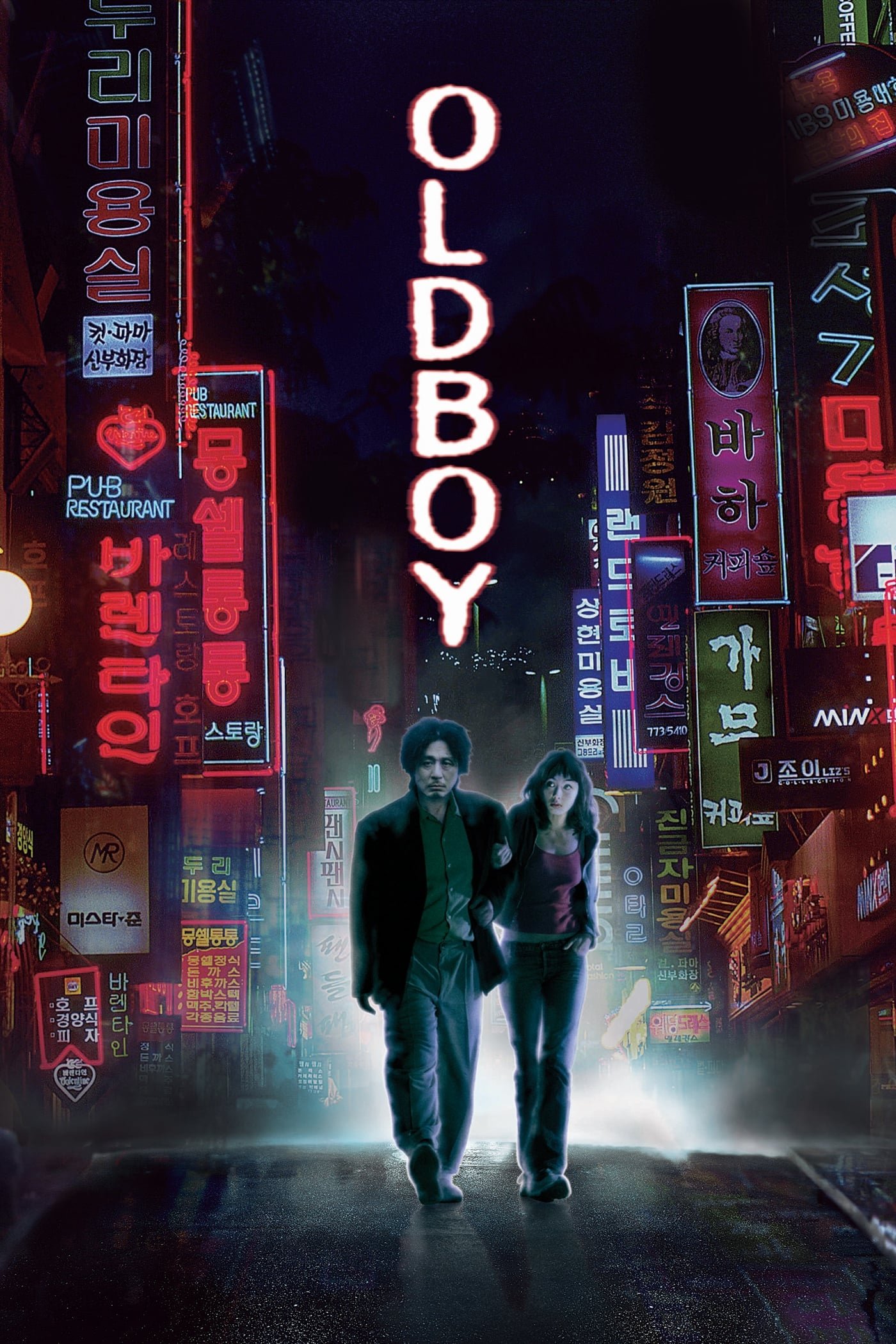
The first time I saw “Oldboy,” I remember sitting motionless as the credits rolled—immersed in a peculiar silence, both internally and in the theater around me. I’m no stranger to revenge thrillers, but there was an emotional viscosity in Park Chan-wook’s direction that clung to me, something that left me pondering not just the questions the film asked, but the unsettling shape of the answers it refused to give. If I return to “Oldboy” over the years, it’s because few films wound as deeply or wrestle so uncompromisingly with the boundaries of justice, cruelty, and our capacity for self-deception.
What the Film Is About
On its surface, “Oldboy” is a labyrinthine revenge tale: a man, Oh Dae-su, is inexplicably imprisoned for fifteen years before being suddenly released, driven to hunt down the architect of his suffering. But to distill the film into a plot summary is to betray its true emotional compass. At its heart, “Oldboy” is a dissection of human resilience and destructive obsession—an exploration of whether primal pain can be transmuted into anything other than further violence.
What “Oldboy” accomplishes, almost uniquely, is an atmosphere of relentless uncertainty: as Dae-su navigates the truth of his imprisonment and the labyrinth of clues left for him, the film compels me to question not just who the villain is, but what it is to be a villain in a world so indifferent to dignity or transparency. The central conflict is less a struggle between two men than a confrontation with the unknowable: the boundaries of memory, the fog of trauma, and the destructive force of searching for meaning where only suffering exists. The emotional journey isn’t merely cathartic; it’s corrosive, demanding the viewer to sit in ambiguity and discomfort, much as Dae-su must.
Core Themes
The deepest motif, and one that has only deepened for me over time, is the cyclical nature of revenge—its ability to mutate, replicate, and become almost indistinguishable from justice or madness. In 2003, in the wake of fractured global politics and a growing sense of collective disenfranchisement, “Oldboy” asked with rare courage: What do we really achieve by answering violence with violence?
There’s also a raw meditation on identity, especially as it relates to memory. By stripping Dae-su of his context for fifteen years, the film interrogates whether our sense of self survives trauma unchanged, or whether we are remade by the very harms we suffer. This theme feels more prescient today than ever; in an era obsessed with reinvention and the narratives we author about ourselves, “Oldboy” remains a brutal rejoinder to any notion that we can outrun or outwit the truth of our own history.
Symbolism & Motifs
One of Park Chan-wook’s greatest technical gifts lies in his use of recurring symbols—images that operate both overtly and as subtle echoes through the film’s runtime. The motif of the live octopus, for instance, is both shocking in its violence and essential to the language of rebirth: Dae-su devours it, as if taking in its rawness to fuel his own drive for answers. To me, this act is less about shock value than about depicting survival stripped bare of social convention.
The constant use of confinement, mirrored in creepy, claustrophobic interiors, functions as a metaphor for the prison of obsession and memory. Even after Dae-su’s release, frames remain tight, corridors winding—the film visually reinforcing that nobody ever truly escapes the cells of their own mind, or the narratives others place them in. The image of the hammer—practical, improvisational, and horrifyingly intimate—becomes a totem not just for violence, but for the work of digging through the past, relentless and crude.
Key Scenes
A Corridor of Carnage
When I reflect on cinematic fight scenes, the hammer hallway battle in “Oldboy” invariably rises to the surface. This single-take sequence, looping through a narrow passage with no flourishes or cutaways, is a testament to the power of exhaustion, bruised humanity, and sheer will. It isn’t heroic; it’s desperate and messy. What it lays bare is Dae-su’s refusal to be contained, not just physically but existentially—a portrayal of rage that feels almost volcanic, spilling over any boundary of choreography or logic. This is not stylized violence for its own sake, but violence as a language for the inexpressible.
The Hypnotic Revelation
Few scenes in modern cinema approach the raw shattering disclosure at the film’s climax, where the villain’s game is revealed in all its baroque cruelty. I find this moment emotionally harrowing: the play between horror and pity, the impossible bargain between knowledge and peace. It’s here that the film’s insistence on ambiguity is most apparent—Dae-su’s suffering doesn’t grant him moral purity or answers, only a deeper, more corrosive awareness of the inexplicable debts we owe to the past. This scene dismantles the myth of catharsis, leaving only the question of what is forgivable, and who gets to choose.
The Mirror of Forgiveness
In the final moments, after the Pyrrhic revelation, Dae-su seeks out hypnosis as a means of erasure. This scene lingers with me: a plea for mercy not from his tormentor, but from memory itself. There is an exquisite agony to this finale—Dae-su’s smile fractured by loss, the possibility of peace polluted by the shadow of everything he now knows. Unlike conventional narratives, “Oldboy” doesn’t restore order or innocence, but closes with a question mark, inviting the viewer to consider if some truths are better left unknown, and if forgiveness is ever possible, even for oneself.
Common Interpretations
Of course, “Oldboy” has attracted a host of critical readings: many see it simply as a masterclass in the revenge genre—a stylized, operatic escalation of violence and cruelty. Critics often focus on its political subtexts, the echoes of authoritarianism and surveillance in both personal and social realms. Others regard it as a tragic romance, a grotesque meditation on love bent into abjection.
While I appreciate these frames—a testament to Park’s layered storytelling—I find myself less convinced by readings that search for tidy answers. For me, the film’s most resonant question is whether any narrative, personal or collective, can ever truly settle accounts with the past. It’s a film about the absence of resolution, the futility of seeking justice by mirroring the methods of your enemies. Where critics see critique or condemnation, I see a more intimate, existential lament—one that resists closure, forcing the audience to sit uncomfortably in the gap between action and consequence.
Films with Similar Themes
- “Lady Vengeance” (2005) – This is another Park Chan-wook work exploring revenge, guilt, and redemption, but with a feminine perspective and a very different moral conclusion. Both films dissect the ways vengeance consumes those who pursue it.
- “Memento” (2000) – Christopher Nolan’s film also questions the reliability of memory and self-identity, using amnesia not only as a plot device but as a metaphor for our unstable relationship to the past.
- “The Man from Nowhere” (2010) – Like “Oldboy,” this Korean thriller examines the lengths to which someone will go when driven by loss and unresolved trauma, folding personal pain into a tapestry of violence and reckoning.
- “Prisoners” (2013) – Denis Villeneuve’s film dives into the abyss of familial vengeance and captivity, asking how far justice can be stretched before it snaps into moral degradation, echoing “Oldboy’s” dilemmas.
Conclusion
For those coming to “Oldboy” in our own era—a time no less turbulent or ambiguous than 2003—I believe the film offers more than shock or spectacle. Approaching it with an awareness of its ethical complexity, its willingness to map the darkest corners of the psyche, can transform a visceral thriller into a study in sorrow, empathy, and the limits of righteousness. Understanding the film’s themes of revenge, memory, and the impossibility of closure not only deepens the experience, but leaves the viewer changed, unsure whether the world is better or worse for reckoning with such darkness. That’s the rarest achievement a film can claim, and why “Oldboy” continues to haunt me.
Related Reviews
If you found value in my perspective, you might also enjoy exploring my thoughts on other cinematic landmarks such as “Lady Vengeance” and “Memento”.
To broaden this interpretation, you may also explore how critics and audiences responded over time.
🎬 Check out today's best-selling movies on Amazon!
View Deals on Amazon