
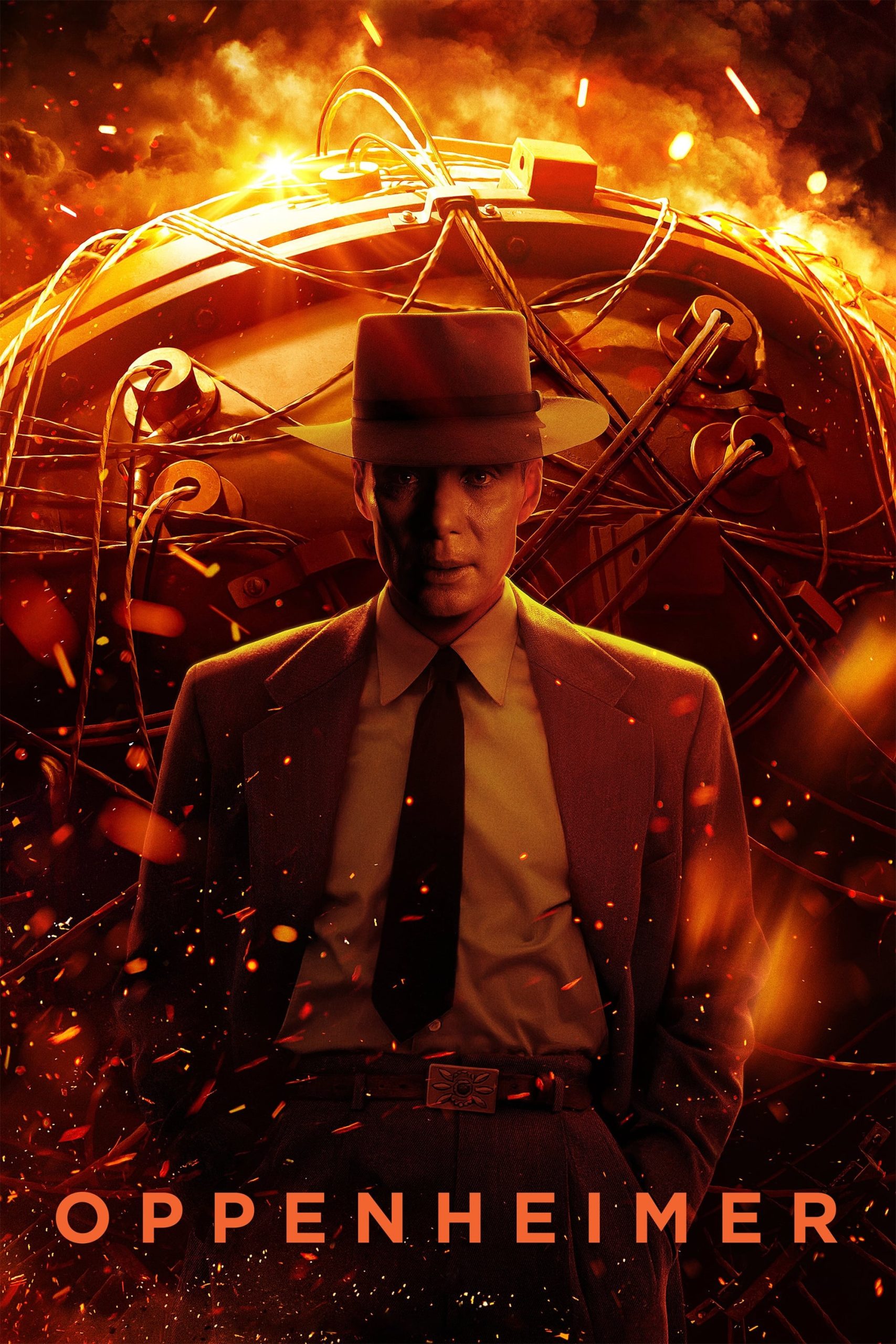
Looking back on my first viewing of “Oppenheimer,” I recall a peculiar sense of both awe and discomfort settling in as the credits rolled. It wasn’t just the scale of the story or Christopher Nolan’s unmistakable style that made an impression—it was a feeling of peering into a mirror, seeing not just the nuclear age birthed in the desert, but the tangled web of progress, ambition, and ethical ambiguity that marks our own era. Few historical figures have fascinated me the way J. Robert Oppenheimer does. He is both a scientific Prometheus and a haunted soul, and Nolan uses him as a lens to interrogate what happens when intellect and morality collide on the global stage.
What the Film Is About
Through Oppenheimer, I see a film not about the science of the atom bomb, but about the emotional volatility of creation itself. The narrative draws us into a world of intellectual obsession, where Oppenheimer’s idealism is tested against the unyielding realities of war and politics. What sets the emotional current of the film apart is the acute anxiety that runs beneath every conversation—a persistent hum of dread that I felt echoing in the silent spaces between lines of dialogue. In many respects, the movie is not only chronicling the birth of a weapon, but the erosion of certainties that comes with it.
What resonates most with me is the film’s scrutiny of personal responsibility in the age of technological marvels and existential threats. While the atomic bomb is the physical object around which the movie orbits, it’s the internal detonation within Oppenheimer himself that strikes hardest. There is a fevered intensity in how the film wrestles with his conflicted sense of triumph and horror, a dynamic I find essential to understanding the film’s central conflict: the inescapable cost of progress, both for an individual and for civilization as a whole.
Core Themes
At its core, “Oppenheimer” meditates on the myth of progress—the unwavering belief that human advancement is inherently good, even as it darkens its own shadow. Through the fragmented timeline and subjective perspectives, I felt that Nolan wants us to ask whether power and genius inevitably corrupt, or if the true danger lies in our faith that we can channel them for the greater good. This is not a cinematic nostalgia trip; it is a howl of relevance for today, when our own scientific breakthroughs routinely outpace our ethical debates.
Identity and alienation also drive the film’s pulse. Oppenheimer, portrayed as simultaneously a celebrated visionary and social outsider, is never truly at home in any room. The film grapples with the question: What happens when one’s identity becomes inseparable from a creation that changes the world, but at an unthinkable cost? Released in 2023, this interrogation felt particularly urgent. The world, still reeling from rapid technological shifts and shadowed by existential fears, continues to debate whether creators and innovators should be held responsible for the futures they set in motion. In my view, “Oppenheimer” speaks less about the past than our own anxious present.
Symbolism & Motifs
What lingers most vividly from my experience are the film’s bold visual motifs. One that recurs is the searing dance of particle imagery: swirling, colliding atomic structures that both mesmerize and forewarn. To me, these sequences aren’t just scientific illustration—they’re charged metaphors for the beautiful and terrifying entropy unleashed by human hands. They visually connect Oppenheimer’s inspirations—his fascination with quantum mechanics and cosmic order—to the chaos his creation brings.
The recurring use of mirrors and reflections in the mise-en-scène fascinated me, emphasizing the duality of heroism and damnation. Oppenheimer often appears split or fragmented, reinforcing his fractured psyche—a mind that can conceive great things yet cannot predict their consequences. Periodic interludes of silence—a complete withdrawal of Hans Zimmer’s score—left me with a discomforting pause, a literal and figurative silence echoing the moral emptiness that follows catastrophe. This use of silence becomes its own motif: the aftermath, the absence where once there was certainty.
Key Scenes
The First Unleashing: “Trinity Test”
The Trinity Test sequence is, for me, the film’s axis. Here, the fusion of scientific awe and existential terror reaches its apex. Nolan’s technical bravado—real pyrotechnics in place of digital effects—anchors the horror in the real, refracting not just the light of history but the dark legacy it casts. In Oppenheimer’s awestruck, haunted eyes, I found a collective reflection of humanity’s first dance with annihilation.
Confronting the Fallout: “The Gymnasium Speech”
Following the bomb’s detonation, Oppenheimer addresses a jubilant Los Alamos crowd. For me, the scene’s intensity lies in its fracture between perception and reality. While the crowd erupts in joy, Nolan clouds the soundtrack with a swelling, distorted roar—muting the applause, amplifying Oppenheimer’s alienation, and revealing the moral vertigo he feels. It’s the ghost of a celebration, haunted by a visionary’s guilt, and it forced me as a viewer to confront how easily collective elation can mask oblivion.
Public Reckoning: “Security Hearing”
The climactic hearing, with Oppenheimer pitted against McCarthy-era paranoia, distills the film’s emotional core. What struck me in these sequences is the quiet desperation in the performance—a genius turned scapegoat before bureaucratic machinery. The probing questions, the accusatory glare, and the erosion of dignity all serve as indictments not just of a single man, but of a nation hungering for absolution in scapegoating those it once lionized. The emotional weight is immense, and it reminded me how genius and integrity are often measured in their moments of greatest vulnerability.
Common Interpretations
Many critics have hailed “Oppenheimer” as a stirring character study and historical cautionary tale. The dominant reading frames it as a portrait of the conflicted genius, lauding Cillian Murphy’s portrayal as one of nuance and inner agony, and reinforcing Nolan’s reputation for heady, non-linear storytelling. Some commentators emphasize the film’s procedural approach, finding its examination of government bureaucracy and academic infighting to be a pointed critique of institutional duplicity.
While I acknowledge the validity of these perspectives, my own reading skews more existential than procedural. I’m less interested in the accuracy of the timelines than in how the film transforms historical narrative into an allegory for our own ethical dilemmas: the seduction of power and the loneliness of responsibility. Where some see a timely reminder about the dangers of unchecked state power, I see a more ambiguous, enduring question—whether humans are capable of reconciling invention with wisdom, or whether the dividing line between hero and villain will always blur in the aftermath of creation.
Films with Similar Themes
- “The Social Network” (2010): Both films probe the consequences of innovation—unintended fallout, individual alienation, and the moral toll of world-changing ideas.
- “Dr. Strangelove or: How I Learned to Stop Worrying and Love the Bomb” (1964): An acerbic take on nuclear paranoia and the folly of hubris; its biting humor serves as a tonal counterpoint to “Oppenheimer’s” somber intensity.
- “A Beautiful Mind” (2001): A portrait of genius teetering on the edge, exploring the personal cost—and societal burden—of intellectual brilliance.
- “Fat Man and Little Boy” (1989): A direct dramatization of the Manhattan Project, paralleling Oppenheimer’s conflicts over science, ethics, and responsibility, though with a more conventional narrative approach.
Conclusion
Approaching “Oppenheimer” today is to confront questions that remain urgent and unresolved. For modern viewers, the real revelation is not in the facts of history, but in the ways the film challenges us to examine our own relationship with progress—its promises and its price. By immersing ourselves in its thematic depths, we gain not only a window to the past but a mirror for the present, recognizing the enduring cost of technological ambition and the necessity of moral reckoning. For me, it is that very process of questioning—unsettling and unending—that makes the film worth returning to.
Related Reviews
If you found value in my perspective, you might also enjoy exploring my thoughts on other cinematic landmarks such as “Dr. Strangelove or: How I Learned to Stop Worrying and Love the Bomb” and “The Social Network.”
To broaden this interpretation, you may also explore how critics and audiences responded over time.
🎬 Check out today's best-selling movies on Amazon!
View Deals on Amazon