
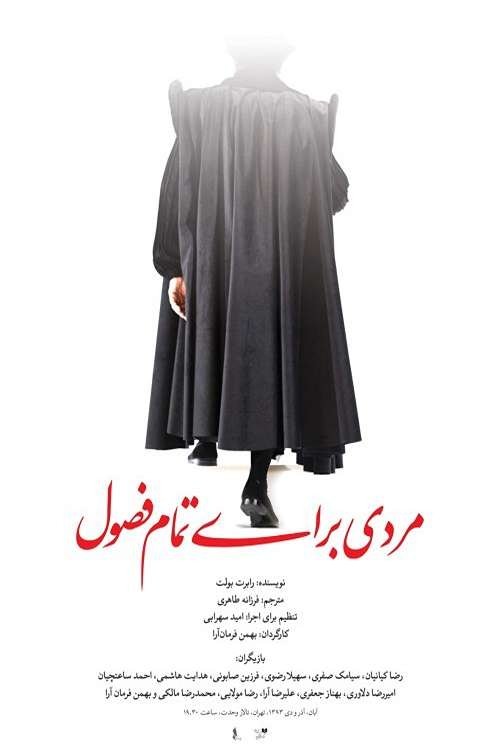
What the Film Is About
“A Man for All Seasons” confronts its audience not with swords or spectacle, but with the measured force of conscience clashing against political expedience. At its heart, the film charts the emotional and ethical journey of Sir Thomas More, a man of keen intellect and quiet wit who finds himself ensnared between his unshakable moral integrity and the demands of a ruthless monarchy. Rather than a story of broad rebellion, the film is about a solitary man holding steadfastly to his principles as the tide of power, ambition, and compromise swirls around him.
The central conflict is less about overt struggle and more about the internal crucible of conscience. More stands alone as friends, family, and countrymen succumb to the shifting winds of royal favor and religious politics. The narrative is propelled by pressure—social, legal, and personal—as More’s refusal to betray his beliefs carries escalating consequences. The film is an emotional study of silent resistance, portraying the cost and dignity of living authentically in a world that demands acquiescence.
Core Themes
One of the most enduring themes of “A Man for All Seasons” is the struggle between individual conscience and authority. The film explores how loyalty to oneself can be at odds with loyalty to king, country, or even family. Through More’s steadfastness, the story interrogates what it truly costs to keep faith with one’s principles when to do so is to risk everything, including life itself.
The theme of moral integrity is central, with the film asking whether an individual can—or should—resist social and political coercion when it means facing isolation or destruction. This question was especially potent in the 1960s, a decade rife with protest, countercultural movements, and challenges to established authority. At the time of release, Western societies were grappling with civil rights, the Vietnam War, and systemic change—all moments where personal conscience clashed with external power.
Another core theme is the ambiguity of law and the limitations of language. More, a brilliant lawyer, seeks refuge in legal technicalities and silence, believing that words have power and consequences. The narrative unpacks how language can both protect and betray its speakers, and how the law, intended as a safeguard, can be weaponized for political ends. This resonates today in ongoing debates about the rule of law, government overreach, and the ethical responsibilities of individuals.
Finally, “A Man for All Seasons” confronts the nature of power: how it is sought, maintained, and relinquished. The film scrutinizes both the temptations of power and the fear it inspires, highlighting the compromises that even good people will make when their ambitions or survival are at stake. This speaks to timeless anxieties about leadership, governance, and the price of integrity.
Symbolism & Motifs
Throughout the film, recurring symbols and motifs reinforce its exploration of principle versus compromise. The silence of Sir Thomas More is a central device—it is at once a form of passive resistance, a shield, and ultimately, a statement in itself. His silence serves both as a legal loophole and a metaphor for the unspeakable convictions that define a person’s core self.
The image of water appears repeatedly—More lives in a house by the river, a place of calm refuge but also of fragile boundaries. The river signifies the flow of change and the dangers of crossing lines of conscience or legality. This motif mirrors More’s own position; he is constantly surrounded by shifting waters, striving to keep his moral footing.
Costuming and settings are used to underscore character and conflict. More’s plain attire, even as he holds high office, visually differentiates his humility and moral fiber from the lavish court surroundings of King Henry VIII and his ministers. The contrast between the opulent court and More’s modest home situates his values as standing apart from those of his contemporaries.
Another powerful motif is the document—the oaths, laws, and written demands that are passed, signed, and refused. These objects symbolize the external manifestations of conscience and the very real consequences that come with refusing to endorse or sign away one’s beliefs.
Key Scenes
Key Scene 1
The pivotal conversation between More and Thomas Cromwell, in which Cromwell pressures More to support the king’s marriage, is crucial to understanding the film’s message. It is less a debate than a philosophical collision—the embodiment of principle versus pragmatism. Here, More quietly but unyieldingly refuses to be bullied or cajoled, exposing the naked force behind Cromwell’s supposedly reasonable arguments. The emotional weight comes from seeing More’s isolation crystalize as he becomes aware that not only is his position unpopular, it is dangerous. His calmness under threat becomes a form of courage, showing the audience that heroism can be quiet.
Key Scene 2
The family discussion after More’s resignation, when his daughter and wife implore him to recant for his own safety, intensifies the film’s central themes. The scene is an intimate depiction of how the demands of conscience are not only personal but also deeply relational. More’s quiet insistence that “when a man takes an oath, he’s holding his own self in his own hands” exposes the cost of integrity on those he loves. Through this, the audience sees that moral choices are rarely abstract—they ripple outward, binding and breaking hearts in equal measure.
Key Scene 3
The final courtroom scene serves as the film’s ultimate reckoning. Here, More finally breaks his silence, making a deliberate, public declaration of the beliefs he has refused to betray. This moment is a profound turning point; it is both the climax of the narrative and the crystallization of the film’s core argument about the limits and power of conscience. In facing execution, More seizes control of his own fate, choosing to live and die in alignment with his values rather than yield to expediency. His speech is not only a defense of his faith but also an articulation of the enduring struggle between the individual and the state.
Common Interpretations
Critics and audiences have typically interpreted “A Man for All Seasons” as a testament to the strength of individual conscience. Many read the film as a celebration of principled resistance in the face of overwhelming pressure, drawing parallels to other moments in history when individuals have stood up to unjust systems. The figure of Sir Thomas More became an icon of moral absolutism, with the film illustrating the honor—if also the loneliness—of holding true to one’s beliefs.
Some interpretations, particularly among modern viewers, focus on the ambiguity and potential rigidity of More’s stance. This reading sees the film not only as a praise of integrity but also as a meditation on the dangers of inflexibility, raising questions about whether unyielding adherence to principle can verge on self-righteousness, or if it is truly heroic even when it brings suffering to loved ones.
A third common reading positions the film as a warning about the destructive potential of unchecked power. The manipulative tactics of Cromwell and the capriciousness of Henry VIII demonstrate how institutions can betray their own laws in the pursuit of control. The film, for these viewers, is both tribute and cautionary tale—holding up conscience as both shield and, sometimes, cross.
Films with Similar Themes
- The Crucible – Explores the peril of maintaining integrity under social and governmental pressures, particularly during moral and political witch hunts.
- 12 Angry Men – Examines the courage of standing alone for principle and justice despite group intimidation and social conformity.
- To Kill a Mockingbird – Investigates moral conscience and the courage to do what is right within a corrupt or prejudiced system.
- Paths of Glory – Focuses on the individual’s struggle against institutional power and the ethical dilemmas faced under oppressive regimes.
Ultimately, “A Man for All Seasons” communicates that true integrity is neither loud nor flamboyant; it is rooted in the quiet, often painful commitment to one’s deepest values. The film suggests that the choices made in private can alter the course of lives and history—even, or especially, when they seem to go unnoticed or misunderstood. In shining a light on the tension between individual conscience and collective authority, the film reflects both the anxieties and aspirations of its era and endures as a meditation on the price of remaining true to oneself in any age.