
What the Film Is About
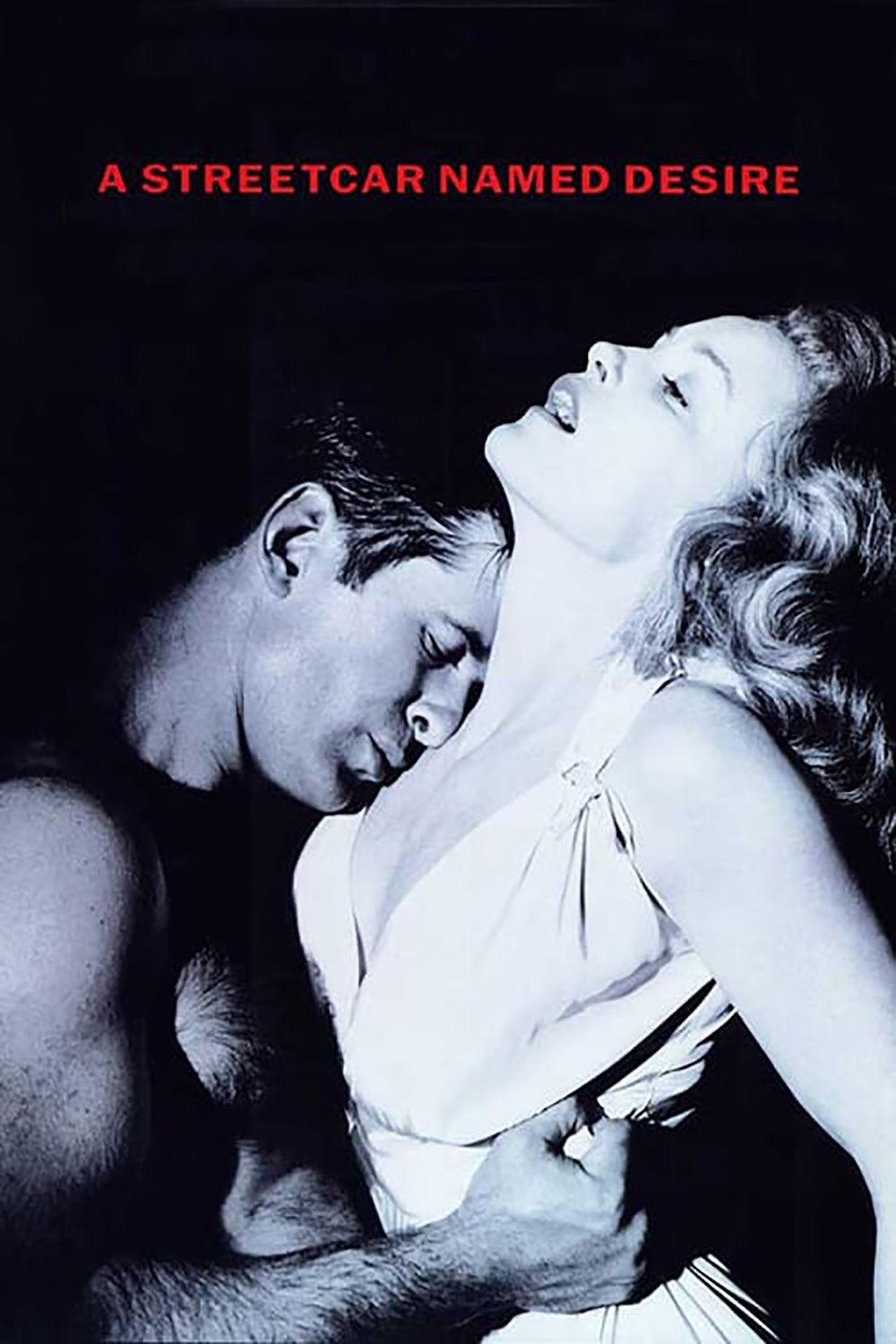
“A Streetcar Named Desire,” directed by Elia Kazan and adapted from Tennessee Williams’ play, dives deeply into the emotional and psychological collisions between fragile dreams and harsh realities. At its core, the film traces the unraveling of Blanche DuBois, a displaced Southern belle, as she arrives in New Orleans to stay with her sister Stella and brother-in-law Stanley Kowalski. The narrative is less about linear action and more about the escalating tension between Blanche’s illusions and Stanley’s brutal honesty, revealing the vulnerabilities, aggressions, and desires that govern human interaction.
What the film is ultimately about is the confrontation between two incompatible worlds: one sustained by nostalgia, gentility, and fantasy (embodied by Blanche), and the other by raw vitality, dominance, and pragmatic survival (personified by Stanley). This clash is not merely personal but social, exploring the erosion of old Southern aristocratic values in the face of post-war modernity and urban working-class realism.
Core Themes
The film is unmistakably a meditation on the illusions people construct to shield themselves from the pain of reality. Blanche’s desperate clinging to beauty, youth, and a romanticized past speaks to a broader theme of self-deception—a defense mechanism against trauma, guilt, and societal obsolescence. Stanley, conversely, exemplifies the threat and necessity of stripping away facades, wielding his version of “truth” as both weapon and equalizer within the confined quarters of their apartment.
Power and gender dynamics course through every interaction. The battlelines drawn between Stanley and Blanche expose mid-century anxieties about shifting roles within relationships and society. Stella’s position in the middle illustrates the tug-of-war between love, loyalty, and autonomy. The film also interrogates the fragility of identity, exploring how characters perform versions of themselves to survive social scrutiny or internal shame.
When the film premiered in 1951, postwar America was grappling with changes: the decline of Southern agrarian aristocracy, the ascendancy of a brash new masculinity, and the redefinition of women’s roles. Its themes of alienation, sexual politics, and the cost of refusing to adapt resonate strongly in contemporary times, as individuals still wrestle with societal expectations and the dangers of denying personal truths.
Symbolism & Motifs
The title itself is metaphorical. The “streetcar named Desire” becomes an emblem for the restless longing that drives the characters—literal, as Blanche’s journey to Stella’s apartment involves the streetcars named ‘Desire’ and ‘Cemeteries’, and figurative, as it suggests uncontrollable urges leading to inevitable ruin. New Orleans, with its humid decay and jazz-infused vitality, is as much a presence as any character, representing both opportunity and moral decline.
Light is a central motif. Blanche famously avoids direct light, covering naked bulbs with paper lanterns and recoiling from sunshine. This conceals her age and fading beauty, but more profoundly, it signifies her aversion to truth. The interplay of light and shadow in the cinematography underscores the tensions between illusion and reality, exposing what characters wish to hide from others—and themselves.
Another recurring leitmotif is music, especially the “Varsouviana” polka that haunts Blanche, an aural reminder of her tragic past and fractured psyche. The frequent sounds from the street—trains, jazz, laughter—ground the story in a world that moves relentlessly forward, indifferent to individual suffering.
Key Scenes
Key Scene 1
One of the film’s most telling moments is the first direct confrontation between Blanche and Stanley. The scene crackles with mutual suspicion and unspoken judgments, establishing the defining battle for psychological domination. Its importance lies not merely in the tension but in how it exposes each character’s vulnerability: Blanche’s anxious attempts to charm and disarm, Stanley’s probing questions and territoriality. The clash between Blanche’s cultivated refinement and Stanley’s raw energy sets the thematic stakes for the rest of the film, introducing viewers to a setting where there is no room for sentimental illusions.
Key Scene 2
The “paper lantern” scene—when Stanley rips the covering off the lightbulb during Blanche’s breakdown—is loaded with symbolic resonance. It is the moment when Blanche’s accumulated lies, about her age, past, and persona, are literally brought into the stark glare of reality. This act is not just a humiliation; it is a forced exposure, stripping her of her protective fantasies. The scene underscores the film’s central motif of truth versus illusion and reveals the cruelty inherent in unmasking someone who cannot survive without their shield of self-deception.
Key Scene 3
The final sequence, when Blanche is led away by the authorities, is the film’s devastating summation. Her poignant assertion, “I have always depended on the kindness of strangers,” echoes with tragic irony. This line is more than an isolated plea; it encapsulates Blanche’s lifelong pattern of seeking refuge in fantasy and the goodwill of others, even as those very mechanisms have failed her in a world that prizes strength over vulnerability. This climactic moment compels the audience to reflect not only on Blanche’s fate but on the society that deems certain people expendable when they can no longer maintain an acceptable façade.
Common Interpretations
Over the decades, critics have seen “A Streetcar Named Desire” as a lament for the lost romance and moral codes of the Old South—a requiem for a bygone world that, for all its flaws, offered those like Blanche a sense of place and identity. Others view it as a brutal critique of postwar American materialism and machismo, embodied in Stanley’s character, which crushes anyone who dares to be different or fragile.
There is also a recurring interpretation centered on gender and sexual politics. Blanche has often been read as a victim not just of personal delusions but of a patriarchal society hostile to independent or sensitive women. In contrast, Stanley is variously regarded as both an emblem of American vigor and the harbinger of its most oppressive qualities. Some critics highlight the film’s exploration of mental health, focusing on Blanche’s breakdown as both a personal tragedy and a commentary on societal indifference to suffering.
While audiences may disagree over whether the film is more sympathetic to Blanche or Stanley, there is broad consensus that its genius lies in refusing easy answers. Instead, it presents a tragic intersection of longing, cruelty, and the quest for dignity in a world with little room for nuance or compassion.
Films with Similar Themes
- Who’s Afraid of Virginia Woolf? (1966) – Like “Streetcar,” this film dissects a relationship through psychological warfare, using raw dialogue and emotional confrontation to probe illusions vs. reality and the destructive power of truth.
- Revolutionary Road (2008) – This drama examines the collapse of dreams under the weight of societal expectations and personal disillusionment, much like the way Blanche’s fantasies collide with reality.
- Blue Jasmine (2013) – This contemporary film, directly influenced by “Streetcar,” follows a woman’s psychological unraveling and the consequences of building life on denial and self-deception.
- The Graduate (1967) – While tonally distinct, “The Graduate” interrogates generational anxieties, identity crises, and the pitfalls of pursuing illusory fulfillment—resonant with the themes of lost direction and existential uncertainty in “Streetcar.”
Ultimately, “A Streetcar Named Desire” endures as a portrait of the American psyche at a time of transition, capturing with painful honesty the costs of clinging to illusion in a reality that demands adaptation and resilience. By shining a light on the fragility of dreams, the violence of truth, and the complexities of desire, it remains a searing investigation of what it means to be human in a world that is often unforgiving to those who fail to assimilate. The film compels us to consider whether survival necessitates the sacrifice of kindness, sensitivity, and beauty—or if, somewhere, there is still a place for compassion amid the struggle for dominance and self-preservation.