
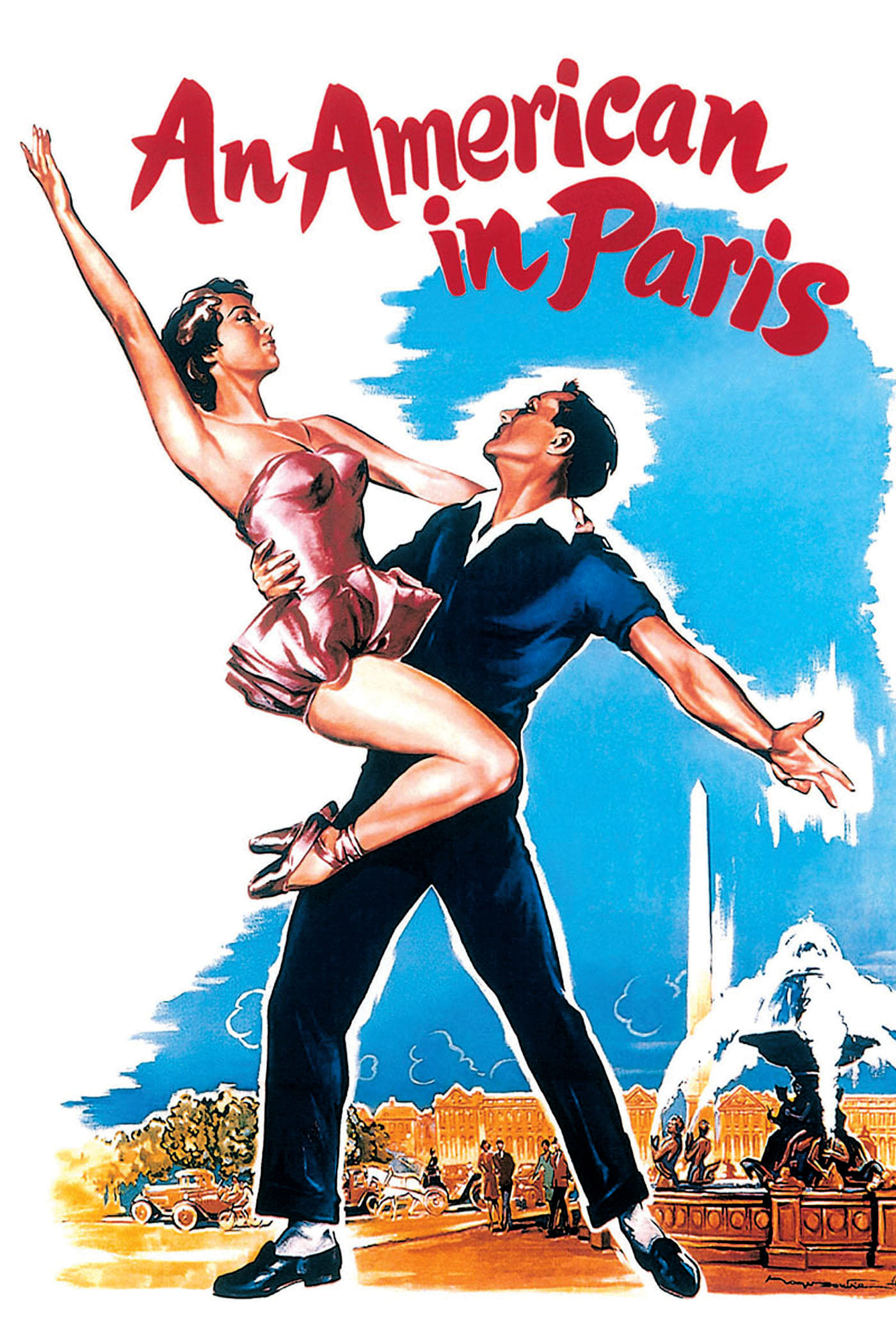
What the Film Is About
From the first shimmering notes of Gershwin, I was swept into “An American in Paris” with an expectation of spectacle but not necessarily substance. Yet, as the richly colored scenes unfolded, I realized this film isn’t just a love letter to postwar Paris or a showcase for Gene Kelly’s talent. For me, “An American in Paris” became a meditation on the price of dreams and the ache of yearning—for artistic worth, for connection, for a place to belong amid life’s complexities.
At its heart, I felt this movie traces the journey of an artist—an American expatriate, untethered and uncertain—trying to reconcile his aspirations with his reality. The film’s emotional current runs on the tension between creative ambition and the rigid boundaries of circumstance, between personal desire and moral obligation. By immersing myself in its world, I encountered not just romance and reverie, but also a persistent undertone of longing: the struggle to find meaning and love in the aftermath of war, and to build a future in a city haunted by both beauty and loss.
Core Themes
What struck me most forcefully is how “An American in Paris” turns the city itself into an emblem of possibility and exile. The Paris I witnessed here is both playground and proving ground—a place filled with dazzling potential but also with reminders of the past. I was drawn into the central theme of artistic yearning: the urge to create something lasting in a world that often doesn’t care for idealists. The film’s protagonist, Jerry, seems always on the verge of self-doubt, caught between fighting for his vision and surrendering to compromise, a dynamic I found painfully resonant.
Love, too, pulses through every frame, but not the uncomplicated kind. For me, the romance is tangled: a story where affection and loyalty become conflicting duties rather than simple joys. I found myself pondering how personal happiness gets weighed against the claims of gratitude, memory, or survival. And underneath, the movie grapples with displacement—a feeling I think was intensely relevant in 1951, as the world was still struggling to heal from the scars of war and millions were redefining home, identity, and loyalty on unfamiliar shores. It’s this sense of searching—for passion, for a future, for a sense of self—that, to me, gives the film a potency still felt today, especially in a world where so many chase dreams across borders physical and emotional.
Symbolism & Motifs
My experience of “An American in Paris” was shaped not just by story but by a tapestry of recurring images and symbols—a visual language that, in my eyes, speaks as loudly as any line of dialogue. Color itself operates as more than mere backdrop. From the saturated reds and golds of the climactic ballet to the gray, lived-in hues of Jerry’s humble apartment, I sensed each shade reflecting the inner world of the characters: hope, frustration, flights of fancy. Dance, too, is ever-present, serving for me as a metaphor for communication where words fail. The blending of ballet, jazz, and tap seemed to echo the hybrid, improvisational lives the characters lead as outsiders remaking themselves in a new land.
The motif of the artist—not just Jerry, but fellow expats and dreamers—reminded me constantly that every act of creation is an act of faith. Even the recurring view of Parisian streets, at once bustling and remote, functioned in my mind as both setting and symbol: a labyrinth representing not just the sprawling city but the bewildering, sometimes beautiful confusion of life itself. I also found repeated allusions to painting and music representing the struggle to harmonize one’s inner vision with a world that resists enchantment.
Key Scenes
Key Scene 1
The first moment that took root in my mind is the piano bar sequence, where Jerry and his composer friend Adam share their aspirations within the cramped intimacy of a Parisian café. It’s a deceptively simple scene, but to me, it’s essential for understanding the film’s conflict. Here, the irrepressible hope of youth is mingled with the anxiety of impermanence. Both men are outsiders—one painting, the other composing—but I could feel their camaraderie for what it truly is: a collective resistance against the apathy of a world that may never reward them. The energy, the bits of mock bravado, and the longing glances at passing women on the street all underscored for me that every creative soul is, in some way, haunted by loneliness. This scene, to me, crystallized how the search for love and artistic meaning are inextricable, feeding and frustrating each other day by day.
Key Scene 2
The grand masquerade ball provided the film’s most dazzling, fraught confrontation with its own theme: the collision of fantasy and reality. As I watched Jerry, dazzled by the woman he loves yet caught in a web of obligations to his patron, I felt the swirling colors and orchestration envelop him like a fever dream. For me, the masks and costumed dancers weren’t just background spectacle—they embodied the masks we all wear, the ways we play out imagined roles when the truth becomes too painful to face. The energy of the scene’s music and movement heightened my awareness that, for Jerry and Lise, love isn’t just discovery; it’s risk and revelation. The scene confronted my belief in dreams with the painful knowledge that chasing them can mean breaking with safety and certainty.
Key Scene 3
No analysis of “An American in Paris” feels complete to me without reckoning with its nearly 20-minute ballet sequence—the film’s emotional and aesthetic climax. As the boundaries between reality and imagination dissolved onscreen, I found myself swept away by the force of Jerry’s artistic vision: here, his feelings for Lise are rendered in pure movement and color, free from words or circumstance. For me, the ballet doesn’t just represent an artistic triumph—it’s the ultimate attempt to create meaning where life has denied it. In this sequence, I sensed the film’s deepest hope: that art, when pursued passionately, can transform heartbreak into transcendence. The ending’s ambiguity, which left me suspended between resolution and longing, underscored my sense that the yearning at the core of the film could never be fully satisfied; it’s the act of dreaming, not its fulfillment, that forms the true heartbeat of human experience.
Common Interpretations
As I engaged with other critics and viewers over the years, certain threads of interpretation recurred with striking regularity. Many see “An American in Paris” as a paean to artistic optimism—a vision of postwar hope where love and creativity offer renewal after so much loss. For some, the film’s exuberant style and rhapsodic score mark it as escapist, perfectly timed to help a 1950s audience imagine pleasures beyond the drab realities of the era.
Others, including myself, have been drawn to a more bittersweet reading. Rather than simple uplift, the film can be seen as portraying the bittersweet costs of relentless pursuit—the loneliness of artists far from home, the betrayals and moral ambiguities inherent in new romance and artistic patronage. I’ve heard viewers debate whether the ending’s embrace represents true fulfillment or only a moment’s happiness before life resumes its messier claims.
While almost everyone agrees the film’s cinematic virtuosity is beyond question, interpretations diverge on the depth of its social commentary. Some emphasize its dreamy, almost mythological quality, while others recognize within its Technicolor folds a real anxiety about expatriation, survival, and the personal cost of ambition. For me, the film works best when I allow for both readings—for I sense it is holding two truths at once: the potential for joy, and the inevitable presence of sacrifice and uncertainty.
Films with Similar Themes
- La La Land – When I watch “La La Land,” I feel the echo of “An American in Paris” in its depiction of dreamers torn between love and career. Each film explores the tension between artistic ambition and real life, and both use dazzling musical sequences to externalize inner longing.
- The Red Shoes – To me, Michael Powell and Emeric Pressburger’s classic ballet film resonates deeply with the motif of art as obsession. Both works use dance as a metaphor for an unattainable ideal, forcing characters to choose between personal fulfillment and artistic devotion.
- Funny Face – Watching “Funny Face,” I sense a similar delight in Paris as a place of possibility, mixed with themes of transformation and the search for authenticity within a world of performance and illusion.
- Midnight in Paris – I’m reminded of “An American in Paris” whenever I see Woody Allen’s nostalgic journey through romanticized Paris; both films use the city as a symbol for lost aspirations and the bittersweet allure of eras and loves that might never have existed at all.
If I had to distill what “An American in Paris” ultimately communicates, it’s that every human life is marked by the tension between longing and reality. The film does not offer pat solutions; instead, it invites me to dwell in the fertile uncertainty between hope and resignation, artistry and necessity, love and loss. For all its color and music, it’s the achingly personal struggle for meaning—played out against the backdrop of a Europe still recovering its soul—that gives “An American in Paris” its enduring power. Even now, decades later, I return to it not just for its beauty, but for its honesty about what it means to pursue a dream in a world that’s always changing, always slipping just beyond our reach.
If you’re curious about how this film was originally perceived or how it compares to similar works of its era, these resources may be helpful.