
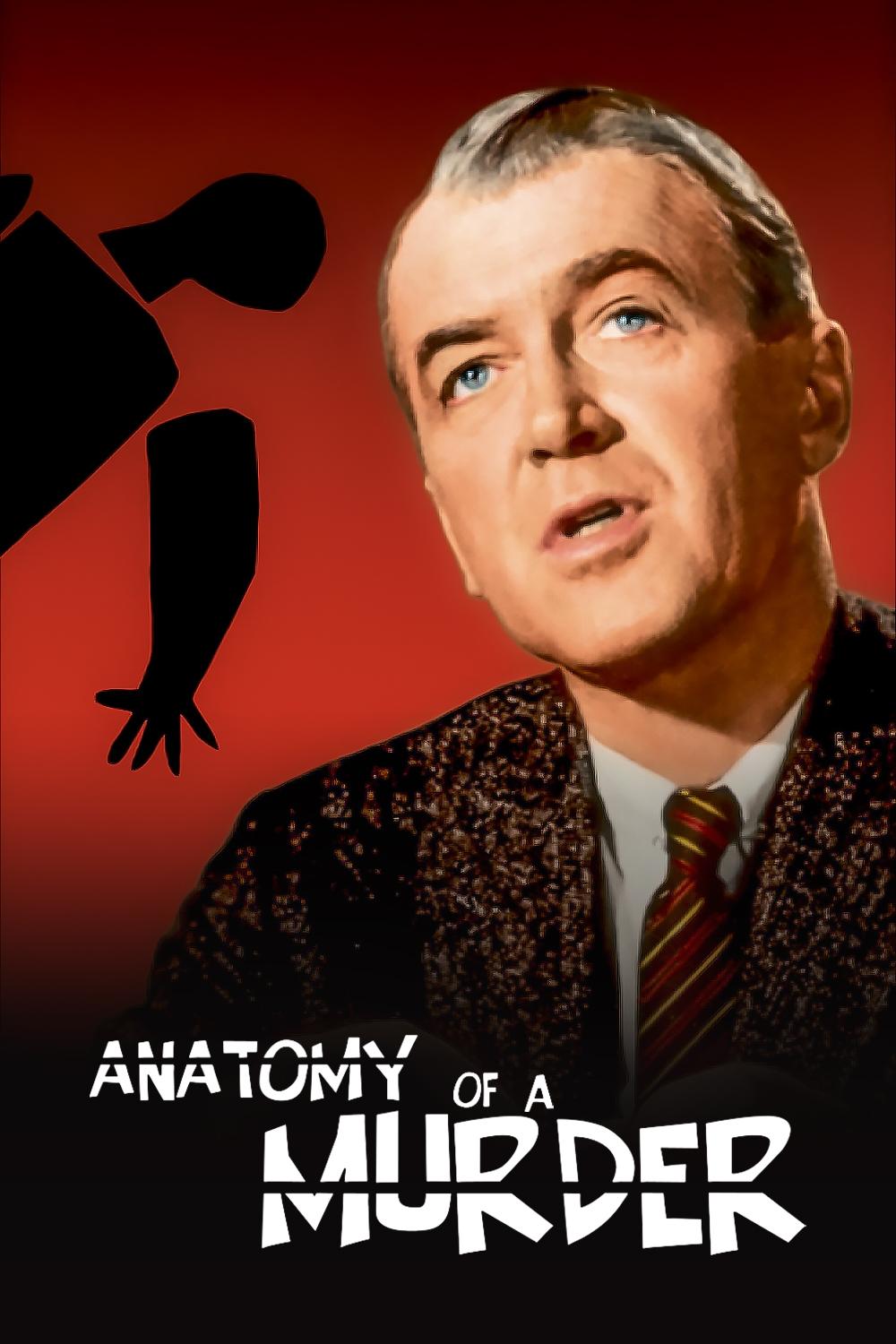
What the Film Is About
Even after all these years, I still remember the first time I sat through Anatomy of a Murder—the uneasy mix of fascination and discomfort that settled over me as its story unfolded. What grabbed me most was not the straight lines of law and order but the way the film relished ambiguity. In watching the characters tussle through a rape trial in a small Michigan town, I felt that I was witnessing not just a search for justice but a deep investigation into the slipperiness of truth itself. The emotional heart of the film lies in watching ordinary people wrestle with extraordinary circumstances, everyone justifying their actions while quietly exposing their own frailties.
For me, the central conflict isn’t just “Who is guilty?” but, “Who gets to decide what is right, and at what personal cost?” Near the surface, there’s the contest between Paul Biegler, a folksy defense attorney, and Claude Dancer, a sharp-witted prosecutor, but underneath, I see a film wrestling with the blurry moral terrain inherent in both the law and daily life. Emotionally, the journey is all about doubt—doubt about innocence, about motives, about the very nature of justice itself. By the time the credits rolled, I felt as unsettled as Biegler looks in the film’s final frames: relieved, but still haunted by the unanswered questions hanging in the air.
Core Themes
What continues to fascinate me about Anatomy of a Murder is its unflinching look at justice as a human, rather than an idealized, undertaking. The film is saturated with questions about the limits of the legal system, shaped not only by evidence but by charisma, cleverness, and the prejudices of jury and judge alike. I find myself engrossed in how the film exposes the malleability of facts—how the same pieces of evidence can lead to entirely different truths depending on interpretation.
There’s a deep current of moral ambiguity running beneath everything. The trial centers on an act of violence supposedly committed in defense of a wife’s honor, but the film stubbornly refuses to give anyone, whether accused or aggrieved, a clean moral standing. I’m reminded how, in postwar America, anxieties about authority, gender roles, and social order simmered beneath the surface. The film’s explicit references to rape and sexual desire shocked its original audience—but, more importantly, they force us to question our own willingness to judge or empathize.
For me, another resonant theme is the way truth and performance intertwine in the courtroom. Each participant—Biegler, Dancer, witnesses—must “perform” for the jury, carefully shaping perception rather than revealing hard reality. In that way, the film is perpetually relevant: institutions we often turn to for certainty—the courts, the law, our own understanding—are influenced by bias, emotion, and showmanship. Today, as then, these themes echo in public debates about justice, privacy, and credibility.
I also felt the film’s quiet meditation on loneliness and personal integrity. Paul Biegler’s world is circumscribed by a ramshackle office and a handful of friends. His pursuit of truth is inextricably tied to his desire for meaning in a world where professional respect and personal happiness seem forever just out of reach. This sense of existential doubt—who am I, when the rules I play by seem perpetually up for debate?—gives the film a tragic undertone that I find unforgettable.
Symbolism & Motifs
One symbol that stood out to me right away is the recurring imagery of doors and thresholds. Throughout the film, characters are constantly moving through doorways—into offices, courtrooms, and bedrooms—a visual metaphor for the transitions not just between spaces, but between states of innocence and guilt, private and public selves. I see these doors as reminders that every interaction has a before and after, and with each threshold crossed, clarity becomes harder to grasp.
Alcohol is another persistent motif, from Biegler’s habitual after-hours fishing and drinking to the presence of liquor in nearly every important conversation. In my reading, these moments of drinking work as a kind of social lubricant but also suggest the ways people dull their anxieties or cloud their own perceptions. Perhaps the most pointed use, for me, comes when witnesses and attorneys alike chase confidence with a dash of whiskey, blurring the careful line between relaxation and evasion.
The motif of jazz—underscored by Duke Ellington’s evocative score—unfolds as more than just musical backdrop. Jazz thrives on improvisation and tension between structure and freedom; it mirrors the unpredictable rhythms of trial and testimony. I always feel that whenever the music swells, the film is quietly reminding us that life, like jazz, resists easy resolution.
Finally, there’s the recurring visual motif of documents and paperwork—wills, depositions, and legal briefs that pass between characters. They represent the veneer of order and control the law tries to impose, yet the film repeatedly shows how messy real life remains just beneath that shuffling paper. I’m struck by how this recurring image exposes both the necessity and the futility of searching for absolute answers.
Key Scenes
Key Scene 1
Reflecting on the moment Laura Manion takes the witness stand, I’m struck by its quiet psychological electricity. What makes this scene indispensable for me is not simply what Laura says, but the tense calculation underlying every word and gesture. The camera lingers uncomfortably, asking us to evaluate not just the facts but the credibility, fear, and performative savvy of a woman facing both judgment and suspicion. For me, this scene crystallizes the film’s exploration of how truth can be subjective, how trauma is often interrogated rather than believed, and how every act of testimony is shaped by what the audience wants to hear. I always find myself asking: am I judging her too, or seeing her as more than a symbol in someone else’s story?
Key Scene 2
The heated exchange between Biegler and Dancer at the height of trial may be, on the surface, a technical duel, but I see it as the film’s most explicit challenge to the myth of objective law. As Biegler presses the limits of improvised insanity defenses while Dancer counters with icy logic, the spectacle reveals that justice is as much about persuasion as fact. I remember feeling every shift in their verbal sparring as a kind of wrestling match between order and uncertainty—each side sincere, yet equally complicit in theater. The scene brought home, for me, the theme of performance; both lawyers risk sacrificing truth for victory. Ultimately, it left me questioning whose version of “truth” ends up steering the fate of the courtroom, and whether any judgment made under such pressure can ever be called pure.
Key Scene 3
I will never forget the film’s closing confrontation, where Biegler, having apparently “won,” visits the deserted trailer of his client only to find it abandoned. The emptiness of that space—echoing with unresolved questions and the weight of everything left unsaid—is the film’s final punctuation mark for me. There’s no Hollywood catharsis here, no moral clarity. Instead, I’m left mulling the real cost of the characters’ victories—the unease about whether justice, as served, actually corresponds to the truth. That powerful ambiguity is, I believe, at the heart of what makes the film enduringly relevant: it never lets me off the hook, forcing me to acknowledge the perpetual gap between legal outcomes and ethical certainty.
Common Interpretations
Every time I’ve discussed Anatomy of a Murder with friends or in film circles, I’ve noticed that most viewers latch onto its critique of the American justice system. The dominant interpretation, and the one I most often share, is that the film exposes the law not as an impartial arbiter, but as a deeply human—sometimes flawed—process, rife with negotiation, manipulation, and ambiguity. The fact that the film refuses to clarify outright whether Manion’s defense was truthful or fabricated is, for many, its signature strength; I personally see that refusal as a statement about the uncertainty inherent in all judgment.
Others often focus on the film’s early, candid handling of sexual violence and gender politics. I’ve spoken to peers who feel that the film, for all its progressive candor, still inevitably reflects the sexist biases of its era—its treatment of Laura as both victim and object of suspicion often spurs heated debate to this day. For me, this ambiguity is intentional, exposing the ways women’s voices are doubted or dissected before being believed.
There’s also a popular reading of the movie as a snapshot of Eisenhower-era anxieties—where Cold War paranoia and social upheaval percolate beneath a surface of small-town respectability. Some critics I know focus on the film’s depiction of how traditional authority (from judges to police) is questioned or subverted, resonating with audiences in the late 1950s who were losing faith in the infallibility of institutions.
Of course, I’ve also come across viewers who argue that the film is, at its core, an existential meditation rather than a social or legal critique. For them—and sometimes for me, in quieter moods—the movie is about personal doubt and the impossibility of complete knowledge. The uncertainty that bothered critics in 1959 has come to be seen by many as the film’s unique gift.
Films with Similar Themes
- 12 Angry Men (1957) – To me, this film’s claustrophobic jury-room drama explores the impact of personal prejudice and moral ambiguity on the pursuit of justice, echoing the thematic heart of Anatomy of a Murder.
- Inherit the Wind (1960) – I find both films compelling for their critiques of legal spectacle, performance, and the intersection of personal conviction with the machinery of law.
- To Kill a Mockingbird (1962) – I often pair this one with Anatomy of a Murder for its similar focus on legal ethics, social bias, and the search for truth within a divided small-town society.
- Witness for the Prosecution (1957) – This film, in my view, shares a fascination with the courtroom as theater, the unreliability of appearances, and the haunting possibility that the truth may lie forever out of reach.
Looking back, what I find most profound about Anatomy of a Murder is how it compels me to sit with uncertainty. This isn’t just a movie about winning or losing a court case; it’s an invitation to grapple with the limitations of our institutions, our collective biases, and our own self-understandings. Decades after its release, the film’s refusal to resolve itself neatly—its insistence on ambiguity and doubt—strikes me as a powerfully honest statement about the messiness of human nature and the enduring challenges of justice. Its relevance persists every time I’m asked to judge, question, or empathize, both inside a courtroom and far beyond.
If you’re curious about how this film was originally perceived or how it compares to similar works of its era, these resources may be helpful.