
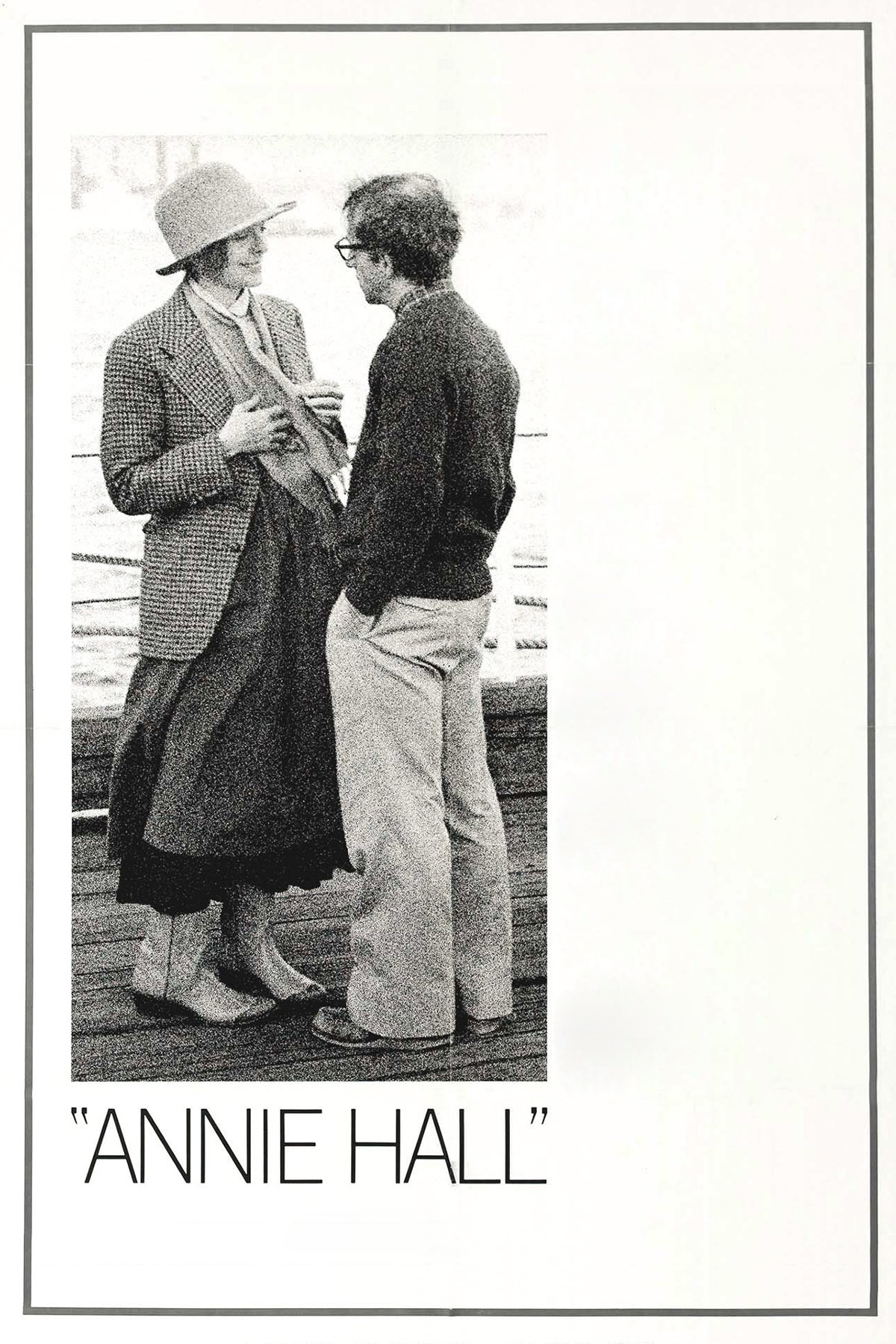
I remember the first time I watched “Annie Hall” not as an introduction to Woody Allen’s filmography, but as an awkward, bookish college student grappling with romantic optimism and urban disillusionment. Sitting cramped on a secondhand couch, I felt as if this film was gently nudging me through its neurotic charm, inviting me to confront my own anxieties and hopes about love, art, and the urban labyrinth of self-invention. What fascinates me about “Annie Hall” is not its reputation—though it looms large—but its raw, idiosyncratic extraction of vulnerability and solipsism, stitched together with self-aware humor that never feels safe. It is, for me, an invitation to laugh at the absurdity of life and mourn the impossibility of truly knowing another, even as we fumble in the attempt.
What the Film Is About
At its core, “Annie Hall” traces the mercurial relationship between Alvy Singer and Annie Hall—a relationship that ebbs and flows in the tides of longing, insecurity, and the restless drive to connect. For me, Alvy’s emotional trajectory is less about finding love than about incessantly dissecting it, picking apart every moment to find meaning or, perhaps, to justify its inevitable loss. The film’s genius lies in how it aligns us—sometimes uncomfortably—with Alvy’s headspace, full of reflexive anxieties and rapid-fire intellectualism, only to peel that back and expose the pain at the center.
What “Annie Hall” is really trying to say, in my estimation, is that romance is a prism refracting our own illusions and self-defenses, rarely delivering clarity but always reshaping us. The central conflict is not simply Alvy and Annie’s incompatibility but their inability to maintain the illusion that connection can be seamless. There’s a subtle cruelty in this honesty—I find myself both wincing and nodding when the film posits that sometimes the most significant relationships are important not because they last, but because of how they force us to confront ourselves.
Throughout, I see the story as a tapestry of reminiscence: the past is relived, re-edited, even physically entered and altered via direct address and fantasy sequences. This is less a love story than a confessional; it’s about what we carry from one another, and how little we can truly articulate what went wrong when intimacy frays.
Core Themes
One of the reasons I continually return to “Annie Hall” is its unvarnished probe into the theme of identity—particularly the identities we assemble in relationships. As Alvy and Annie orbit each other, developing and shedding quirks, aspirations, and even personal style, I see an interrogation of self-actualization: who are we by ourselves, and who do we become when we’re watched, loved, or left?
I also find the film’s engagement with memory and subjectivity persistently relevant. The nonlinear narrative and breakage of the fourth wall are not gimmicks but honest attempts to depict the slippery way we remember. In the 1970s, this was radical—a rebuttal to the tightly-scripted, polished romance. In today’s era, where nostalgia is almost commodified and self-fashioning happens on every digital platform, this theme feels uncannily prescient.
Another core theme I treasure is the disconnect between intellect and emotion. Alvy’s hyper-analytical persona clings to rationalization, yet he remains confounded by feelings that refuse to submit to logic. For me, “Annie Hall” remains potent because it stares at this paradox without flinching. In 1977, this self-examination was both a balm and a provocation—a reminder that the heart’s chaos will not be tamed by cleverness, no matter the cultural moment.
Symbolism & Motifs
What lingers most after watching “Annie Hall” are its recurring visual motifs and sly symbols, which quietly deepen the narrative. The frequent placement of characters in windows or on benches—framed by the vast, disorderly city—suggests a persistent longing for clarity, definition, and control. For me, this reminds us of how small and adrift we are, even in proximity to each other. The city itself, particularly New York, is not merely backdrop but a living entity, mirroring Alvy and Annie’s shifting interior landscapes. I feel as if their emotional weather changes with the traffic, the skyline, the gray or sudden bursts of color in the set design.
I also see the lobsters in the kitchen scene as one of the film’s purest symbols. For me, this awkward, slapstick moment—full of shrieking, laughter, and spilt shells—epitomizes the mess of intimacy. It’s a rare, unguarded collision between vulnerability and joy, and its echo later (as Alvy tries to recreate the moment with another woman) is devastating, underlining that connection cannot be manufactured or repeated by force of will.
Another subtle motif I’ve come to admire is the use of language and miscommunication. Whether it’s the subtitles under polite dinner table conversations or the pointed interruptions by New York passersby, there is a constant gap—between what is said, what is meant, and what is understood. I believe this is Allen’s way of underscoring the limits of wit and language; no cleverness can fully bridge the space between two souls.
Key Scenes
Key Scene 1: The Split-Screen Therapy Sessions
There’s a moment where Alvy and Annie are shown in simultaneous therapy sessions—split screen, separate but parallel. This scene masterfully exposes the chasm between personal realities; each believes the other is at fault, neither can quite hear what the other needs. I find this sequence vital as it crystallizes the film’s thesis: even with shared experiences, our interpretations are worlds apart. The simple visual cue of the divided screen is a powerful metaphor for their entire relationship.
Key Scene 2: The Animated Sequence
In one extraordinary leap, Alvy falls into a Snow White cartoon, swapping barbed banter with the Evil Queen. This moment isn’t just a playful digression but a concise embodiment of the film’s willingness to break narrative form to reflect psychological reality. For me, it’s Allen’s declaration that memory is performative, at once unreliable and vivid, and that the pain of romance can only be truly expressed in surreal, hyperbolic terms. The film’s innovations here reside not in mere cleverness, but in their service to a deeper, messier truth about how we process disappointment.
Key Scene 3: The Final Montage with “Seems Like Old Times”
The closing montage, scored with melancholy and shot through with both real and constructed memories, stays with me as the heart of the film. This bittersweet sequence—where Alvy and Annie’s past flashes by while “Seems Like Old Times” plays—captures the ache of longing without resolution. For me, it’s where the film admits defeat; not every story ends with answers or reconciliation. There’s grace in the acceptance, a recognition that even our failed loves become part of us, shaping how we move forward.
Common Interpretations
Critics often view “Annie Hall” as a groundbreaking romantic comedy, notable for shattering genre conventions and introducing a cerebral, self-referential style. Many read it as Allen’s auto-fictional lament, a reflection of his own neuroses projected onto New York’s intelligentsia. While I appreciate these assessments, they rarely linger long enough on the film’s emotional bruising. Yes, it’s clever, but to reduce it to mere “neurotic jokes” or genre innovation is to miss how the comedy is ultimately a shield for heartbreak.
Others have labeled it a time capsule—a snapshot of 1970s metropolitan angst, filtered through Allen’s lens. This is valid, but for me, the film rises above its era through its unvarnished inquiry into what it means to love imperfectly. When I hear critics talk about its post-modern affectations, I want to counter that the broken, staccato style is in the service of honesty, not just cool detachment. In my view, “Annie Hall” is fundamentally about the limits of storytelling—how no narrative, no matter how artful, can fully capture the why and how of love’s failure.
Films with Similar Themes
- Manhattan (1979): Explores urban relationships tinged with nostalgia and the ambivalence of desire, much like “Annie Hall,” but with an even sharper focus on moral ambiguity.
- Eternal Sunshine of the Spotless Mind (2004): Delves into the mechanics of memory, heartbreak, and the irresistible urge to rewrite our romantic histories—ideas at the soul of Allen’s film.
- Her (2013): Examines the difficulties of connection, longing, and the blurry boundary between self and other, filtered through a mixture of humor and melancholy.
- When Harry Met Sally… (1989): Inspired by “Annie Hall,” it interrogates whether men and women can truly be friends, sharing the earlier film’s skepticism and hopefulness regarding love’s boundaries.
Conclusion
For modern viewers, approaching “Annie Hall” means allowing yourself to be both charmed and unsettled. It is a film that laughs with you before admitting, quietly, that there is no final wisdom—only the honesty of trying, failing, and moving forward. In my experience, understanding its core themes—memory, identity, the limits of language—turns a sharp comedy into a mirror for our own emotional missteps and aspirations. That is the enduring value “Annie Hall” offers those willing to see it not just as a cultural artifact, but as a living, breathing confession.
Related Reviews
If you found value in my perspective, you might also enjoy exploring my thoughts on other cinematic landmarks such as The Graduate and Manhattan.
To broaden this interpretation, you may also explore how critics and audiences responded over time.