
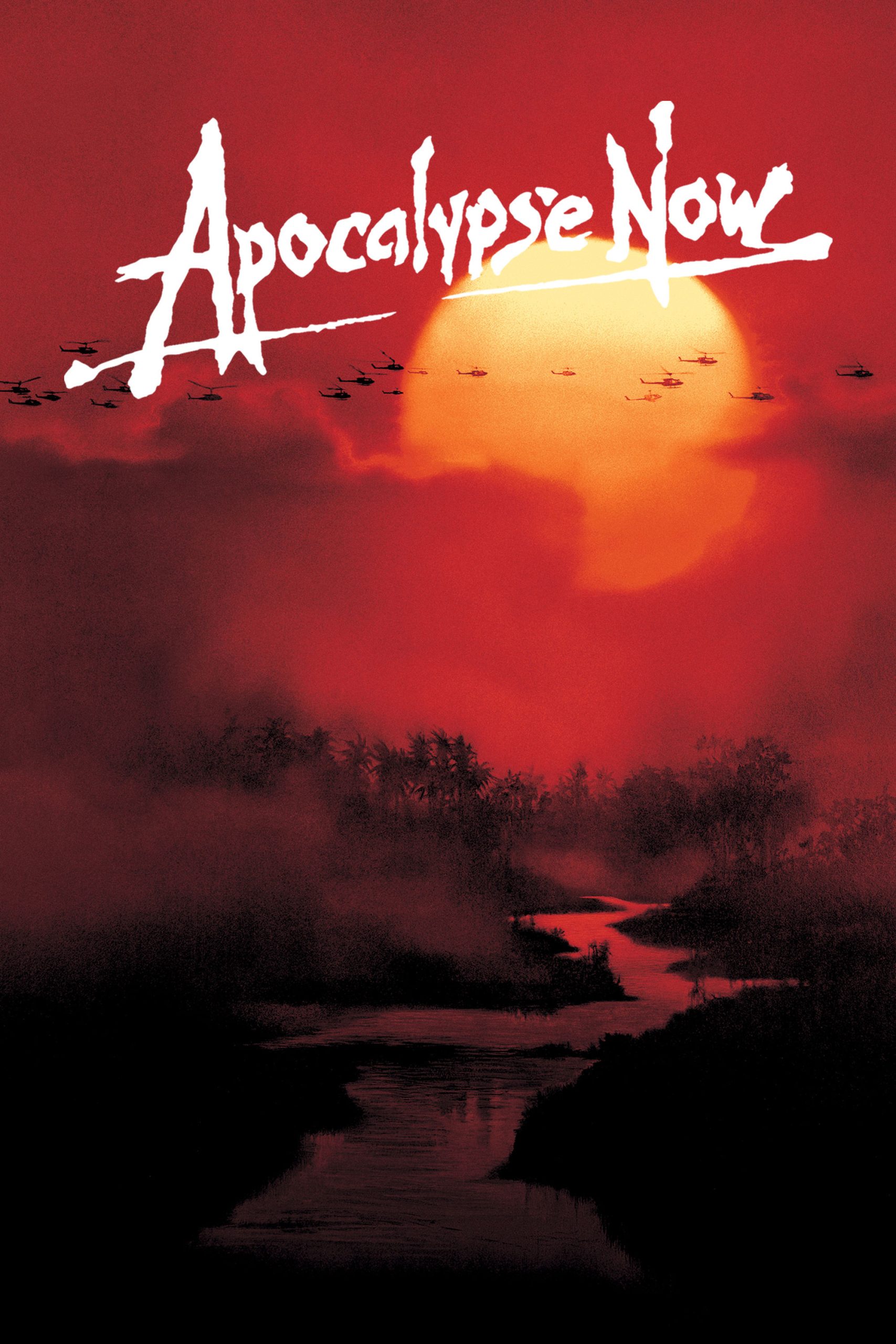
What the Film Is About
From the moment I first experienced Apocalypse Now, I was overcome with a sense of creeping dread and fascination. This film didn’t just take me on a journey down the Nùng River—it forced me to confront the darkest corners of my own morality and the chaos that can overtake the human soul. At its core, I found the film to be less about the Vietnam War specifically and more about the unraveling of identity in a world stripped of order and certainty. Captain Willard’s mission to find Colonel Kurtz is presented as a military operation, but for me, it was always an emotional descent—one that exposed the primal instincts lurking beneath our supposedly civilized surface. This is a story propelled not by action but by an inexorable momentum toward existential crisis, where moral boundaries become blurred and the very concept of sanity is called into question.
What left the deepest impression on me was the way the film refuses to offer clarity or comfort. Instead of clear-cut heroes and villains, I saw men contorted by circumstance, wrestling with the terrifying freedom that war brings. The central conflict isn’t just Willard versus Kurtz; it’s the internal war within each character’s mind as they navigate the jungle’s madness. The emotional landscape is jagged and unpredictable, drawing the viewer in with a kind of hypnotic unease. The further the journey, the more this film becomes a mirror—reflecting both the world’s brutality and my own doubts about civilization, morality, and the cost of obedience.
Core Themes
When I try to distill what Apocalypse Now is truly trying to express, I return again and again to its complex tapestry of themes. The one that strikes me with the deepest resonance is the collapse of moral certainty in the face of extreme violence. Through Willard’s mission and the increasingly surreal encounters along the river, I felt the film was confronting me with questions about the nature of evil: Is it inherent? Is it the result of removing social constraints? The film doesn’t offer answers, but it makes me painfully aware of how quickly order gives way to chaos, and how fragile our civilized masks really are.
Another theme that has haunted my thoughts is the seductive nature of power and the ease with which human beings rationalize the unthinkable. Colonel Kurtz, perhaps, is the embodiment of this allure—removed from oversight, equipped with unwavering conviction, he constructs his own morality. As I watched, I saw shades of historical atrocities, where otherwise ordinary people justified cruelty for the sake of ‘greater good’ or ‘necessity.’ The Vietnam War setting isn’t incidental; for me, it functions as both literal and symbolic backdrop for how U.S. power struggled with ambiguity, where justifications for violence quickly spiraled out of control.
I’d argue that identity—personal, collective, and cultural—is yet another thematic pillar. Willard enters the jungle as a soldier, obedient and hollowed by war’s trauma. Kurtz, once celebrated by his superiors, becomes a fugitive from any identity but his own self-fashioned deity. I see their intersecting journeys as a meditation on what we become when structure disappears and there’s no one left to answer to but ourselves.
These themes had profound relevance at the time of release—a period still reeling from the shockwaves of Vietnam, where America’s idealism crashed against an unforgiving reality. Yet, when I watch the film today, I’m reminded that its questions about violence, power, and the soul’s dark places haven’t faded. If anything, they feel more urgent now as we face new forms of uncertainty and reckon with history’s ghosts.
Symbolism & Motifs
The first time I saw the opening montage—whirring helicopter blades overlaying Jim Morrison’s haunted voice—I sensed that Apocalypse Now was communicating through a dense network of symbols and recurring visual motifs. Many of these stuck with me long after the credits rolled.
The river is the motif that echoes most powerfully in my memory. Every bend in the Nùng feels like a step further away from reality and deeper into myth. The river is at once a physical pathway, a psychological journey, and a metaphor for how each character slides from order into moral ambiguity. By the time Willard reaches Kurtz, I felt as if the river had washed away any last vestiges of certainty or innocence—what remained was only the raw, unfiltered self.
Darkness and light play out in nearly every frame. There’s a suffocating, inky quality to the jungle, pierced only occasionally by artificial flares or sunlight. The darkness here isn’t simply about the absence of light; for me, it’s a presence—a living entity symbolizing the unknown and the capacity for cruelty lurking within all of us. Moments of light often feel jarring or surreal, highlighting the dissonance between the civilized world and the world of primal instinct.
Cultural symbolism also weighs heavily throughout the film. One image I find especially loaded is the juxtaposition of American military machinery with Vietnamese temples and landscapes. The “Ride of the Valkyries” attack sequence is a fever dream of Western cultural arrogance. These symbols reinforce how war imposes its own reality, devouring both the invaded and the invaders alike, and calling into question what, if anything, survives such relentless incursion.
Finally, there’s the omnipresent voiceover narration—delivered in a tone both detached and despairing. For me, Willard’s narration is a motif that blurs reality and delusion, echoing Heart of Darkness and suggesting that even our attempts to explain or narrate horror falter under its weight.
Key Scenes
Key Scene 1
The arrival at Lieutenant Colonel Kilgore’s beach remains indelibly marked in my mind as both absurdist spectacle and a parable of imperial hubris. Witnessing the surreal “Ride of the Valkyries” helicopter attack, scored to Wagner’s thunderous music, I was struck by the jarring intersection of grandiose American might and the utter chaos it unleashes. I can never forget the way Kilgore treats the battlefield as a stage for bravura, organizing surfing breaks in the midst of carnage, forcing his men to confront the senselessness of their predicament. To me, this scene encapsulates the film’s critique of the delusions of control and the dehumanizing effect of war. The emotional impact comes not from the violence itself, but from the contrast: high art and destruction intertwined, exposing the hollowness at the heart of both.
Key Scene 2
As the patrol boat drifts further upriver, the crew’s escalating paranoia explodes in the infamous Do Lung Bridge sequence. Watching this for the first time, I felt as if I were holding my breath along with Willard. The bridge, illuminated like a nightmarish carnival, is a no-man’s-land where every concept of order or hierarchy has vanished. Soldiers fire blindly, no one seems to be in command, and the only constant is fear. For me, this scene is the film’s bluntest statement about the breakdown of authority and the seductive pull of chaos. It brings into focus the way war unravels not only societies but the very fabric of meaning. The anarchy here is not cathartic; it’s stifling and disorienting, forcing me to ask: If no one’s in charge, what difference do choices or morals make anymore?
Key Scene 3
Willard’s final confrontation with Kurtz, set in the heart of a shadow-drenched temple compound, is where I most keenly felt the culmination of the film’s philosophical and emotional journey. Kurtz’s rambling monologues are less the ravings of a madman and more the reflections of a man who has shrugged off all illusions. The brutal ritualized killing that ensues, juxtaposed with sacrificial imagery, pulls me into uncomfortable territory. I’m left wondering whether Willard’s act is an assassination or a form of succession. This scene’s ambiguity—its refusal to declare a victor or offer moral clarity—is, for me, the film’s ultimate statement: confronting overwhelming darkness, there may be no clean answers, only the lingering knowledge that we, too, could be carried away by the current.
Common Interpretations
Over the years, I’ve discussed Apocalypse Now with countless viewers and fellow critics, and I’ve come to appreciate the range of interpretations it provokes. The one I encounter most often—and the interpretation that seems to align with my own experience—is that the film is a modern retelling of Joseph Conrad’s “Heart of Darkness”, translated into the context of the Vietnam War to critique both American imperialism and the seductive nature of absolute power. This reading emphasizes how the jungle setting, the collapse of hierarchy, and the ultimate encounter with Kurtz all serve as metaphors for how easily civilization’s veneer can be stripped away.
Some interpret the film as a cautionary tale about the futility and madness of war itself, focusing on how the mission’s ostensible purpose—eliminating a rogue officer—only deepens the insanity. These viewers see Willard not as a hero, but as a bystander swept along by forces he barely comprehends. In this sense, the film is almost existential: the war becomes a metaphor for the struggle to find meaning in a world bent on self-destruction.
Others view Apocalypse Now through the lens of individual morality and the limits of obedience. For them, Willard’s journey is a reckoning with how far someone can be pushed before they either break or become complicit. I’ve also heard readings centering on trauma and psychological dissolution—noting how every character on the river is haunted by loss, guilt, or their own capacity for brutality.
While some more speculative interpretations posit the film as a surrealist fever dream or a meta-commentary on art itself, I’ve always found the most compelling interpretations are grounded in the uncomfortable questions it raises about violence, complicity, and the ease with which rationalizations collapse.
Films with Similar Themes
- Full Metal Jacket – I see a strong thematic kinship here in the exploration of dehumanization and loss of innocence within the chaos of war, filtered through a starkly different but equally unflinching lens.
- The Deer Hunter – This film resonates with me for its meditation on the psychological scars of Vietnam, particularly the way war contorts identity and devastates communities.
- Paths of Glory – Kubrick’s antiwar classic aligns closely with Apocalypse Now in its scrutiny of authority, the absurdity of military conflict, and the corrupting lure of power.
- Aguirre, the Wrath of God – Werner Herzog’s obsession with madness and ambition on the edges of civilization provides a haunting parallel to the Kurtz-Willard journey into the heart of the unknown.
After years of revisiting Apocalypse Now, I continue to believe that its greatest strength lies in its refusal to comfort or justify. What Coppola and his team ultimately communicate, through increasingly feverish imagery and sound design, is that any of us, given enough darkness, enough leeway, could find ourselves at the edge of morality. The film is unflinching in its assertion: violence and madness are not anomalies of war; they are threads woven through the human condition. For me, the Vietnam setting is neither historical accident nor mere backdrop—it is the crucible that reveals, with brutal honesty, just how quickly we can become strangers to ourselves.
If you’re curious about how this film was originally perceived or how it compares to similar works of its era, these resources may be helpful.
If you found value in my perspective, you might also enjoy exploring my thoughts on other cinematic landmarks such as The Deer Hunter and Paths of Glory.