
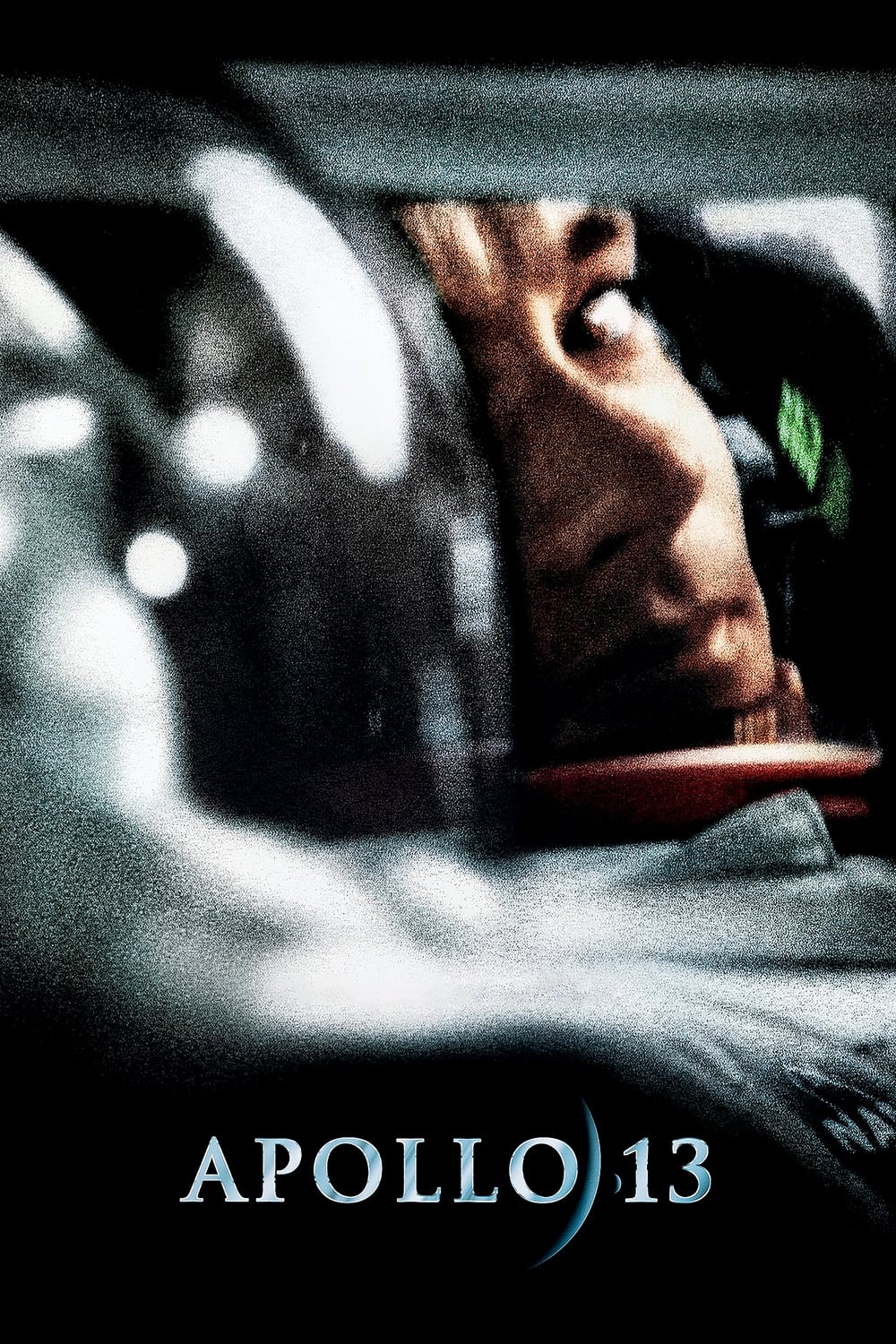
I have never shaken off my awe for space travel—not in the bombastic, sci-fi spectacle way, but in the almost unbearably silent, lonely stretch of blackness that faces those who venture away from Earth. “Apollo 13” (1995) is, for me, the rare film that bridges the gap between the grand public story of heroism and the terribly private struggle for survival in a place that feels as much psychological as physical. Watching it, I’m transported—not simply into NASA’s historical crisis, but into that vulnerable liminal space where human ingenuity faces the cold unknown. I remember the night I first watched “Apollo 13,” flipping through cable channels with my father, who had explained to me what “failure is not an option” meant long before I understood its full depth. That line, echoing after the end credits, lingers not just as a motivational catchphrase, but as an existential mantra. This is why “Apollo 13” fascinates me: it makes the public myth intimately personal.
What the Film Is About
At its most apparent, “Apollo 13” chronicles the precarious journey of Jim Lovell and his crewmates as their lunar mission falls apart and becomes a harrowing struggle to get home alive. Yet, the emotional heart of the film is not just the danger, but the stripping away of everything but character and adaptability. I’ve always felt that most movies about space focus on what’s out there; this one, instead, points inward. The central conflict isn’t just the explosion that cripples the spacecraft, but the collision between ambition and vulnerability. We see it in Lovell’s gaze, in his wife Marilyn’s silent worry, and in the steely but breakable calm of Mission Control. Every layer of technological achievement is peeled back to reveal the raw, pulsing need—not simply to survive, but to matter in the face of disaster.
For me, the film’s deepest resonance emerges in its portrayal of the entwined fates of those in space and those on the ground, particularly through the emotional journey of Lovell and flight director Gene Kranz. “Apollo 13” is on some level about the myth of American competence—the confidence that systems and experts can overcome chaos. Yet Ron Howard, perhaps more than any director working with material of this scale, injects doubt and fear into every clean line of NASA’s control panels. What the film tries to say, to my mind, is that heroes are made in the radical act of reimagining what victory looks like—accepting that sometimes coming home with your life is the only moon you can claim.
Core Themes
I see “Apollo 13” as principally a film about human resilience and the fragility of even our boldest dreams. Again and again, the characters are forced to question what their mission means when the mission becomes simply coming home. This notion—that purpose is not a fixed star but a shifting alignment—is why the film resonates so strongly with our present moment. In a culture obsessed with triumph and “winning,” the idea that survival and adaptation are worth celebrating remains profoundly relevant.
The film also wrestles with the theme of community and dependence. Amidst the technological prowess, we see the necessity of trust: between crew members, between astronauts and ground control, and between families holding their breath at home. At the time of its release, the world had tasted failure—after Challenger, after the Cold War—and “Apollo 13” carried a subtle, almost cautionary undertone. It’s a meditation on fallibility, on accepting that expertise is not immunity, and that innovation often blossoms only under pressure. Today, as we grapple with crises of our own, from pandemics to climate change, I find that this lesson—the necessity of communal effort and flexibility—feels more vital than ever.
Symbolism & Motifs
What strikes me most are the visual motifs of light and perspective throughout “Apollo 13.” Light, in this film, is not just illumination but hope—sometimes a flicker, sometimes an overwhelming glare. When the power is cut to conserve energy, the ship falls into shadow and the palpable chill of space invades; it’s a literal and symbolic dark night of the soul. The contrast between the comforting warmth of home (bathed in golden hues) and the clinical, often icy environment inside the spacecraft, builds a visual dialogue about what’s truly at stake: the warmth of human connection against the indifferent void.
Another recurring image is the framing of windows and portals. Whether it’s Lovell gazing out at the unreachable moon or Marilyn Lovell anxiously watching her children through the glass at home, these frames serve as metaphors for distance—physical, emotional, and existential. They remind me how the film constantly positions its characters at the threshold between hope and despair. Even more striking is the simple motif of the astronauts’ hands—reaching, straining, turning dials and flipping switches, grasping for control in a situation that offers so little of it. These small, tactile details reinforce the film’s conviction that sometimes our fate truly rests in our own hands, even as we float in an ocean of uncertainty.
Key Scenes
Key Scene 1
The sequence immediately after the cryogenic tank explosion remains, for me, one of the most harrowing moments in all of space cinema. As alarms blare, I feel the palpable confusion and terror; Howard’s kinetic, almost claustrophobic camera work refuses to give us a god’s-eye view. For me, this scene exemplifies the collision of expertise and panic—watching as Lovell, Swigert, and Haise scramble through checklists and improvisations echoes the way any crisis strips us to our core competencies. There’s something breathtaking about how quickly order gives way to a primal fight for survival, and how the astronauts’ training doesn’t erase but rather intensifies their fear. This moment forces me to confront my own assumptions about heroism: it’s not fearlessness, but the capacity to act with fear coursing through your veins.
Key Scene 2
The engineering room at Mission Control, where the team must figure out how to fit a square CO2 filter into a round hole, is the film’s second transformative scene for me. It’s a celebration of “bricolage,” of making do with what you have—even when what you have is nowhere near enough. Watching the team dump assorted spacecraft parts onto a table and set to work is as rousing as any spacewalk scene, because it peels away abstraction. This moment, for me, becomes an ode to collaboration and the relentless pursuit of a solution, no matter how improvisational. The tension isn’t just technical—there’s a psychological desperation, a sense that lives are depending on creativity over protocol. This is the essence of the film’s optimism: that imagination and teamwork can rescue us when systems fail.
Key Scene 3
Near the film’s end, as the crippled capsule hurtles toward Earth, the tension is suffocating. The moment the radio blackout stretches far past its expected duration, and we cut between NASA personnel, the astronauts, and families across the world, is almost unbearably intimate. I find myself holding my breath every time—aware, on some level, that survival is not guaranteed. More than any triumphant return, this suspenseful gap captures the real psychological cost of exploration: the not knowing, the existence of hope only within the waiting. For me, this sequence crystallizes the film’s message: there are times when, despite all the calculations and courage, ultimate outcomes are out of our hands. We wait, and we hope, and that’s the sum of being human in the face of the unknown.
Common Interpretations
Many critics have framed “Apollo 13” as a straightforward celebration of American ingenuity and collective perseverance. Some see it as a nostalgic love letter to the can-do era of NASA and mid-century heroics. While I appreciate and understand that reading, my own response to the film is far more ambivalent—as much about humility as triumph. I don’t view it as a pure testament to mastery, but as a reminder of our dependence on contingency, on things going wrong and refusing to obey our plans.
Further, there is often an undercurrent of Cold War comparison in critical analyses—“Apollo 13” as a corrective after the debacle of Vietnam or Watergate, a filmic assertion of America’s undiminished spirit. I can see how those cues would resonate for audiences in the 1990s, but I tend to focus instead on the film’s quieter acknowledgment of vulnerability—the moments of almost paralyzing uncertainty. What stands out for me is not flag-waving, but the ways the film honors limitation and the invention born from breakdowns.
Films with Similar Themes
- Gravity (2013): Like “Apollo 13,” this film hinges on survival in a hostile, indifferent universe, focusing on the resilience required to endure rather than conquer space.
- The Right Stuff (1983): Another deep dive into American spaceflight history, exploring the cultural mythology of astronauts and the burdens behind public heroism.
- First Man (2018): This Neil Armstrong biopic delves into the personal sacrifices of exploration, threading the private and public aspects of scientific achievement in ways that echo “Apollo 13.”
- Cast Away (2000): Though set on Earth, its narrative of survival, improvisation, and emotional resilience in isolation mirrors the existential struggle at the heart of “Apollo 13.”
Conclusion
For modern audiences, “Apollo 13” is not just a time capsule but a mirror. I believe viewers today can approach it not merely as a tale of technical triumph, but as a meditation on the uncertainties that undergird every bold ambition. Understanding its themes of resilience, community, and adaptability transforms the experience from passive viewing to active reflection. To me, the true gift of “Apollo 13” lies in its refusal to flatten crisis into mere spectacle; instead, it invites us to see our own struggles, our own yearnings for home and meaning, reflected in the ultimate trial of endurance against the infinite.
Related Reviews
If you found value in my perspective, you might also enjoy exploring my thoughts on other cinematic landmarks such as “The Right Stuff” and “First Man”.
To broaden this interpretation, you may also explore how critics and audiences responded over time.