
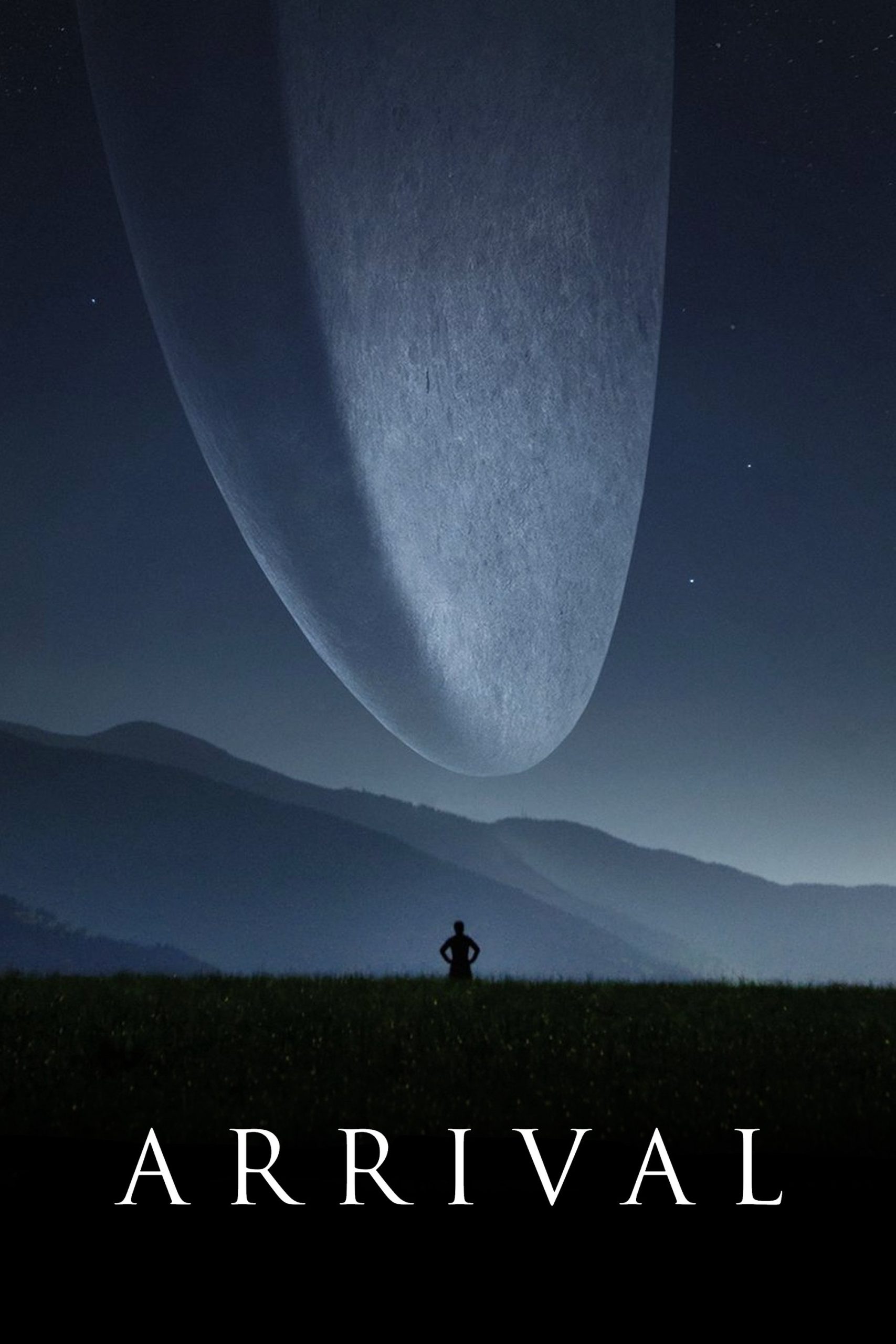
I still remember the first time I saw “Arrival.” It was a dreary Sunday, the kind lull you get near the end of autumn when even time feels suspended. I was struggling with the idea of communication—my own, with someone important to me—when I wandered into the dark hush of the theater. What I encountered wasn’t the alien encounter I’d anticipated, but something much closer to my inner life: an intricate meditation on understanding, loss, and the way language not only describes our world but shapes our very perception of it. “Arrival,” to me, is less about visitors from the stars and more about learning to speak with the unfamiliar—sometimes within ourselves.
What the Film Is About
While the premise on paper might offer echoes of familiar science fiction territory—a linguist, Dr. Louise Banks, is recruited to communicate with extraterrestrial visitors—it transcends genre and expectation in the emotional arc it traverses. The heart of “Arrival” is a deeply personal journey of grief, connection, and the agony and ecstasy of memory. Louise’s story is colored by loss, but also by resilience, as she steps into a role that will irrevocably alter not just world events, but her own sense of time and self.
The central conflict isn’t between humans and aliens, but between humans and their own fear of the unknown—be it death, change, or the relentless march of time. I see “Arrival” as a film that asks, with a gentle but provocative tone: What if the way we frame questions defines the limits of our answers? The climactic moments, unmoored from traditional action-thriller pacing, instead dwell in the intangible: communication, empathy, and the willingness to accept pain along with joy. This resonates with me so deeply because it feels honest; it doesn’t cheat the complexity of confronting what we cannot change.
Core Themes
Perhaps more than any film of the past decade, “Arrival” is concerned with the transformative and sometimes agonizing power of language. Not merely as a means of communication, but as the architecture that shapes thought. The Sapir-Whorf hypothesis—a theory suggesting that the structure of a language determines its speakers’ perception and categorization of experience—is no mere backdrop, but the film’s actual narrative engine. This theme urges me to consider: What am I missing in my own life, not because of a lack of information, but because of the limits of my own interpretive frameworks?
Another central thread, and one that made me reflect at length, is the acceptance of loss as a precondition for love and meaning. Louise’s eventual embrace of her daughter’s transient life, despite foreknowledge of pain, speaks to a profound existential bravery. “Arrival” for me is a film about time—not linear, but cyclical, echoing in choices both tragic and beautiful. Watching during a period of uncertainty in society (2016, with its global turbulence), the relevance was almost overwhelming: acceptance doesn’t mean resignation, but a richer kind of engagement with the inevitable cycles of gain and loss.
Finally, the movie subtly unpacks the ever-present tension between global cooperation and the toxicity of suspicion and nationalism. The world’s fractious, fearful response to the alien arrival mirrors, in microcosm, how easily humanity’s divisions can threaten progress and understanding. In an era marked by political upheaval and fractured public discourse, “Arrival” offered—offers—a quietly urgent plea for shared vulnerability rather than posturing strength.
Symbolism & Motifs
From the opening frames, circular imagery—both visual and narrative—dominates the film’s language. The Heptapod’s logograms, perfectly looping, encapsulate not only their written mode of communication but the very structure of their reality: time experienced all at once, not doled out sequentially as in human consciousness. What moves me about this motif is how it’s seeded everywhere: the daughter’s name (Hannah, a palindrome), the repeated musical cues, the circular nature of Louise’s memories.
The motif of mist and fog—especially as the humans approach the alien vessels—communicates for me the thematic core of uncertainty. Rarely do we see anything clearly, at first. The entire cinematic language chooses opacity over clarity, inviting the audience to yield certainty for exploration. This choice from director Denis Villeneuve signals trust in viewers’ patience: the answers, if they come, will not be spoon-fed, but earned.
Perhaps my favorite recurring symbol is that of hands—human hands pressed against the glass, mirroring alien appendages. These moments of almost-contact underscore the yearning for connection that propels the narrative. Language, here, is both barrier and bridge. Closer and closer, Louise and the Heptapods reach for mutual understanding, visually evoked through these powerful, tactile images that speak, without words, to the longing for shared experience.
Key Scenes
Key Scene 1
The first encounter with the Heptapods inside their mist-shrouded vessel stands as the film’s defining structural and emotional pivot. As Louise removes her hazmat suit, risking everything for clarity, I was struck by the vulnerability demanded by true communication. For me, this scene dramatizes the necessity of trust: to understand, and be understood, one must let down defenses. It’s an act of existential courage, quietly monumental, and played with heartbreaking authenticity by Amy Adams. The fog, the music, the slow pacing—each element conspired to draw me into the film’s unique rhythm, where real advances are made by taking emotional risks.
Key Scene 2
The revelation sequence, where Louise comprehends the Heptapods’ perception of time and thus her own memories of her daughter, marked a transformative moment in my viewing experience. This is not merely a twist, but a shattering of narrative linearity—a move that left me genuinely destabilized and awestruck. I love how the film trusts the audience enough to destabilize not just the story, but our relationship to memory, cause, and effect. The visual storytelling, with quicksilver editing and ethereal sound design, makes the metaphysical almost palpable. This moment feels like a profound meditation on how we live with foreknowledge of our own suffering, and how that knowledge doesn’t diminish, but rather intensifies, our capacity to love.
Key Scene 3
In the final confrontation with the Chinese general, General Shang, Louise delivers a message in Mandarin that averted war. This climax hinges on the power of a single, personal message—“in war there are no winners, only widows”—turning global history on the tiniest hinge: empathy, distilled in language. This scene lingers with me, less for its suspense than for its unapologetically optimistic faith in communication. For once, a science fiction film’s resolution isn’t predicated on force, but on translation, on understanding—a choice that feels revolutionary in its gentleness.
Common Interpretations
Many critics laud “Arrival” as an allegory for cross-cultural cooperation or even as a treatise on the art of translation itself. I read reviews applauding its ambition to unite hard science fiction with emotionally resonant themes of grief. There’s no shortage of analysis centered on the Sapir-Whorf hypothesis or on the cyclical structure of its storytelling as a symbol of accepting fate. I respect these views, as they do justice to Villeneuve’s meticulousness, but I find that they sometimes overlook what feels most urgent to me: the film’s assertion that love is an act of willful vulnerability in the face of inevitable loss. Where many see a puzzle-box, I find an invitation—to live bravely, knowing how fragile and fleeting all things are.
Another popular reading positions “Arrival” as a commentary on communication breakdowns in the modern political sphere. I don’t disagree, but I find more resonance in its micro than its macro scale. The scenes that stir me aren’t the geo-strategic chess matches, but the whispered moments between Louise and her daughter—the way private heartbreak shapes, and is shaped by, public responsibility.
Some critics have even argued that “Arrival” cheats its emotional stakes by having Louise choose pain, knowing it’s coming. I strongly disagree—I see this as the very crux of what makes the film endure for me: the wisdom that some experiences, no matter how finite, are always worth the cost.
Films with Similar Themes
- Contact (1997): Like “Arrival,” this film explores first contact and the existential implications of communication with extraterrestrials. Both center around female scientists confronting the unknown.
- Interstellar (2014): Christopher Nolan’s epic contemplates the nature of time, memory, and the inescapable tradeoffs of human connection—in ways that strongly echo “Arrival’s” cyclical vision.
- Solaris (1972): Tarkovsky’s philosophical sci-fi masterpiece investigates grief, perception, and the impossibility of perfectly understanding the “alien” other, both external and internal.
- Eternal Sunshine of the Spotless Mind (2004): While not science fiction in the conventional sense, this film similarly examines the relationship between memory, pain, and the possibility of choosing love even when one knows its eventual outcome.
Conclusion
For contemporary viewers, I think “Arrival” remains a potent reminder to resist the seduction of easy certainty. Its themes—grief, perception, empathy—are only more urgent in today’s increasingly fragmented discourse. Approaching the film not as an alien invasion narrative, but as a meditation on communication’s power to heal and harm, deepens its impact significantly. To truly see “Arrival,” one must be willing, as Louise is, to accept vulnerability as the first step toward understanding.
Related Reviews
If you found value in my perspective, you might also enjoy exploring my thoughts on other cinematic landmarks such as “Solaris (1972)” and “Eternal Sunshine of the Spotless Mind (2004).”
To broaden this interpretation, you may also explore how critics and audiences responded over time.