
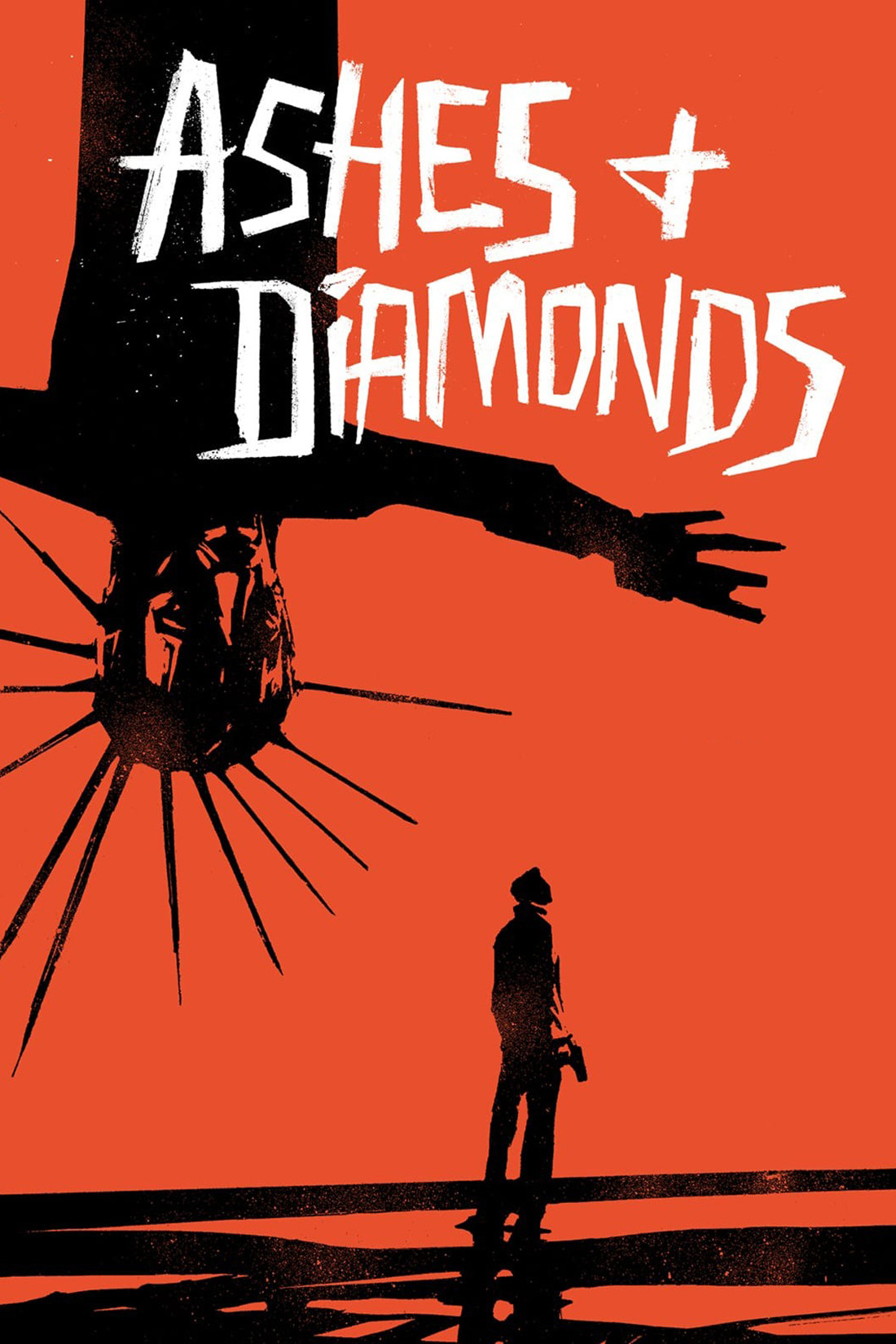
What the Film Is About
When I first experienced Ashes and Diamonds, I was left with a sensation of profound uncertainty—an emotional turbulence fused with the cold undercurrent of existential doubt. Rather than offer clear answers or easy resolutions, the film thrusts me into a world at the crossroads of war and peace, hope and disillusionment. Here, the supposed triumph of liberation is inseparable from the emotional exhaustion that defines its central conflict. For me, the real heart of the film is the way it follows an assassin, Maciek, forced to navigate not only his mission but his own eroding sense of purpose. The tension between personal longing and political duty overrides any sense of comfort or closure. What unfolds is an intimate and heartbreaking glimpse into the human struggle to find meaning in a time of upheaval—when yesterday’s ideals threaten to collapse beneath the weight of tomorrow’s compromises.
As I interpret it, the film becomes a meditation on the last vestiges of wartime morality and youth, splayed out over a country desperately seeking stability. The unspoken trauma of Poland’s war-torn past hovers quietly in every frame, even as the narrative suggests that peace may be an even more complicated burden than conflict itself. The story arcs towards a collision of love, regret, and violence, with its characters poised on the threshold between the values that sustained them and the ambiguous future that awaits.
Core Themes
I cannot help but return, again and again, to the way Ashes and Diamonds interrogates the conflict between duty and desire. This is not just a political thriller but a film deeply invested in the moral disarray that remains after the “just cause” has seemingly ended. The protagonist’s internal battle, torn between following orders and pursuing a fleeting romance with Krystyna, becomes a powerful metaphor for an entire nation’s crisis of identity. Maciek’s yearning to escape the cycle of violence feels like the private tragedy of all those whose ideals did not survive the war untouched.
Another theme that struck me is the ambiguity of heroism and the haunting afterlife of violence. There is no true sense of victory here, only the persistent shadow of the sacrifices made. The film consistently asks whether any act—no matter how heroic or principled—can remain pure when filtered through the machinery of history. I found myself questioning whether the cost of ideological purity is, ultimately, a kind of existential loneliness. Loyalty, both political and personal, is portrayed as an ever-shifting ground, and the characters who survive the war seem like ghosts—trapped between memory and obligation.
On a wider scale, I read the film’s themes as a direct reflection of Poland’s historical moment. Released in 1958, in a country still grappling with the traumas of occupation and the brutal aftermath of shifting regimes, the film’s preoccupation with uncertainty mirrored the collective anxiety of an entire generation. What resonates for me, decades later, is how these themes escape the confines of history. The questions raised about truth, identity, and the cost of social change remain agonizingly current—whether you view them through the lens of global conflict or personal moral struggle.
Symbolism & Motifs
Watching Ashes and Diamonds, I was especially moved by the film’s poetic use of visual and narrative motifs. The persistent presence of fire and flame stands out first. From the ominous burning glasses raised in a silent toast, to the explosive fireworks that punctuate nighttime scenes, fire becomes a signifier of both memory and destruction. For me, it’s a metaphor for the flickering remnants of passion and the unpredictable threat posed by unchecked violence. Each flare of light feels both celebratory and funereal, mirroring the characters’ contradictory impulses.
Another motif that lingers in my mind is the repeated juxtaposition of light and shadow. Director Andrzej Wajda’s use of chiaroscuro is not just aesthetic; it conveys the perpetual uncertainty and moral grayness that defines the characters’ world. Hallways and doorways become thresholds, not just literal exits but painful metaphors for difficult choices.
I was drawn also to the motif of decay and ruin—bombed-out buildings, abandoned churches, and empty squares. These settings communicate more than just the aftermath of war—they express an atmosphere of lost innocence and a country adrift in the space between old certainties and new fears. Even the soundtrack, with its haunting silences and abrupt explosions, seems to oscillate between hope and resignation.
Lastly, there is the powerful visual motif of mirrors and reflections. Throughout the film, Maciek and other characters are often framed beside or within mirrors, suggesting multiplicity and the sense that they are always watched, fractured, or alien to themselves. I interpret this as a commentary on the difficulty of self-recognition in a period when the very nature of reality and personal identity is in upheaval.
Key Scenes
Key Scene 1
The scene that has always haunted me most is the moment when Maciek, cloaked in his assassin’s resolve, locks eyes with Krystyna in the dim refuge of the hotel bar. This encounter, set against the backdrop of post-war celebration, pulses with a yearning for intimacy as much as a fear of entrapment. It’s in this scene that the film’s signature emotional ambivalence is crystallized: Maciek discovers, perhaps too late, the possibility of a life not dictated by violence. The honesty and vulnerability that emerge between them are themselves acts of rebellion—a fleeting reminder of what could be salvaged even when surrounded by ruin. To me, the emotional charge here is less about romance and more about the last gasp of possibility before the weight of history asserts itself once again.
Key Scene 2
I can’t shake the resonance of the church scene, where Maciek finds himself enveloped in the silence and spectral beauty of a war-ravaged sanctuary. For me, the way Wajda frames his protagonist within the cavernous emptiness underscores the film’s core themes of loss, yearning, and the ambiguity of faith—both spiritual and ideological. Maciek, stripped for a moment of his wartime persona, is confronted by the spiritual vacuum left in war’s wake. Here, the silence speaks louder than any declaration of intent; it’s an indictment of both the world he has survived and the one he is being asked to inhabit. The contrast between the sacred setting and the still-unfinished business of violence serves as a blunt testament to what war cannot resolve. It asks me, as the viewer, whether forgiveness or redemption is even possible when the wounds of the past are still so raw.
Key Scene 3
What stays with me most is the film’s final tableau, where Maciek—mortally wounded and robbed of his chance at either escape or atonement—bleeds out, alone and unnoticed, amid the weeds and detritus on the outskirts of a celebratory town. The contrast with the jubilant festivities in the distance is almost unbearable. For me, this closing image distills the film’s statement on the ultimate futility of violence and the tragic isolation of those who cannot adjust to the shifting tides of history. The war may technically be over, but the emotional and moral conflict refuses to resolve neatly, much like Maciek’s own fate. The world moves onward, indifferent to individual suffering—leaving me with a profound sense of loss, anger, and resignation. The closing shot, to my mind, encapsulates the film’s bitter answer to the hope and idealism that once inspired its characters.
Common Interpretations
Through years of discussion with fellow cinephiles and plowing through critical essays, I’ve noticed that Ashes and Diamonds is almost universally regarded as a tragedy of transition, though the nuances of interpretation often diverge. Many find the film to be a condemnation of the costs exacted by political dogma—exploring how individuals are crushed or rendered obsolete by the merciless demands of greater historical forces. Others tend to see it as a meditation on generational loss, with Maciek emblematic of an entire cohort robbed of both innocence and future. This latter reading sees the romance between Maciek and Krystyna as the last possible redemptive force, suffocated by the reality of obligation and history.
A common thread is the film’s focus on historical ambiguity and moral uncertainty. Polish audiences, especially those who experienced the trauma of shifting occupations and betrayals, read the film’s moral ambiguity as an honest reflection of their complexity and confusion. Meanwhile, some critics outside Poland frame the film as a universal statement about the aftermath of any war: the inability to return to normal life, the loss of self, the impossibility of reconciling private and public selves.
Other interpretations—less dominant, but persistent—suggest that Wajda’s film was also subtly critical of the then-current Communist regime, hinting at the oppression and compromises required in a society built on ever-changing ideological sands. I can relate to all of these readings, since the film’s refusal to take sides or provide neat resolutions is precisely what gives it its haunting power.
Films with Similar Themes
- The Third Man – For me, this film resonates with similar questions of postwar morality, shifting alliances, and the erosion of ethical certainties against the backdrop of a war-torn city.
- The Cranes Are Flying – I find a parallel here in the way both films examine the emotional cost of war, focusing on the private pain that lingers after the cannons have fallen silent.
- Come and See – Like Ashes and Diamonds, this film uses subjective experience to channel the sheer trauma and psychological devastation left by conflict, leaving the viewer unsettled long after the credits roll.
- Army of Shadows – What connects these two, in my mind, is their exploration of loyalty and betrayal within underground movements, and the toll such realities exact on personal identity and survival.
In my experience, Ashes and Diamonds ultimately communicates the uneasy truth that the struggle for meaning does not end with the war, but is in fact heightened by the burden of peace. The film’s refusal to grant easy redemption or heroism feels truer to the messiness of human nature than any triumphalist narrative ever could. It is a film about memory, disillusionment, and the search for honesty in an age of shifting certainties. Its enduring relevance, for me, lies in the way it captures the bittersweet legacy of those who have survived crisis only to inherit ambiguity—and the hope that, even amid this ambiguity, there might remain a longing for decency, love, and connection.
If you’re curious about how this film was originally perceived or how it compares to similar works of its era, these resources may be helpful.
If you found value in my perspective, you might also enjoy exploring my thoughts on other cinematic landmarks such as “The Cranes Are Flying” and “The Third Man.”