
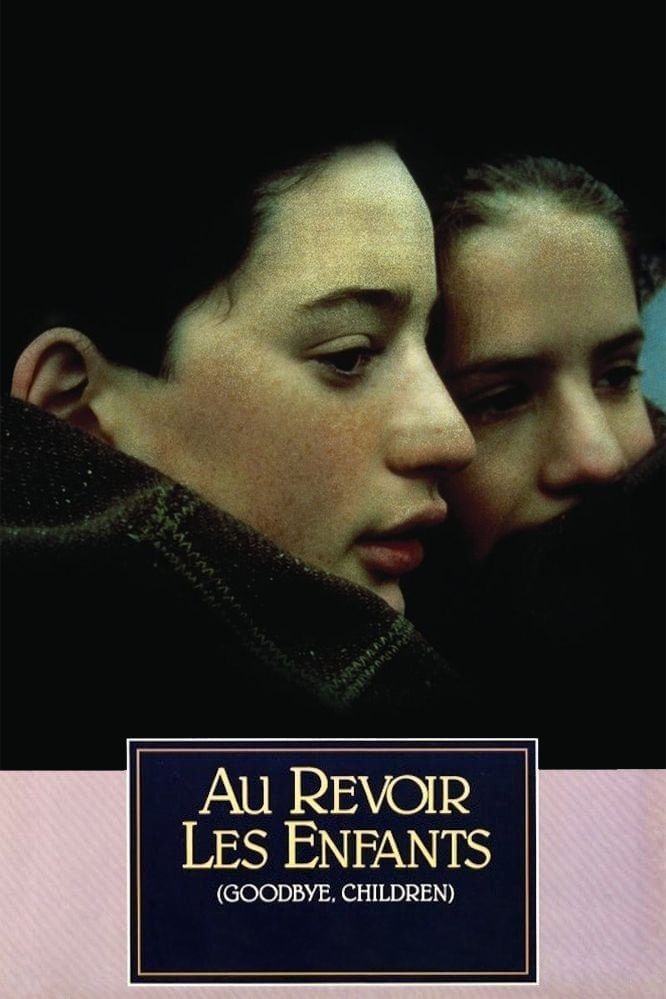
There are certain films that lodge themselves deep within my memory, not simply for their craft or beauty, but for how they transport me to a world that, on some private frequency, I feel I’ve inhabited before. “Au Revoir les Enfants” is one of those rare films. The first time I watched it, I was struck not by grand gestures or dramatic reveals, but by silent exchanges and the overwhelming sense of things left unsaid. I returned to that boarding school’s corridors, haunted by the echoing footsteps and the delicate interplay of innocence and menace. What fascinates me most is how the film transforms the ordinary routines of adolescence into a battleground for moral and emotional survival, rendering the personal heartbreak of childhood against the backdrop of war’s colossal indifference. I have always been drawn to films that unravel history through the smallest, most intimate spaces. “Au Revoir les Enfants” invites me to remember—and reflect—on the quiet heroism and pain of growing up in the shadow of catastrophe.
What the Film Is About
For me, “Au Revoir les Enfants” is less a film about the events of World War II than it is a meditation on the fraught emergence of conscience in the midst of innocence. Watching the friendship between Julien and Jean unfold, I am reminded of moments in my own youth when competing loyalties—between self-preservation and compassion—became excruciatingly clear. The central conflict here is internal: it’s the struggle of a boy discovering, almost despite himself, the costs of empathy in a world where betrayal and violence linger just outside the classroom window.
I see the story as a series of emotional thresholds. Every scene crackles with the impending sense that childhood can be irrevocably ruptured—not just by bombs or soldiers, but by the sudden weight of knowledge. That’s what the film seems to be telling me: that the true trauma lies not merely in loss itself, but in the realization that one’s actions, or failure to act, can alter another’s fate forever. It’s a lesson that feels almost unbearably intimate precisely because it is never shouted. The war is always there, but it is the subtle, accumulating guilt and complicity that come to dominate Julien’s world, and mine by proxy as a viewer.
Core Themes
The first and most overwhelming theme for me is the innocence of childhood corrupted by the realities of war. Malle’s film pivots on a coming-of-age narrative, but one so steeped in historical trauma that the usual rites of passage acquire a new, devastating significance. The formation of identity—something every adolescent struggles with—is here complicated by secrets and moral dilemmas beyond the understanding of most adults.
Another theme that resonates profoundly is the veiled nature of heroism and cowardice. In “Au Revoir les Enfants,” acts of courage and betrayal occur in muted circumstances—an exchanged glance, an unspoken truth. The film refuses to create easy villains, making the question of who one is, and what one stands for, unbearably ambiguous. At the time of its release in 1987, that ambiguity felt radical. The film arrived during a period when France was only beginning to publicly reckon with its wartime past, especially concerning collaboration and resistance. Today, as our world grapples with the rise of exclusionary ideologies and the complexity of personal responsibility, I find this theme both urgent and timeless.
Finally, I am deeply affected by the film’s treatment of memory. “Au Revoir les Enfants” serves as both testimony and elegy, a way for Malle to confront his own childhood and, by extension, demand that we confront ours. The act of remembering—painful, incomplete, necessary—is as much the film’s subject as the events it depicts. This persistent need to look back, to linger over the moments that define our moral selves, feels more pressing with each passing year. How we choose to remember, and what we do with that memory, is a question that haunts the film and, undeniably, haunts me as well.
Symbolism & Motifs
One of the most evocative motifs throughout “Au Revoir les Enfants” is the recurring contrast between warmth and cold—literal and emotional. The chill of the school’s corridors and dormitories mirrors the emotional isolation felt by the students, especially the new arrival, Jean. Yet there are also fires: glowing hearths, kitchens, exchanges of warmth between Jean and Julien. To me, these moments of physical comfort stand in poignant relief against the impersonal cold of the outside world, functioning as fleeting sanctuaries imperiled by the threat of exposure.
I find the school itself operates as a potent symbol. Its walls offer not only protection but also containment—secret lives are shielded, but only temporarily. The way Malle films those long, echoing corridors, the closed doors, and the perpetual grayness outside, reinforces the sense of a world on the brink, where safety is always provisional. The games the boys play, their musical performances, and the routines of religion all create a veneer of order, but always with the knowledge that this is a fragile illusion.
Perhaps most striking for me is the symbolism of the hidden. Jean’s concealed Jewish identity becomes a metaphor for all that is hidden, repressed, or denied—not only in wartime society but within ourselves. The film is replete with secrets: a stashed loaf of bread, forbidden radio broadcasts, coded glances. As I watch, I am always attuned to Malle’s subtle insistence that the real drama of survival and betrayal lies in what remains unsaid, in the silences that shape our choices.
Key Scenes
Key Scene 1
The opening arrival of Jean Bonnet is, for me, a quietly seismic event. The uncertain glances exchanged in the dormitory, the sense of being an outsider in a world with unspoken rules—these moments remind me not only of my own formative years but of every moment when kindness becomes a risk. It’s in Jean’s hesitation and Julien’s initial resentment that the film subtly maps out the first fault lines of empathy and suspicion. The mood is almost glacial, but underneath, a profound tension builds: the knowledge that belonging can be granted or withheld with devastating consequences.
Key Scene 2
There is a deeply affecting scene midway through the film when Julien discovers Jean in the chapel, quietly praying. Here, Malle’s camera lingers on the boys, the candlelight flickering between them. This silence, thick with longing and fear, becomes a crucible in which mutual recognition is forged. For me, this moment is about more than religious difference; it is about confronting otherness and finding, if only for a moment, common ground. In the fragile intimacy of this encounter, I see an entire universe of hope and impossibility.
Key Scene 3
The climax—when the Gestapo arrive and the children are summoned in the dining hall—has never ceased to devastate me. The priest’s refusal to betray the boys, the quick glance Julien gives toward Jean, and the ultimately futile attempt to maintain innocence—all culminate in a moment that is brutal in its restraint. The horror lies in the ordinary: the scraping of chairs, the cold light, the abrupt rupture of daily life. Here, I feel the existential weight of guilt and helplessness—the way a single gesture, or failure to act, can echo across a lifetime.
Common Interpretations
Many critics, in my experience, have focused on the film as a quietly devastating indictment of French complicity and cowardice during the Occupation. Some see Julien’s inadvertent betrayal of Jean as symbolic of the broader societal failure to protect the vulnerable. While I see truth in these interpretations, I am less interested in the film as an accusatory history lesson. Instead, what stays with me is its persistent ambiguity. The boundaries between victim and bystander are never clear-cut. Malle’s refusal to indict or absolve his characters too neatly is what makes the experience so resonant for me.
Others have praised “Au Revoir les Enfants” for its realism and subtlety, emphasizing its role in sparking conversations around remembrance and reconciliation in France. I agree, but I’d argue that the film’s true power comes from its universality—it remains relevant not only as a French memory work, but as a meditation on the ways childhood innocence is shaped, and inevitably wounded, by history’s intrusions. For me, it is as much about the perennial struggle between empathy and self-preservation as it is about any one historical moment.
Films with Similar Themes
- Hope and Glory – John Boorman’s semi-autobiographical film also reflects a child’s eye view of World War II, blending innocence with the encroaching horror of conflict.
- The White Ribbon – Michael Haneke’s film explores the roots of cruelty and conformity in small communities, its cold, rural setting echoing the emotional isolation of Malle’s boarding school.
- The Diary of Anne Frank – Both films use the perspective of youth to illuminate the precariousness of moral choices under the threat of totalitarian violence.
- Come and See – While more harrowing in its depiction, Klimov’s masterpiece also traces the destruction of innocence amid the chaos of war, forcing viewers to confront both historical atrocity and personal survival.
Conclusion
For a modern viewer, approaching “Au Revoir les Enfants” means making peace with subtlety and discomfort. The film is not about spectacle or catharsis; it is a quietly shattering portrait of memory, betrayal, and the impossibility of innocence. From my vantage point, understanding its themes allows for a deeper engagement with our own histories—personal and collective. If we let its silences linger, the film rewards us with truths that are as elusive, and necessary, as forgiveness itself.
Related Reviews
If you found value in my perspective, you might also enjoy exploring my thoughts on other cinematic landmarks such as Forbidden Games and The 400 Blows.
To broaden this interpretation, you may also explore how critics and audiences responded over time.